

By the year 600 BC, Cyrus the Elder (or perhaps the Great?...ok, both the Great and the Elder - I have checked), the founder of the first Persian Empire, introduced new and spectacular elements into the tactics of a conqueror, which succeeded in transforming him in the minds of the occupied peoples, from an invader into a messiah-like figure. Abandoning oppressive means of ruling specific to tyrants, perpetuating the cultures, religions, and traditions of the assimilated subjects, instilling in them a sense of authoritative respect instead of fear and terror... All these strategies, unheard of in theaters of operation until then, remained in military history as a new dimension, full of strength and promises, with results that no other approach could afford, something that would be called: psychological warfare.
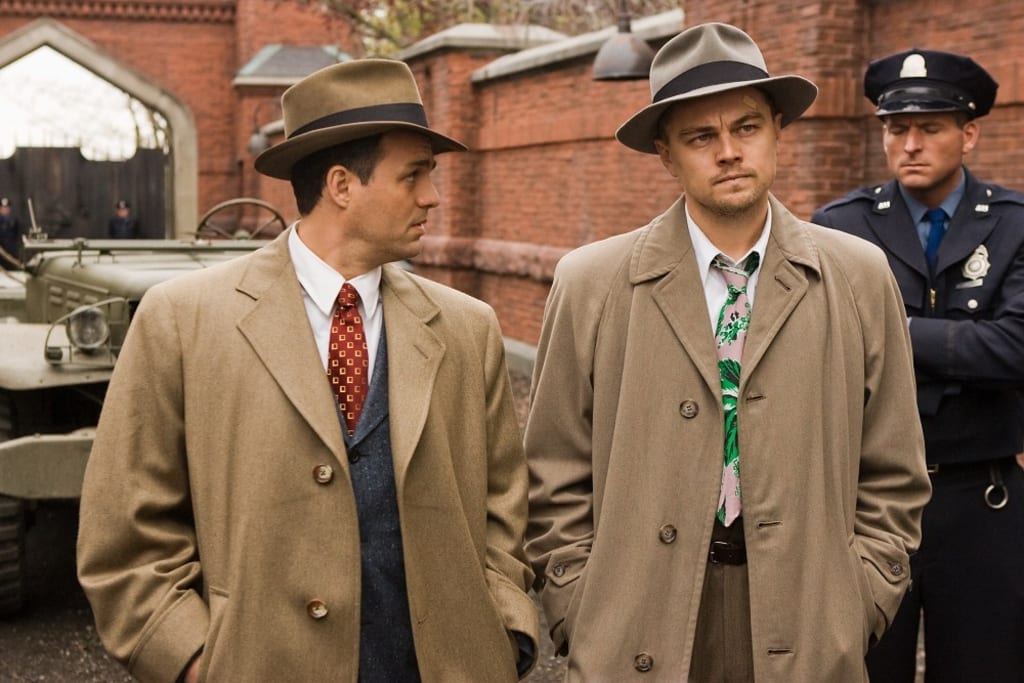
This is what the movie Shutter Island is about, a film that initially aimed for modest goals, and peripheral successes (and only in terms of box office), with an interesting spatial/temporal positioning of the theme, and an evident openness to the improvised developments on set. Because we are dealing with the story of an institution of psychiatric experiments and a psyche under observation and management. When Martin Scorsese chose the screenplay by Laeta Elizabeth Kalogridis (adapted from Dennis Lehane's controversial novel), he was not particularly drawn to the proposed subject. Rather, in the midst of experimental/artistic fervor, the director was absorbed by the advantages of a production without funding issues, with almost total creative freedom, and no limits on improvisation.
It must be said that Martin Marcantonio Luciano Scorsese (Mean Streets, Taxi Driver, Raging Bull, and Goodfellas), a filmmaker with a meteoric and dazzling debut, established himself through the Italian-American gangster genre, where violence, organized crime, and the underworld dominated the screen and captivated the audience with spectacular revelations or the harshness of cinéma vérité scenes that strictly and accurately reiterated events with a direct correspondence to the realities of the time. Martin Scorsese carried too abruptly and too early on the wings of success, suffered from the anguish of reaching the destination without going through all the necessary stages of the journey; ultimately, a complex that was noticed by the specialized press and needed to be resolved.
In the realization of the production, you are tempted to believe that Scorsese did not care about anything else but the filming techniques. An impressive range of lenses, a team of cinematography supervisors, and direct collaboration with two top-notch cinematographers meant that there were much more important priorities than casting, where DiCaprio's role practically solved the entire issue. And the film is indeed a great achievement in terms of the cinema of the great director... because of the abundance of plunge shots, suggesting a Big Brother-type monitored action, but at the same time accentuating the isolation effects of the island and those detained there; the wide shots and axial tracking shots, the eerie scenes borrowed from the horror genre with so many allusions... but also the noir-type scenes, all manage to significantly contribute, directly to the plot, supporting parts of the story.
That the United States has had a permanent and major interest in the study of psychological warfare is testified by a series of documents that became public immediately after 1995, and the abundance of imagined scenarios that naturally followed this initiative; but while most of them treat the involvement with mockery or humor, and others insinuate stories of experiments that can no longer be humanly controlled or belong to the realm of science fiction, this unique film tries to remain grounded in credible historical truths (the continuation of Hitler's experiments, a la Dr. Mengele), with results that fall within the realm of hospital wear and tear.
What makes Shutter Island an absolutely remarkable film is how it manages to escape any form of control, acquiring its own destiny and evolution, astonishing even its creators. Realities are mixed together, confusion grows in size and engulfs everything it touches, until the resolution through abandonment becomes contrary to any prognosis.
After watching this film, only then, make time and Go see it...because that's how it works; it reveals itself only the second time around, in a fascinating, unprecedented, and heretical exercise...in a similar manner to the ones it constantly comments on and suggests; in a skillful and manipulative game with the mind of the viewer.
About the Creator
Andreea Sorm
Revolutionary spirit. AI contributor. Badass Engineer. Struggling millennial. Post-modern feminist.
YouTube - Chiarra AI
Keep reading
More stories from Andreea Sorm and writers in Geeks and other communities.
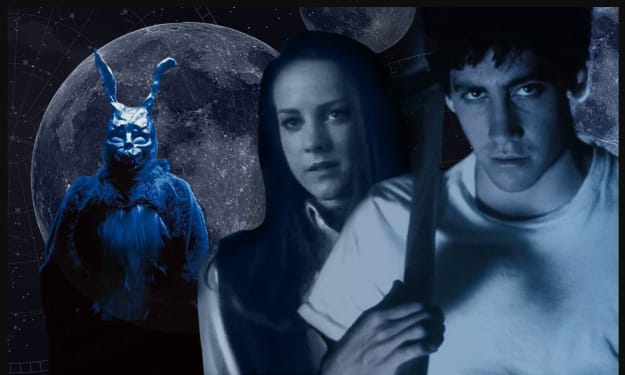
Donnie Darko (2001)
"Sometimes I doubt your commitment to Sparkle Motion." - Frank Anderson (James Duval) According to the prestigious magazine Empire, after Reservoir Dogs, this would be the second-best indie film ever made (Sundance Institute/Festival). It is the result of a bet with herself by Drew Barrymore, for the first time as a (co)producer, which was taken quite seriously in securing distribution, but also a credible lobbying platform to support the investment. However, it is also the result of the tenacity and belief of director Richard Kelly (Southland Tales, The Box), a young man (26 years old at the time of filming) who believed in his screenplay, even when all evidence pointed to failure (the film was a financial disaster at the box office, only finding success three years later with the DVD release).
By Andreea Sorm3 years ago in Geeks
The Politics of Playing Dress-Up
Well, to start off I'd like to say a happy world book day to all who celebrate. I know I haven't really posted anything on my socials about it but I'm not a jubilant kind of person. I lay low most of the time. Let's start off with a popular anecdote from the vaults...
By Annie Kapur10 days ago in Geeks
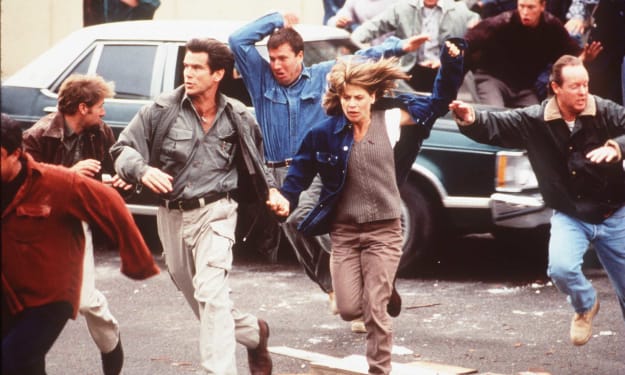
Dante's Peak (1997) - A Movie Review
We need to escape now before the volcano erupts! Dante’s Peak is a 1997 film. Harry Dalton, a volcanologist, arrives in a small town where there have been signs of an active volcano. As he scopes the town, he discovers a dormant volcano that isn’t long until it awakens.
By Marielle Sabbag4 days ago in Geeks


Comments
There are no comments for this story
Be the first to respond and start the conversation.