
Scream 7: Can the Ghostface Legacy Survive Another Reboot?
A Meta-Horror Franchise Faces Its Most Dangerous Challenge Yet: Reinvention in the Age of Reboots and Viral Fame
Few horror franchises have managed to stay as sharp, self-aware, and culturally relevant as Scream. Since its debut in 1996, the series has thrived on reinvention—satirizing horror tropes while simultaneously embodying them. Now, with Scream 7 on the horizon, fans are once again asking the same question that fuels every installment: who will survive, and can the franchise itself escape becoming the very cliché it loves to mock?
After the success of the recent films that revitalized the brand for a new generation, the seventh chapter faces enormous pressure. Horror franchises rarely make it this far without losing their edge. Yet if any series can turn franchise fatigue into fuel, it’s this one.
The Weight of Legacy
The most fascinating challenge facing Scream 7 is legacy. The previous entries walked a careful line between honoring original characters and passing the torch to new ones. That balance wasn’t just narrative—it was thematic. The franchise has always been about cycles: sequels, remakes, reboots, and “requels.” It understands that horror is generational.
By the time a seventh film arrives, the story is no longer just about Ghostface stalking teenagers. It becomes about what the mask represents. The costume is no longer a single killer’s identity; it’s a symbol of obsession, fandom toxicity, revenge, and reinvention. Each new Ghostface adopts the mask for personal reasons, but the broader implication is clear: horror never dies. It evolves.
If Scream 7 leans into this idea, it has the opportunity to explore something deeper than simple whodunit thrills. It can question whether the franchise itself is trapped in a loop—forever recreating trauma for entertainment.
Reinvention or Repetition?
One of the biggest risks for any long-running horror series is repetition. By the seventh installment, audiences know the formula: a brutal opening kill, a group of suspects, meta-commentary about horror rules, and a final act reveal with an emotional monologue.
But here’s the twist—Scream knows that we know.
The brilliance of the franchise lies in its awareness. It doesn’t just follow tropes; it critiques them. So what happens when the trope becomes self-awareness itself? That’s the creative puzzle Scream 7 must solve. It can’t just comment on sequels again. It has to examine franchise exhaustion, legacy pressure, and perhaps even fan entitlement.
Modern horror audiences are savvy. Social media has turned speculation into sport. Theories spread instantly. Leaks become marketing. The idea of “spoiler culture” could easily become part of the narrative. Imagine a Ghostface motivated by viral fame or online notoriety—a killer who wants their murders to trend.
That kind of commentary would feel timely without sacrificing suspense.
The Evolution of the Final Girl
The franchise has long been defined by its strong, resilient survivors. Earlier films focused on trauma and survival in a more straightforward way. But recent installments have expanded that lens, portraying characters who are deeply scarred yet still fighting back.
In a seventh film, the “final girl” archetype could evolve even further. Instead of merely surviving, perhaps the focus shifts to reclaiming control. What if survival isn’t enough anymore? What if the characters actively try to dismantle the cycle?
There’s also the possibility of blurring the lines between hero and villain. The franchise has flirted with morally gray territory before. By this stage, exploring how trauma reshapes identity could add psychological depth. What does living through repeated violence do to a person? At what point does fear become rage?
That emotional complexity could elevate Scream 7 beyond a standard slasher.
The Ghostface Factor
No matter how deep the themes go, the heart of the franchise remains Ghostface. The mask is iconic for a reason—it’s both theatrical and terrifying. Unlike supernatural horror villains, Ghostface is human. Fallible. Clumsy. Vulnerable.
That humanity is crucial. The killer bleeds. They make mistakes. They get hit with doors and furniture. This grounded approach keeps the suspense raw and immediate.
For the seventh installment, the creative team could experiment with the physicality of Ghostface. Perhaps a more strategic killer. Perhaps multiple killers again—but with a twist. Or maybe the boldest move would be a single mastermind orchestrating chaos from a distance.
What matters most is motive. The reveal scene has always been the franchise’s centerpiece. It’s not just about who is under the mask; it’s about why. The motive needs to feel contemporary. Revenge alone isn’t enough anymore. The best reveals tie into the film’s broader commentary.
Audience Expectations in the Streaming Era
Another factor influencing Scream 7 is the changing way audiences consume horror. Streaming platforms have altered viewing habits. Binge culture has conditioned viewers to expect rapid twists and constant escalation.
The franchise has always thrived in theaters, where collective reactions amplify tension. But it must now compete in a landscape saturated with true crime documentaries, horror series, and endless content.
This environment offers opportunity. The film could comment on how desensitized viewers have become. How violence is consumed as entertainment. After all, the original film critiqued media influence and horror obsession. Revisiting that theme in today’s algorithm-driven world feels natural.
What does horror mean when real-life crime stories are streamed for fun? What does it say about us?
Risk-Taking Is Essential
If Scream 7 plays it safe, it risks becoming predictable. The most successful entries in the franchise were bold. They killed major characters. They subverted expectations. They weren’t afraid to shock.
The seventh installment could benefit from genuine unpredictability. Perhaps the opening scene doesn’t follow the usual formula. Perhaps a presumed protagonist isn’t safe. Perhaps the killer is revealed earlier than expected, shifting the film into a cat-and-mouse thriller rather than a mystery.
The series has earned enough goodwill to take creative risks. Fans may resist change at first, but stagnation would be far worse.
The Cultural Mirror
At its best, Scream acts as a mirror to horror culture. It reflects our fears—not just of masked killers, but of ourselves. Of obsession. Of violence as spectacle. Of fame.
In 2026 and beyond, those fears are more complex. Fame is instant. Outrage is currency. Identity can be curated. A seventh film has the chance to explore how digital personas and real-life consequences collide.
Ghostface has always used the phone as a weapon, taunting victims before attacking. In today’s world, that concept could expand dramatically. Livestreams. Deepfakes. Doxxing. The tools of terror have evolved.
If the film leans into modern anxieties while preserving its signature wit and suspense, it could feel both nostalgic and cutting-edge.
Can the Franchise Survive?
Ultimately, the question surrounding Scream 7 isn’t just about who lives or dies. It’s about whether the franchise can continue to reinvent itself without losing its identity.
The key lies in balance: honoring what came before while daring to challenge it. Maintaining suspense while delivering commentary. Giving fans what they expect—and then twisting it.
Horror thrives on fear of the unknown. For a seventh installment, the greatest danger is familiarity. If the film can surprise us again—truly surprise us—then Ghostface will remain as sharp as ever.
Because in the world of Scream, the rules are meant to be broken.
And if history has taught us anything, it’s that just when you think the story is over, the phone rings again.
About the Creator
Keep reading
More stories from Alex Bloomfield and writers in Geeks and other communities.
How to Watch Hulu in Sweden 2026
Hulu is one of the most popular streaming services in the U.S., known for hit shows, movies, and original content. However, Hulu isn’t officially available in Sweden due to licensing restrictions. If you’re living in Sweden and want to watch Hulu, this guide explains safe, legal, and effective options for accessing the service in 2026.
By Alex Bloomfieldabout 6 hours ago in Geeks
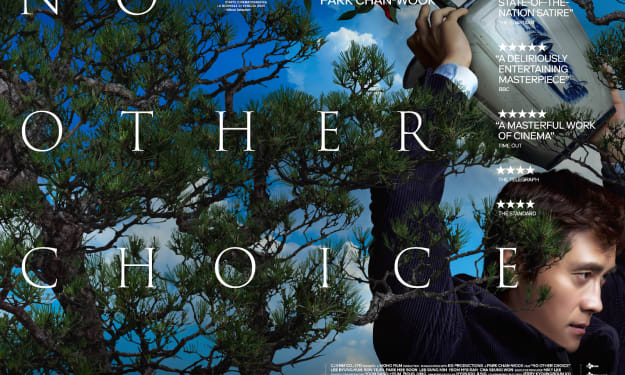
No Other Choice (2025)
It is only February, so other films may well surpass “No Other Choice”, but I think this is the best film I’ve seen so far this year. And that surprises me, because, it is a subtitled film and while I am pretentious enough to choose to watch foreign-language films, I was also very tired and that was an extra commitment from me. But more importantly, let me warn you, this film is gruesome and violent. There were times I had to turn away from the screen to avoid the worst of it (including some self-inflicted dentistry).
By Rachel Robbins7 days ago in Geeks
The Code Beyond the Screen
Ayaan Rahman had always believed that every problem in the world could be reduced to logic. As a software engineering student known among his friends as “the debugger,” he thrived on broken systems. Whether it was a crashing app or a corrupted database, he approached every issue the same way: isolate variables, trace dependencies, eliminate noise. Life, to him, was simply a larger version of code—complex but ultimately solvable. That belief began to crack the night his laptop displayed something it was never programmed to show.
By Sudais Zakwana day ago in Geeks


Comments
There are no comments for this story
Be the first to respond and start the conversation.