
Revisiting The Visitors: How a 1993 French Comedy Became a Timeless Cultural Gem
How a Medieval Knight and His Hapless Squire Became Icons of French Comedy

Some films survive because they are masterpieces. Others survive because they are quirky, unpolished, chaotic, and utterly unforgettable. The Visitors (Les Visiteurs, 1993), the cult-classic French comedy directed by Jean-Marie Poiré, belongs squarely in the latter category—and that’s exactly why it continues to charm audiences decades later. Equal parts slapstick, satire, and absurdist fantasy, the film blends medieval mayhem with modern-day madness in a way that still feels fresh, even in a world saturated with time-travel stories.
At first glance, The Visitors appears to be a simple fish-out-of-water comedy: a medieval knight and his loyal—but hopelessly foolish—squire are accidentally transported to the 20th century. Cue the predictable culture clash, right? But the film distinguishes itself through razor-sharp timing, larger-than-life performances, and a deeply human core hidden beneath its comedic anarchy. What emerges is a movie that is more than the sum of its goofy parts: a playful critique of class, tradition, identity, and the absurdity of modern life.
The Time-Travel Setup: Chaos from the Very First Spell
The story begins in 1123 with Godefroy de Montmirail (Jean Reno), a noble knight loyal to the king. After heroically saving the monarch from an assassination attempt, he is rewarded with the promise of marriage to the beautiful Frénégonde. But everything goes disastrously wrong when Godefroy, under the influence of a witch’s potion, accidentally kills his soon-to-be father-in-law. Stricken with grief and determined to undo his catastrophic mistake, he seeks the help of a wizard whose time-travel spell—shockingly—goes wrong.
Instead of returning slightly into the past, Godefroy and his squire, Jacquouille la Fripouille (Christian Clavier), are hurled forward nearly nine centuries, landing in 1992 France.
It is here that The Visitors truly comes alive.
A Medieval Knight vs. the 20th Century
What makes this time jump so entertaining is the film’s wholehearted commitment to the bit. The modern world isn’t just different—it’s completely incomprehensible to a man who believes in sorcery, curses, and chivalry.
Godefroy’s reaction to cars, telephones, and electricity is played with deadpan seriousness by Reno, whose stoic intensity makes every bewildered stare twice as funny. Meanwhile, Jacquouille reacts to the modern world with all the chaotic glee of someone who spent his entire life sleeping in stables and stealing scraps of bread. His obsession with faucets, toilets, light switches, and snacks becomes a running joke that somehow never wears thin.
But the most clever twist is the discovery that their descendants are still alive. Godefroy’s lineage has transformed into a wealthy, dignified aristocratic family, while Jacquouille’s lineage has become… well, slightly less sophisticated. This accidental reunion sets up a biting—but humorous—look at class continuity and class erosion in modern France.
Jean Reno and Christian Clavier: A Duo for the Ages
The heart of The Visitors lies in the electric chemistry between Jean Reno and Christian Clavier. Reno’s performance is a masterclass in playing serious against absurd; he delivers his lines with such unwavering conviction that even the most ridiculous situations feel grounded. Clavier, on the other hand, brings frenetic energy, physical comedy, and impeccable timing. Together, they create a pairing that feels iconic—not just for French cinema, but for comedy as a whole.
This contrast between noble bravado and gleeful buffoonery is what gives The Visitors its comedic soul. It’s Laurel and Hardy, but with chainmail. It’s Bill & Ted meets Monty Python meets historical farce. And it works.
Slapstick, Satire, and the Art of Controlled Chaos
One of the film’s great strengths is its fearless embrace of slapstick. Doors are slammed, cars are demolished, tables are overturned, and a shocking number of household items are mistaken for magical artifacts. Yet the physical comedy is never random—it’s meticulously choreographed, giving the film a sense of rhythm that keeps the humor feeling sharp rather than messy.
Underneath the slapstick lies a playful commentary on both medieval and modern life.
The Visitors pokes fun at:
- feudal hierarchies
- social snobbery
- bureaucracy
- modern consumerism
- and the absurdities of everyday technology
The film never tries to be profound, yet it manages to highlight something truly human: no matter the century, people are still ridiculous.
A French Cultural Phenomenon
In France, The Visitors wasn’t just a box-office hit—it was an event. The film became one of the highest-grossing French comedies of all time and developed a cult following that remains strong today. Its catchphrases entered popular culture (you will still hear “OKAAAAAY” jokingly thrown around by fans), and its characters became cultural icons. The success spawned sequels, an American remake, and even a theme-park attraction, though none captured the original magic with quite the same spark.
Part of the film’s enduring appeal lies in how unapologetically French it is. The humor, references, and settings are deeply rooted in French culture, yet the comedy remains universally accessible. You don’t need to understand French history to laugh at Jacquouille’s inability to comprehend a bathroom.
Why The Visitors Still Works Today
Despite its 1993 release, The Visitors continues to resonate with viewers around the world. But why?
Timeless physical comedy
Even if cultural references fade, slapstick is eternal. The film’s physical gags are so well-executed that they still hit nearly 30 years later.
A perfect comedic duo
Reno and Clavier create characters who feel instantly iconic—recognizable, relatable, and endlessly entertaining.
A clever blend of genres
The film simultaneously parodies and celebrates both historical epics and modern life, making it feel fresh even after repeated viewings.
A comforting absurdity
In a world that often feels chaotic and serious, The Visitors reminds us that it’s okay to laugh at the absurdity of life—past, present, or future.
Final Thoughts: A Comedy That Stands the Test of Time
The Visitors may not be a high-brow art film, nor does it pretend to be. It is loud, silly, energetically chaotic, and proudly ridiculous. But beneath its goofy exterior lies a film crafted with genuine skill—smart writing, tight comedic timing, and characters that stay with you long after the credits roll.
If you’ve never seen it, consider this your sign to dive in. And if you have, revisit it with fresh eyes. It’s a rare comedy that can make you laugh as hard on the fifth viewing as on the first. Whether you’re a fan of French cinema, time-travel stories, or just clever, joyful chaos, The Visitors remains a timeless gem worth rediscovering.
About the Creator
Keep reading
More stories from James S Pope and writers in Geeks and other communities.
Oh. What. Fun.: A Holiday Film That Surprises More Than It Sparkles
Holiday films are usually predictable. We expect twinkling lights, cozy sweaters, old romances rekindled, and the ultimate reassurance that everything will be okay by Christmas morning. Oh. What. Fun.—a 2023 dark comedy set during a dysfunctional family’s Christmas Eve gathering—does not offer that kind of comfort. Instead, it flips the holiday-movie formula on its head, delivering a sharper, messier, and surprisingly genuine story about family chaos, hidden wounds, and the complicated love that binds people who drive each other crazy.
By James S Pope3 months ago in Geeks
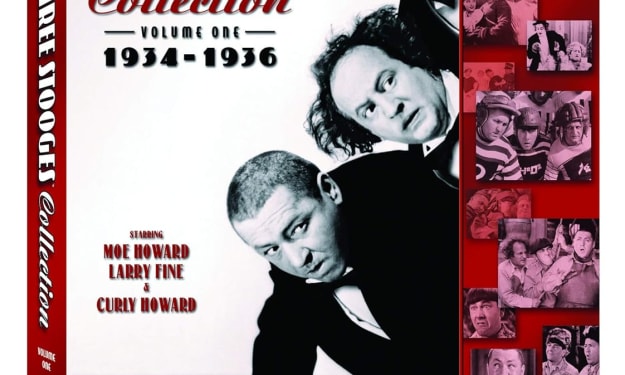
History of The Three Stooges (Part I: The Beginnings and Columbia Pictures - 1920s-1936)
I have been itching to write about The Three Stooges on Vocal for close to two years, but I couldn't figure out how to do it. I wanted to do it by third Stooge, but that's a bit complicated. I know this much. I was about eight or nine years old when I first saw The Three Stooges. I remember one of my local channels had the Stooges on for hours, and I tried my damnedest to be up for those shorts. I remember that the Family Channel actually had an hour of the Stooges on from 11PM to midnight, and it was the entire library on during that time.
By Clyde E. Dawkins4 days ago in Geeks
Where Is The Cast Of 'Orange Is The New Black' Now?
While Netflix was still in the early days of blockbuster shows, the streaming service hit the jackpot when it launched the prison-dramedy series, Orange is the New Black, in 2013. The show followed a white collar criminal, Piper Chapman, as she faced consequences for a past mistake, and was based off the memoir of the same name by Piper Kerman. In fact, OITNB was just the second Netflix original series after House of Cards.
By Jenika Enoch7 days ago in Geeks



Comments (1)
Oooo looks cool! You made me want to check this out, thanks!!