
Reviewing 'The Fault in Our Stars'
A personal analysis of the ending of the book 'The Fault in our Stars' written by John Green.

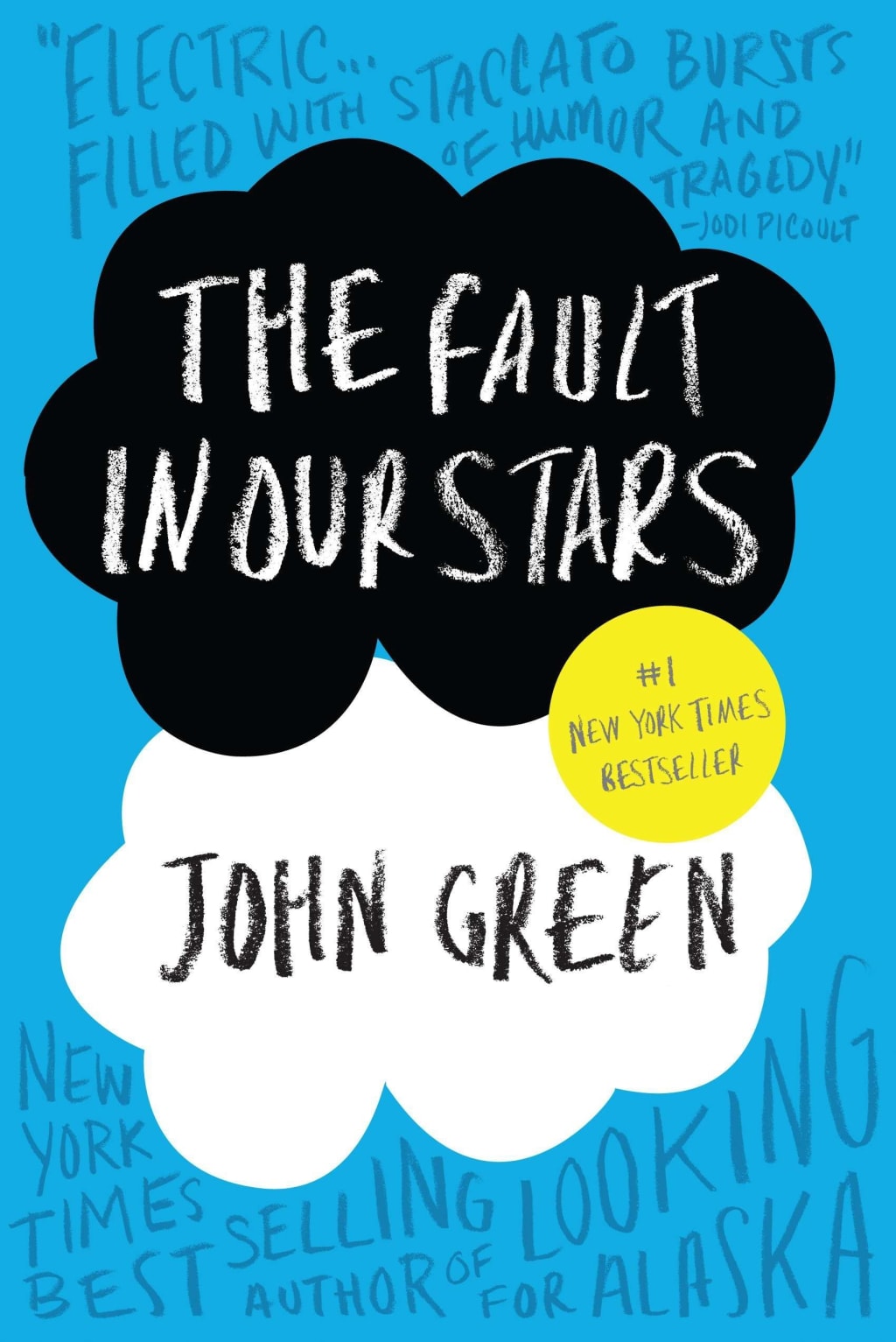
‘’My thoughts are stars I can’t fathom into constellations.’’—John Green
The Fault In Our Stars is a novel written by John Green, describing the life of a 17-year-old girl (Hazel) with Thyroid cancer, and her short relationship with a boy named Augustus from a first person point-of-view. During the novel, the readers witness the development of love between these two teenagers, but as the novel gets closer to the end, Augustus (who was a cancer survivor) gets informed that his cancer has spread again and that this time, the chances of him surviving are not likely. At the very end, after Augustus passes away, Hazel finds a letter which he had sent to her favorite author (Peter Van Houten), and the novel ends by the end of the letter. There are three parts in this letter, which are going to be analyzed in this essay before coming to the conclusion if whether or not it was a good way to end the novel, with Augustus’s letter: The beginning, middle, and end.
At the start of the novel, Augustus requests Van Houten to write a sequel to the book that Hazel is fond of. He then goes on about people’s obsession with being remembered before they die, and how this matter had been something of importance to Augustus: to know that his life had a purpose, and that he was thought of even after he dies. This part of the letter had probably been written when Augustus was recently diagnosed with the cancer again, therefore it struck him that he needs to take action by writing this letter, in order to be remembered. He has thoughts, things he wants to tell, to accomplish his goal of having his memory last forever but, "[his] thoughts are stars [he] can’t fathom into constellations." He's disoriented and scared, unsure of how things will be when he is gone, which is something very normal when one is going to die. He is not described as the typical brave and perfect character, and that is what makes a good ending to the book. Humans are not perfect; everyone has flaws, and that is a good and realistic message to convey.
However, there are more things that Augustus realizes that he needs to write, as he gets sicker day by day. Over the course when he was in his intermediate stage of his illness, he begins to think more of Hazel, and his letter shows how her ideology inspired him to think differently. At this stage, he began to think about how Hazel believed that it’s not always necessary to be remembered when one dies. It is not crucial to leave some sort of mark, memory, or even do something for this world, in order to have lived a decent life. Judging by the quote, "Hazel knows the truth," it is noticeable how Augustus began having faith in Hazel’s ideology of this world, and that it because he was encountered by this so-called "Truth." Hazel’s truth was about noticing the world, and that is exactly what Augustus was doing while getting closer to his late-stage cancer; Augustus was noticing Hazel.
Last but not least is the final paragraph of the letter, at which Augustus uses all the strength he has left to write down what he has noticed about Hazel to Peter Van Houten, in an attempt to give Houten the reason he needs for writing a sequel. Augustus doesn’t try to beg and plead, the way some others would have done. Instead, he uses very simple and short sentences, both because he wants it to be straight to the point and effective, and because he doesn’t have strength to write much more. The longest and most effective sentence that he did write was, "You don’t get to choose if you get hurt in this world, old man, but you do have some say in who hurts you." To me, this sentence came as a clench to the heart. It all comes back to the point, that the fault is not in our stars; we are meant to get hurt in this world, and this has been decided for all people through their stars, but we decide how this hurt will come to us. People can choose the way in which they will be hurt, and for some, the pain and hurt is worth the journey. This sentence clearly is aiming at the decisions of all characters in the entire story, but mainly at Augustus’s, for deciding to hurt himself by falling in love with Hazel, and at Van Houten, for the things he did that made him end up as the old miserable man that he is now.
Looking through the letter and analyzing it made me come to the point that it was actually a good ending for the book. It might have not been the perfect ending, but that was the whole point with the letter; it was not supposed to be perfect, and that is the "Truth." The idea was to make the readers actually notice how this ending was not perfect. Even if some might have been hurt by the way this book ended, that would be their choice. This was quite a sad story, and was meant to hurt the readers, although the degree to which the audience would have been hurt would be up to them, and based on their own personal judgment. And these three points could not have been any more perfectly conveyed in the letter from Augustus Waters.
About the Creator
Keep reading
More stories from Dena Sehati and writers in Geeks and other communities.
Can We Know Ourselves?
Every individual is always at war within themselves in order to know who they really are. But with the constant changes of our environment, society, and acquaintances, it is quite difficult to find a reasonable answer to questions such as knowing yourself. The pressure that is put on every individual by their surroundings, forces them to make minor changes in their behaviour unconsciously, which leads to being a new person, depending on the conditions that the individual lives in.
By Dena Sehati6 years ago in Longevity
The Politics of Playing Dress-Up
Well, to start off I'd like to say a happy world book day to all who celebrate. I know I haven't really posted anything on my socials about it but I'm not a jubilant kind of person. I lay low most of the time. Let's start off with a popular anecdote from the vaults...
By Annie Kapur7 days ago in Geeks
The Andy Griffith Show: The two Arnolds who were Opie's friends
Two boys named Arnold in Mayberry While watching reruns of The Andy Griffith Show, viewers will notice that Opie Taylor (Ronnie Howard) had many friends during the 10-year run of the series. These include Johnny Paul, Howie, Fred, and Jimmy.
By Cheryl E Preston7 days ago in Geeks



Comments
There are no comments for this story
Be the first to respond and start the conversation.