
Relative Danger 2025: A Family Secret Unspools with Twists and Tension
When loyalty collides with survival, even family ties can turn fatal

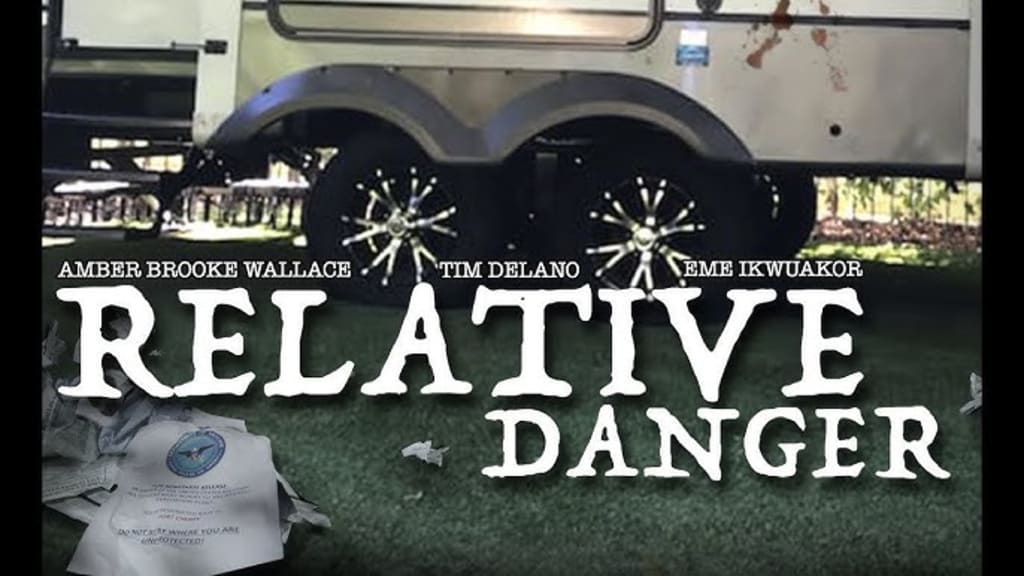
There are thrillers that grip you with action, and then there are those that hold you by the throat with emotion. Relative Danger, the 2025 neo-noir family thriller directed by Aisha Landon, falls firmly into the latter category. It’s not just a story about crime or betrayal — it’s a study in how love, guilt, and greed twist together until there’s no way out without blood on your hands.
The Plot: When Family Becomes the Enemy
The story centers on siblings Evan (played by Oscar Isaac) and Mara Holt (portrayed by Florence Pugh), who reunite after their estranged father, a once-notorious conman, dies under mysterious circumstances. At first, the reunion seems civil, even tender — until Evan discovers that their father’s death may have been staged as part of one final scam involving stolen government bonds and a missing accomplice.
When an enigmatic stranger (Mahershala Ali) arrives, claiming to have been their father’s partner, the siblings are pulled into a spiral of deception, violence, and buried childhood trauma.
As secrets unravel, Relative Danger transforms from a mystery into something far more unsettling: a meditation on how far we’ll go to protect the people who hurt us.
Performance: Pugh and Isaac Deliver Fire and Ice
Florence Pugh and Oscar Isaac are the heart and heat of Relative Danger. Their chemistry as estranged siblings crackles — at times tender, at times venomous. Pugh gives Mara a quiet ferocity; you can see years of emotional armor in her every glance. Her portrayal of grief laced with suspicion feels painfully human.
Isaac’s Evan, meanwhile, is a study in duality — a man trying to be moral but seduced by his father’s legacy of deceit. There’s an exhaustion in his eyes that speaks volumes; Isaac never overplays the role, making Evan’s slow descent into paranoia feel tragically inevitable.
Mahershala Ali’s performance as the mysterious “Mr. Cline” is masterful — all charm and menace. He’s the kind of antagonist who makes you want to trust him even as your gut screams no. His scenes with Isaac crackle with tension, each line layered with double meaning.
Direction: Aisha Landon’s Sharp Eye for Human Chaos
Director Aisha Landon, best known for her indie drama The Glass Line, brings her trademark empathy and precision to the thriller genre. Instead of relying on spectacle or high-octane chases, Landon builds tension through silence, glances, and moral ambiguity.
Each frame feels deliberate. The camera lingers just long enough on a twitch, a reflection, a lie caught mid-sentence. Landon knows that real danger doesn’t come from gunfire — it comes from what people are capable of when they’re desperate to be loved or forgiven.
Cinematography and Sound: Beauty Wrapped in Unease
Cinematographer Greta Zozula bathes the film in muted tones — stormy grays, deep shadows, the soft yellow of dying light. The visuals echo the emotional weather of the characters: beautiful but brittle, calm but hiding thunder.
There’s one unforgettable sequence in the third act, shot in a decaying lakeside cabin, where flickering candlelight and fractured reflections blur the line between truth and illusion. It’s pure visual poetry.
Composer Ryuichi Sakamoto’s final score, completed posthumously, haunts every scene. His minimalist piano themes, punctuated by distant strings and electronic undertones, give the movie an emotional gravity that lingers long after the credits.
Themes: The Lies We Inherit
What makes Relative Danger resonate isn’t just its suspense — it’s its insight. The film peels back the layers of family mythology to ask: can love survive betrayal? Can we escape the moral DNA of those who raised us?
Mara and Evan are mirror images — one trying to bury the past, the other obsessed with redeeming it. Their father, though dead, remains omnipresent, like a ghost whispering temptation through every decision they make. The film argues that family isn’t just blood — it’s a cycle of stories we keep rewriting until we either break or repeat them.
There’s also a sharp undercurrent of social commentary. Landon uses the crime plot as a metaphor for inheritance — not just of wealth or secrets, but of emotional damage. When Evan says, “You don’t get to choose the pieces of your past you keep,” it feels like a thesis statement for the entire film.
Tone and Structure: Noir Meets Psychological Drama
Relative Danger balances genres with remarkable finesse. It has the shadows and cynicism of classic noir but the emotional rawness of an indie drama. The dialogue is sharp yet natural, full of quiet barbs and unspoken truths.
The film’s pacing may challenge viewers expecting constant action — this is a slow burn that rewards patience. Each revelation deepens the emotional stakes rather than offering neat resolutions. By the final act, every character’s truth feels earned and devastating.
The ending, which I won’t spoil, is both inevitable and shocking. It’s one of those rare conclusions that make you sit in silence, questioning not just the characters’ choices but your own moral boundaries.
What Makes It Stand Out
In an era crowded with formulaic thrillers, Relative Danger dares to slow down and let its story breathe. It’s not about who pulls the trigger, but why. It’s about the danger of knowing someone too well — and realizing you might never have known them at all.
Aisha Landon crafts a thriller that’s as emotional as it is cerebral. She refuses to simplify her characters into heroes or villains, making the audience complicit in their choices. By the time the truth comes out, it doesn’t feel like revelation — it feels like confession.
Final Verdict: A Quietly Devastating Thriller
Relative Danger is one of those rare films that lingers. It doesn’t rely on explosions or chase scenes but on the implosion of trust. It’s beautifully acted, meticulously directed, and written with both intelligence and empathy.
Florence Pugh delivers one of her finest performances — restrained but shattering — while Oscar Isaac proves once again that he’s one of the most emotionally precise actors of his generation. Together, under Landon’s measured direction, they turn what could have been a simple family mystery into a tragic, unforgettable portrait of loyalty and loss.
About the Creator
Keep reading
More stories from James S Pope and writers in Geeks and other communities.
Exit Protocol 2025: A Haunting Glimpse into the Fragility of Control
There are films that entertain, and then there are films that linger — unsettling you long after the credits fade. Exit Protocol belongs firmly to the latter. Directed by Matthew Rankin and starring Naomi Watts, John Cho, and rising talent Kiara Morgan, Exit Protocol is a psychological techno-thriller that examines the perils of artificial intelligence, surveillance, and moral erosion in a digital world where data knows us better than we know ourselves.
By James S Pope4 months ago in Geeks
A Knight of the Seven Kingdoms Series Review (Season 1)
As one of the biggest properties in fantasy, A Song of Ice and Fire remains immensely popular with audiences. After reaching far into the past with House of the Dragon, a second spin-off was on the cards. A Knight of the Seven Kingdoms serves up a bite-sized slice of action and drama, but it still claims a spot among the best small-screen titles.
By Robert Cain7 days ago in Geeks
Review of 'Man on the Run'
My wife and I saw Man on the Run, a nearly 2-hour documentary on Amazon Prime, about Wings, Paul McCartney's group that flew around the world from shortly after The Beatles broke up in early 1970 to shortly after John Lennon was murdered at the end of 1980, making a Beatles reunion forever impossible.
By Paul Levinson6 days ago in Beat


Comments
There are no comments for this story
Be the first to respond and start the conversation.