
'Passing': A Blerd's Eye View
The Nella Larsen classic deserved a more experienced director


Remember when Taylor Swift basically took the music world by storm with her amazing banjo-picking rendition of Earth Wind and Fire’s R&B classic September a little over three years ago, prompting many in the Black community to praise Swift as a musical genius, dubbing her an honorary queen of soul, and even extending to her a lifetime invitation to the “cookout”?
Well, neither do I.
But I do remember that it didn’t take long for Black Twitter to unleash the “draggin’” once the cringeworthy track was released, vocally assaulting our ears with a slow-tempo hangover of a drone that can only come from white privilege and day drinking.
And I also remember thinking to myself that, of course, Taylor Swift being a multi-talented, award-winning musical artist probably felt she was more than qualified or simply entitled by virtue of her whiteness to cover any song of her choosing which is very much on-brand in an industry with a long and lucrative history of cultural appropriation.
It would seem that certain people have learned nothing from Jeff Goldblum’s character, Ian Malcolm, in Jurassic Park (1993) who said that just because white people can do something doesn’t always mean they SHOULD, especially white women who believe that Black people should somehow be honored by their often whimsical, joyless, unseasoned, and baffling interpretations of Black art and culture. And I’m paraphrasing, of course.
Because we’re not talking about a one-hit-wonder by a group of unknowns whose short-lived celebrity is eclipsed by the popularity of their once upon a time chart-topper that they’re not able to collect any royalties from because they didn’t read the fine print in their contract so they’re reduced to doing multiple side-hustles in an unforgiving gig economy that includes but is not limited to sex work on Craigslist. And I just made all that up but you get my point.
We’re talking about Rock and Roll Hall Of Fame legends whose songs are still considered bangers even in a more tech-savvy era of social media, viral videos, and the ominous specter of cancel culture.
So what does any of this have to do with the movie Passing (2021)?
Rebecca Hall is an English actress turned director who made her directorial debut earlier this year, adapting the 1929 Nella Larsen novella Passing to the big screen. Hall claimed she felt connected to the book’s precarious subject matter of Black women being able to pass as white in late 1920s New York.
It turns out that Hall’s grandfather who apparently was light-skinned enough to pass as white (I assume somewhere between retired baseball great Sammy Sosa and Rachel Dolezal) probably came to her in a “vision” — a lot like the same entitlement vision that inspired Swift — to make this film. And the rest, as they say, is history.
I will admit that Passing is aesthetically pleasing to look at with its lush monochromatic hues producing a sort of grim gray effect that nicely punctuates the theme of racial ambiguity evident throughout the film, as the two tragic mulattres’, Tessa Thompson (Irene Redfield) and Ruth Negga (Clare Bellew) are boxed in by the 4:3 aspect ratio giving the impression that there definitely are limits to the privilege their brighter skin tone affords them. And, although, both Thompson and Negga turn in superb performances their characters felt largely unexplored.
Passing the novella, which was published during the Harlem Renaissance, is the early seminal work by Nella Larsen that exemplifies the intersectionality of Black women before the term was even coined by Kimberlé Williams Crenshaw in 1989. But, unfortunately, in the hands of Rebecca Hall, Passing becomes a generic, unimaginative, cautionary tale in cautious storytelling. In other words, there’s more telling than showing which is indicative of an inexperienced first-time director unwilling or not skilled enough to take risks and give the level of importance to the source material that it so richly deserves.
Still, the overwhelming majority of critics on Rotten Tomatoes gave the movie positive reviews. But, then again, they’re probably mostly white people who thought Taylor Swift’s Milk of Magnesia version of September was “lit” or some other overused AAVE (African American Vernacular English) colloquialism that has gotten whitewashed over the years.
About the Creator
Ice Blerd Ben
I'm a writer with a BA in multimedia journalism and a Blerd who believes being a Black nerd is very cool. Coffee is my drug of choice and to squash all the rumors and gossip I"ve never dated Janet Jackson or Halle Berry at the same time.
Keep reading
More stories from Ice Blerd Ben and writers in Geeks and other communities.
'Only Murders In The Building': A Blerds Eye View
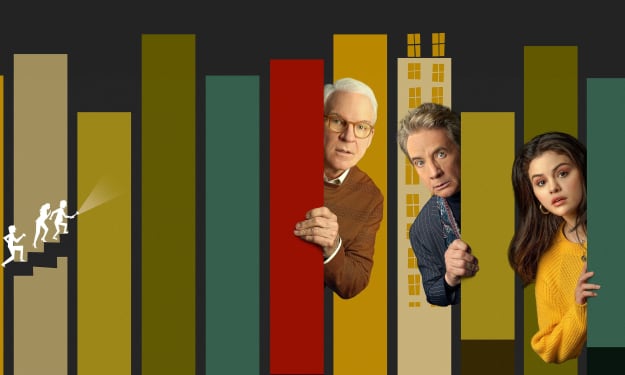
I find the real mystery surrounding the Hulu Original, star-studded whodunit, Only Murders In The Building (2021), is its 100% Tomatometer critic rating (that’s right, 100%) and the overwhelmingly positive audience reviews on Rotten Tomatoes.
By Ice Blerd Ben4 years ago in Geeks
The Rachels - 2025
Much to my surprise, I have kept a list of the films I‘ve seen this year. I daresay it isn’t complete. There will be films that snuck in on a late night in front of the TV that I would’ve forgotten to note. Or others, that I went to watch at the cinema, but then had a red wine and promptly forgotten about. But it’s not a bad approximation of the films I’ve seen this year. In total, there are 53 films listed, so an average of one a week and one for good luck.
By Rachel Robbins25 days ago in Geeks


Comments
There are no comments for this story
Be the first to respond and start the conversation.