
NY Philharmonic
Haydn, Schubert and Mozart.
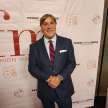

What was once The Avery Fisher Hall, now the Geffen Hall at Lincoln Center and inside the Wu Tsai Theater, we get a more modern, better acoustic room. Gone are the tuxedos and gowns, the philharmonic's musicians are clad in black and grey. What was traditional last night was the music: Haydn's Piano Concerto in D major, Schubert's Symphony in B minor (unfinished) and Mozart's Piano Concerto No. 20 in D minor,K. 466.
Lead by Sir Andras Schiff, the evenings first number which was Haydn's was the best piece of the evening. It's pulse was outstanding. With Schiff both playing the piano and conducting, something in of itself is quite remarkable. I felt that the orchestra was well connected during this performance; its energy and vibrancy was electric.
In Joseph Haydn we get a different sound than the other two musical writers. Foregoing the harpsichord for the pianoforte, Haydn was able to bring the piano and its sound into this piece. With the harpsichord, it would never have been as great; never would have tapped the depth that Haydn goes to in this piece.
It is in this piece that Schiff shows us his piano chops. His adaptation of this piece was spectacular and insightful. The audience was fixated on this piece throughout the hour-hour in which Schiff commanded the stage. Both playing and conducting, one was amazed at the talent of Schiff.
In Franz Schubert we get an unfinished work. Composed over 200 years ago, Schubert wrote out the first two movements in a manuscript. The music is romantic and provides a supreme lyrical sound. In the second movement, Schubert began a scherzo, but after nine measures the manuscript ends. In this piece, Schubert solely conducts. Here we get a full dose of the talented violinists and its backing sections.
In Wolfgang Amadeus Mozart, we get the Overture to Don Giovanni, K.527 Piano Concerto No.20 in D minor, K.466. Mozart here composed his first dramatic work at the age of 11- an intermezzo in Latin titled Apollo et Hyacin-thus- and opera would remain a central preoccupation until the last year of his life, when at the age of 35 he wrote The Magic Flute and La clemenza di Tito.
Mozart's depth in this piece is unparalleled as far as the genre and the psychological influence that Mozart put forth in this piece. Under piano, Schiff too delivers the piano brilliance that is required to make it successful. In conducting as well, the cello, oboes and the violins bring a deft blend making it remarkable. At times the piece slows to a lag, but, picks up towards the end in which they redeem the piece.
In the newly renovated Philharmonic you will find a very upbeat, cool spot. No cost was spared. The building now has more accessible comforts. Bars, sitting areas, big screens were well thought out. The rooms seats and sight lines are excellent and the sound has improved immensely. With easier ways to move about, it makes the experience at The Philharmonic at Lincoln Center even more enjoyable than when it was The Avery Fisher Hall.
I do not know how the schedule will unfold for the rest of the season. When I had my subscription years ago, the Philharmonic would have the first performance as traditional, more classical. The second act after the intermission was usually modern. The organization wanted to promote new works.Under music director Jaap van Zweden it is to be seen as to how she will go about promoting new works. The decision making is of utmost importance because the dedicated classic lover wants to heep it at that. Whether the audience will accept new works remains to be watched.
About the Creator
Robert M Massimi. ( Broadway Bob).
I have been writing on theater since 1982. A graduate from Manhattan College B.S. A member of Alpha Sigma Lambda, which recognizes excellence in both English and Science. I have produced 14 shows on and off Broadway. I've seen over700 shows
Keep reading
More stories from Robert M Massimi. ( Broadway Bob). and writers in Geeks and other communities.
Becomes A Woman.
"Becomes A Woman" by the Mint Theater Company is a deep by that is written by Betty Smith and was way ahead of its time.Playing an important role in the 1920s and 1930', Smith would go on to write 70 one-act and full-length drams. Her most famous work is "A Tree Grows in Brooklyn". "Becomes A Women" was written in 1931 and its nexus was exploring socially transgressive themes.
By Robert M Massimi. ( Broadway Bob).3 years ago in Geeks
The Politics of Playing Dress-Up
Well, to start off I'd like to say a happy world book day to all who celebrate. I know I haven't really posted anything on my socials about it but I'm not a jubilant kind of person. I lay low most of the time. Let's start off with a popular anecdote from the vaults...
By Annie Kapur5 days ago in Geeks
Paras Uncovered: The Mysterious Mushroom Pokémon That Holds Secrets of the Forest
Paras is one of the most fascinating Bug- and Grass-type Pokémon in the franchise, known for its unusual combination of attributes and hidden strengths. While often overlooked due to its small size and modest appearance, Paras demonstrates versatility, strategic potential, and a connection to its mysterious fungal symbiote that makes it a unique addition to any trainer’s team. Its evolution into Parasect enhances these traits, turning this tiny forest dweller into a powerful, tactical asset that can change the outcome of battles when used cleverly.
By Lukáš Hrdličkaabout 19 hours ago in Geeks



Comments
There are no comments for this story
Be the first to respond and start the conversation.