
Nope, You Have Not Seen These Movies Yet
OMG. That Movie you like has a Friend who’s Just as Hot (Maybe Hotter!)

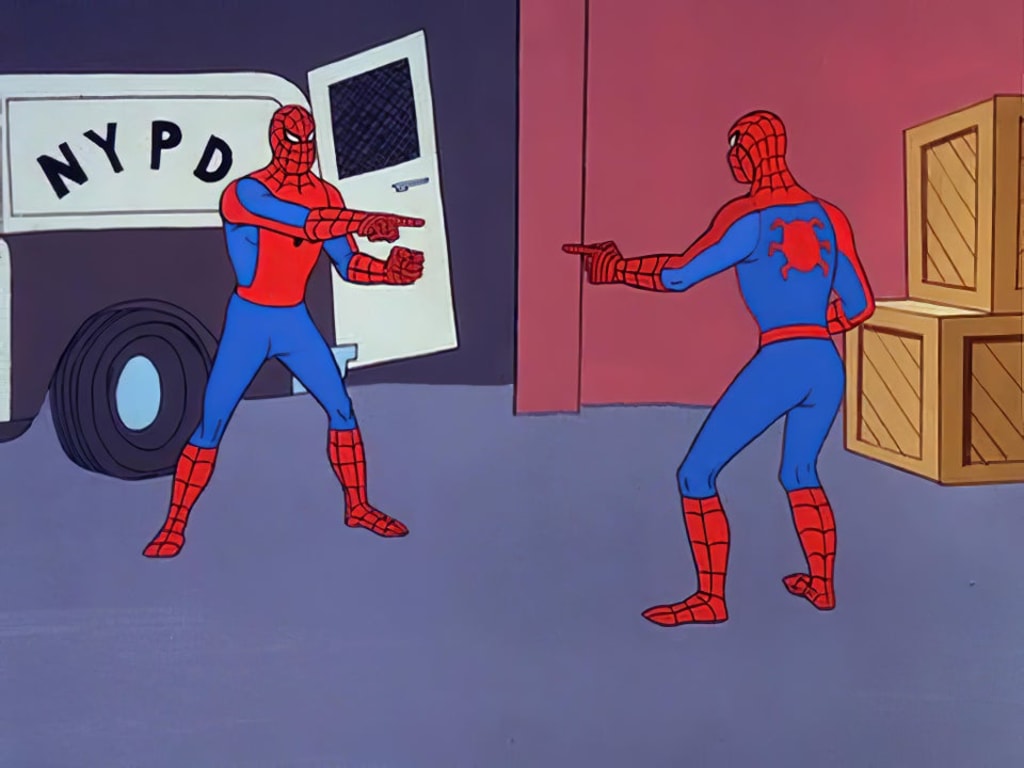
Yes, that subtitle is meant to read like a 2000s chick flick quote, but never mind that! Why should you ignore that? Because America has done itself justice when it comes to making original films in the romantic comedy AKA chick flick genre, but we’ll be talking about some movies that America did not do justice to, which you may not even know about.
“Was it good? I don’t know.”
- 45th President Donald Trump on Korean Film Parasite
Disclaimer: Before you skim this post and start to dislike me or feel uncomfortable about the fact that you might have a preference for American remakes of Asian films, no, I am not about to tell you that every American-remake movie you might like is inherently bad nor will I say that all of them are worse than the original Asian films that they are derived from. In fact, I will flat out tell you which ones I think are bad adaptations, which ones I think are good adaptations, and why. Just stick around!
Remember when America had its fan girl phase? A large portion of Americans these days love to make fun of the mostly young women and girls who love all things Korean entertainment and there used to be a time when anyone with an anime profile picture would be side-eyed, but we seem to forget that there was a time when America as a country was obsessed with all things Asian culture (we arguably still are). Martial arts films dominated movie theaters from the 70s to the early 2000s. In the 70s, young men and teenage boys all across America were running around with nunchucks as their light sticks, butchering Bruce Lee’s martial arts moves like me and some other K-Pop fans butcher Korean lyrics. The Karate Kid film series inspired many to try to learn the discipline after its popularity in the 80s, which I would say is much more of a commitment than the kid you knew that would Naruto run down the halls. Cobra Kai is still doing well on Netflix. To this day, adults in their 20s reminisce over their Teenage Mutant Ninja Turtles and Power Rangers days. Comics began including more martial arts and Asian characters during the 70s and 80s as well. Even in movies that were not meant to be focused on Asia, there was a tendency to use some aspect of Asian culture to explain things or make them more interesting. How else would we have explained the existence of the Mogwai? How else could we have made the villain and conflict in Indian Jones and the Temple of Doom interesting? Many popular movie series dipped their toes into Asian culture at some point or another (i.e. Fast and Furious: Tokyo Drift, The Wolverine, Kong: Skull Island, The Dark Knight Rises, Doctor Strange, The Matrix, etc.). So yeah, America and Asia have been somewhat collaborative in the entertainment industry for some time now.
So, why did I just expose America’s fan girl phase? Because many Americans seem to have a weird stigma against watching movies if they are not American-made or that do not have English speakers in them. Moviemakers have keyed in on the unspoken demand for perfectly good Korean movies like Train to Busan and Parasite to be remade with American actors. Audiences may not be yelling “I won’t watch this until it’s in English!” from the rooftops, but Hollywood is still getting the message loud and clear.
My Formula: If you find that you like an American movie that is based off of or similar to a critically acclaimed foreign movie, check the foreign movie out too.
Remakes
Alright, let’s start with the obvious: horror movies. The Grudge and The Ring are two of the most culturally relevant movie in the horror movie genre. The originals and subsequent remakes of these movies played a huge role in the popularity of Japanese horror movies internationally. Both movies can be found referenced and parodied everywhere since their debuts. However, because of cultural differences in how we produce horror films here in the US versus how the Japanese structure their horror films, in many cases, the way in which the audience is impacted and/or scared is completely different. American horror films place a lot of emphasis on shock and special effects. Japanese horror films seem to seek to make their audiences uncomfortable and to have a more prolonged effect of disturbance on the viewer. The remake of Ringu made changes to the plot that served a purpose and ultimately helped the movie appeal more to an American audience. For the Ring movies, there is a lot of debate about whether the Japanese movies or the remakes are better. But, more importantly, regardless of whether you prefer to be unsettled by a horrific atmosphere or to be jump scared during your horror movie experience, both Ring movies provide two different experiences for the viewer. This is a case where both films are worth watching. Unlike the Thai movie Shutter (2004), which had a remake by the same name released in 2008. The original managed to be unique and scary while the other ended up a joke because of differences in cinematography, directing, and actor performance. The Kairo (2001) remake, Pulse (2006), is a case where the original film loses all of its meaning and depth when remade into a basic American slasher film (and not a good one).
Another example of a quality remake is 2006 movie The Departed, a remake of 2002 Hong Kong movie Infernal Affairs; watch both! The basic plot points are the same, but the presentation of events and characters make the movies different. The Hunger Games (2012) may not be a direct or intentional remake of Battle Royale (2000), but there were so many similarities between the two that Suzanne Collins had to state several times that she did not plagiarize Koushun Takami’s work. Anyone who has not seen both films because they believe they’ve already seen one if they’ve seen the other is doing a great disservice to themselves. The movies are so alike, but also so different. Once again, cultural differences show up in the writing of the books as well as the execution of scenes in the movie. I won’t give you the full synopsis, but the biggest difference is that The Hunger Games is a social commentary on capitalism, socioeconomics and consumerism; Battle Royale is social commentary on generational differences, oppressive governments, and human nature. Film-wise, The Hunger Games offers a more serious experience because of superior special effects and more realistic actor performances, but if you take away the comical manners of death in Battle Royale, you will find that it is actually grimmer.
There are a lot more cases of remakes getting destroyed in translation. Just look at the American live-action anime adaptations Death Note (2017) and Dragonball: Evolution (2009), where the original Japanese characters are unrecognizable. On the other hand, The Grudge changes little more than the race and language of characters from the original Ju-On. Remakes like this, where almost nothing is changed, make me question the purpose of the remake. Not only are copy-paste remakes unnecessary, but they also do not benefit the original creators as much as they should a lot of the time. For example, The Grudge (2004) did little more than take potential viewers from the original. It did not enhance the source material and came off as just a less impressive version of itself, even with the original director helping with its reproduction. At least with Godzilla’s American debut, the monster was so popularized that both Japan and America have been able to continue to profit from the movies to this day. To conclude, there has been talk of both a Train to Busan (2016) remake and a Parasite (2019) remake. Both of these movies became widely successful on their own. Let’s just hope that the remakes actually serve to add something new to the movies other than popular American actor faces and the English language.
“Once you overcome the 1-inch tall barrier of subtitles, you will be introduced to so many more amazing films.”
- Bong Joon Ho, Director of Parasite
About the Creator
Tiannah Steele
Hi Vocal Community! I am 23 years old and I enjoy reading books and short stories in the fantasy genre. I am inspired by fantasy books, movies, video games, anime, and TV shows and I hope to make some fantasy content of my own some day.
Keep reading
More stories from Tiannah Steele and writers in Geeks and other communities.
The Unambitious Social Climber
I am an unambitious social climber. I have no real desire to achieve anything, and I never have. Yet, things always line up in my favor. An opportunity I did not ask for comes to me, offering a clear path to having more. And then, for no reason at all because I do not desire anything, I put in the bare minimum effort that the opportunity requires of me to get more.
By Tiannah Steele5 years ago in Humans
Not Just For Clean Up: A History Of The MCU's Department of Damage Control
Initially an organisation that seemed to exist to help the heroes of the Marvel Cinematic Universe, from Phase Four onwards, the Department of Damage Control has shifted into a more antagonistic role. Most recently seen in the Wonder Man series, the current incarnation of Damage Control seems to target superpowered individuals, regardless of whether that person poses an active or intentional threat.
By Kristy Andersona day ago in Geeks
"Knock, Knock," A Common Thread Theatre Company Presents "Fun Home"
Do you feel my heart saying ‘hi?’ A Common Thread Theatre Company opens the doors to its production of “Fun Home,” a Tony Award-winning musical based on Alison Bechdel’s graphic memoir. The story centers on Alison, a lesbian woman, recalling memories of the past to help her understand her complicated relationship with her closeted gay father, Bruce.
By Marielle Sabbag4 days ago in Geeks
One Unchecked Box
"Republished" because it was the only way to add the embed for the newly recorded audio version of this story due to the Top Story badge. Plus it serves as a nice, informal announcement of the podcast's revival for another season (go subscribe!):
By Stephen A. Roddewig6 days ago in Fiction



Comments
There are no comments for this story
Be the first to respond and start the conversation.