
MUTINY AND MAYHEM: UNRAVELING THE LEGACY OF X-MEN: THE LAST STAND
"X-Men: The Last Stand," released in 2006, stands as a pivotal, albeit controversial, chapter in the X-Men film franchise.

Introduction:
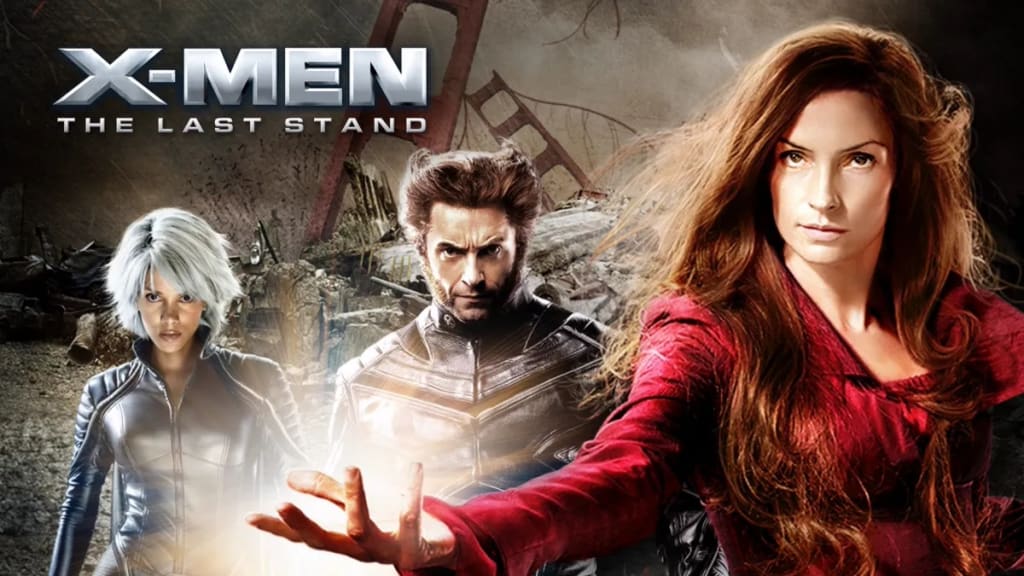
"X-Men: The Last Stand," released in 2006, stands as a pivotal, albeit controversial, chapter in the X-Men film franchise. Serving as the conclusion to the original trilogy, it promised a climactic showdown between the mutant heroes and a burgeoning threat that challenged the very foundations of their existence. Set against the backdrop of a world grappling with mutant integration and fear, the film tackles complex themes of choice, identity, and the price of peace. While it generated significant box office success, its departure from the source material and its handling of key characters sparked intense debate among fans and critics alike, making it a landmark film that continues to be dissected and discussed years later.
Plot:
The storyline of "X-Men: The Last Stand" weaves together two primary narrative threads. The first revolves around the discovery of a "cure" for the mutant gene, developed by Worthington Labs. This cure ignites a schism within the mutant community, dividing those who yearn for normalcy from those who embrace their powers and fear persecution. Magneto, ever the advocate for mutant superiority, rallies his Brotherhood to oppose the cure, leading to a series of escalating conflicts with the X-Men.
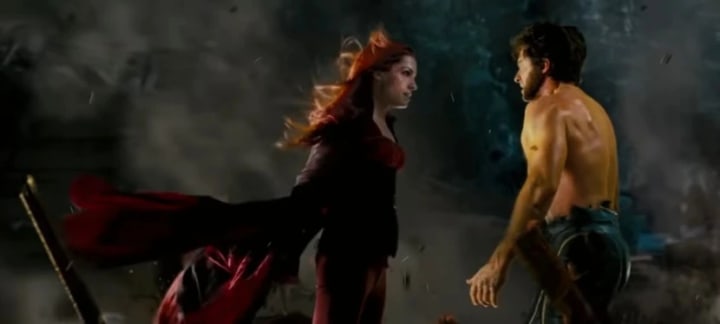
The second, and perhaps more impactful, narrative arc centers on Jean Grey. Resurrected after her apparent death in "X2: X-Men United," Jean returns as the immensely powerful and unstable Phoenix. The Phoenix persona represents Jean's darker, unrestrained side, a force of unimaginable destruction that threatens both mutants and humanity. As Jean struggles to control the Phoenix, the X-Men find themselves torn between saving their friend and stopping a potential apocalypse.
The film builds towards a massive confrontation at Alcatraz Island, where Worthington Labs plans to mass-produce the cure. Magneto and his Brotherhood launch a full-scale assault, leading to a brutal battle against the X-Men and the military. During the chaos, the Phoenix unleashes her full power, devastating the island and killing several prominent characters, including Cyclops and Professor X. Wolverine, forced to make an agonizing choice, ultimately uses his claws to subdue and seemingly kill Jean, preventing further destruction. The film concludes with a series of ambiguous scenes, hinting at Magneto's diminished but lingering powers and the possible survival of Professor X in a comatose patient. The narrative style, while action-packed and visually impressive, was criticized for its rushed pacing and its deviation from the established lore of the comics. Key twists, like the early and sudden death of Cyclops, were particularly controversial.
Cast:
The cast of "X-Men: The Last Stand" boasts a formidable ensemble of talent. Hugh Jackman reprises his iconic role as Wolverine, delivering his trademark blend of ferocity and vulnerability. Patrick Stewart returns as Professor X, portraying his unwavering belief in mutant-human coexistence, even in the face of growing hostility. Ian McKellen once again embodies Magneto, capturing the character's charisma and conviction, even as he descends further into extremism. Halle Berry returns as Storm, showcasing her weather-manipulating powers with impressive visual flair.
Famke Janssen takes on the challenging role of Jean Grey/Phoenix, portraying the character's internal struggle with palpable intensity. Her performance is a highlight, capturing the duality of Jean's personality and the sheer force of the Phoenix's power. James Marsden, as Cyclops, has a significantly reduced role, but his presence is still felt, particularly in the early scenes.
Among the new additions to the cast, Kelsey Grammer shines as Dr. Hank McCoy/Beast, bringing both intellectual gravitas and physical prowess to the character. Ben Foster plays Warren Worthington III/Angel, a mutant with feathered wings, adding a visually stunning element to the film. Ellen Page portrays Kitty Pryde/Shadowcat, showcasing her phasing abilities in several exciting action sequences. Vinnie Jones, as Juggernaut, delivers a memorable, albeit brief, performance with his imposing physique and destructive power. While the cast members generally delivered strong performances, some critics felt that certain characters, particularly those introduced in this installment, were underdeveloped and lacked sufficient screen time.
Reviews:
"X-Men: The Last Stand" received mixed reviews from critics and audiences. While praised for its action sequences and visual effects, the film was criticized for its convoluted plot, its handling of key characters, and its deviation from the source material.
Positive reviews often highlighted the film's spectacle and its exploration of complex themes. Many praised the performances of Jackman, McKellen, and Janssen, noting their ability to bring depth and nuance to their respective characters. However, negative reviews focused on the film's narrative flaws, its rushed pacing, and its perceived disrespect for the established X-Men lore. Critics argued that the film attempted to cram too many storylines into a single movie, resulting in a disjointed and unsatisfying experience.
Audience reception mirrored the critical response, with many fans expressing disappointment with the film's handling of beloved characters and storylines. The death of Cyclops, in particular, sparked outrage among fans, who felt that the character was unfairly sidelined. Despite its mixed reception, "X-Men: The Last Stand" remains a significant entry in the X-Men film franchise, sparking ongoing debates about its merits and shortcomings.
Production:
The production of "X-Men: The Last Stand" was plagued by challenges and changes. Bryan Singer, who directed the first two X-Men films, initially intended to return for the third installment. However, he ultimately chose to direct "Superman Returns" instead, leaving the director's chair vacant. 20th Century Fox then hired Matthew Vaughn to direct, but he also left due to creative differences. Finally, Brett Ratner was brought on board to direct, with only a year remaining before the scheduled release date. This rushed production schedule significantly impacted the film's development and execution.
The film's financing came primarily from 20th Century Fox, with a budget of approximately $210 million, making it one of the most expensive films of its time. The production involved extensive location shooting in Vancouver, British Columbia, as well as significant soundstage work.
Writing and Casting:
The screenplay for "X-Men: The Last Stand" underwent numerous revisions and rewrites. Simon Kinberg and Zak Penn were initially hired to write the script, but their work was heavily modified by Brett Ratner upon his arrival. The final script drew inspiration from two prominent X-Men comic book storylines: "The Dark Phoenix Saga" and "Gifted." However, the film significantly altered key elements of both storylines, resulting in a narrative that diverged considerably from the source material.
The casting process involved the return of most of the original cast members, as well as the addition of several new actors. Kelsey Grammer's casting as Beast was particularly well-received, as many fans felt that he perfectly embodied the character's intelligence and physicality. The casting of Ellen Page as Kitty Pryde also generated excitement, as she was seen as a rising star in Hollywood. However, some fans expressed disappointment with the limited screen time given to certain new characters, such as Angel and Juggernaut.
Principal Photography:
Principal photography for "X-Men: The Last Stand" began in Vancouver in August 2005 and lasted approximately seven months. The filming process was reportedly challenging, due to the rushed schedule and the large number of actors and special effects involved. There were reported creative differences between Ratner and some of the cast members, particularly Famke Janssen, regarding the portrayal of Jean Grey/Phoenix.
Despite the challenges, there were also moments of levity on set. One anecdote involves Hugh Jackman accidentally injuring a cameraman while filming a fight scene. Jackman reportedly felt terrible about the incident and apologized profusely. Another humorous incident involved Vinnie Jones, who had difficulty fitting into his Juggernaut costume due to his muscular physique. The crew reportedly had to make several modifications to the costume to accommodate his size.
Production Design:
The production design of "X-Men: The Last Stand" aimed to create a visually impressive and believable world for the mutant characters. The set design featured a mix of futuristic technology and real-world locations, reflecting the film's themes of mutant integration and social conflict. Worthington Labs was designed as a sleek, modern facility, while Magneto's Brotherhood headquarters was depicted as a more gritty and industrial environment.
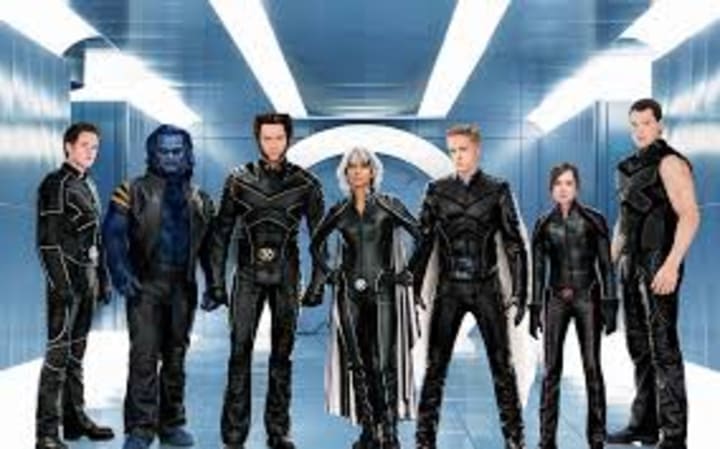
The costumes for the X-Men were updated from the previous films, featuring more streamlined and functional designs. The costumes for the new characters, such as Beast and Angel, were particularly noteworthy, showcasing their unique mutant abilities. The visual aesthetics of the film were generally well-received, with critics praising the attention to detail and the overall sense of realism.
Sound Design & Music:
The sound design of "X-Men: The Last Stand" played a crucial role in creating the film's immersive and action-packed atmosphere. The sound effects were particularly effective in conveying the power of the mutant abilities, such as Storm's weather manipulation and the Phoenix's telekinetic powers. The use of sound was also instrumental in building tension and suspense during the film's many action sequences.
The musical score for "X-Men: The Last Stand" was composed by John Powell, who replaced John Ottman from the second film. Powell's score blended orchestral elements with electronic music, creating a dynamic and exciting soundscape. While some critics felt that the score was less memorable than Ottman's work on "X2," it was generally praised for its effectiveness in enhancing the film's emotional impact.
Visual Effects:
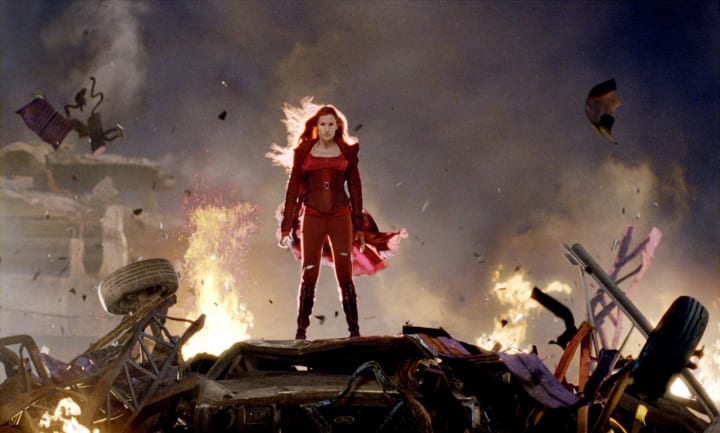
The visual effects in "X-Men: The Last Stand" were among the most impressive of their time. The film featured a wide range of visual effects, from the realistic depiction of mutant abilities to the creation of large-scale environments and explosions. The visual effects team worked closely with the actors and the stunt crew to create seamless and believable action sequences.
One of the most visually stunning effects in the film was the portrayal of the Phoenix's powers. The filmmakers used a combination of computer-generated imagery and practical effects to create a swirling vortex of energy that surrounded Jean Grey. The visual effects were also used to create the massive destruction caused by the Phoenix, including the devastation of Alcatraz Island.
Influences:
"X-Men: The Last Stand" drew inspiration from a variety of sources, including the "Dark Phoenix Saga" and "Gifted" storylines from the X-Men comic books. The film also incorporated elements from other cinematic and literary works, such as "Frankenstein" and "Dr. Jekyll and Mr. Hyde," exploring themes of identity, transformation, and the duality of human nature.
The film's exploration of mutant rights and social prejudice also reflected real-world issues, such as the civil rights movement and the ongoing debate over equality and tolerance. The filmmakers aimed to use the X-Men characters as a metaphor for marginalized groups, highlighting the importance of acceptance and understanding.
Scientific Knowledge :
The film incorporates some scientific elements, though often fictionalized for dramatic effect. The concept of the "mutant gene" is a simplified take on genetics and evolution. The "cure" for the mutant gene, while presented as a scientific breakthrough, raises ethical questions about genetic manipulation and the acceptance of diversity. The Phoenix's immense power can be interpreted as a metaphor for untapped human potential, but its scientific basis is largely speculative. The film does not delve deeply into the scientific details, focusing instead on the social and ethical implications of its fictional technologies.
Marketing, Release & Box Office:
The marketing campaign for "X-Men: The Last Stand" was extensive and multifaceted. 20th Century Fox launched a massive promotional blitz, including trailers, television commercials, posters, and online advertising. The studio also partnered with various brands to create tie-in merchandise, such as action figures, video games, and clothing.
The film was released in theaters worldwide on May 26, 2006. It opened at number one at the box office, grossing over $100 million in its opening weekend. "X-Men: The Last Stand" ultimately grossed over $459 million worldwide, making it one of the highest-grossing films of the year. While a commercial success, its box office performance fell short of expectations, given the high budget and the popularity of the X-Men franchise.
Critical Responses:
Overall, "X-Men: The Last Stand" received mixed to negative reviews from critics and a divided response from audiences. Critics often cited the rushed plot, character inconsistencies, and deviation from source material as key weaknesses. However, the movie was praised for its visual effects, action sequences, and the performances of certain actors, particularly Hugh Jackman, Ian McKellen, and Famke Janssen. Audiences were similarly divided, with many expressing disappointment over the treatment of beloved characters and storylines, while others appreciated the film's spectacle and themes. Despite its commercial success, "X-Men: The Last Stand" remains a controversial entry in the franchise, debated among fans for its impact on the X-Men cinematic universe. Its ending dramatically altered the landscape of the series, influencing subsequent films and prompting a timeline reset in "X-Men: Days of Future Past." The film serves as a cautionary tale about the challenges of adapting complex storylines and the importance of honoring the source material.
About the Creator
Xavier
Global news reporter covering science, tech, environment, Entertainment & sports. Delivering balanced insights to inform and inspire readers worldwide. Sometimes a poet.
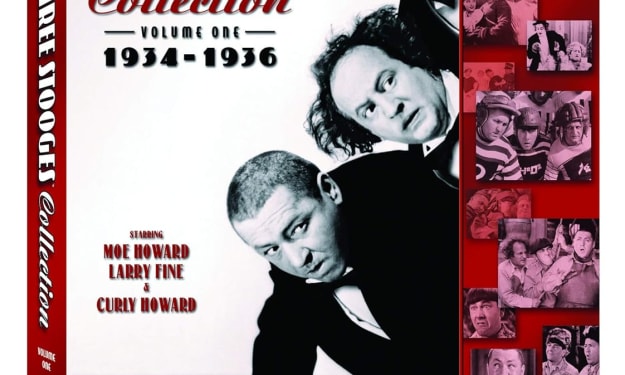
History of The Three Stooges (Part I: The Beginnings and Columbia Pictures - 1920s-1936)
I have been itching to write about The Three Stooges on Vocal for close to two years, but I couldn't figure out how to do it. I wanted to do it by third Stooge, but that's a bit complicated. I know this much. I was about eight or nine years old when I first saw The Three Stooges. I remember one of my local channels had the Stooges on for hours, and I tried my damnedest to be up for those shorts. I remember that the Family Channel actually had an hour of the Stooges on from 11PM to midnight, and it was the entire library on during that time.
By Clyde E. Dawkins4 days ago in Geeks
Global Conflicts in 2026: A Deep Dive into Yemen, Russia-Ukraine, and Beyond
The world is currently facing several serious conflicts, including the war in Yemen and the ongoing war between Russia and Ukraine. As 2026 unfolds, the world continues to grapple with several protracted and escalating conflicts that are reshaping international relations, humanitarian priorities, and global economics. Among the most critical are the ongoing wars in Yemen and Ukraine, each with its unique dynamics, and other regional conflicts that collectively paint a troubling picture of global instability.
By shaoor afridi2 days ago in Geeks


Comments
There are no comments for this story
Be the first to respond and start the conversation.