
Movie Review: Tha Rae: The Exorcist – Faith, Folklore, and Family Drama in Taweewat Wantha’s Chilling Thai Horror
Tha Rae: The Exorcist (2025), directed by Taweewat Wantha and starring Jirayu Tangsrisuk, Phiravich Attachitsataporn, Nichaphat Chatchaipholrat, and Thaneth Warakulnukroh, blends Thai folklore, Catholic ritual, and family drama into a chilling, thoughtful horror film that lingers long after the credits.

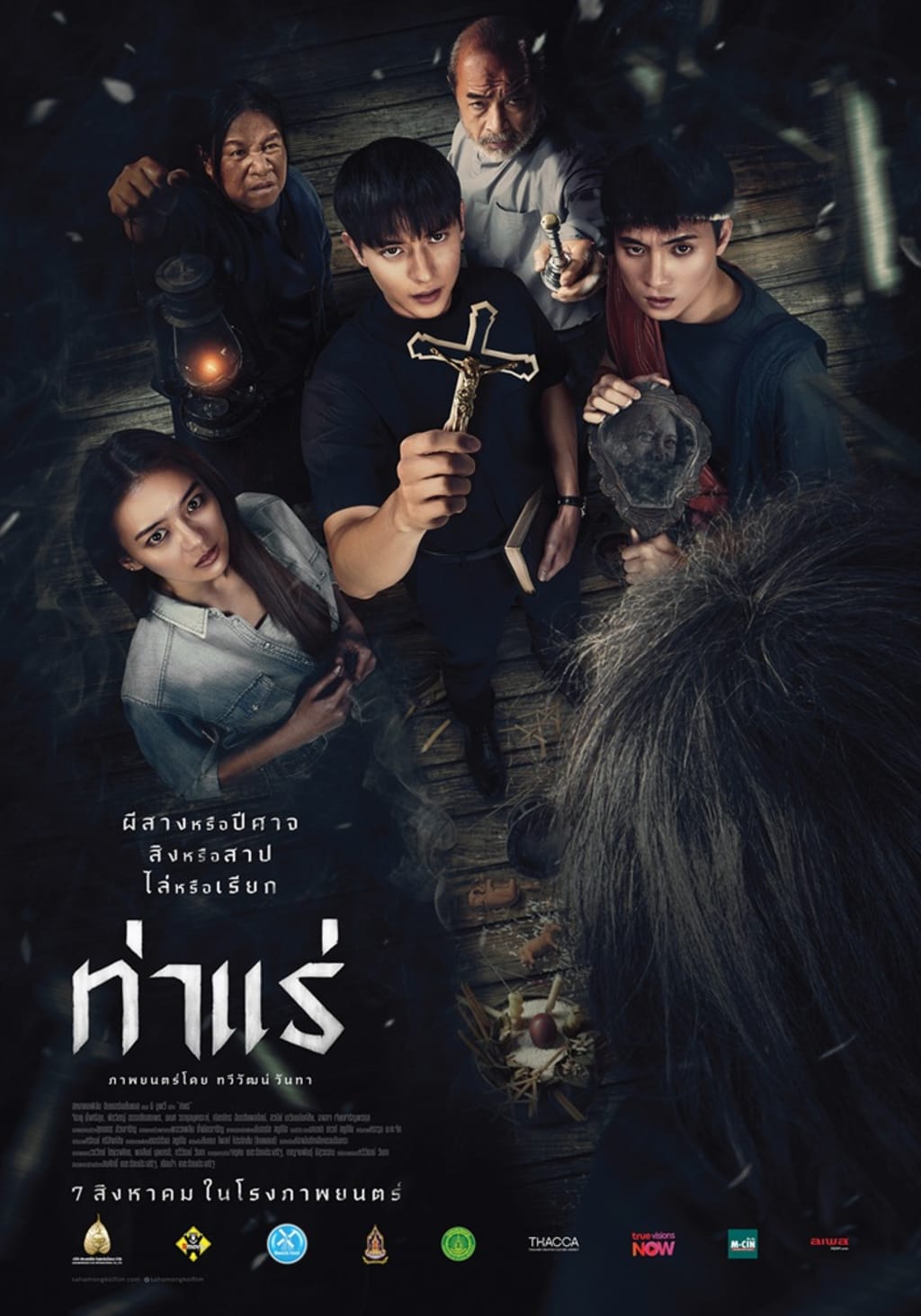
Tha Rae: The Exorcist (2025), directed by Taweewat Wantha, is a Thai horror film that skillfully blends folklore, faith, and family drama against the backdrop of Tha Rae, a village in Sakhon Nakhon, and home to the largest Catholic community in Thailand. Leading the cast are Jirayu Tangsrisuk as Father Paolo, the determined exorcist called in from Bangkok; Phiravich Attachitsataporn as Sopha, the male Yao who channels ancestral spirits and livestreams his rituals; Nichaphat Chatchaipholrat as Malee, Ming’s estranged daughter drawn back into her family’s dark secrets; and Thaneth Warakulnukroh as Old Ming, the patriarch whose past decisions and encounters with the supernatural set the story in motion. Supporting them is Sawanee Utoomma as Aunt Seng, the sister-in-law whose own history intertwines with the family’s haunting.

I first watched Tha Rae on its opening day, August 7, and found it so compelling that I returned on August 27 to see it a second time. Both screenings deepened my appreciation for how the film handles its supernatural elements, blending modern social media, ancestral rituals, and familial drama into a cohesive whole.
The film stands out not just for its chilling visuals, but for how it intertwines belief, inheritance, and survival. Social media becomes an unlikely conduit for the supernatural, as news of the phob (cannibalistic spirit in Thai lore) spreads through Facebook posts and TikTok clips. The story hints that the same demon that haunted Aunt Seng’s daughter 40 years ago may have resurfaced, now possessing both Ming and Malee. The result is a horror film grounded in lived tradition while still delivering clever, modern scares—a tale that lingers long after the credits roll. Unlike The Exorcist: Believer (2023), which flattens cross-cultural ritual into spectacle, or the wildly popular The Conjuring franchise, which mythologizes the exploits of Ed and Lorraine Warren, Tha Rae treats exorcism as a living, complex tradition inseparable from the community that sustains it.
Cultural Context and Thematic Depth
When I was in third grade, there were rumors at school about a ghost haunting a fifth grader. Priests came to bless our classrooms, and even if what happened was probably just a case of stress or mental breakdown, the rituals gave us a sense of safety. Watching Tha Rae brought those memories back — that feeling that rituals, whether Catholic or animist, hold power not just spiritually but emotionally. What drew me to Tha Rae: The Exorcist was deeply personal; as a Filipino cradle Catholic, I’ve long been fascinated by how Catholic practices coexist with folk beliefs across Southeast Asia. In the Philippines, Catholicism dominates, but folk healers like the albularyo or babaylan persist in rural communities. Seeing how Catholic rituals and animist practices remain active and respected in Thailand, especially in Sakon Nakhon’s Tha Rae village, was both familiar and striking. Spirit houses, ancestral mirrors, and offerings are not symbolic relics; they are living tools, part of a vibrant belief system where the unseen world interacts with daily life.
This approach contrasts sharply with Hollywood horror about demonic possession, such as the recent The Exorcist reboot (2023) or the upcoming final installment of The Conjuring franchise. In these films, spiritual enemies are clearly classified: demons, fallen angels, and other identifiable entities with fixed hierarchies. Thailand, by contrast, categorizes all supernatural forces simply as “ghosts.” This broad umbrella allows ghosts to interact, even fight one another, which explains why Yao like Sopha call upon ancestral spirits to assist in exorcisms. The system is flexible, culturally embedded, and rooted in centuries of animist practice—yet it coexists seamlessly alongside Catholic rituals, showing a layered understanding of faith and power that Hollywood rarely explores.
Faith, Tradition, and Family at the Heart of the Horror
Each character in Tha Rae: The Exorcist embodies a unique approach to faith and tradition, creating a story where religion is never abstract but lived, flawed, and deeply human.

Father Paolo (Jirayu Tangsrisuk) represents the authority of Catholic ritual. Summoned from Bangkok, he wields prayers and clerical training with authority, but his resolve is undercut by guilt and doubt. His character reminds us that official institutions of faith may look unshakable, yet they, too, are vulnerable to human weakness.
Sopha (Phiravich Attachitsataporn), the male Yao, approaches possession from the opposite direction—through animist practice inherited from his grandmother. His exorcisms are not cloistered but shared with the world, livestreamed to a digital audience. In him, tradition adapts to modernity, creating a strange new blend of ancestral wisdom and online spectacle.

Malee (Nichaphat Chatchaipholrat) serves as the emotional center, torn between skepticism and obligation. Estranged from her father and doubtful of ritual, she embodies the push and pull between inherited beliefs and personal disillusionment. Her journey reveals how fear, family obligations, and cultural memory intersect, turning possession into a metaphor not just for supernatural danger, but for estrangement and the consequences of ignoring one’s heritage.
At the heart of the curse stands Old Ming (Thaneth Warakulnukroh), whose past mistakes ignite the family’s suffering. Once a priest, now a cautionary figure, Ming shows how neglected duties and buried guilt leave lasting marks across generations. He embodies the porous boundary between the spiritual and the human—where sin, neglect, and legacy blur into haunting.
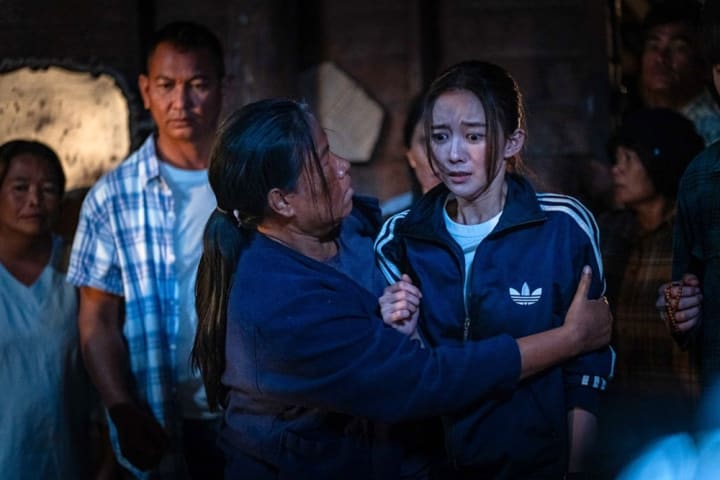
Even villainous characters, like Aunt Seng (Sawanee Utoomma), add texture to this web of belief. Her role emphasizes kinship, showing how one person’s failings ripple outward through family and community.
Together, these threads create a story that is less about good versus evil than about how belief, in its many forms, collides and coexists. Tha Rae: The Exorcist suggests that no single tradition holds all the answers; instead, strength comes from acknowledging vulnerability, reckoning with heritage, and finding unexpected connections between faiths.
What’s Next for the Ghostbusting Avengers?
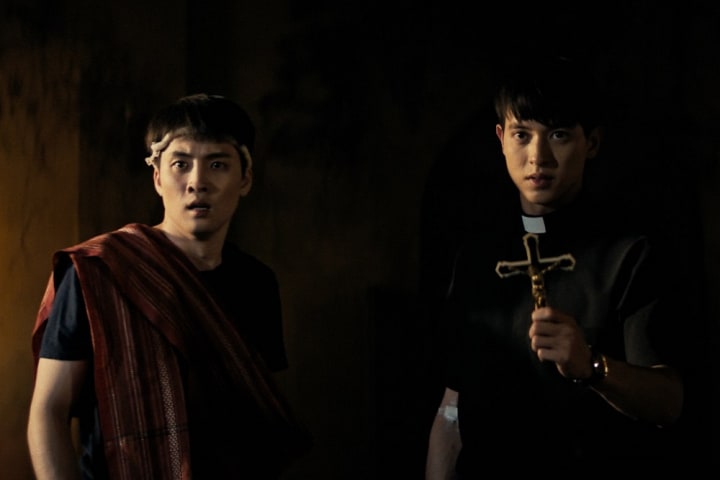
By the film’s end, Tha Rae: The Exorcist reaches for something beyond ritual or spectacle. Its battles with ghosts, and the dependence on guides both ancestral and divine, point to a larger truth: clarity and courage can also be drawn from within. Even stripped of outside forces, we may act as our own compass, carrying a true north that steadies us against fear. Paolo and Sopha’s joint exorcism already plays less like a clash of traditions than a supernatural alliance—more Avengers than adversaries. And the unresolved fate of Old Ming and Malee, whether they can ever sever themselves from their haunting roots, keeps the story balanced on a knife-edge between resolution and dread. This openness feels deliberate, a quiet invitation to imagine a sequel without diminishing the completeness of what we’ve already witnessed.
All the main and supporting characters are portrayed with remarkable nuance. You can feel their emotional pain as vividly as their terror, making each performance a delight to watch. Director Taweewat Wantha and the writing team craft a story that is layered and witty. The film never lays everything bare for the viewer; it challenges us to think, speculate, and engage with the narrative on multiple levels.
What ultimately sets Tha Rae: The Exorcist apart is its reverence. Where Western horror often casts folk traditions as sinister—The Conjuring, The Exorcist, Insidious—this film refuses to demonize them. Instead, it frames Catholicism, animism, and ancestral belief not as rivals but as complementary forces in the fight against darkness. No single framework is privileged. Survival, the film suggests, lies in recognition, respect, and collaboration across traditions. That balance makes it more than an effective horror movie. It becomes a cultural statement, one that lingers as powerfully as its scares.
Five out five stars.
Tha Rae: The Exorcist is currently showing in cinemas and is slated for release in select countries.
About the Creator
Karina Thyra
Fangirl of sorts.
Twitter: @ArianaGsparks
Reader insights
Outstanding
Excellent work. Looking forward to reading more!
Top insights
Compelling and original writing
Creative use of language & vocab
Easy to read and follow
Well-structured & engaging content
Excellent storytelling
Original narrative & well developed characters
Expert insights and opinions
Arguments were carefully researched and presented
Eye opening
Niche topic & fresh perspectives
Heartfelt and relatable
The story invoked strong personal emotions
Masterful proofreading
Zero grammar & spelling mistakes
On-point and relevant
Writing reflected the title & theme
Keep reading
More stories from Karina Thyra and writers in Geeks and other communities.
Elle Woods and the Realities of Justice: Why Legally Blonde Still Matters
This evening, as we prepare for our internships in different places, I found myself watching Legally Blonde (and Legally Bonde 2!) with my friends. As an elder Gen Z, I feel it’s my responsibility to introduce them to the best chick flicks of 2004. My friends, who come from Myanmar, have often remarked on how this movie, released in 2001, still feels so fresh and relevant. They’ve noted how impressive the technology looks compared to films they’ve seen, perhaps because they haven’t experienced many Hollywood productions; Asia has its own thriving film industry and beloved favorites.
By Karina Thyraabout a year ago in Geeks
The Rachels - 2025
Much to my surprise, I have kept a list of the films I‘ve seen this year. I daresay it isn’t complete. There will be films that snuck in on a late night in front of the TV that I would’ve forgotten to note. Or others, that I went to watch at the cinema, but then had a red wine and promptly forgotten about. But it’s not a bad approximation of the films I’ve seen this year. In total, there are 53 films listed, so an average of one a week and one for good luck.
By Rachel Robbins15 days ago in Geeks
Allu Arjun teams up with Lokesh Kanagaraj for mega-budget film starting in 2026
Allu Arjun has reportedly joined forces with director Lokesh Kanagaraj for a new mega-budget film, which will begin production in Hyderabad in October 2026. This collaboration comes after Lokesh Kanagaraj's Coolie and follows detailed discussions between the actor and the director in Hyderabad, where the script was finalised.
By Dena Falken Esq3 days ago in Geeks
If You Love Me, You'll Do It
I met Jason when I was five years old. I could say that I loved him from the moment I saw him. He was so handsome to me and I felt in awe by his presence. When they introduced him as the new kid in school, I wanted to be his friend right away. I remember it like it was yesterday. I remember his smile and how he didn't seem shy. He appeared confident and ready to learn. I waved at him and said "hello," before anyone else could even say a word. He sat next to me, and I asked him if he wanted to be friends. He looked so happy as he said, "Yes!"
By Sidney Smith (Sid Smith)6 days ago in Fiction



Comments (6)
That's really impressive, I like how you describe the delicate detail about the movie and also sharing your own aspects, this review makes me want to watch this movie!!
Excellent review and a wonderful overview of the distinctive qualities of Thai horror. I’ll need to watch!
"Priests came to bless our classrooms, and even if what happened was probably just a case of stress or mental breakdown, the rituals gave us a sense of safety" this part justifies more how we always incorporate everything happened to us in our beliefs
Ahhh, I don’t know who’s cuter: the priest or the yao! 😂 absolutely loved the breakdown of the characters and how you compared Hollywood Horror from Thai Horror, which in my opinion, is S tier! Thai horror films are absolutely unmatched so this review puts The Rae in my Watch List! 👏👏👏 more film reviews in the future! I hear Wicked: For Good is coming soon! 🙏😍
While I don't believe in ghosts, I also cannot watch horror films because of the jumpscares. But reading this well-written review allows me to have a gist of the film. Now, I'm tempted to watch it.
This seems so good! Is this part of a franchise? Do I need to watch anything else to be able to understand this?