
Judy Holliday – The Controversial Oscar Winner
And the Problem with the Fawn Response


Born Yesterday (1950) was the kind of film my imaginary 1940s screenwriting persona was destined to write. It’s funny, topical, features a sassy female lead and just occasionally tips over into preachy. (I know my faults).
“The whole history of the world is the story of the struggle between the selfish and unselfish. All that’s bad around us is bred by selfishness. Sometimes selfishness can even get to be a cause, an organized force, even a government. And then it’s called fascism.”

In 1950, Judy Holliday won the best actress Academy Award for playing Billie Dawn in Born Yesterday. I call it a controversial win because it was a strong field and she was not the favourite. And according to the several Classic Hollywood Facebook fan sites I visit, it was the wrong choice. I mean, have you heard her voice?
Art is not competitive. So, judgements will always look and feel wrong. (Told you, I could get preachy). I’m not going to compare the scheming of Anne Baxter in All About Eve to the histrionics of Gloria Swanson in Sunset Boulevard with the feistiness of Judy Holliday in Born Yesterday. But I am going to say that I loved Holliday’s performance.

Born Yesterday is a Pygmalion tale of how an educator learns from his student, wrapped up in a love letter to Washington and US Democracy, threaded through with a strong anti-fascist and anti-corruption morality.
It is a 1950 American comedy drama written by Garson Kanin and Albert Mannheimer and directed by George Cukor.
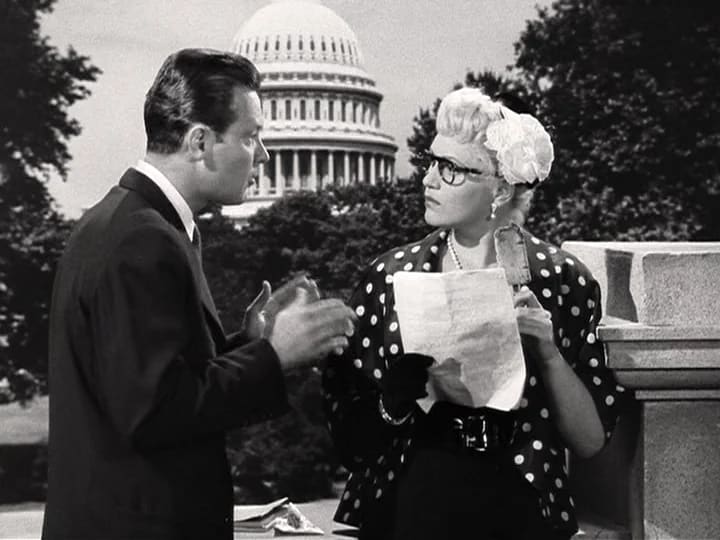
The plot follows an uneducated, young woman, Billie Dawn (Holliday), who is entangled romantically and financially with the bullying Harry Brock (Broderick Crawford). Brock has come to Washington to buy a congressman to further enlarge his scrap iron business. Worried that Billie, with her uncouth ways, will embarrass him, he pays a young handsome journalist Paul Verrall (William Holden) to educate her, to help her fit in.
The education is less about manners, but about freedom, democracy and history.
When we first see Billie, she is silent, impeccably styled, if a little over-dressed. She has a mannered walk and the camera along with the hotel staff follows her ass. It is over three minutes before she speaks and when she does – well, the spell is broken. As Picturegoer – a British film magazine – said, her voice is “like the tinkling of many tiny, tuneless cymbals”. This is almost too kind. It is high-pitched, screechy, off-key.
Judy Holliday delivers a master class in comedy characterisation. The voice, the mannerisms, the sharp physicality of a card-game, demonstrate timing and shrewdness all wrapped up in a pretty exterior.
Billie: He’s right. I’m stupid and I like it.
And unlike many funny women she is allowed a character arc. She is allowed to learn, to change and develop. But also, she never loses her sass and her rough edges. It’s a joy to watch education and brawn combine to win the day.

But Holliday was controversial in other ways beyond an unexpected Oscar win.
Prior to her big break in Hollywood, she had protested the anti-communist blacklist in radio and film, supported the Hollywood Ten, lent her name as a sponsor of the World Peace Conference held in NYC in 1949 and supported Paul Robeson against public protests.
Judy along with her friends Garson Kanin and Ruth Gordon were among the 151 writers, directors and actors listed in Red Channels: The Report of the Communist Influence in Radio and Television, a volume released by three former FBI agents which served as a reference tool for blacklisting within radio and television broadcasting.
After Holliday completed her second major feature film The Marrying Kind (1952) she was subpoenaed to appear before Pat McCarren’s Senate Internal Security Subcommittee, even though a 1950 investigation turned up no evidence that Holliday had ever been a member of the Communist Party.
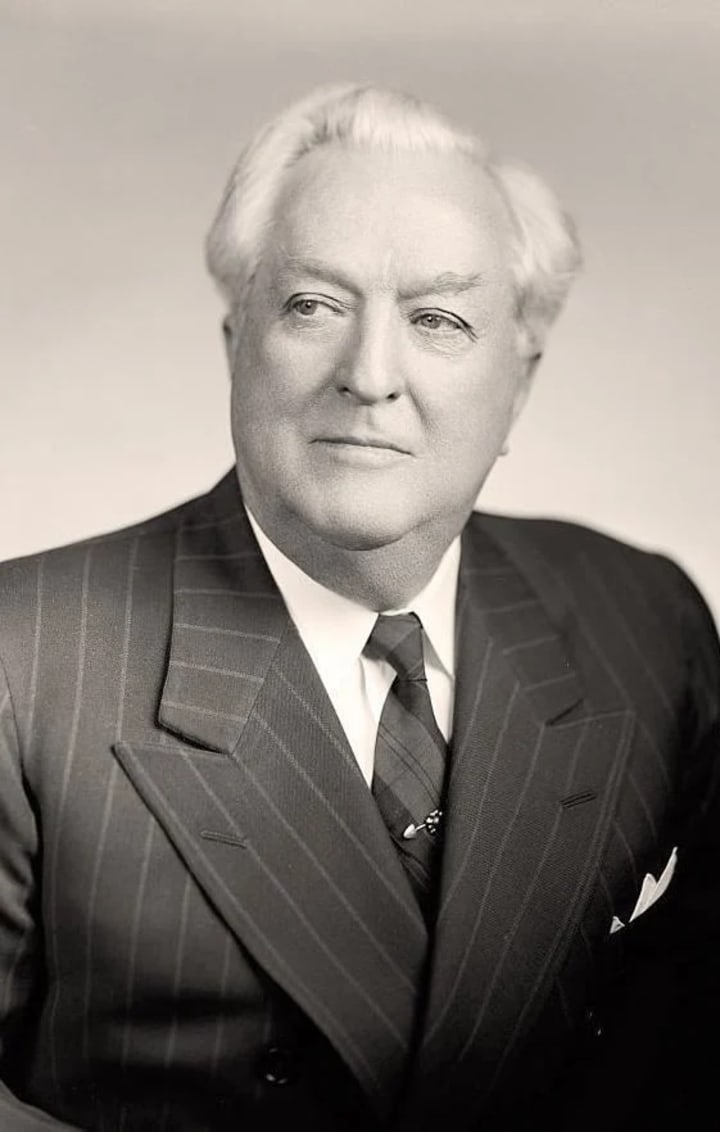
Ah, Pat McCarren. McCarren was an ardent anti-communist senator and the chief sponsor of the Internal Security Act, which required the Communist Party to register with the Attorney General and gave greater powers to investigate possible communist subversion. He was also a virulent antisemite, hidden under a guise of anti-communist patriotism. McCarran specifically targeted what he called people of “Middle European” descent as being potential Communists, a thinly-veiled reference to people of Jewish ancestry.
His biographer Michael Ybarra asserted in his book Washington Gone Crazy: Senator Pat McCarran and the Great American Communist Hunt that:
"Arguably no American wrecked as many lives as did the great Red hunter from Nevada."
In the era of McCarthyism it is tempting to use the old saying – “Same shit, different smell.” (Of course, that won't get past the censors).

Judy Holliday (original surname Tuvim) was from a Jewish working-class social activist background, with both parents involved in labour organisations. Her own show business career began in theatrical satire. There was a reason she was targeted.
And it scared her. She had a career and livelihood to lose. But there was also the bullying that might force her to name names and watch others go through the same process.
Of the experience she said to her friend Heywood Hale Broun:
“Maybe you’re ashamed of me because I played Billie Dawn. Well, I’ll tell you something. You think you’re going to be brave and noble. Then you walk in there and there are the microphones and all of those senators looking at you—Woodie, it scares the shit out of you. But I’m not ashamed of myself because I didn’t name names. That much I preserved.”
That’s right. She went into that committee meeting and played the dumb blonde.
The hearing covered her choice not to take her husband’s name, her parents employment, her religion and her friends. She then chose to move the conversation along by stating that she had hired people prior to the hearing to investigate her own behaviour.
Mr Arens (Prosecutor): You hired people to investigate you?
Holliday: I certainly did, because I had gotten into a lot of trouble.
Arens: Has anyone tried to prosecute you?
Holliday: Yes.
Arens: Who?
Holliday: Prosecute? No, I thought you meant persecute?

What this quote demonstrates is the Fawn response to danger.
Holliday was scared and when we are scared we have biological instincts that tell us what to do. We all know about the fight or flight instinct, how our bodies store up adrenalin so that we can throw a punch or run faster than we ever have before. We are also learning that some bodies become paralysed in those moments and that is called the Freeze response. There is another response to trauma – the Fawn response.
To fawn is to respond to a threat by becoming more appealing to the bully. We accommodate and appease the person who may harm us. We use charm, flirting and an abandonment of our strengths. It is begging and pleading. Billie Dawn tries it with Harry. It doesn’t work. He hits her anyway:
All that stuff I've been studying, what Paul's been tellin' me, it just mixed me up. But when you hit me before, it was like everything knocked itself together in my head and made sense. All of the sudden I realized what it means: how some people are always givin', and some takin'. And it's not fair. So, I'm not gonna let ya anymore - or anybody else.

All trauma responses are open to criticism. You hit him? You just ran away? You did nothing?
And the fawn response – You can’t call yourself a victim. You played along!
And yet they are all a response to trauma, outside of the control of the traumatised. None of them are perfect responses. And they shouldn’t have to be. Because the poor behaviour is not coming from the victim, but the bully.

Before the hearing Judy’s image was of a quick-witted intellectual. And that is present in the word play. But what really remained was the performance. After the hearing she seldom broke free from the dumb blonde image again.
The fawning came with a cost, but it at least afforded Holliday the chance to complete her contract with Columbia, although she never made another film as successful as Born Yesterday. And she didn’t name names. She attempted a return to the theatre, but had to retire owing to ill health, dying in 1965, far too early, at the age of 43 from metastatic breast cancer.
Who knows with time, she could have reasserted the intellectual, the wit, the ferocity. But she will probably be forever associated with the blankness of Billie Dawn. But watch the film and you will see her wit and intelligence stamped all over it. It takes real talent to play that dumb and be that smart.
If you've enjoyed what you have read, consider subscribing to my writing on Vocal. If you'd like to support my writing, you can do so by a regular pledge or leaving a one-time tip. Thank you.
About the Creator
Rachel Robbins
Writer-Performer based in the North of England. A joyous, flawed mess.
Please read my stories and enjoy. And if you can, please leave a tip. Money raised will be used towards funding a one-woman story-telling, comedy show.
Keep reading
More stories from Rachel Robbins and writers in Geeks and other communities.
The Legend of Lucille Ball
Lucy Ricardo: [Lucy gets caught spying on the neighbors] I was, uh... bird-watching! Ricky Ricardo: Bird-watching? Lucy Ricardo: Uh, yeah! Do you know that there's a yellow-bellied woodpecker on our lawn? Ricky Ricardo: No, but I know that there's a red-headed cuckoo in the living room.
By Rachel Robbins2 years ago in Geeks
Dante's Peak (1997) - A Movie Review
We need to escape now before the volcano erupts! Dante’s Peak is a 1997 film. Harry Dalton, a volcanologist, arrives in a small town where there have been signs of an active volcano. As he scopes the town, he discovers a dormant volcano that isn’t long until it awakens.
By Marielle Sabbaga day ago in Geeks
Becca
"Everything is so... flat." Denille said stupidly as she looked around her new neighborhood. She looked around at the muted desert where even the smallest sign of life seemed to have given up. The plant life was shrubs that were half cooked by the heat and where there should have been a lawn, a mess of white rocks laid glistening in the sun. Even the sky looked stretched thin, like the sun had ironed it smooth. She’d moved from Riverside, where at least there were hills, but here in Barstow, everything felt baked and brittle.
By Sara Wilson7 days ago in Fiction



Comments (7)
I enjoyed thinking back on this movie--she was one of my favorite film actresses for a lot of reasons. The film in question is worth seeing. They certainly did live in interesting times.
She was brilliant in this film. I love her half-high-pitched-half-deep-growl: "Whaaat!" & finally "Do like I say!" & the card game is one of my fave cinematic scenes. I do love how you wove the fawn response into this review. Excellent.
Damn , gotta show someone this
A nice blend of writing with a film era, leading to a prominent social theme.
Interesting insight into the witch hunt era. No a film I have seen so will look out for it
Well written
Great one.