
IoT in Healthcare: Saving Lives Through Connectivity
From Wearables to Smart Medical Devices: The Future of Healthcare Connectivity


The Internet of Things (IoT) is revolutionizing various industries, with healthcare being one of the most significant areas of transformation. IoT in healthcare involves using connected devices and systems to improve patient care, enhance operational efficiency, and drive better health outcomes. This article explores how IoT is changing healthcare, focusing on its key applications, benefits, challenges, and prospects.
Introduction to IoT in Healthcare
What is IoT in Healthcare?
IoT in healthcare refers to the integration of connected devices and systems that collect, transmit, and analyze health data. This connectivity enables real-time monitoring, data-driven decision-making, and improved patient management. IoT solutions in healthcare include wearable devices, smart medical equipment, and connected health apps.
Importance of IoT in Healthcare
The adoption of IoT in healthcare addresses several pressing issues:
- Patient Monitoring: Continuous monitoring of patients' vital signs and health conditions.
- Operational Efficiency: Streamlining hospital operations and reducing administrative burdens.
- Data-Driven Insights: Leveraging data for better diagnosis and treatment plans.
Key Applications of IoT in Healthcare
1. Remote Patient Monitoring
Definition: Remote patient monitoring (RPM) involves using IoT devices to track patients' health metrics from a distance.
Applications:
- Wearable Devices: Devices like smartwatches and fitness trackers monitor heart rate, activity levels, and sleep patterns.
- Chronic Disease Management: IoT devices track conditions like diabetes and hypertension, providing real-time data to manage treatment effectively.
- Post-Surgical Monitoring: Devices monitor patients after surgery to ensure proper recovery and detect complications early.
Stat: According to Grand View Research, the global remote patient monitoring market was valued at $1.9 billion in 2020 and is expected to reach $7.8 billion by 2027, growing at a CAGR of 22.6%.
2. Smart Medical Devices
Definition: Smart medical devices are connected to the internet to enhance functionality and data collection.
Examples:
- Smart Insulin Pens: These devices track insulin doses and provide reminders, improving diabetes management.
- Connected Inhalers: Inhalers with IoT capabilities track usage patterns and provide feedback on medication adherence.
- Smart Blood Pressure Monitors: These devices send blood pressure readings to healthcare providers for real-time monitoring.
Example: The Medtronic Guardian Connect system uses a continuous glucose monitoring sensor to provide real-time glucose data and alerts to patients and healthcare providers.
3. Enhanced Hospital Management
Definition: IoT technologies improve hospital management by optimizing resource use and enhancing patient care.
Applications:
- Asset Tracking: IoT systems track the location and status of medical equipment and supplies, reducing loss and improving availability.
- Environmental Monitoring: IoT sensors monitor conditions such as temperature and humidity in storage areas to ensure proper storage of medications and vaccines.
- Patient Flow Management: IoT devices track patient movement within the hospital to improve scheduling and reduce wait times.
Example: The RFID tracking system in hospitals helps manage surgical instruments and equipment, reducing delays and increasing operational efficiency.
4. Telemedicine and Virtual Health
Definition: Telemedicine uses IoT to provide remote consultations and health services.
Applications:
- Video Consultations: Patients can have virtual consultations with healthcare providers using connected devices.
- Remote Diagnosis: IoT devices transmit patient data for analysis and diagnosis without requiring an in-person visit.
- Remote Therapy: Devices support physical therapy and rehabilitation exercises at home with real-time feedback.
Stat: The global telemedicine market is expected to reach $459.8 billion by 2030, growing at a CAGR of 23.4%, driven by the increasing adoption of IoT solutions.
Benefits of IoT in Healthcare
1. Improved Patient Outcomes
- Real-Time Monitoring: Continuous tracking of health metrics allows for timely interventions and better management of chronic conditions.
- Personalized Care: Data-driven insights enable tailored treatment plans based on individual patient needs.
- Early Detection: IoT devices can detect health issues before they become critical, leading to proactive care.
2. Operational Efficiency
- Resource Optimization: IoT improves the allocation and management of medical equipment and supplies, reducing waste and costs.
- Administrative Automation: IoT systems automate routine tasks, such as scheduling and inventory management, freeing up staff for patient care.
- Data Integration: Centralized data collection and analysis streamline decision-making and improve healthcare delivery.
3. Cost Savings
- Reduced Hospital Visits: Remote monitoring and telemedicine reduce the need for in-person visits, lowering healthcare costs.
- Efficient Resource Use: Better management of equipment and supplies reduces overhead costs and improves financial performance.
- Preventive Care: Early detection of health issues through IoT reduces the need for costly emergency interventions.
Challenges and Considerations
1. Data Privacy and Security
Issue: Protecting sensitive health data from breaches and unauthorized access is critical.
Solutions:
- Encryption: Use strong encryption methods to secure data transmission and storage.
- Access Controls: Implement strict access controls and authentication measures for IoT devices and systems.
- Compliance: Ensure adherence to regulations such as HIPAA (Health Insurance Portability and Accountability Act) for data protection.
2. Integration and Interoperability
Issue: Integrating IoT devices with existing healthcare systems and ensuring compatibility can be challenging.
Solutions:
- Standardization: Adopt industry standards and protocols for device interoperability.
- API Integration: Use Application Programming Interfaces (APIs) to connect IoT devices with electronic health records (EHR) systems.
3. Technical Complexity
Issue: Implementing and managing IoT solutions requires technical expertise and training.
Solutions:
- Training Programs: Invest in training for healthcare staff to effectively use and manage IoT technologies.
- Technical Support: Partner with an IoT development company for ongoing support and maintenance.
Future Trends in IoT in Healthcare
1. Advancements in AI and Machine Learning
Overview: AI and machine learning enhance IoT solutions by analyzing large datasets for predictive analytics and automated decision-making.
Applications:
- Predictive Analytics: AI models predict patient outcomes and treatment responses based on IoT data.
- Automated Diagnostics: Machine learning algorithms assist in diagnosing diseases from data collected by IoT devices.
Stat: The AI in the healthcare market is projected to reach $45.2 billion by 2026, growing at a CAGR of 44.9%, driven by advancements in IoT and data analytics.
2. Integration with Blockchain
Overview: Blockchain technology improves data security and integrity in IoT healthcare applications.
Applications:
Secure Data Sharing: Blockchain provides a secure and transparent way to share health data across systems.
Patient Consent Management: Blockchain can manage and record patient consent for data use and sharing.
Example: Blockchain-based health records systems ensure data accuracy and prevent unauthorized access.
3. Expansion of Wearable Technology
Overview: Wearable devices will continue to evolve, offering more advanced health monitoring capabilities.
Applications:
Health Tracking: New wearables will monitor a wider range of health metrics, including blood glucose levels and sleep patterns.
Fitness and Wellness: Wearables will integrate with IoT systems to provide comprehensive wellness solutions.
Stat: The global wearable medical devices market is expected to reach $27.8 billion by 2026, growing at a CAGR of 22.5%.
Conclusion
IoT is transforming healthcare by enabling real-time monitoring, enhancing operational efficiency, and providing data-driven insights. Despite challenges such as data security and technical complexity, the benefits of IoT in improving patient outcomes and reducing costs are substantial.
As technology continues to advance, IoT solutions will play a crucial role in shaping the future of healthcare, driving innovation, and enhancing care delivery.
Interested in integrating IoT solutions into your healthcare practice? Partner with a leading IoT development company to explore IoT application development services tailored to your needs.
About the Creator
William Smith
I am an informative tech blogger exploring a wide range of topics, including web, mobile, IoT, etc.
Keep reading
More stories from William Smith and writers in Geeks and other communities.
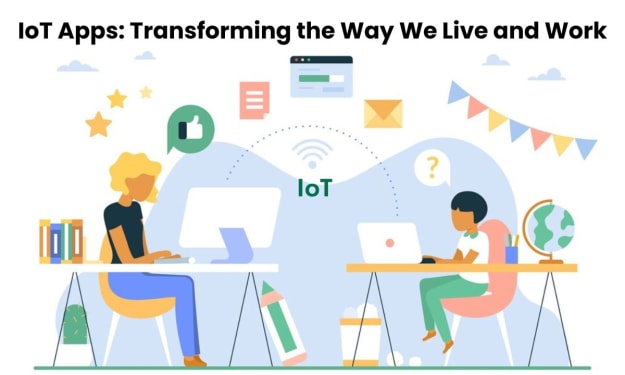
IoT Apps: Transforming the Way We Live and Work
The Internet of Things (IoT) is reshaping the world around us, influencing how we live and work. With the rapid advancement of technology, IoT applications have become integral to various industries and everyday life. This article explores how IoT apps are transforming our world, the role of an IoT Application Development Company, and the importance of IoT consulting services in this evolving landscape.
By William Smith2 years ago in Geeks
The Politics of Playing Dress-Up
Well, to start off I'd like to say a happy world book day to all who celebrate. I know I haven't really posted anything on my socials about it but I'm not a jubilant kind of person. I lay low most of the time. Let's start off with a popular anecdote from the vaults...
By Annie Kapur3 days ago in Geeks
Spider-Man Rogues Gallery Power Rankings
Spider-Man’s world isn’t just defined by great power — it’s shaped by the enemies determined to break him. The rogues gallery of Spider-Man is one of the most iconic in comic history, filled with brilliant scientists, monstrous experiments, criminal masterminds, and deeply tragic figures. Some rely on raw strength, others on genius-level intellect, advanced technology, or psychological warfare — but all of them have pushed Peter Parker to his absolute limits.
By Top Ranked5 days ago in Geeks
Review of 'Man on the Run'
My wife and I saw Man on the Run, a nearly 2-hour documentary on Amazon Prime, about Wings, Paul McCartney's group that flew around the world from shortly after The Beatles broke up in early 1970 to shortly after John Lennon was murdered at the end of 1980, making a Beatles reunion forever impossible.
By Paul Levinson7 days ago in Beat


Comments
There are no comments for this story
Be the first to respond and start the conversation.