
How to make people believe you are smarter than you really are
ADVICE


How to Instantly Sound More Intelligent Than You Really Are
Everyone wants to be perceived as intelligent. Whether you're in a meeting, giving a presentation, or simply engaging in casual conversation, sounding smarter than you really are can open doors, impress people, and boost your confidence. The good news? You don’t have to be a genius to come across as one. With a few strategic tips and tricks, you can instantly elevate how intelligent you seem in any situation. Here’s how.
1. Choose Your Words Carefully
The words you use say a lot about your intelligence. You don’t need to use obscure vocabulary, but opting for slightly more sophisticated words can make you sound more intelligent. Instead of saying "happy," try "content" or "elated." Rather than "fast," go with "expeditious" or "rapid." However, avoid overloading your speech with complex words—balance is key. You want to sound smart, not pretentious or confusing.
One trick is to sprinkle in a few words from academic jargon or fields of interest that impress people. Words like “cognitive,” “paradigm,” and “empirical” are safe bets. Just be sure you know what they mean so you don’t get caught out!
2. Speak Slowly and Clearly
How you say something is just as important as what you say. People who speak quickly often come across as nervous or unsure of themselves. When you speak more slowly and deliberately, you give the impression of thoughtfulness and authority. Pausing between sentences or after key points also signals to others that you are in control of the conversation and that what you’re saying is worth listening to.
Speaking slowly gives you time to think before responding, reducing the likelihood of stumbling over words or saying something that doesn’t make sense. Plus, slower speech tends to sound more articulate and confident.
3. Ask Thought-Provoking Questions
One of the easiest ways to sound intelligent is to ask questions that get others thinking. When you engage people in deeper conversations or challenge them to reflect on their opinions, you come across as thoughtful and curious. For example, instead of asking a simple “What did you think of the meeting?” try “What impact do you think the decisions made in the meeting will have on the project’s long-term outcomes?”
Asking open-ended questions also keeps the conversation going, which gives you time to think about your next point. It shows that you’re engaged and interested in understanding different perspectives, a trait that’s often associated with high intelligence.
4.Reference Books, Studies, or Famous Thinkers
Name-dropping the right books, studies, or philosophers can instantly make you sound more knowledgeable. Mentioning that you recently read a particular study or are familiar with a famous work adds credibility to your intelligence. For instance, casually referring to a study published by a prestigious university or dropping a quote from someone like Nietzsche or Albert Einstein can elevate how you’re perceived.
Even if you haven’t read an entire book, referencing key ideas or concepts from the book can make it seem like you have a solid understanding of the topic. You can also get a lot of mileage from saying things like, “There’s an interesting psychological study that suggests…” even if you’re summarizing a vague article you skimmed online.
5. Use Analogies and Metaphors
A great way to sound more intelligent is by drawing comparisons through analogies and metaphors. People who can explain complex ideas in simple terms using relatable examples are often seen as insightful. For instance, if you're explaining a difficult concept, relate it to something familiar. You might say, "Think of it like baking a cake—every ingredient matters, and if you leave one out, the whole thing falls apart."
Analogies not only demonstrate creativity but also show that you understand a concept well enough to explain it clearly. This ability is often associated with intellectual depth.
6. Stay Calm in Disagreements
If you want to appear intelligent in discussions or debates, staying calm is essential. Emotional reactions can undermine your credibility. People tend to assume that those who remain composed in the face of disagreement are more intelligent and confident in their views.
When someone challenges your point of view, resist the urge to become defensive. Instead, calmly explain your reasoning, and if necessary, respectfully disagree by saying something like, “That’s an interesting perspective, but here’s why I see it differently...” or “Let me clarify what I meant.”
Remaining calm gives you more control over the conversation and portrays you as a rational, thoughtful individual rather than someone who reacts impulsively.
7. Make Eye Contact and Use Confident Body Language
Non-verbal cues play a huge role in how people perceive your intelligence. Making consistent eye contact shows that you're focused, confident, and engaged. Additionally, standing or sitting up straight, using hand gestures appropriately, and avoiding fidgeting can make you seem more self-assured.
People naturally associate confident body language with competence and intelligence. On the flip side, slouching or avoiding eye contact can make you seem unsure of yourself, regardless of how insightful your words may be.
8. Know When to Admit Ignorance
Ironically, one of the smartest things you can do is to admit when you don’t know something. Trying to bluff your way through a topic you’re unfamiliar with often backfires. Instead, acknowledge gaps in your knowledge by saying something like, “I’m not familiar with that, but I’d love to learn more.”
Admitting ignorance when appropriate doesn’t make you seem less intelligent—it actually suggests that you’re open to learning and self-improvement, traits often associated with high intelligence.
Conclusion
Sounding more intelligent doesn’t require deep expertise or endless studying. By choosing your words carefully, speaking with clarity, asking thoughtful questions, referencing credible sources, and using confident body language, you can easily elevate how others perceive your intelligence. And remember, sometimes knowing what you don’t know can be just as impressive as what you do!
About the Creator
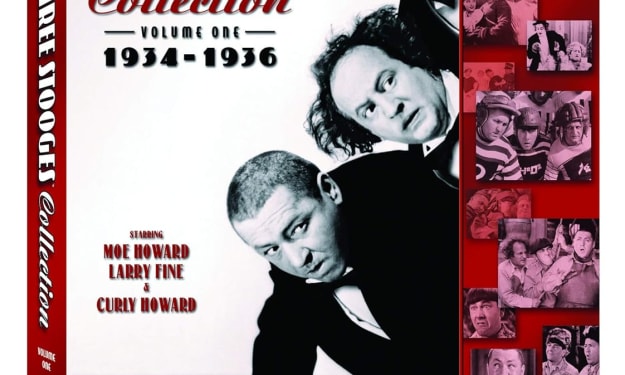
History of The Three Stooges (Part I: The Beginnings and Columbia Pictures - 1920s-1936)
I have been itching to write about The Three Stooges on Vocal for close to two years, but I couldn't figure out how to do it. I wanted to do it by third Stooge, but that's a bit complicated. I know this much. I was about eight or nine years old when I first saw The Three Stooges. I remember one of my local channels had the Stooges on for hours, and I tried my damnedest to be up for those shorts. I remember that the Family Channel actually had an hour of the Stooges on from 11PM to midnight, and it was the entire library on during that time.
By Clyde E. Dawkins4 days ago in Geeks
Amy Madigan wins best supporting actress for ‘Weapons’
In a night celebrated for cinematic excellence, veteran actress Amy Madigan captured the Best Supporting Actress award for her role in the critically acclaimed film Weapons, a performance that has been widely praised for its depth, nuance, and emotional resonance. The announcement, made at the 2026 International Film Awards on Saturday evening, brought a standing ovation from attendees, highlighting Madigan’s enduring impact on the film industry. Weapons, directed by acclaimed filmmaker Lena Torres, explores the complex moral landscape of modern warfare and personal accountability. Madigan’s portrayal of Dr. Eleanor Hayes, a humanitarian worker grappling with the consequences of her past decisions, has been described by critics as “mesmerizing” and “hauntingly authentic.” In interviews leading up to the awards ceremony, Madigan emphasized that the role was “a deeply personal journey,” allowing her to explore themes of guilt, courage, and redemption. The voting panel, composed of prominent figures from the film community, cited Madigan’s “ability to convey profound emotional depth with subtlety and grace” as a decisive factor in her win. “Amy Madigan’s performance transcends the screen,” said panel chair Michael Reynolds. “She brings humanity to a story that could easily have been bleak and inaccessible. Her work reminds us why cinema is such a powerful medium for empathy and reflection.” The award marks another milestone in Madigan’s distinguished career, which spans more than four decades and includes multiple accolades across stage and screen. Known for her versatility, she has portrayed a wide array of characters in drama, comedy, and thriller genres, earning critical acclaim for her commitment to authentic storytelling. Industry insiders note that her latest performance in Weapons solidifies her reputation as one of the most reliable and compelling supporting actresses of her generation. On accepting the award, Madigan delivered a heartfelt speech that touched on the collaborative nature of filmmaking. “This recognition is not just about me,” she said, voice resonating through the packed auditorium. “It’s about the incredible team that brought Weapons to life—from the director and writers to the crew and my fellow cast members. Every scene, every moment, was built together, and this award reflects that collective effort.” Director Lena Torres, who joined Madigan on stage during the ceremony, praised the actress for bringing authenticity to a character grappling with moral ambiguity. “Amy has a rare gift,” Torres said. “She inhabits her characters so completely that you forget you are watching a performance. Dr. Hayes could have been a distant figure, but Amy gave her a heart, a story, and a voice that resonates long after the credits roll.” Critical reception for Weapons has been overwhelmingly positive, with reviewers highlighting the film’s tight screenplay, evocative cinematography, and compelling ensemble cast. While Madigan’s role is central, many have also noted the seamless interplay between her and lead actor Javier Cortés, whose performance as a conflicted soldier anchors the narrative. Together, they navigate a story that addresses complex ethical dilemmas without resorting to melodrama, balancing tension with human empathy. Industry commentators suggest that Madigan’s win may influence the trajectory of awards season, positioning Weapons as a strong contender for further accolades in writing, direction, and ensemble acting categories. “Her performance sets a standard,” said film critic Natalie Wong. “It reminds voters and audiences alike that supporting roles are often the emotional heartbeat of a film. Amy elevates every scene she is in, making her recognition not just deserved but essential.” The evening itself was marked by notable moments, including tributes to pioneering filmmakers, performances from acclaimed musicians, and a series of speeches reflecting on the transformative power of cinema. Yet, for many in attendance, Madigan’s win represented the emotional highlight—a reminder that authenticity, dedication, and emotional intelligence remain at the core of extraordinary storytelling. As Madigan’s career continues, she has expressed a desire to take on roles that challenge conventional narratives and offer insight into underrepresented perspectives. Her achievement with Weapons underscores her ability to choose projects that are both artistically ambitious and socially resonant, cementing her status as an actress capable of shaping not just performances but the broader conversation around contemporary cinema. With this accolade, Amy Madigan joins a distinguished lineage of actors whose supporting roles have left a lasting imprint on audiences and critics alike. Her performance in Weapons is poised to be remembered as one of the defining moments of 2026, exemplifying the enduring impact of craft, commitment, and courage in the art of acting.
By Fiaz Ahmed about 20 hours ago in Geeks



Comments
There are no comments for this story
Be the first to respond and start the conversation.