
How Hollywood Stole Strong Men From Society
35 years of slow-boil propaganda (now young men are cooked)


The entertainment world has dramatically reshaped society’s representation of men since the 1980s. This transformation has replaced the archetype of a strong, capable, and moral man with flawed, damaging stereotypes.
By promoting negative tropes, Hollywood has effectively removed male aspirational figures from mainstream culture. This subtle shift impacts young viewers as they form their identity and understanding of manhood.
For young men, it becomes difficult to find the guideposts we all need as we journey through life. For women, it makes it too easy to ascribe negative stereotypes to men they meet in real life.
In my opinion, this is the result of intentional and coordinated cinematic brainwashing, but I’ll dive into that later. For now, let’s focus on the archetypes.
The Strong Men of the 1980s
The heroes of the 80s were the last prominent, uncomplicated aspirational figures in Hollywood, before subversion gained momentum. They were defined by competence, integrity, and a clear moral compass.
Their strength was used for protection, offering young men principles they could use to build their own purpose and identity. Though different in persona, they all shared core virtues like fortitude, compassion, and leadership.
Jean-Luc Picard (Star Trek: The Next Generation, 1987)
Picard represents the intellectual strong man, prioritizing diplomacy, wisdom, and respect over physical aggression.
His decisive leadership is built on ethical principles and emotional intelligence, showing strength through measured authority.
He models compassion and fortitude by bearing immense responsibility without resorting to dominance or force.
Indiana Jones (Raiders of the Lost Ark, 1981)
Jones is equal parts brains and brawn, valuing knowledge as much as physical capability.
He uses his wits, scholarly expertise, and problem-solving skills to overcome challenges, but isn’t afraid to punch and shoot bad guys when necessary.
He demonstrates fortitude against overwhelming odds with a spirit of adventure that has universal appeal.
Rocky Balboa (Rocky, 1976)
Rocky is the physically-driven strong man, embodying resolve and perseverance through hard work and humility.
He consistently models integrity, refusing to compromise his morals despite immense pressure or adversity.
He taught a generation that true success comes from relentless effort, not entitlement.
This era, however, began to fade with the cultural upheaval of the late 1980s and early 1990s.

Hollywood targeted this aspirational strength systematically. What followed was a deliberate replacement of the hero with two inherently flawed stereotypes.
The Deconstruction: Twin Tropes of Failed Men
Following the turn of the millennium, patriarchal authority became increasingly associated with two deeply problematic stereotypes. These characters are defined by their flaws, suggesting that behind closed doors, all men are crippled by either past trauma or childish immaturity.
This shift offers no balanced path for aspirational masculinity, and often insinuates (or states outright) that without the women in their lives, men would be nothing.
Trope 1: The Man-Child
This character is physically an adult but remains emotionally stunted and domestically incompetent, typically used for cheap laughs.
Homer Simpson (The Simpsons, 1989): This archetype popularized the fat, lazy, and stupid husband whose only redeeming quality is his family’s unconditional love. His domestic failure and poor decision-making are constantly rewarded with the devotion of his competent wife and children.
Peter Griffin (Family Guy, 1999): Peter carries the “fat, lazy, and stupid” husband archetype into more extreme territory with selfish, destructive behavior and constant absurdity. His immunity to consequences reinforces the idea that incompetence is endearing, and the audience is regularly reminded that his wife is more attractive and intelligent, and only stays with him due to her unconditional, undeserved love.
Doug Heffernan (The King of Queens, 1998): Doug, like Homer and Peter, fits the blue-collar version of this trope of the overweight husband whose primary goal is avoiding responsibility. He is consistently bailed out by the unwavering support and competence of his wife, Carrie, who earns more than him and sacrifices career opportunities to avoid damaging his ego.

The Man-Child trope requires constant guidance and help from other characters (usually women), making them almost subhuman in their incompetence.
Trope 2 The Broken Loner
This archetype maintains some of the “strong man” physical traits but couples them with severe emotional isolation and self-punishment. His competence is not a source of happiness or stability, but a manifestation of trauma.
Walter White (Breaking Bad, 2008): Driven by profound insecurity, Walter finds purpose and competence only through violent, morally bankrupt, and ultimately self-destructive behavior. His genius and ambition eventually lead to the confession that he didn’t do it to support his family — he did it because he liked the way it felt.
Luke Skywalker (The Force Awakens, 2015): A revered hero is intentionally deconstructed into a disillusioned, cynical hermit, utterly failing his mission and living in self-imposed exile. This portrayal associates classic heroism and aspiration with eventual, unavoidable failure and crippling isolation.
Joel Miller (The Last of Us, 2013): Joel is a protector whose immense survival skills are rooted entirely in the grief over his dead daughter. His strength is inextricably linked to violence and emotional detachment, creating a man who cannot thrive, only survive.
Cinematic Brainwashing
Hollywood leverages proven psychological principles to execute a push-pull effect that establishes new behavioral norms. This process relies heavily on Operant Conditioning and Social Learning Theory. The goal is not just to entertain, but to subtly condition viewers about what masculinity is and what it is not.
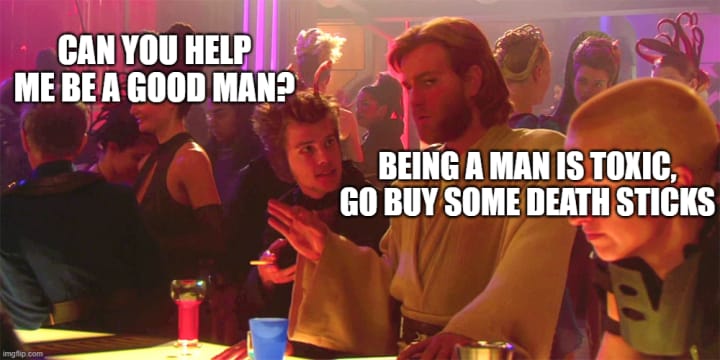
Operant Conditioning is learning based on consequences, like rewards and punishments.
When the Man-Child acts lazily or foolishly, he is met with positive reinforcement — laughter, zero real consequences, and the unconditional love of a competent partner. This powerful reward system encourages the audience to view incompetence as an acceptable or endearing trait.
Social Learning Theory dictates that we learn by observing others and the outcomes of their actions.
When viewers watch the highly capable, disciplined Broken Loner constantly suffer, they see competence and strength paired with negative reinforcement like isolation, misery, or betrayal. This strongly discourages the adoption of those traditionally positive, yet emotionally punishing, masculine traits.
Finding Inspiration in the Cultural Void
By consistently validating the dysfunctional man (through humor) and pathologizing the capable man (through tragedy), Hollywood has limited the aspirational male ideal.
For young viewers seeking guidance, the media offers either incompetence that is laughed at or strength that is feared and pitied. The result is a cultural void where realistic, good, and strong men are rarely seen or celebrated.
This doesn’t mean the template for positive masculinity has vanished, it has simply moved to a new home
Today, the most vital and encouraging models for young men are found outside the mainstream cinematic machine. Look for inspiration in history, literature, philosophy, or in modern entrepreneurs, authors, and content creators.
There are still wise, strong men who will give you advice and help you along the way. But you need to find them on your own.
Seek out strong men online or in your local community, mentors, and positive role models who quietly exemplify courage, responsibility, and emotional strength every day.
The screen may show failure, but the world is still full of genuine heroes.
About the Creator
Alex Tucker
I help entrepreneurs build the businesses they envision online.
Keep reading
More stories from Alex Tucker and writers in Geeks and other communities.
A Knight of the Seven Kingdoms Series Review (Season 1)
As one of the biggest properties in fantasy, A Song of Ice and Fire remains immensely popular with audiences. After reaching far into the past with House of the Dragon, a second spin-off was on the cards. A Knight of the Seven Kingdoms serves up a bite-sized slice of action and drama, but it still claims a spot among the best small-screen titles.
By Robert Cain7 days ago in Geeks
'A Knight of the Seven Kingdoms': Why Dunk And Egg's Trip To Dorne Probably Saved Their Lives
By the standards of the Game of Thrones universe, the first season of latest spin-off/prequel A Knight of the Seven Kingdoms gives us a rather happy ending, with Ser Duncan the Tall and his new Squire, Prince Aegon Targaryen, aka Dunk and Egg, riding away together. However, those with a little extra knowledge of Targaryen history know that this is just the calm before yet another storm in Westeros.. and no, it's not because Egg ran off with Dunk without the permission of his Father, Prince Maekar.
By Kristy Anderson5 days ago in Geeks



Comments
There are no comments for this story
Be the first to respond and start the conversation.