
Harley Quinn at 33: From Animated Sidekick to Pop Culture Icon
From Doormat to Diva!

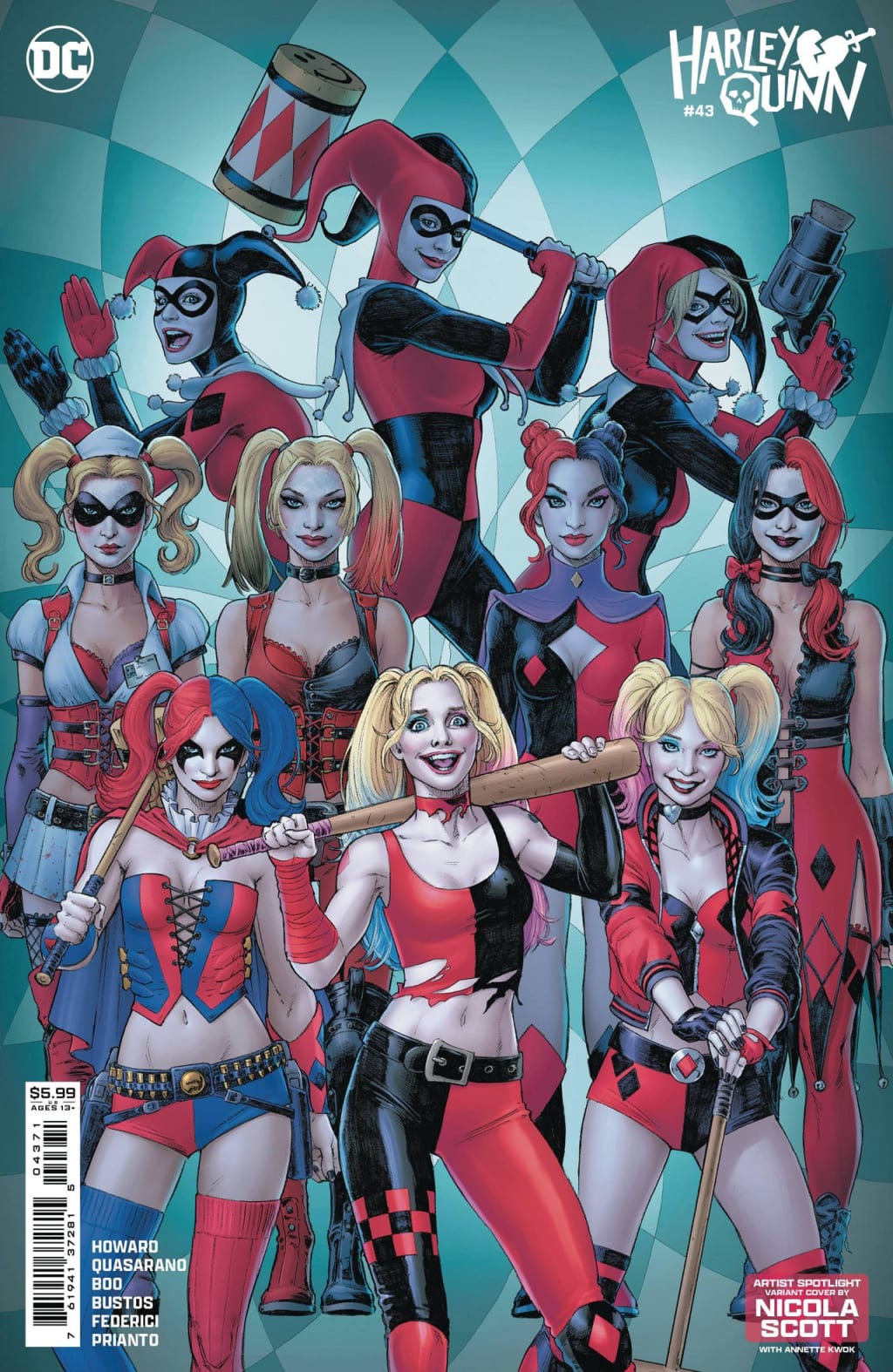
On September 11th, 1992, the world was introduced to a character who would go on to redefine the meaning of “comic book breakout star.”
Harley Quinn, the mischievous jester in red and black, first appeared not in the pages of a comic book but on television—Batman: The Animated Series. In an episode titled “Joker’s Favor,” she debuted as nothing more than a quirky henchwoman for the Clown Prince of Crime. Yet, in just three decades, Harley has transformed into one of DC’s most beloved and recognizable figures, standing shoulder to shoulder with Batman, Superman, and Wonder Woman.
As we celebrate her 33rd anniversary in 2025, it’s worth looking back at how Harley Quinn was created and how she became a global phenomenon.
A Happy Accident Turned Legacy
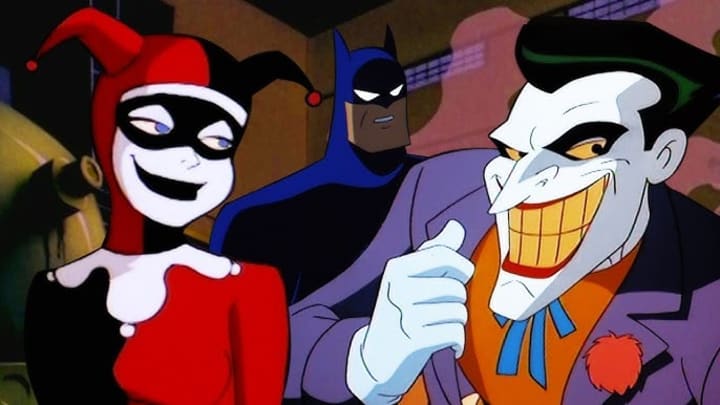
Harley Quinn was co-created by writer Paul Dini and artist Bruce Timm. Her origin was somewhat accidental: Dini, working on Batman: The Animated Series, envisioned a female sidekick for the Joker to liven up an episode. Inspired by a jester-costumed character portrayed by actress Arleen Sorkin in a Days of Our Lives dream sequence, Dini sketched out Harley as a wisecracking, Brooklyn-accented moll. Voiced by Sorkin herself, Harley instantly clicked with audiences thanks to her humor, charisma, and tragic devotion to the Joker.

What was meant to be a one-off role became recurring, and by the mid-1990s Harley was appearing in more episodes, eventually gaining her own story arcs. Her blend of slapstick comedy, dark vulnerability, and unpredictable energy made her stand out in a series already filled with complex villains.
From Screen to Page

Fans’ enthusiasm was so strong that DC Comics brought Harley into the official canon in 1999 with Batman: Harley Quinn #1, cementing her place in Gotham’s underworld. From there, she starred in the Harley Quinn solo series and became a recurring player in Batman comics, Suicide Squad, and beyond.
Her early portrayals leaned heavily on her toxic relationship with the Joker, a storyline that resonated with readers while also sparking conversations about abuse, independence, and self-identity. Over time, writers began moving Harley away from the Joker’s shadow, allowing her to become her own fully realized character.
Reinvention and Independence

A turning point came in the 2010s when Harley was reimagined as more independent, chaotic, and morally gray. Her redesign in DC’s New 52 run gave her a punk-infused look, and her solo comics began leaning into her zany, unpredictable nature. She was no longer just the Joker’s sidekick—she was her own force of chaos.
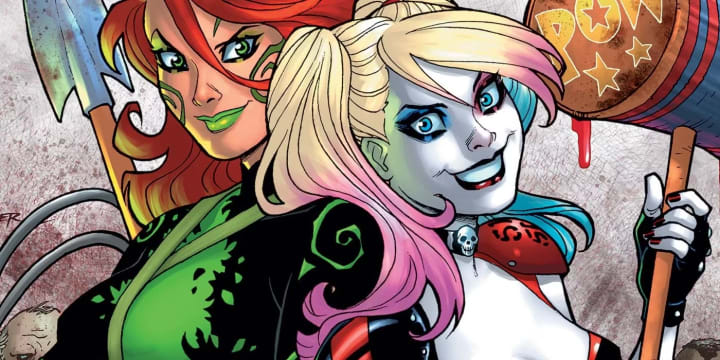
Equally important was her partnership with Poison Ivy, which evolved into one of DC’s most celebrated romances. Their relationship, playful yet heartfelt, gave Harley the depth and growth fans had long wanted, positioning her as a symbol of self-liberation and queer representation in mainstream comics.
Big Screen Stardom

While Harley had already become a fan-favorite in comics and animated series, Margot Robbie’s portrayal in 2016’s Suicide Squad launched her into global stardom. Robbie’s Harley was unhinged, stylish, and vulnerable—a performance that turned Harley Quinn into a household name beyond comic book circles. Follow-up appearances in Birds of Prey (2020) and The Suicide Squad (2021) cemented her as one of DC’s most bankable characters.
The character’s image—colorful, chaotic, rebellious—became a fixture in cosplay, fashion, and fandom spaces. Harley Quinn costumes remain a staple at conventions, and her catchphrases, mallets, and hyenas are instantly recognizable worldwide.
Why Harley Endures
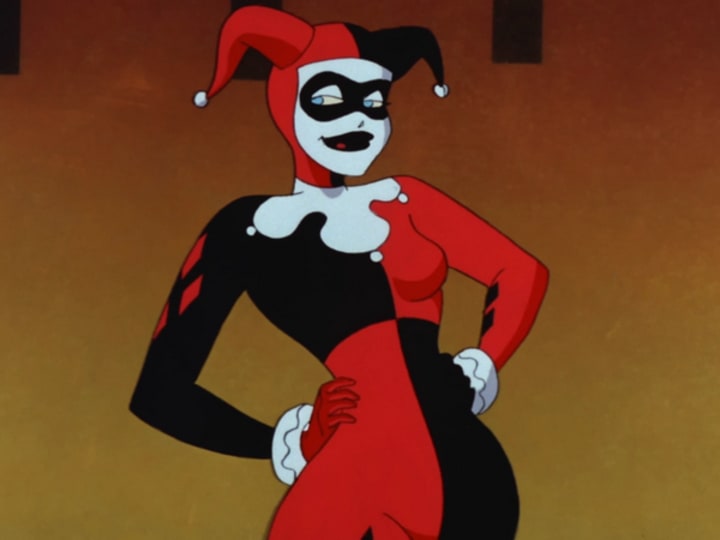
Harley Quinn’s popularity endures because she embodies contradictions. She’s simultaneously hilarious and tragic, villainous and heroic, fragile and indestructible. She reflects themes of survival, reinvention, and finding strength in chaos. Fans see in her a character who can stumble, fall, and still emerge stronger, even if she leaves glitter-covered mayhem in her wake.
As she turns 33, Harley Quinn represents more than just a sidekick who got lucky. She’s proof that great characters can come from unexpected places and evolve far beyond their origins. From a one-episode appearance to a cultural powerhouse, Harley Quinn has earned her place as the Queen of Chaos—and shows no signs of slowing down.
About the Creator
Edwin Betancourt Jr.
Edwin is a published Author, Poet and Playwright hailing from the Bronx, NY.
When he isn’t working on stories, he can be found creating homemade lip balms and customizing dolls.
Keep reading
More stories from Edwin Betancourt Jr. and writers in Geeks and other communities.
When Jem Lost Her Sparkle!
When news broke in 2015 that Jem and the Holograms was getting a live-action movie, fans of the iconic ‘80s cartoon were ready to relive the glam, glitter, and truly outrageous magic. After all, the original series was a kaleidoscope of fashion, Electronic Pop music, female empowerment, wild storylines, and of course—holograms! But when the film hit theaters, it didn’t quite capture the electric charm of the original, leaving many longtime fans scratching their neon-colored heads.
By Edwin Betancourt Jr.5 months ago in Geeks
Marvel Zombie
The last entry into our 2025 superhero projects catalogue is Marvel Zombies. This was a show that was anticipated by absolutely no one and it disappeared from the public consciousness as quickly as it was released. There was nothing special about the project that made it a must see, or a must remember. In fact if anything it's a must forget.
By Alexandrea Callaghan16 days ago in Geeks
The Beast in Me Season 1 Review
Every once in a while, a series arrives that doesn’t just entertain—it burrows in. It lingers. It creeps into the quiet spaces of your mind and refuses to leave. The Beast in Me: Season 1 is exactly that kind of show: a slow-burning psychological thriller that blends supernatural horror with an uncomfortably intimate exploration of human trauma.
By David Cook4 days ago in Geeks
FPS: The Last Flame Challenge Winners
Welcome to our first Winners Announcement of the year and to the final challenge in the Fall Poetry Series. The Last Flame invited writers to sit with endings, using fire as a central image to consider what remains when something burns out: ash, warmth, memory, silence, or the faint promise of what comes next. The strongest pieces treated endings as gradual rather than sudden, allowing them to flicker, dim, and linger.
By Vocal Curation Team4 days ago in Resources


Comments
There are no comments for this story
Be the first to respond and start the conversation.