

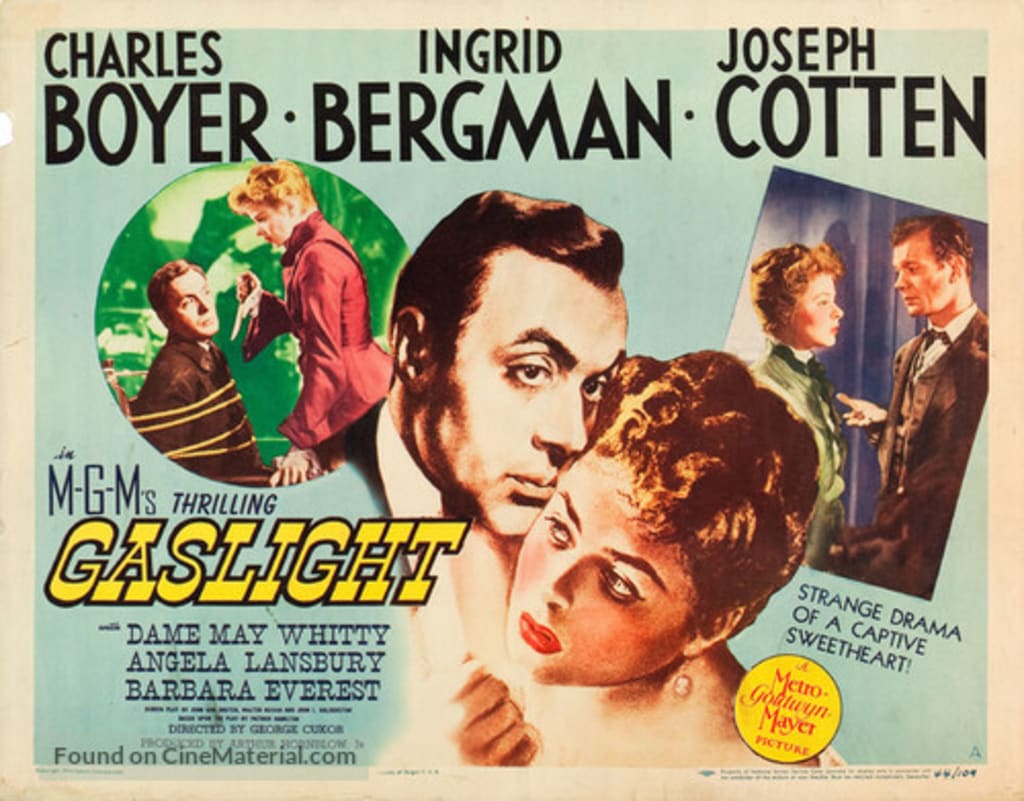
“I couldn’t have dreamed it. No, I couldn’t. I couldn’t have dreamed it. No, I couldn’t have dreamed it. I couldn’t have dreamed it. Did I dream? Did I really, really, dream? Dream, dream.” (Paula Alquist-Anton)

Lights dim and fade, steps overhead, a woman who cannot trust her own sense in a world of shadowy, crowded interiors.
In the 21st Century we know about ‘gaslighting’. In 2022, it was the word of the year. It is a tactic of deep fakes, of trolls, of governments, of shady organisations, of powerful people, of the man across the road whose wife has never been the same. We are living through the soup of misunderstanding. We feel the shove to comply to a narrative, despite the tingling in our fingers, the misplacing of sensations, the tilted reality.
Gaslighting means to over-write someone’s reality so that their world becomes unstable, and constructed in a way that opposes the facts. This form of psychological abuse derives its name from the film and play.
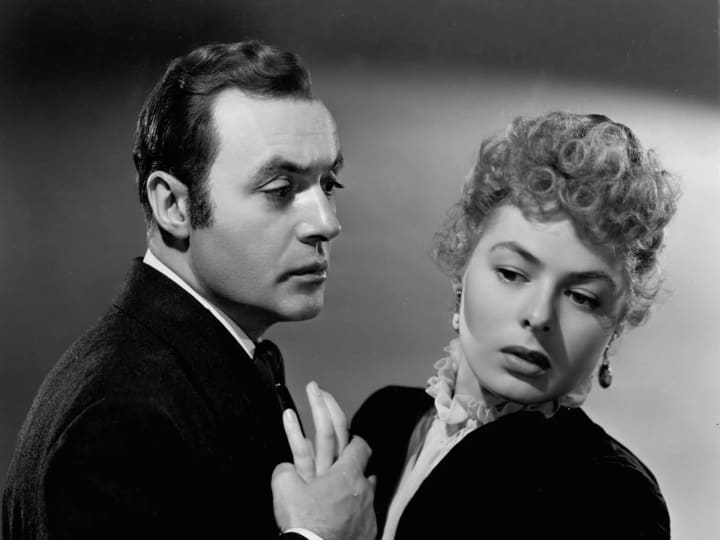
Gaslight (1944) is the Hollywood version of Patrick Hamilton’s 1938 play. Directed by George Cukor, it is a film which gives us the glamour of a leading lady (Ingrid Bergman) at the height of her attraction, but juxtaposed with a gloomy tension and descent into madness. It is an uneasy seduction.
An opera singer is the victim of an unsolved and apparently motiveless murder at her London address. Her niece (Paula) is sent to Italy to follow in her operatic footsteps. As an adult she is whisked away in a whirlwind romance with her pianist (Gregory Anton) and returns with him to the London home. Once there, she sees occasional glimpses of anger in her new husband, and she frets about her apparent fragile grip of her world: forgetful, hearing things, the lights dim. She begins to acquiesce to her husband’s belief that she is neurotic and in need of help. But the audience see the other side of Gregory, the flirting with the maid, the tempers, the disappearing at night, the moving in the shadows, the rumours that he spreads.
It takes a courage just out of Paula’s reach to say that this is not my reality. Because gaslighting is about power. The power to de-rail a victim’s sense of self.
Gaslighting isn’t just about proving that the victim is wrong about a ‘fact’, but that they cannot be trusted to understand the facts. It is about denying her any understanding. It is about rendering her socially incompetent – charming and pretty, but so very, very dumb.
The victim is in a no-man’s land.
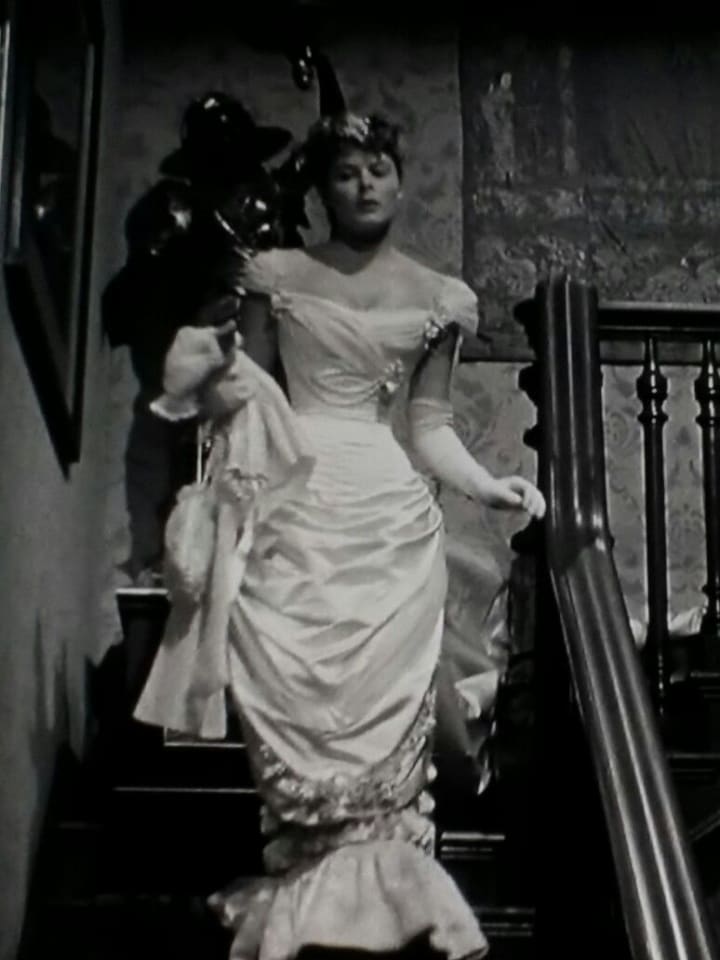
Gaslighting works as a strategy because we see things from the perspective of the abuser. What makes Gaslight (the film) important is that we see it all. We see the behaviour of the abuser as well as the abused. And we believe and root for her because of this. But for many women in this situation we don’t see the machinations, we only see the impact – a woman deranged and railing against a ‘truth’.
And for it to work, he has not only to insist upon her instability – he must enlist others to see his truth.
Nancy Oliver: What's the matter with the mistress? She don't look ill to me. Is she?
Elizabeth: I don't know. Not as I can see. But the master keeps telling her she is.
A young maid, Nancy (played to an Oscar award nomination standard by Angela Lansbury) who sees a handsome, rich husband. And a housekeeper who cannot be easily lied to, but whose hearing is fading. These women have a role in reinforcing the husbands assertions.
And Gregory’s ultimate game is to enlist the power of the psychiatric profession. He is going to prove her madness by institutionalism, by naming it a psychiatric disorder.

And because we can see the torture and not just its outcome, Gaslight works as an antidote to victim-blaming. Paula did not choose the wrong man – he chose her.
And just as Gregory enlists the help of the household in his plans, Paula needs help too.
This is provided by Cameron, an admirer of Paula’s aunt with a desire to understand her murder, who enlists a patrol man to watch Gregory. Cameron provides the answers.

The gaslight provides a mood, a dreamlike quality for all of us, not just the protagonist.
But what can we do to break the sleepy, dulling pull of the gaslight?
We have to be one of the voices that insist upon describing their reality as honestly and completely as possible.
And rush to aid those who cannot express their distress.
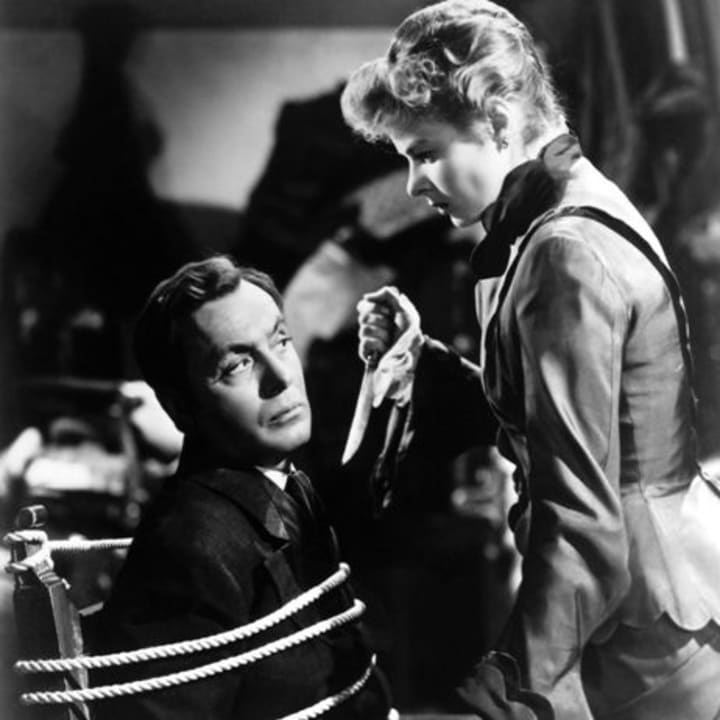
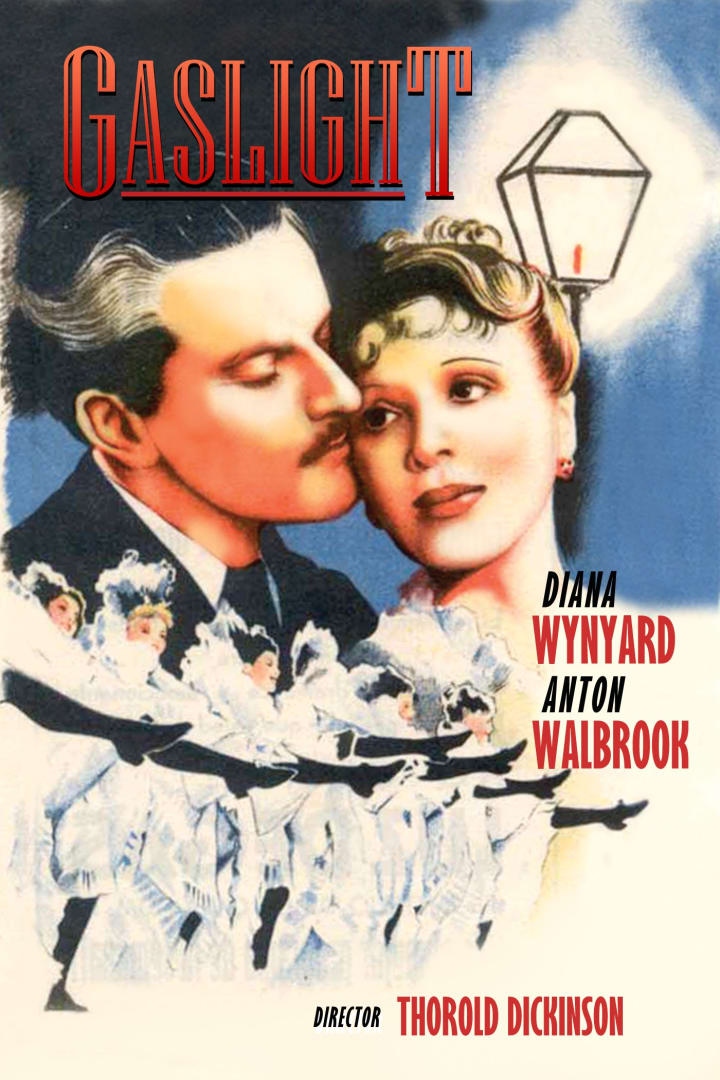
Of course, there is a great irony in all of this. Gaslight (1944) is actually a remake. In 1940 there was a British version of the film, just as thrilling, but not as glamorous. But when Metro Goldwyn Mayer bought the remake rights, there was a clause insisting that all existing prints of the original film be destroyed… as if it never existed…
If you've enjoyed what you have read, please consider subscribing to my writing on Vocal. If you'd like to support my writing, you can do so by leaving a one-time tip or a regular pledge. Thank you.
About the Creator
Rachel Robbins
Writer-Performer based in the North of England. A joyous, flawed mess.
Please read my stories and enjoy. And if you can, please leave a tip. Money raised will be used towards funding a one-woman story-telling, comedy show.
Reader insights
Outstanding
Excellent work. Looking forward to reading more!
Top insights
Compelling and original writing
Creative use of language & vocab
Easy to read and follow
Well-structured & engaging content
Excellent storytelling
Original narrative & well developed characters
Expert insights and opinions
Arguments were carefully researched and presented
Eye opening
Niche topic & fresh perspectives
Heartfelt and relatable
The story invoked strong personal emotions
Masterful proofreading
Zero grammar & spelling mistakes
On-point and relevant
Writing reflected the title & theme
Keep reading
More stories from Rachel Robbins and writers in Geeks and other communities.
Butterfly McQueen (8 January 1911 – 22 December 1995)
During the filming of Affectionately Yours (1941), Merle Oberon told friends that the film was a “dud”. And she wasn’t wrong. It is a mis-step of a comedy, based on the idea that two intelligent and exceptionally beautiful women would care about and compete over a philandering liar. Big names and talents wasted on a silly, pointless script. It is not just my 21st century sensibilities that baulk at the chaotic, broad comedy. It did poorly at the time, finishing 166th at the box office for 1941, despite the three-way draw of Rita Hayworth, Merle Oberon and Dennis Morgan. It also had the talents of Academy award winner Hattie McDaniel in yet another maid role. And the unique voice and spirit of Butterfly McQueen is used merely to punctuate the comedy with shrieks and laughs. (Notice neither of them make it onto the poster…)
By Rachel Robbins2 years ago in Geeks
The Politics of Playing Dress-Up
Well, to start off I'd like to say a happy world book day to all who celebrate. I know I haven't really posted anything on my socials about it but I'm not a jubilant kind of person. I lay low most of the time. Let's start off with a popular anecdote from the vaults...
By Annie Kapur6 days ago in Geeks
Book Review: "The Palace"by Gareth Russell (Pt. 1)
This review covers the introduction to chapter 3 You know how much I love books about royal history. No, that doesn't particularly mean I enjoy the monarchy the way it is at the moment. I do however, enjoy how the monarchs were once, even as recent as Queen Elizabeth II, were involved in the political landscape of their country. So, it only makes sense to read a book about one of the most important places in the whole of England - Hampton Court. The Palace covers the 500 years from its building to the modern day, including all the great and worrying things that happened there over this time. It was intriguing.
By Annie Kapur2 days ago in Geeks




Comments (7)
One of the great films of all-time!!! Excellent review! Great job, Rachel.
Excellent! A perfect blending of a film review & an analysis of "gaslighting". And a great ending - to the film & your article. Fortunately, Mayer did not succeed in the destruction. I've seen both; each have commendable aspects but I prefer the Cukor. Love Dame May Whitty bringing levity!
One of my all-time favourites! Thanks for this...and for information about the original!
Wow! This is an awesome, awesome review, explanation, and analysis of "Gaslight." You hit every nail on the head. It's incredible how something from the 1940s can still be so relevant today. Thank you so much for writing and sharing this piece!
VERY INTERESTING
NICE
GOOD