
Exploring Affordable 3D Scanning Services for Small Businesses
3D Scanning Services have shifted from being high-cost solutions reserved for industrial giants to accessible


For many small businesses, staying competitive often means embracing new technologies without breaking the bank. In recent years, 3D Scanning Services have shifted from being high-cost solutions reserved for industrial giants to accessible, budget-friendly tools for entrepreneurs, artists, engineers, and local manufacturers. But what exactly makes them worth exploring for small businesses, and how can they unlock growth without draining limited resources?
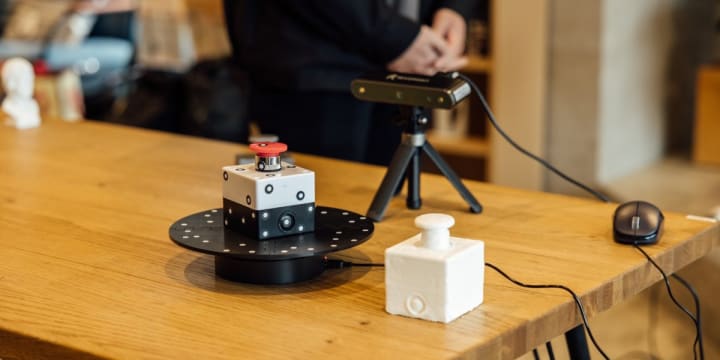
One key driver behind the increasing interest in 3D scanning among small businesses is its ability to streamline design and production workflows. Take for instance Studio Nomad, a small custom furniture company based in Portland. Founder Eliza Wren shared in a recent interview, “We used to spend weeks on prototyping. Now, with 3D scanning, we get accurate surface data in hours, make quick tweaks, and send designs straight to CNC or 3D printing. It’s changed how fast we can move and how much we can take on.” Her team adopted a local scanning service to digitize reclaimed wood surfaces, allowing them to design unique furniture pieces with organic textures—something nearly impossible to replicate manually.
The rise of affordable 3D Scanning Services is fueled not only by lower hardware costs, but also by the increasing number of service providers offering flexible packages. Companies no longer need to purchase expensive equipment or hire in-house experts. Instead, they can outsource scanning needs to specialized firms or freelancers, many of whom offer mobile services or cloud-based platforms for model delivery. This shift in accessibility has leveled the playing field for startups and small studios.
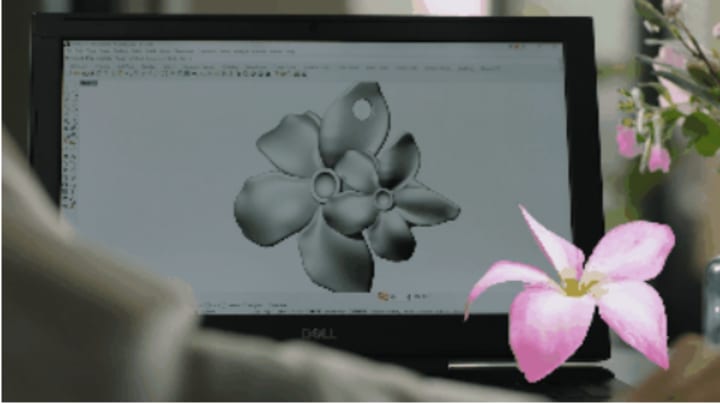
What’s more, the services aren’t just for product design or prototyping. In the fashion industry, small ateliers have begun using 3D scans to create precise digital mannequins for custom tailoring. A recent project in Brooklyn saw a collaboration between a local tailoring house and a freelance 3D scanning expert, resulting in a completely virtual fitting process for clients during the pandemic. It not only improved the fit of garments but also helped the business stay afloat when physical appointments weren’t possible.
Even in sectors like architecture and heritage preservation, 3D scanning is opening up new opportunities. Small restoration firms can now afford to create detailed digital twins of historical structures, helping them plan renovations more accurately and present their projects to clients in visually engaging ways. A case in point is Green Beam Studio, a two-person architecture team in Edinburgh, which used a budget 3D scanning service to model a 17th-century stone chapel. Their scan allowed them to detect structural flaws invisible to the naked eye and saved them thousands in potential repair costs.
Industry voices have recognized this shift too. In a panel discussion hosted by Maker Faire, engineer and digital fabrication advocate Limor Fried remarked, “The democratization of 3D scanning is here. It’s not just something for NASA or Hollywood anymore—it’s for anyone who has a good idea and wants to bring it to life.” Her statement rings true for small business owners who previously saw such technologies as out of reach.
With advancements in portable scanning devices, such as the Revopoint MINI 2 and MIRACO scanners, service providers can offer on-site scanning without bulky setups or large crews. This mobility makes the technology especially useful for businesses dealing with delicate, large, or immovable objects. Whether scanning a sculpture for reproduction or a workshop machine for reverse engineering, small companies can now access high-precision data at a fraction of the traditional cost.
Marketing is another area where 3D scanning services can make a big impact. Product visualization in 3D has become a major trend in e-commerce. Small brands can now offer interactive 3D previews of their products, giving customers a richer online shopping experience. When combined with augmented reality (AR), this creates an immersive digital storefront that rivals those of larger competitors. A small ceramic studio in Melbourne, for example, recently used a freelance scanning service to create AR models of their handmade vases—sales jumped 40% within three months.
For many businesses, the first step is simply knowing that these services exist and are within reach. Whether it’s through local maker spaces, online directories, or freelancer platforms, affordable 3D scanning has never been more accessible. The key lies in understanding the potential applications—from improving product fit and function to elevating marketing efforts—and finding the right partner to make it happen.
In the end, 3D Scanning Services are not a luxury anymore—they’re a smart, strategic investment for small businesses looking to work smarter, faster, and more creatively. As technology continues to evolve and competition grows, those who embrace accessible innovation will be the ones who thrive. Small businesses may not have the budgets of industry giants, but with the right tools, they can certainly match their agility and creativity.
About the Creator
Olivia Davis
I really love DIY, and I once used 3D scanning and 3D printing to create a very beautiful desktop ornament. I really like my 3D scanner, MIRACO.
Keep reading
More stories from Olivia Davis and writers in Geeks and other communities.
Metro Hub: Intelligent Robotic 3D Scanning for Automated Industrial Workflow
Revolutionize your inspection and measurement processes with the Metro Hub, an advanced robotic 3D scanning system designed for batch automation in both laboratories and production lines. Built for high throughput, precision, and safety, Metro Hub integrates seamlessly into modern manufacturing environments.
By Olivia Davis6 months ago in Education
Book Review: "The Queen" by Andrew Morton
You're probably wondering why on earth I would read this book. It was free and it was a fair length. That was basically it at first. But another reason is because I enjoyed the show The Crown and so, it only makes sense to read a book that goes through separating facts from fictions - and to be fair, there aren't a lot of fictions about the show it seems. From the birth of the little princess and the way in which her father was reluctantly to become the king, all the way to meeting and marrying the veteran prince, Duke of Edinburgh and even down to the death of her father, queendom and beyond, this book actually gives us a lot about a woman who basically embodied the greatness and modernisation of the British 20th Century.
By Annie Kapur7 days ago in Geeks
Rani Mukerji To Star In Dhoom 4, YRF's Next Spy-Verse Film? Mardaani 3 Actor Says, 'I Have...'
For over two decades, Yash Raj Films (YRF) has been one of Hindi cinema’s most influential studios. But, under the vision of Aditya Chopra, it has evolved into a creator of interconnected cinematic universes. What began as a knack for blockbuster storytelling matured into a strategic world building exercise, first with the adrenaline charged Dhoom films and later with the massively popular YRF Spy Universe. But will his wife and actress, Rani Mukerji, be a part of these cinematic universes?
By Dena Falken Esq3 days ago in Geeks


Comments
There are no comments for this story
Be the first to respond and start the conversation.