
Edith Head – Magic and Camouflage
Character through Costume Design


“What a costume designer does is a cross between magic and camouflage. We create the illusion of changing the actors into what they are not. We ask the public to believe that every time they see a performer on the screen he’s become a different person.”
Edith Head (28 October, 1897 – 24 October, 1981)
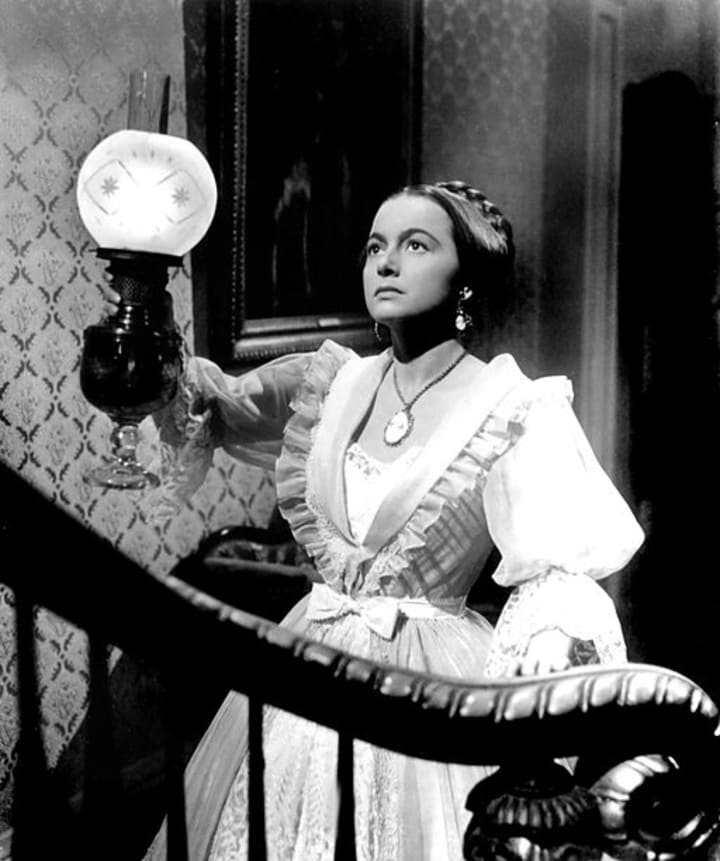
Being an imaginary 1940s screen writer can be a lonely life.
I sit at my imaginary typewriter and tap away stories about sassy women with a fierce wit and a startling intelligence. I plan to write women who can philosophise, argue and stand their ground. I plot women who make mistakes and then ride the storm. But I’m told instead to write stories about good girls who wait for Mr Right, who I find drippy and dull. Bad girls, I am reminded, need to be punished.
The other writers think I only got the job because of my pencil skirt and the gossip I may or may not know about Samuel Goldwyn. They ignore me in meetings. With that, the handsy studio executives and the blue-nosed censors, there’s not much space for friendly, female company.
And that’s why I’m going to light my imaginary cigarette and have an imaginary conversation with the great Edith Head. Because despite all sorts of disagreements in Hollywood, we all agree that if the censors won’t let us undress them, women on screen should be as well-dressed as possible.
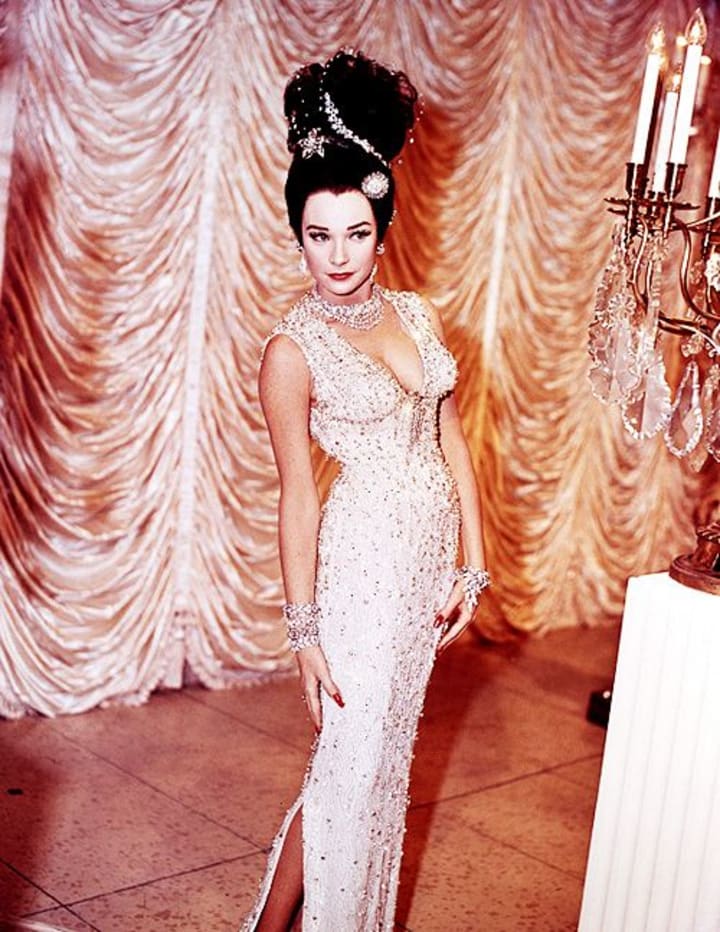
Because I am a 1940s screen writer my imaginary conversation with Edith has to happen before she completed her unbroken run of Oscar nominations from 1949 – 1966 and her record 8 awards in total. It is before the controversy of her acceptance of an Oscar for Sabrina (1954) that doesn’t acknowledge the contribution of Hubert Givenchy to Audrey Hepburn’s wardrobe. It is before the glorious camp and extravagance of the costumes for Shirley MacLaine in What a Way to Go! (1964).
Instead, she has just finished her first collaboration with Hitchcock on Notorious (1946), dressing Ingrid Bergman as spy and seductress.

I enjoy Edith’s company. She makes me feel safe. She never tells me about her clients’ secrets and insecurities. And I know she won’t tell on mine. But from the first meeting, she told me my hips don’t need the added bulk of a peplum. Simple tailoring, she informs me, is my friend.
You see, men think we dress to impress them, but Head knows we dress to impress other women. The way we talk about clothes excludes men. It is all about joy in our comfort, our bodies, in the right textiles, drapes and shapes.
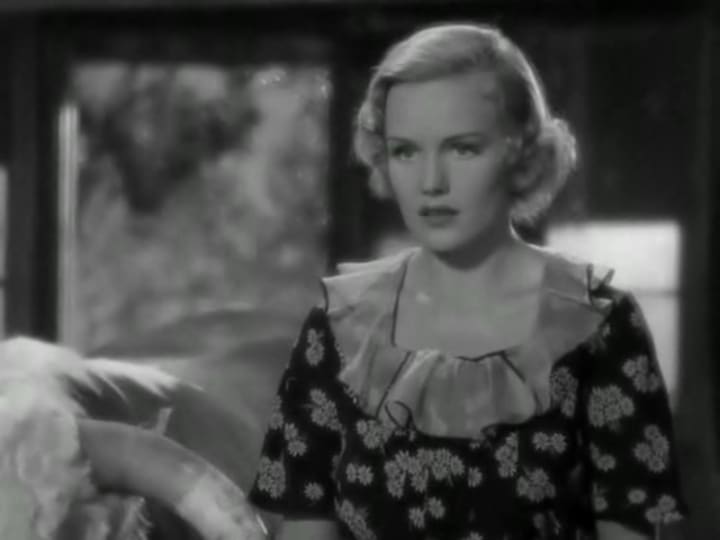
Some things I’ve learned from talking to Head…
“Some people need sequins, others don't.”
Frances Farmer – no need. Paulette Goddard, yes.
Her advice to me, is that if I want to be taken seriously by the men – dress neutrally but sparkle conversationally.
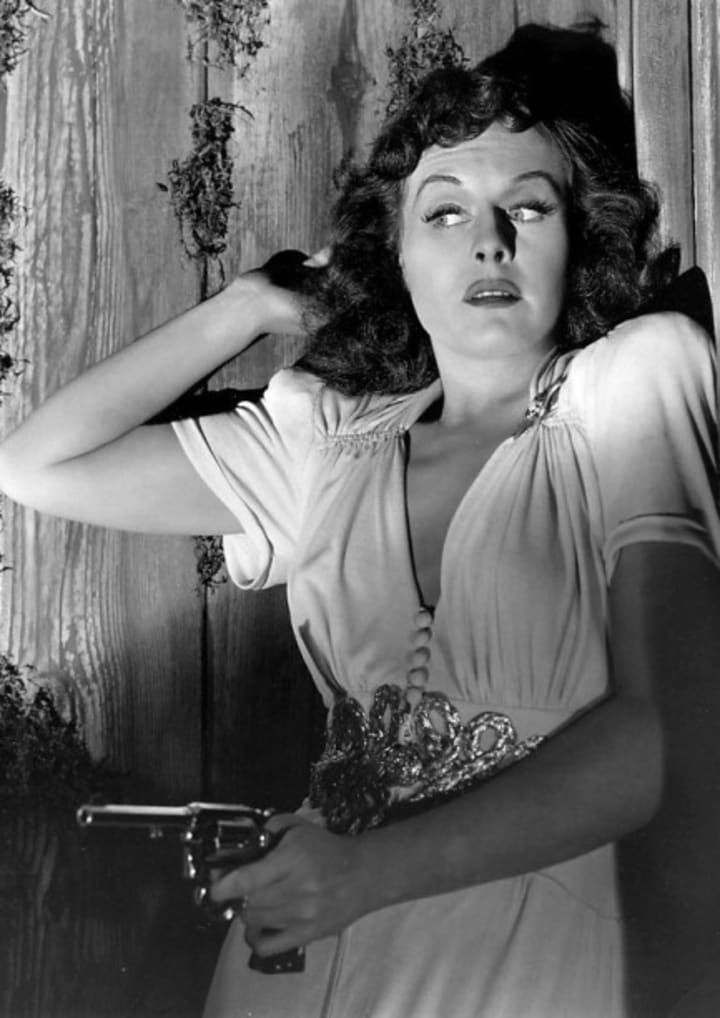
“The audience must know who a character is the moment she walks on. They make instant judgement before they’ve even heard her speak. She can’t look like one thing and be another.” – Edith Head
I learn from Edith that costumes start in the script. The role of the costume is to define the era, explore an individual’s sensibilities and yearnings and to declare a screen presence. Costumes, like the actors who wear them, have a character arc. Line them up and you will see how the character progresses. From the zebra-striped two piece evening gown, to the masculine tailoring and neutral wardrobe, we see Ingrid Bergman as Alicia Huberman move from party girl to spy operating under the radar. Her clothes tell a story.

“I knew I was not a creative design genius. I was never going to be the world’s greatest designer, but there was no reason I couldn’t be the smartest.” - Edith Head
I am struck in our conversations about how often Edith plays down her creativity. She claims her skills lie in negotiation and collaboration. As if creativity is a virtue only bestowed on chosen ones. But I take from this, that creativity comes through relationships, interpretation, and attention to detail. Her expertise was not about style and flair, but there is a greatness in her service to the character and the story-line. She performs an alchemy of the director's wishes, an actress's orders and the plot's demands.

“Think of yourself as a product.” In order to achieve success you have to sell that product, so start right now thinking of how you can improve it.’ – Edith Head
I get this Edith, I really do. But this is something I struggle with. I think the men in the office already think of me the same way they think about a washing powder, or a pair of shoes. To them, I am a product, a thing, an object. They don’t see me in all my complexities, my insecurities and my successes. And I don’t know how to make them.
What I’m trying to say is that I’m not good at the whole self-promotion thing. And boy, you really got this. Edith. You lived at both the right time for designing dresses for glamorous actress and the wrong time to have missed out on the glory of social media. I can’t explain it to you right now, but you would have been a sensation on Instagram.
From Dorothy Lamour’s sarong, you showed that you knew how to be a star without being on the screen. People knew the name Edith Head, because they knew who wore your clothes.
So, yes, I get it. People need to know my name because they know who says my lines.
The dream – my words being said by Ingrid Bergman wearing a dress designed by you.
Well, that can only happen if I get back to my imaginary type-writer. Thanks Edith.

As I turn back to my desk, Edith’s parting shot is to let me know that maybe I should wear a halter neck to balance out my proportions.
If you've enjoyed what you have read, consider subscribing to my writing on Vocal. If you'd like to support my writing, you can do so by leaving a one-time tip. Thank you.
About the Creator
Rachel Robbins
Writer-Performer based in the North of England. A joyous, flawed mess.
Please read my stories and enjoy. And if you can, please leave a tip. Money raised will be used towards funding a one-woman story-telling, comedy show.
Keep reading
More stories from Rachel Robbins and writers in Geeks and other communities.
Book Review: "Human Monsters: A Horror Anthology" by Various Authors
Yes, it's horror again. I'm feeling kind of down and whenever I'm down I read horror because it makes me feel better. Have you heard about that study that states people who are in depression should watch and read horror in order to make themselves feel better? Yeah, I checked it out some time ago - you should too. Human Monsters is exactly what you think it is, it is about monsters who are human - those who lurk in the normal world, not in the shadows, not in the darkness - they stand right in front of us. They are us. Let's go through my favourite stories in the anthology...
By Annie Kapur18 days ago in Geeks
Matt Prokop, a former Disney actor, was arrested in Texas on charges of child pornography.
Matt Prokop, a former child actor who is now best known for his roles in Disney Channel productions like "High School Musical 3: Senior Year" and "Geek Charming," has been arrested in "Victoria County, Texas" on a number of serious charges, one of which is allegedly possessing child pornography. The 35-year-old was taken into custody on December 24, 2025, and as the case progresses, he or she is currently being held without bail.
By Raviha Imranabout 17 hours ago in Geeks
Bruce Lee and The God of War: Kuan Ti
It starts with love.. The Power to the God Of War and Wealth Walk into a Chinese restaurant (even in Oklahoma, USA), a Chinese police station, a kung fu martial arts studio or even a Chinese temple and you often see a red faced warrior holding a heavy quan-do (spear like weapon).
By WILD WAYNE : The Dragon King4 days ago in Chapters


Comments (8)
Delightful costumes coupled with delightful writing! I thoroughly enjoyed this piece Rachel!
Fabulous! Both you and Edith. You do her justice.
I love how your writing always introduces me to fascinating people I’ve never heard of.
Wow... loved all of the photos. Thank you for the story!!😊💕
I had never heard of Edith Head until today. Thank you for educating me about this wonderful creative!
I always mention her in a media course I teach. Thank you for this!
She really did know how to dress people, great reminder!
❤️Great as always 🎬😊