
"Dr Zhivago" by Boris Pasternak
Classic Book of the Month: March

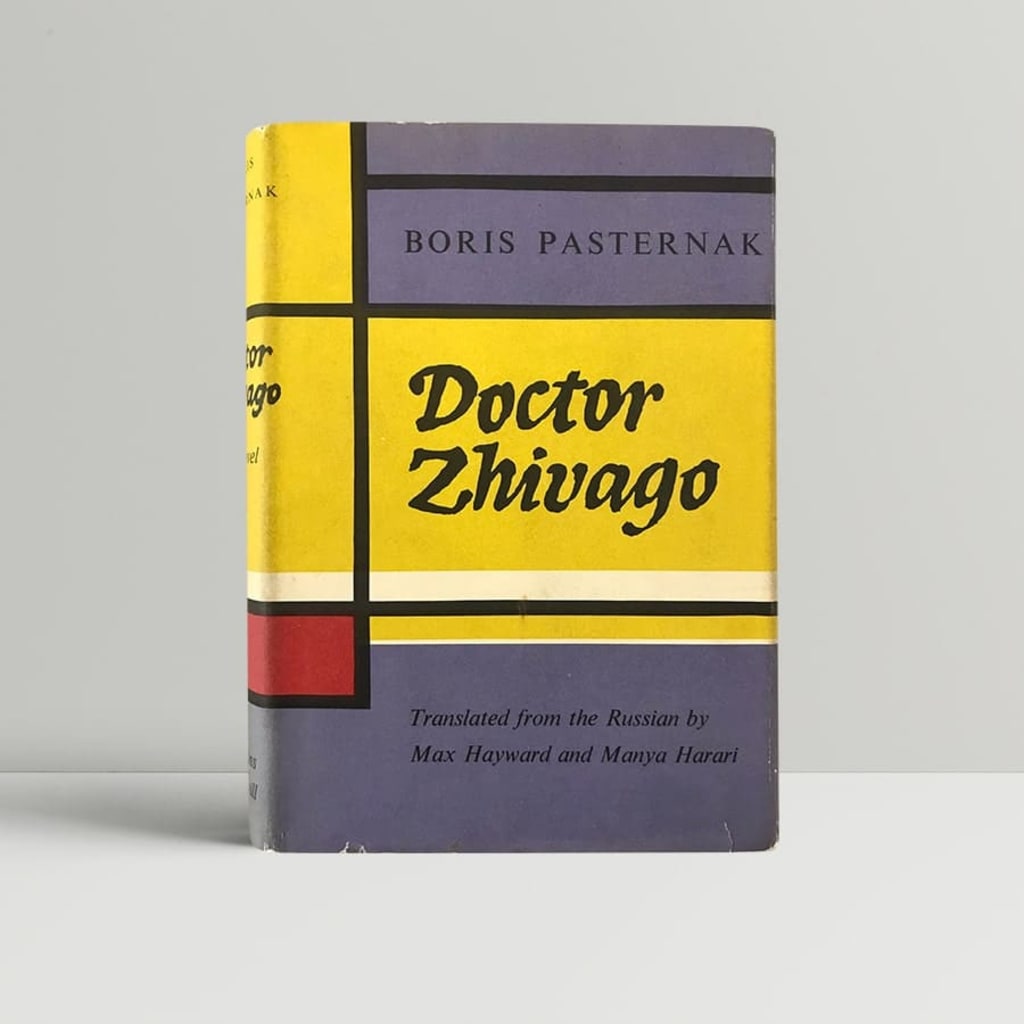
Published in 1957, Doctor Zhivago is normally regarded as one of the greatest Russian novels of the modern age with its themes of nationality and romance, life and death, truth and lies at the very heart of the text rounded off with the mysterious Doctor Yuri Zhivago, a figure of grand symbolism in a world that is constantly trying to drag him down to their level.

Heavily censored at its time, Doctor Zhivago was refused publication in the USSR due to its opinions about the October Revolution, 1917. The manuscript was finally published in 1957 due to it being smuggled into Milan and published there. Pasternak was awarded the Nobel Prize for Literature the following year and this made the Communist Party incredibly angry and embarrassed.

The novel opens in 1902 where Yuri is taken in by his maternal uncle and they all live in Imperial Russia. Yuri's uncle is a philosopher and an artsy person and through this he learns too, about his father. The next part involves the 11-year-old Yuri witnessing a man's suicide from a train whilst traveling. As the book develops, Yuri discovers more about who he is, and who Lara is as well. He witnesses wars and the violation of human rights, he cannot seem to get the image of death out of his head and the reader comes full circle back to the suicide upon the train. Involving a cellist and a woman called Amalia, Yuri works on his profession to become a doctor whilst being dragged between emotion and duty during the Russo-Japanese War.
As Yuri learns even more about himself - particularly that he may have a brother or half-brother, he also studies even further to be a doctor. Through attempted murder, fainting spells and lavish parties - control and toxicity become more and more present as aspects of Lara's life that she suffers dearly.

It seems great that Yuri has married Tonya and Pasha has married Lara, Yuri grows into a man, fathers a child and begins to really live the life of a doctor through war. But he does feel that something extreme is missing, a piece is being left out of his life. Once he starts to get to know Lara, he finds her not only interesting, but is more romantically interested in her than he would like to be. She does not yet reciprocate the feeling. Be that as it may, Yuri and Lara are working in close quarters due to the revolution and uprisings in which hundreds of people are being killed and injured.
The October Revolution causes Yuri's family to flee their home and travel to Tonya's. Yuri begins to pen poetry and letters, writings of incredible artisticness. As he progresses to becoming a part of the guerrilla movement unwillingly, Yuri reflects on his life and his marriage, the things he has not done and the people he did not save. He comes into close contact with rampant narcissism and toxicity in character whilst Tonya and Lara grow closer together.

As the story progresses, death breaks marriages and suffering encaptures the very essence of the storyline, emotion and heartbreak litter the novel and come to a blinding climax from Part 14 onwards. We eventually come to the line of being a nameless number and the book comes to an eventual, tearful and heartaching close. An absolutely beautiful novel with a brilliant message of love and death.

I first read this in my teens and I couldn't stop crying throughout the whole thing, from the first suicide to the epilogue which is strangely upsetting, there is so much to explore about existence in this book and how we have to come to terms with the fact that people we love will die and not always after living a long and fruitful life. Sometimes, things will go wrong and we just have to deal with it, no matter how much it hurts - and believe Pasternak, it is going to damn well hurt.
“About dreams. It is usually taken for granted that you dream of something that has made a particularly strong impression on you during the day, but it seems to me it´s just the contrary. Often it´s something you paid no attention to at the time -- a vague thought that you didn´t bother to think out to the end, words spoken without feeling and which passed unnoticed -- these are the things that return at night, clothed in flesh and blood, and they become the subjects of dreams, as if to make up for having been ignored during waking hours.” - Dr Zhivago by Boris Pasternak
About the Creator
Annie Kapur
I am:
🙋🏽♀️ Annie
📚 Avid Reader
📝 Reviewer and Commentator
🎓 Post-Grad Millennial (M.A)
***
I have:
📖 280K+ reads on Vocal
🫶🏼 Love for reading & research
🦋/X @AnnieWithBooks
***
🏡 UK
Keep reading
More stories from Annie Kapur and writers in Geeks and other communities.
Book Review: "Justine" by Lawrence Durrell
Now, you all know how I love reading a random book by someone I've never heard of at least once a week. Well, I kind of cheated this week because I had already heard of this guy before even though I haven't actually read anything by him before. To be honest, I was completely on the fence about this book when it came to the writing style vs. what the book was actually about. There were both pros and cons to this text and that is why, dear reader, I could not possibly give it full marks even though it was a somewhat enjoyable read. I have to say, there are some faults of writing to be analysed.
By Annie Kapur4 years ago in Geeks
Ben Shelton
Ben Shelton has quickly become one of the most exciting names in modern tennis. In a sport often dominated by long-established stars, Shelton represents a new generation—fearless, expressive, and unafraid of the biggest stages. His rise has not only captured the attention of fans but has also created intriguing matchups against seasoned players like Casper Ruud. The growing interest around Ben Shelton vs Casper Ruud reflects more than just individual matches; it highlights a clash of styles, experience, and tennis philosophies. The Rise of Ben Shelton Ben Shelton’s journey to the professional tennis spotlight is anything but ordinary. Unlike many players who spend their teenage years grinding on the international junior circuit, Shelton developed largely within the American college system. Playing for the University of Florida, he sharpened his game in a competitive yet structured environment, gaining match toughness and confidence before fully committing to the ATP Tour. What immediately stands out about Ben Shelton is his physical presence and explosive athleticism. His left-handed serve is among the most powerful on tour, capable of producing aces at critical moments. Combined with his aggressive baseline play and willingness to move forward, Shelton brings a refreshing unpredictability to matches. Beyond technique, his emotional openness—celebrations, fist pumps, and visible intensity—has made him relatable to fans and refreshing in an era often defined by restraint. Casper Ruud: Consistency and Craft On the other side of the net, Casper Ruud represents a different but equally compelling tennis archetype. The Norwegian star built his career on discipline, consistency, and a deep understanding of clay-court tennis. While Ruud has steadily expanded his success across surfaces, his foundation remains rooted in patience and tactical precision. Casper Ruud’s game thrives on heavy topspin, excellent footwork, and mental resilience. He may not always dominate headlines with flashy shot-making, but his ability to construct points and wear down opponents has brought him deep runs in major tournaments. Ruud’s calm demeanor and professional approach contrast sharply with Shelton’s emotional fire, making their encounters particularly fascinating. Ben Shelton vs Casper Ruud: A Study in Contrast When discussing Ben Shelton vs Casper Ruud, the appeal lies in the stylistic contrast. Shelton plays first-strike tennis, looking to shorten points with serve-plus-one patterns and bold forehands. Ruud, by contrast, prefers extended rallies where his consistency and court coverage can slowly tilt the match in his favor. In their meetings, these differences are clear from the opening games. Shelton often tries to establish dominance early, relying on his serve and aggressive returns to seize momentum. Ruud counters by absorbing pace, neutralizing Shelton’s power, and forcing him to play extra shots. The outcome often depends on Shelton’s ability to manage errors and Ruud’s success in extending rallies. These matchups also highlight the importance of adaptability. Shelton, still early in his career, learns valuable lessons in patience and shot selection when facing someone as composed as Ruud. Meanwhile, Ruud is challenged to defend against raw power and unpredictability—elements that test even the most experienced players. Mentality and Growth One of the most compelling aspects of Ben Shelton’s development is his mental growth. Early in his career, emotional swings could sometimes disrupt his rhythm. However, each high-profile matchup, including those against players like Casper Ruud, has contributed to his maturity on court. Shelton is learning when to channel his energy productively and when to slow things down. Ruud’s mental steadiness, on the other hand, has long been a defining strength. His ability to stay composed under pressure serves as a benchmark for younger players. In a sense, Ben Shelton vs Casper Ruud is not just a physical contest but a mental one—raw ambition meeting seasoned calm. Impact on Modern Tennis The emergence of Ben Shelton signals a shift in how fans connect with tennis players. His openness, confidence, and willingness to show emotion resonate strongly with younger audiences, particularly in the United States. He represents a bridge between elite performance and personal expression, something the sport continues to embrace. Casper Ruud’s continued success reinforces the value of fundamentals and discipline in an evolving tennis landscape. Together, their matchups symbolize the sport’s balance—power versus precision, emotion versus composure, youth versus experience. What Lies Ahead As Ben Shelton continues to refine his game, future encounters with Casper Ruud are likely to become even more competitive. Shelton’s ceiling is high, especially as he gains experience against top-tier opponents. Improved consistency and tactical patience could make him a serious threat across all surfaces. For Ruud, maintaining his position among the elite will depend on continued adaptation. Facing players like Shelton forces him to evolve, adding aggression when necessary while preserving his trademark consistency. Conclusion Ben Shelton’s rise is one of the most compelling stories in tennis today. His matches against Casper Ruud offer more than just entertainment; they provide insight into the sport’s future. Ben Shelton vs Casper Ruud represents a meeting point between generations and styles, reminding fans why tennis remains endlessly fascinating. As both players continue their journeys, their rivalry—whether frequent or occasional—will remain a symbol of tennis in transition, where new energy meets established excellence, and where every match adds another chapter to the game’s evolving story.
By Saboor Brohi about 15 hours ago in Geeks




Comments
There are no comments for this story
Be the first to respond and start the conversation.