
Doris Day – The Thrill of it All (1963)
Doris Day – The Thrill of it All (1963)


I have written about Doris Day before. In fact, she was the subject of my undergraduate thesis. I’ve written about her because she is magnificent. I am a fan.
You can read here (Little Feminism) about how Calamity Jane is my favourite film.
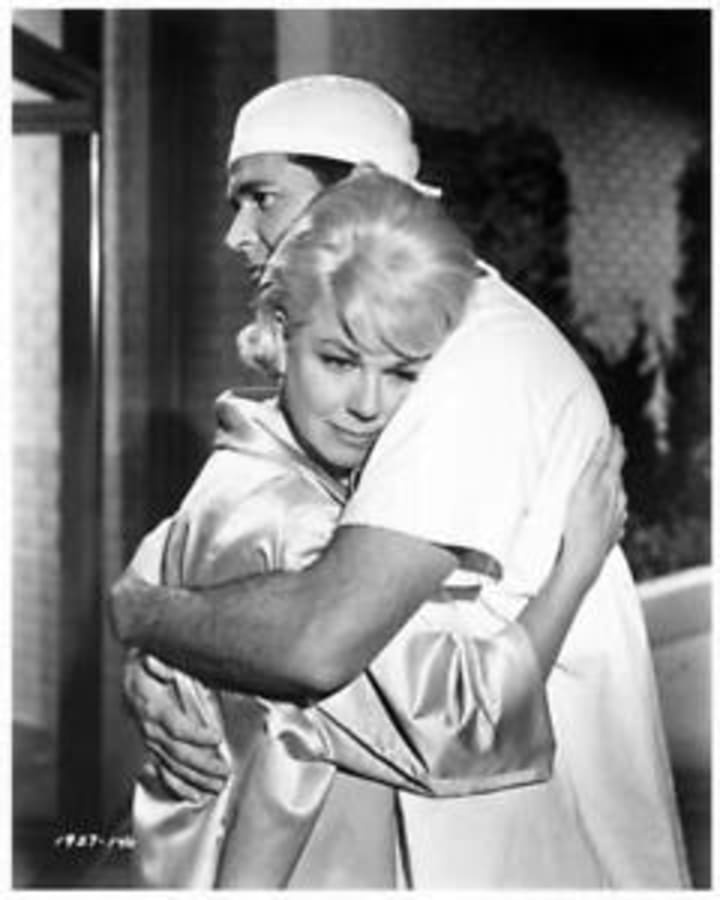
The Thrill of it All (1963) is a very different film with a slightly different Doris starring as Beverley Boyer. She is already tamed and domesticated, unlike Calamity.
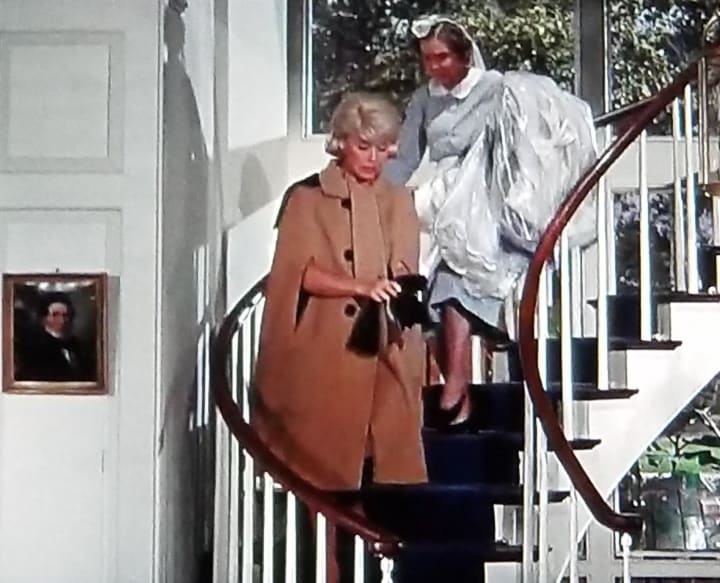
The Thrill of It All is a domestic comedy. But it is a domesticity that few of us have access to; a husband’s wage being enough to cover a large house, two cars, two children and a maid. (In 1963 could a Doctor’s wage really cover all of this, including his wife’s expansive wardrobe and the twin beds!?).
Anyway the message of the film – because it is a morality tale - is that Beverley Boyer is satisfied enough by being a doctor’s wife. Her attempts at a career as an advertising actor are ill-conceived and a burden for her family. She should be at home…, doing what precisely? After all, she has a live-in maid – oh yes, cooking dinner and bottling her own ketchup. I mean lots of ketchup, baskets full of tomatoes needed.
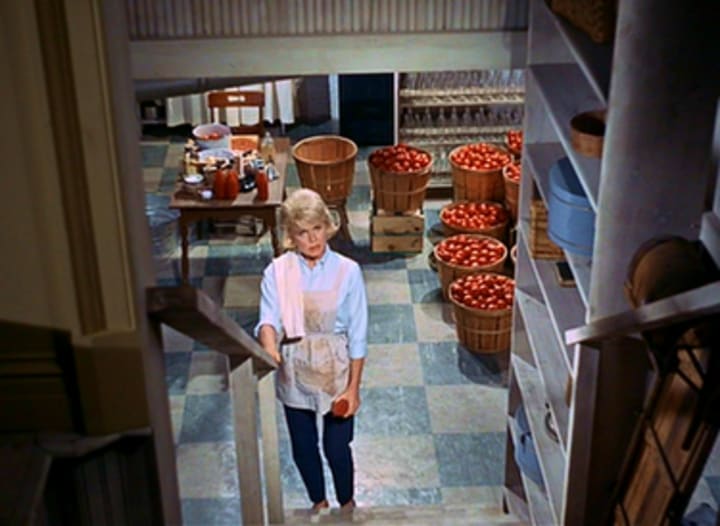
But there are layers of story-telling. The story portrayed by the film is clearly that women should know their place. That female ambition is dangerous for the home.
One exchange between Dr and Beverly Boyer:
“What happened to my rights as a woman?”
“They grew and grew until they suffocated my rights as a man.”
Because, the audience is invited to agree, rights are a zero sum game.

And this sentiment often goes unchallenged. According to Helen O’Hara’s (2021) research there were reports from the Directors Guild of America meetings of male directors arguing that any steps towards promoting women should be accompanied by financial compensation to men, as they would be losing out as a result.
In other words, men are entitled to those jobs and women achieving is a way of stifling men. That is what Dr Boyer thinks.
The story of The Thrill of it All, reflects a layer of entitlement that goes unchallenged.
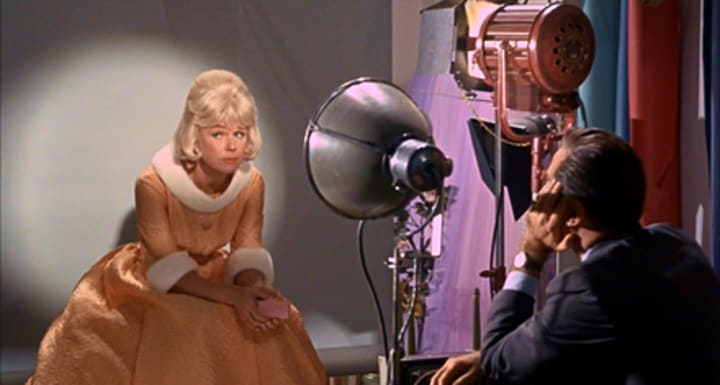
Let’s dig beneath the layers of that morality. The Thrill of It All was released in the same year as Betty Friedan’s book – The Feminine Mystique. This was a significant book in the women’s movement and credited with increasing activism around women’s rights in the US. In that book Friedan writes about uncovering the ‘problem that had no name’ – the deep dissatisfaction women felt at being confined to their home. The question “is this all?” devastatingly opening up a lack of purpose. Beverley Boyer’s desire to earn her own keep and to have something in her life beyond ketchup feeds neatly into that narrative. Friedan, however, highlighted the role that advertising had in keeping women in their place, of sharing the dream of domesticity. How ironic then that Beverley is employed to advertise domesticity whilst apparently neglecting her own family. (There is no hint that the long hours that her husband works could be seen as neglect).
However, both the book and the film have at their hearts a privilege not shared by most. For many the life of leisure depicted by Beverley Boyers and the Feminine Mystique is aspirational. It is not unsatisfactory – it is out of reach. As bell hooks (1984) points out the Feminine Mystique is a critique of the sexism faced by an elite group, and does little to address collective solutions that build community and connection.

Often when Beverley is at work, advertising soap powder and detergent, she is a woman alone, surrounded by men in the advertising industry. The advertising men are depicted as manipulative, flattering and deceptive in their treatment of Beverley – offering stardom and the kind of money she can’t ignore.
But the film itself was written, produced and directed by men. Men who have produced a fable about women seeking satisfaction within marriage and the home. And yet, to tell that story they rely on one of the most successful working women of her time. The film illustrates the post-war conundrum of Hollywood – portraying women’s satisfaction in the home and using career women to do it.
One of the producers is Martin Melcher. He was married to Doris Day from 1951 to 1968. He was a man who relied on his wife’s income and stardom for his own career. Whilst using her to tell stories of marital bliss, he was also an emotionally and financially abusive man. Following his death Doris was left with millions in debt that he had syphoned from their business. She also discovered that she had been signed on to do a television series and that the advance for it had already been spent. So, despite years as a top box-office star and recording artist, Doris Day had no financial security and was tied to a contract she hadn’t wanted.
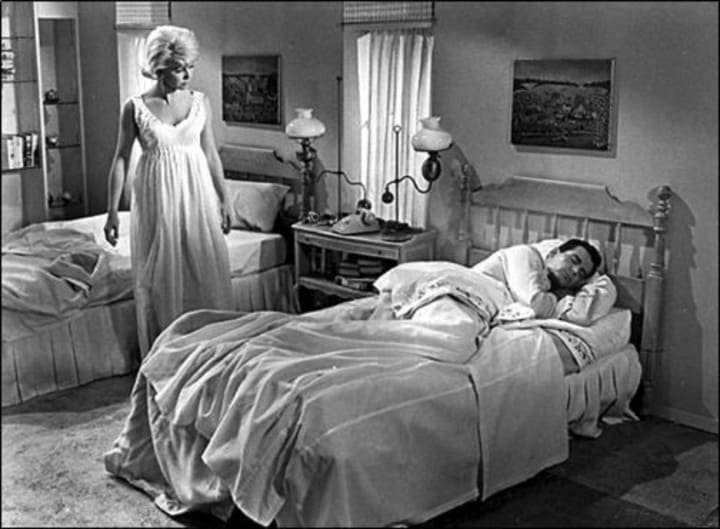
Doris Day is my Twitter handle and avatar. She remains wonderful to watch on screen, even in films with dated stories and poor scripts. James Garner, in his memoir, said The Thrill of it All was “better than it should have been… because of Doris”. Her performance is endearing, charming and funny. (As was Garner’s).
Doris Day was an important reminder to me when I was a domestic abuse researcher. She had been treated badly by three husbands by the time she made The Thrill of it All, but she was still a queen of the box office and a million-selling recording artist. Just like all the women I met and interviewed, she was not just the story of her abuse. The men they loved and the systems of support often let them down, but they amazed me every day. Doris Day amazes me even when she has to say lines like:
“My husband is a doctor and I’m a doctor’s wife.”
About the Creator
Rachel Robbins
Writer-Performer based in the North of England. A joyous, flawed mess.
Please read my stories and enjoy. And if you can, please leave a tip. Money raised will be used towards funding a one-woman story-telling, comedy show.
Keep reading
More stories from Rachel Robbins and writers in Geeks and other communities.
A Knight of the Seven Kingdoms Series Review (Season 1)
As one of the biggest properties in fantasy, A Song of Ice and Fire remains immensely popular with audiences. After reaching far into the past with House of the Dragon, a second spin-off was on the cards. A Knight of the Seven Kingdoms serves up a bite-sized slice of action and drama, but it still claims a spot among the best small-screen titles.
By Robert Cain15 days ago in Geeks
How 'A Knight of the Seven Kingdoms' Proves Daenerys' Plan To Retake Westeros Was Never Going To Go As Well As She Thought
Nearly seven years after it aired, the eighth and final season of the phenomenon that was Game of Thrones is still remembered for one of the most divisive TV series endings of all time. Much of the controversy stems from fans believing the ending was too rushed, particularly the scenes in which Queen Daenerys Targaryen, seemingly depicted as a hero for most of the series, succumbs to Targaryen madness and burns many of the innocent commoners of King's Landing in her bid to seize the Iron Throne.
By Kristy Andersona day ago in Geeks




Comments
There are no comments for this story
Be the first to respond and start the conversation.