
Does 'Gotham' Prove That 'Batman' Can Work as a Live-Action Show?
A Look Back at What The Show Got Right and Wrong

Many people have compared the actors who have played Batman in live-action films. And just recently, fans have been debating whether or not Robert Pattinson is a good choice for Matt Reeves' The Batman. But one topic that has never really been debated is live-action Batman actors on television. The reason for this is that there has pretty much only been one: Adam West.
In the decades since his show, Batman has been a cursed character when it comes to live-action TV. A Bruce Wayne show was in the works back in 1999, but it never came to be. In Smallville (2001), Lex Luthor has a vision of a future in which Batman lies dead, as a skeleton wearing the cowl and suit. In Birds of Prey (2002), there's brief footage of Batman (Bruce Thomas from the OnStar commercials), as the narration explains that he has left Gotham City. In Powerless (2017), there are mentions of Batman and Bruce Wayne, but the audience pretty much only saw his (annoying) cousin Van Wayne. All of these are cases in which Batman is kinda there, but also not really. It's really bizarre to think about when we've gotten so many live-action show depictions of Superman.
Slowly, things have begun to change a bit. DC Universe's Titans so far has shown Bruce Wayne/Batman from behind, and with his face obscured, not speaking at all. But now people know that Iain Glen will portray Bruce Wayne in season two. In Arrow, there was a mention of Bruce Wayne, and the later Elseworlds crossover revealed that Batman's not in Gotham anymore. But now it has been announced that Kevin Conroy will portray Bruce Wayne in the CW crossover Crisis on Infinite Earths. This is a dream come true among fans who view Conroy as the definitive voice of Batman. However, we are getting a Batwoman show in which it seems that Batman will be absent for the most part. To be fair, Batwoman is a character who needs to stand on her own. But one cannot help but beg the question of whether a live-action Batman TV show could work.
This brings us back to Gotham.

Gotham title card (Credit: Warner Bros. Television)Sc
'GOTHAM' SPOILERS BELOW!
The basic premise of Gotham has always been a headscratcher. A Batman TV show, except Batman is still a kid, and not yet Batman, but various members of his rogues gallery pre-date the caped crusader's debut. Judging from the show's casting and the aesthetics of the city, one might think, "Why couldn't they have just done all this, but as a full-on Batman TV show?" Or even, "Why couldn't Ben MacKenzie have played Batman?" (He did voice him in the animated adaptation of Batman: Year One). The fifth and final season concluded with a finale that was heavily promoted as Batman arriving at last for an ultimate showdown against Jeremiah Velaska. But the finale failed to deliver, which may be what was expected after the rest of the season felt rushed, and did not live up to its epic-sounding premise inspired by the No Man's Land and Zero Year storylines. Instead, the final season serves as a reminder of all that was wrong with the show.
Of course, adaptations are not always beholden to the source material. To someone who has not seen or read much, or any, other Batman-related media, this may seem like a fantastic show. And there are sure to be those who enjoy the show despite having been steeped in a lot of Batman lore. But for some, knowledge of other interpretations of the characters may hinder enjoyment.

Gotham cast (Credit: Warner Bros. Television)
The Heroes
This younger Jim Gordon, who is filled with darkness, can be compelling to watch. But for some, it might be difficult to imagine him becoming a version of Jim Gordon with whom some fans are more familiar. It really depends on the viewer. Some changes, such as making Harvey Bullock more heroic, are odd, but interesting. Sean Pertwee's Alfred takes part in more of the action than would be allowed for other more aged versions of the character. Even David Mazouz and Camren Bicondova fare very well with what they are given for the roles of young Bruce and Selina (Lili Simmons is also convincing as an older Selina in the series finale).
But then there are changes to characters like Renee Montoya, a police officer who is supportive of Batman in other media. Gotham depicts her as a recovering drug addict, and then has her disappear after season one before she can get any further development. GCPD's Captain Sarah Essen, who is Gordon's second wife in the comics, and gets an impactful fate in the No Man's Land comics, gets written off in a not so impactful way within the first few episodes of season two.
Another change is that Dr. Leslie Thompkins becomes Jim Gordon's love interest. Eventually, things end up going south between the two of them, and some rather repetitive struggles between them ensue. She does show how dedicated she is as a healer like her comic book counterpart. But what's missing is the surrogate mother relationship that she is supposed to have with Bruce Wayne. In the season five episode "Ace Chemicals," one cannot help but be reminded of the lack of this type of relationship when Jeremiah places Jim and Leslie in a trap, referring to the former as Bruce's father figure, and the latter as simply Bruce's "dear friend." And even that particular moniker does not really feel earned since Bruce and Leslie do not interact so much on the show. The effort to give Leslie more to do may be appreciated by viewers, but her mother-son relationship with Batman would have been an interesting aspect to explore.

Scarecrow on Gotham (Credit: Warner Bros. Television)
The Villains
And then there's Barbara Kean, who is all over the place throughout the show's run. She begins as Jim's fiance before spiraling into criminal activity, and eventually feeling like a creator's pet when it is posited that she may be the rightful heir to Ra's al Ghul. And when the season four finale kicks off the No Man's Land storyline, she leads a territory where no men are allowed (which might be an eye-roller for some viewers). And if that's not enough, Jim rekindling his relationship with her in season five feels very forced as a result of everything that came before. All to ensure the creation of the Barbara Gordon who may surely become Batgirl in the future. But by this time, the Barbara name has a lot of baggage on Gotham. It feels very weird that the name Barbara in a Batman show would be more associated with villainy than with heroism.
If one were told that there would be a TV show featuring not just the more popular Batman villains like Bane, Mr. Freeze, Penguin, Poison Ivy, Ra's al Ghul, Riddler, and Scarecrow, but also some of the less popular villains like Cornelius Stirk, Hugo Strange, Mad Hatter, Professsor Pyg, Solomon Grundy, the Ventriloquist, and Zsasz, then it would sound like a really great show. But once one is told that these villains are around without Batman, then it sort of becomes a "Huh?" type of reaction. Surprisingly, the show refrains from having Harvey Dent undergo his transformation into Two-Face (he disappears after season two). And young Tommy Elliott does not transform into Hush. Still, the theory that these costumed villains are around as a result of Batman's presence goes away. And these two characters in particular have close relationships with Bruce Wayne in other media, which would've made their transformations interesting to see play out in a full-fledged live-action Batman show.
To be fair, some of these villains have been very well cast. The arcs pertaining to Penguin and Riddler, as repetitive as they may have felt at times, were fun to watch. Mr. Freeze is a vast improvement from what we got in Batman & Robin. Solomon Grundy, and how he came about was a pleasant surprise. Professor Pyg conveys as much creepiness and absurdity as one would hope. And the Scarecrow on this show is perhaps the best version of the character when it comes to film and TV. The one from Nolan's Dark Knight trilogy was under-utilized. And for some reason, Scarecrow is not involved in the No Man's Land storyline from the comics. With Jonathan Crane having very little to do in the NML portion of The Dark Knight Rises, one would hope that he would get something to do in the Gotham adaptation of NML. And, sadly, Scarecrow gets vastly under-utilized in season five. There may have only been one scene in this season, if memory serves. The Ventriloquist (accompanied by Scarface) and Bane feel like last minute additions toward the end of the series. Mad Hatter, whom the show depicted as a legitimately threatening hypnotist in previous seasons, only appears in one season five episode, with not much to do.
And then there's Zsasz, who's never been quite right from the beginning. In season one, he does have a few tally mark cuts in his skin indicating how many people he's killed. But other than that, he does not really feel like the Zsasz of the comics. Rather than a serial killer who knifes people to free them of the meaninglessness of life, he's a hired hitman with lots of guns. He is still nuts, but it is a really odd change. In season five, it seems that his kangaroo court trial is meant to be a tip of the hat to an issue from NML in which Batman and Leslie Thompkins debate the quality of his life, and whether medical resources should be used to save him. But it does not feel as compelling on the show.

Professor Pyg on Gotham (Credit: Warner Bros. Television)
Joker (?)
By now, readers might be thinking, "This article still hasn't mentioned the Joker." Well, neither does the show. Early on, it seemed that Gotham was trying to be in line with this idea that's prevailed since The Killing Joke (1988), which is that the Joker's backstory is very vague, and even he is not sure which memories are true. A comic from the 1950s revealed the chemical vat backstory, where it is first posited that Batman may have unintentionally created the Joker. Tim Burton's Batman film, which was made shortly afterward, ran with this. And Christopher Nolan's The Dark Knight ran with an ambiguous backstory.
In Gotham, some of the ambiguity seems to be tossed out the window, depending on one's point of view. Early on, we get Jerome Velaska (Cameron Monaghan), whose voice is reminiscent of Heath Ledger's Joker or even Chucky from Child's Play. Season three even has an interesting tip of the hat to when the Joker had his face cut off, and then wore it in New 52 comics. In season four, it is revealed that Jerome has a twin brother named Jeremiah, who, after Jerome's death, gets affected by laughing gas, turning his skin pale, and giving him a personality reminiscent to that of the Anthony Hopkins portrayal of Hannibal Lecter. And some of his actions really lean into elements of The Killing Joke being repurposed. Even though this might scream "Joker origin," there is no denying that Monaghan puts on very entertaining performances as these characters. Season five even seems to have a tip of the hat to New 52's Endgame storyline.
But once Jeremiah falls into the ACE Chemical vat, he gains a look that feels like a downgrade from how he looked before. After being comatose for ten years, he returns in the series finale, and once again dons clothes that are very reminiscent of the Joker. But his green hair isn't full, and his deformed face does not really scream "Joker" so much as "Palpatine." His vocal performance as this new iteration is not really that impressive. And again, he is not called the Joker on the show. People behind the scenes even seem to tiptoe around it, even implying that this may be a precursor that inspires the Joker, which is an idea that may not jive with many people. As much as the series finale's version of Velaska was promoted, he does not get much screen time, and Batman simply defeats him quickly with two batarangs in an anti-climactic scene. Despite there being reservations regarding actually showing a Joker backstory, it was sad seeing Monaghan's final performance on Gotham not live up to what came before. And it seems partially due to the show not being allowed to use the word "Joker" (And don't even get me started on the upcoming Joker movie).

Jerome and Jeremiah Valeska (Credit: Warner Bros. Television)

(Credit: Warner Bros. Television)
Batman
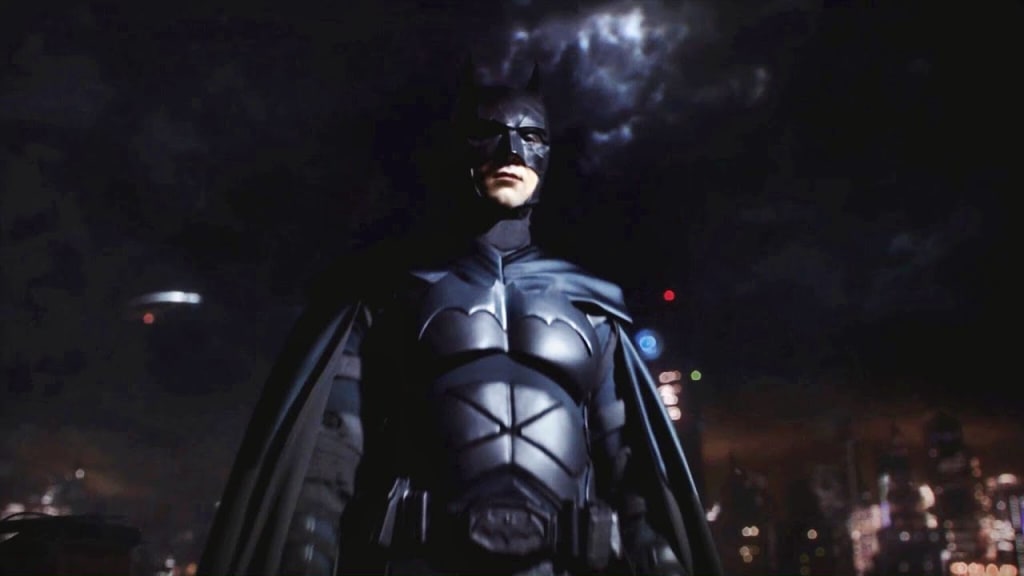
And, of course, there is the lack of Batman. There are hints of him throughout the finale, but there is no full body shot of him until the very end. And he looks very artificial. Some would argue that this finale was more disappointing than the Smallville series finale. One cannot help but wonder why there would be limitations on how much Batman there could be. Is it really that difficult to distinguish between the TV and film continuities? And would audiences not have been able to tell that neither Jerome nor Jeremiah would have ever become the Joker from the Suicide Squad film (the existence of which prevented Harley Quinn and other Suicide Squad characters from having further use on Arrow)? It really boggles the mind.
Conclusion
Gotham has shown that the aesthetics Batman's city and enemies can work in live-action television. Soon, we will be seeing a bit more of live-action Batman unobscured in DC Universe's Titans and CW's Crisis on Infinite Earths. But a live-action TV show centered around Batman is probably years and years away, if one ever gets made. A vague estimate, but Batman is all about mystery.
About the Creator
Steven Shinder
Author of fantasy horror comedy novel Lemons Loom Like Rain, which is available on Amazon. You can also read excerpts at stevenshinder.com and check out facebook.com/StevenShinderStorytelling.
Keep reading
More stories from Steven Shinder and writers in Geeks and other communities.
DC Universe's 'Swamp Thing' Ends with 'Loose Ends'
Swamp Thing is the third live-action show on DC Universe, following the releases of Titans and Doom Patrol's first seasons. While those two shows take place in the same universe, Swamp Thing is kept more self-contained. While it may not be as great as Doom Patrol, it has been well-acted. Crystal Reed plays Abby Arcane, who witnessed tragedy in her past and investigates a virus in the swamp. She gets the help of scientist Alec Holland (Andy Bean), but then events result in the creation of Swamp Thing, whose human side is conveyed convincingly by Derek Mears. Even though the pacing was slow at times, the great acting makes it a shame that it got cancelled after the first episode premiered. DC Universe did release all ten episodes, and they advertised the last one as a series finale. But it does not feel like a series finale because it leaves loose ends, keeping fans wondering what could have been. This will be discussed in the spoiler section, which will be marked.
By Steven Shinder7 years ago in Geeks
The Politics of Playing Dress-Up
Well, to start off I'd like to say a happy world book day to all who celebrate. I know I haven't really posted anything on my socials about it but I'm not a jubilant kind of person. I lay low most of the time. Let's start off with a popular anecdote from the vaults...
By Annie Kapur3 days ago in Geeks



Comments
There are no comments for this story
Be the first to respond and start the conversation.