
Disney+ or Disney-?
Disney +'s new history vault opens more than historic animations

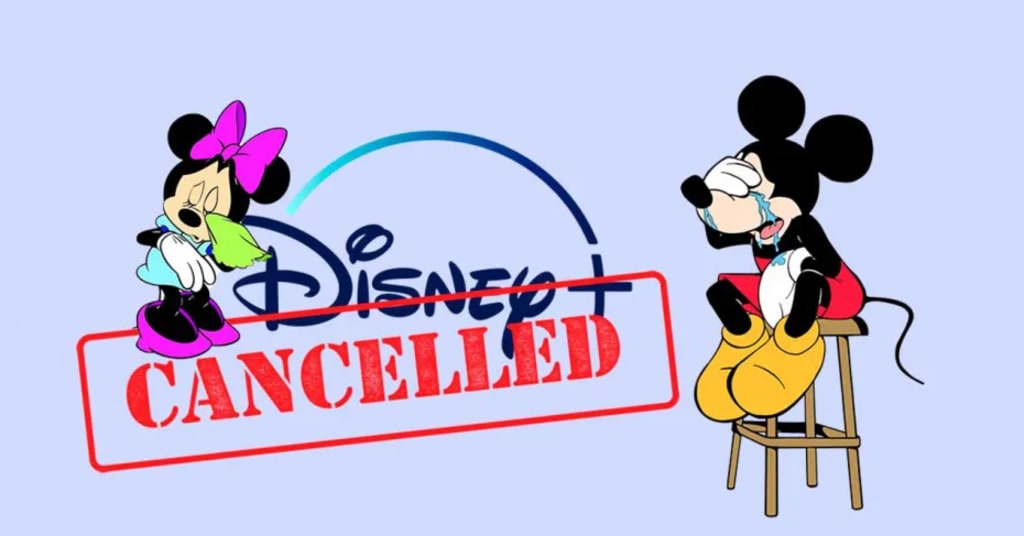
How do you combat a social systematic issue that has existed long before your own existence, must have been the question Disney + creators asked themselves when they decided to implement ‘outdated cultural depictions’ messages before the viewing of classic animated films, such as ‘Dumbo’ and ‘Peter Pan’. Discussion as to whether these outdated depictions should be recognised, edited out or even be shown has been circulating the media since Disney’s decision. Although, popular films such as ‘Pocahontas’ and ‘Aladdin’ do not contain the disclaimer message, even though they clearly contain racial and misogynistic stereotypes, demonstrating Disney still has a long road to full exclusivity and multicultural understanding.

Since the early 1940’s, Disney’s animations can seem to suggest and represent racial and misogynistic stereotypes that were once accepted but are now recognised as chauvinist and obstructive towards society. For example, the crows in ‘Dumbo’ appear to encapsulate stereotypes of African Americans through their representation of ‘the lazy and illiterate, dark-skinned labourers’, analysed by the Guardian. Yet, these films still exist and circulate throughout nostalgic and younger generations.
Releasing these films on a new streaming platform is problematic for Disney whose old content evidently includes repetitively troubling and concerning stereotypes but withholding these Disney classics from fans and enthusiasts could be viewed as a breach of exclusivity and history. In 2011, Disney CEO Bob Iger said releasing old Disney animations on a new platform “wouldn’t necessarily sit right or feel right to a number of people today.”
Arguably, the launch of films with outdated ideals in a circulation of films that are supposedly improving their social representations would counteract this improvement by polluting new, socially inclusive films such as ‘Star Wars: The Rise of Skywalker’. Since the creation of Disney +’s disclaimer message, Disney + owners are using the streaming service to access the ‘Disney Vault’, containing 80 years’ worth of Disney films, to decipher which and how many of those movies contain problematic cultural representations.

Movies from the first half of the 20th century, such as ‘Lady and the Tramp’ and ‘The Jungle Book’ (and do not also include the disclaimer message) are said to be the worse. Because of these issues, Disney movie ‘Song of the South’, from 1946, was never released for home video and hasn’t appeared on Disney streaming devices since it’s release due to its racist representation of plantation workers and other characters.
Other streaming services, such as Warner Bros., faced similar issues with their ‘Tom and Jerry’ cartoons that contain racial stereotypes and misogynistic depictions. The Warner Bros. statement calls its own cartoons out for ‘ethnic and racial prejudices’ and Amazon’s streaming subscription service of ‘Tom and Jerry: The Complete Second Volume’ is accompanied by the caution: ‘Tom and Jerry shorts may depict some ethnic and racial prejudices that were once commonplace in American society. Such depictions were wrong then and are wrong today’.
Both of these media services recognise the outdated assumptions they are distributing more clearly than Disney by asserting the terms ‘ethnic and racial prejudices’ as opposed to ‘outdated cultural depictions’. Warner Bros. explains the reasoning behind their disclaimer message, “while these cartoons do not represent today's society, they are being presented as they were originally created, because to do otherwise would be the same as claiming these prejudices never existed”. The company “needs to follow through in making a more robust statement that this was wrong, and these depictions were wrong,” said Psyche Williams-Forson, chairwoman of American studies at the University of Maryland at College Park.
This view is accompanied by thousands of the public. The Guardian notes that a Change.org petition — with more than 4,000 signatures — is encouraging the company to not ‘bury’ its release “so we can learn from history and make our own decisions.” Many American studies scholars, such as Gayle Ward from Washington University, believe the disclaimer can teach new generations how to change their perceptions of others for the better and steer away from deep rooted racist values, “Disney’s disclaimer is a good way to begin discussion about the larger issue of racism that is embedded in our cultural history”. By recognising the past and not destroying it from our memory and history, we have the opportunity as a society to reevaluate what we believe about others and why we make assumptions about others based on their ethnicity, race or gender. Whilst feminism and representations of ethnic minorities in film and music is rising, the issue is still not as prevalent and contested as much as it should be within society due to the great unjustified to these categorised people that has been experienced for generations. Disney +’s disclaimer is just the tip of the iceberg to a systematic and routine ideology within media and film that is still to be wholly uncovered and dissembled.
About the Creator
A Knight of the Seven Kingdoms Series Review (Season 1)
As one of the biggest properties in fantasy, A Song of Ice and Fire remains immensely popular with audiences. After reaching far into the past with House of the Dragon, a second spin-off was on the cards. A Knight of the Seven Kingdoms serves up a bite-sized slice of action and drama, but it still claims a spot among the best small-screen titles.
By Robert Cain7 days ago in Geeks
'A Knight of the Seven Kingdoms': Why Dunk And Egg's Trip To Dorne Probably Saved Their Lives
By the standards of the Game of Thrones universe, the first season of latest spin-off/prequel A Knight of the Seven Kingdoms gives us a rather happy ending, with Ser Duncan the Tall and his new Squire, Prince Aegon Targaryen, aka Dunk and Egg, riding away together. However, those with a little extra knowledge of Targaryen history know that this is just the calm before yet another storm in Westeros.. and no, it's not because Egg ran off with Dunk without the permission of his Father, Prince Maekar.
By Kristy Anderson5 days ago in Geeks



Comments
There are no comments for this story
Be the first to respond and start the conversation.