
DeepSeek vs ChatGPT: Can AI-Driven Marketing Build Trust Without Losing the Human Touch?
Uncover How AI-Driven Marketing Can Build Trust While Retaining a Human Touch – and See How Geeks for Growth Masters the Balance for Unmatched Brand Connection

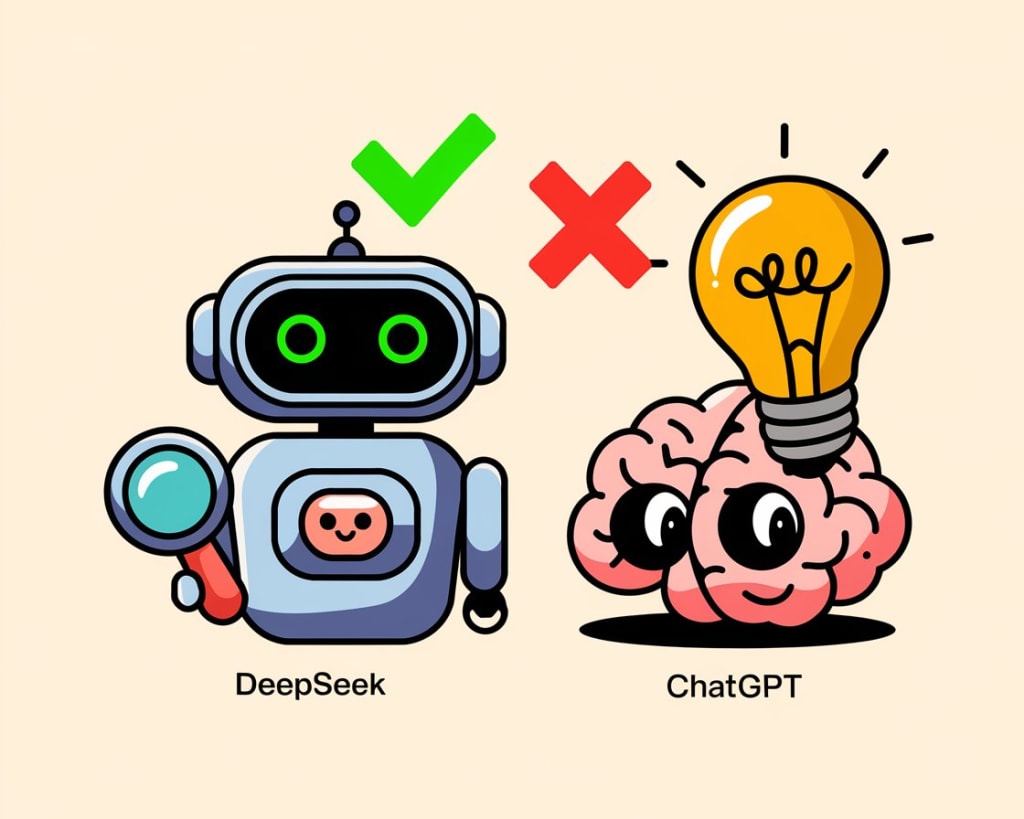
In 2023, the marketing world found itself at a crossroads. On one hand, AI tools like ChatGPT promised to revolutionize campaigns, offering unprecedented speed and efficiency. On the other, consumers are increasingly wary of brands that lean too heavily on automation, fearing a loss of genuine, personal interaction. In fact, the 2023 Edelman Trust Barometer revealed that 61% of people distrust brands that overuse technology, concerned about impersonal service and potential data misuse.
Yet, AI isn't a passing trend - it's poised to drive an estimated $1.8 trillion in global marketing value by 2030 (McKinsey). The real challenge is not whether to use AI, but how to use it wisely!
Take, for example, tools like DeepSeek, which utilizes data-first AI for predictive analytics, or ChatGPT, known for its prowess in content creation. Both offer remarkable benefits, but they also carry the risk of disconnecting from your audience if deployed without empathy and authenticity.
In this post, we explore how to strike the perfect balance between automation and human connection. We'll dive into actionable strategies for integrating AI in a way that enhances (not replaces) the irreplaceable human touch. Learn how companies like Geeks for Growth are thoughtfully incorporating AI to empower genuine interactions and build lasting trust with their customers.
The AI Divide: DeepSeek’s Data vs. ChatGPT’s Creativity
AI isn’t a one-size-fits-all solution. Tools like DeepSeek and ChatGPT each bring unique strengths—and pitfalls—to the marketing table:
DeepSeek:
This tool is a powerhouse when it comes to data. It dives deep into analytics, predicting trends, optimizing ad spend, and pinpointing high-value audiences. But while it excels at crunching numbers, data alone can’t capture the full picture of your brand’s story.
ChatGPT:
On the flip side, ChatGPT shines in generating content at scale. It can whip up email copy, social media posts, and more in seconds. However, when it comes to embodying a nuanced brand voice, AI can sometimes miss the mark—transforming catchy slogans into something generic if not fine-tuned with a human touch.
The Common Pitfall: Over-Reliance
A 2023 HubSpot survey revealed that 72% of consumers get frustrated when chatbots or AI content feel generic. Dr. Tricia Wang, a tech ethnographer and author of The Human-Centric AI Playbook, warns:
“AI can’t replicate human intuition. Trust erodes when brands let algorithms dictate decisions without ethical guardrails.”
Consider Patagonia: while ChatGPT might generate a catchy slogan, it can’t mirror Patagonia’s decades-long, genuine commitment to sustainability—a cornerstone that boosted their sales by 30%, even as they encouraged customers to buy less.
The Trust Crisis in AI-Driven Marketing
In marketing, trust is more than accuracy—it’s about intent. Sure, DeepSeek can predict which customers might churn, and ChatGPT can personalize emails, but there’s something consumers still crave: genuine human interaction. A Salesforce report found that:
84% of customers say feeling “treated like a human” matters more than ever. 68% distrust brands that lean too heavily on automation.
Similarly, a 2023 Stanford study showed that even when AI-generated content is indistinguishable from human-written text, participants still rated it as “less authentic.”
Blending AI with Humanity: Lessons from Leading Brands
The secret sauce for successful marketers is using AI as a tool—not as a crutch. Here are some actionable strategies:
1. Use DeepSeek for Insights, Not Decisions
Strategy: Use DeepSeek to analyze customer behavior and identify pain points. Let your human teams craft the solutions.
Example: Netflix uses AI to recommend shows but relies on creative storytellers to bring those shows to life.
2. Deploy ChatGPT as a First Draft, Not a Final Product
Strategy: Use ChatGPT to generate initial ideas for blogs or social media posts, then refine them with brand-specific humor, empathy, or anecdotes.
Example: Duolingo’s TikTok team taps ChatGPT for meme ideas, but they add their unique “unhinged” tone manually.
3. Audit AI Outputs for Bias
Strategy: Regular human reviews are essential to prevent missteps. MIT research has shown that 45% of AI-generated marketing content can inadvertently reinforce stereotypes.
How Geeks for Growth Balances AI and Authenticity
At Geeks for Growth, we’re passionate about using AI tools like DeepSeek and ChatGPT - but with a clear focus on what matters most: people. Here’s how we do it:
DeepSeek in Action: We use it to analyze campaign performance trends, which frees up our strategists to focus on creative storytelling.
ChatGPT for Ideation: ChatGPT helps us generate initial content ideas, but our writers infuse each piece with client-specific voice and genuine vulnerability.
Empathy Checks: Every AI-driven campaign includes human reviews to ensure that messaging aligns perfectly with brand values.
As CEO Jamie Lin (Taiwan Mobile) puts it: “AI handles the heavy lifting; we handle the heart. Tools like DeepSeek and ChatGPT boost our efficiency, but trust is built by humans who listen, adapt, and care.”
Actionable Strategies to Humanize AI Marketing
Personalize with Purpose:
Use DeepSeek to segment your audience and craft tailored stories. Think of Airbnb’s “Live There” campaign, which used data to target travelers but leaned on authentic host stories to create an emotional connection.
Turn Data into Stories:
Let ChatGPT draft quarterly reports or initial ideas, then enrich them with real anecdotes from customer surveys. Spotify’s “Wrapped” campaign pairs hard data with playful, human-centric design—making it a favorite every year.
Stay Transparent:
Be open about your AI usage. For instance, Geeks for Growth explains how their free SEO audit toolkit combines AI analysis with human recommendations—no bots in sight.
Protect Privacy Ruthlessly:
DeepSeek’s insights are valuable, but respecting data boundaries is non-negotiable. Apple’s privacy-first approach has become a key differentiator, reinforcing consumer trust.
The Future Belongs to Hybrid Marketers
As the debate between DeepSeek’s data prowess and ChatGPT’s creative agility continues, one truth remains clear: trust is a human currency. AI can optimize, predict, and scale—but it can’t laugh, empathize, or offer a sincere apology. The brands that thrive will combine AI’s efficiency with the warmth of human connection, using technology to serve people - not the other way around.
For more insights on ethical AI, check out Harvard Business Review’s Building Trust in AI-Driven Marketing. And remember, at Geeks for Growth, we’re here to help you navigate this balance—because in a digital world, trust always starts with a handshake, not a chatbot.
About the Creator
Keep reading
More stories from Trony Martins and writers in Geeks and other communities.
Experience Limos From Skyline to Sunshine
In 2024, Illinois and Florida saw record tourism. Chicago alone welcomed about 55.3 million visitors, while Florida hosted a staggering 143 million travelers. Yet more visitors means more cars on the road: Chicago drivers lost an average of 102 hours per year stuck in traffic. For anyone tired of gridlock or last-minute rideshare hassles, a growing solution is to hire a private car service. A chauffeured limo might sound lavish, but with demand for smooth, convenient travel rising, many savvy road-trippers are discovering it’s the ultimate travel hack.
By Trony Martins8 months ago in Wheel
A Knight of the Seven Kingdoms Series Review (Season 1)
As one of the biggest properties in fantasy, A Song of Ice and Fire remains immensely popular with audiences. After reaching far into the past with House of the Dragon, a second spin-off was on the cards. A Knight of the Seven Kingdoms serves up a bite-sized slice of action and drama, but it still claims a spot among the best small-screen titles.
By Robert Cain14 days ago in Geeks
Stand By Me: A Timeless Journey of Friendship Returns to Theaters for Its 40th Anniversary
Few films capture the bittersweet ache of growing up as powerfully as Stand By Me. Adapted from Stephen King’s novella The Body, Rob Reiner’s 1986 classic remains a cultural touchstone—an intimate portrait of childhood friendship, grief, courage, and the moment innocence gives way to something more complicated. As the film approaches its 40th anniversary, AMC Theatres is bringing it back to the big screen, giving longtime fans and new audiences the chance to rediscover its magic.
By Kristen Barenthaler7 days ago in Geeks




Comments
There are no comments for this story
Be the first to respond and start the conversation.