
Dare You to Death: The Reality Thriller Pushing Fear, Friendship, and Morality to the Edge
A gripping reality-thriller series that explores how far people will go when fear becomes the game

Television has never shied away from the spectacle of fear. From haunted-house competitions to psychological endurance challenges, audiences have always been drawn to stories of survival—especially when they unfold in real time. But Dare You to Death, the breakout reality-thriller series that has dominated conversations both online and off, pushes the concept far beyond jump scares and adrenaline gimmicks. It blends social strategy with psychological horror, turning an ordinary challenge show into an exploration of what people will do when fear becomes currency.
At its core, Dare You to Death is simple: contestants face a series of escalating dares designed to test their limits—physically, mentally, ethically, and emotionally. But unlike most reality competitions, the real game isn’t just completing tasks; it’s deciding which dares to accept, which to refuse, and who to trust. Every choice has consequences, and every consequence is public. The show frames fear not just as a reaction but as a negotiation with the self.
A Format Built to Unsettle
Each episode begins with a group of contestants receiving a “fear brief”—a cryptic clue that hints at the theme of the coming challenges. Sometimes the brief points to classic phobias like darkness, confined spaces, heights, or insects. Other times it draws from more personal terrors: betrayal, social humiliation, abandonment, or moral conflict. What makes the show effective is that it treats fear with nuance. The challenges aren’t random stunts; they’re carefully orchestrated situations meant to evoke genuine emotional responses.
Throughout the episode, contestants privately confess their strategies, suspicions, and anxieties to the camera. These confessionals are what elevate Dare You to Death beyond typical fear-factor entertainment. Viewers gain insight into the psychology behind each decision. One contestant might accept a challenge not because they’re brave but because they fear seeming weak. Another might refuse a dare out of ethical discomfort rather than fear itself. These layered motivations turn what could be a simple scare show into a narrative about human complexity.
Get Cyber Monday VPN Deals to unblock any platform now!
The Social Game Behind the Terror
Perhaps the most ingenious element of the series is the social layer woven into every dare. Contestants can challenge each other, form alliances, or strategically sabotage one another. Every dare accepted or declined alters the group dynamic. Accepting can earn respect—or paint a target on one’s back. Refusing can protect someone physically but leave them vulnerable socially.
This interplay creates a constant tension in the house where contestants reside. Even during moments of calm—meals, downtime, late-night conversations—the suspense is palpable because viewers know alliances may shift with the next challenge. The show transforms fear into a strategic tool, and the contestants are forced to weaponize it or fall victim to it.
The most memorable moments often come when contestants must choose between personal comfort and group loyalty. Some episodes culminate in “moral dares,” where players must make decisions that could help or harm others. Do they accept a terrifying challenge to spare a friend from facing it? Do they refuse and save themselves at the cost of someone else’s wellbeing? The resulting emotional fallout is often more gripping than the dares themselves.
A Cinematic Approach to Reality TV
Although Dare You to Death is a reality show, its visual style borrows heavily from thriller cinema. Dim lighting, atmospheric scoring, and meticulously crafted set design create an environment that feels more like a psychological horror film than a competition series. The aesthetic choices enhance tension without relying on cheap scares.
Camera work plays a crucial role as well. Slow zooms linger on anxious faces, wide shots emphasize isolation, and handheld moments capture the rawness of panic. The editing is equally deliberate—pausing just a beat too long in moments of uncertainty, drawing out silences that the contestants themselves seem desperate to escape. These stylistic decisions elevate the show beyond reality TV conventions and transform it into an immersive viewing experience.
Fear as a Mirror
What makes Dare You to Death resonate is not the spectacle of fear but the vulnerability behind it. Each contestant enters with their own backstory, insecurities, and ambitions. As the dares escalate, these inner conflicts surface. Some confront fears tied to childhood trauma; others grapple with identity, self-worth, or long-suppressed anxieties. In witnessing these raw experiences, audiences are encouraged to reflect on their own fears and how they shape their decision-making.
The show also raises ethical questions about exploitation and consent—an inevitable conversation around any fear-based reality format. But Dare You to Death attempts to address this by granting contestants a surprising amount of agency. They can refuse any dare without immediate elimination, though doing so may affect their standing with peers. This structure shifts the narrative from “forced endurance” to “self-determined risk,” allowing the series to explore fear as a choice rather than a punishment.
A Cultural Moment
It’s rare for a reality series to become a cultural discussion point, yet Dare You to Death has managed just that. Part of the buzz stems from its unique blend of genres—horror, strategy, social experiment—but a larger part comes from the way viewers see themselves in the contestants. Many have taken to social platforms to debate which dares they would accept and which they’d refuse. Conversations about ethics, courage, manipulation, and boundaries extend far beyond the show.
In a landscape saturated with content, Dare You to Death feels refreshingly original because it treats fear not as a gimmick but as a narrative engine. It captures the essence of modern anxiety—the pressure to perform, the fear of judgment, the weight of personal limits—and places it on a stage where every choice reveals something about human nature.
Why It Works
What ultimately makes Dare You to Death compelling is its honesty. Beneath the staging and drama, contestants reveal genuine emotion. They cry, shake, laugh nervously, and second-guess themselves. Their reactions remind viewers that fear is a universal experience, one that levels the playing field regardless of physical strength or social savvy.
The show succeeds because it doesn’t merely ask, “Can you face your fear?” Instead, it asks more difficult questions:
Why are you afraid? What will fear make you do? And who are you when faced with your own limits?
By the time the finale rolls around, the audience isn’t just rooting for a winner—they’re rooting for personal breakthroughs. Victory, in this context, is less about triumphing over others and more about triumphing over oneself.
Conclusion
Dare You to Death stands out in a crowded media landscape because it isn’t just entertainment—it’s an examination of the human condition disguised as a reality thriller. Its combination of psychological tension, strategic gameplay, cinematic presentation, and emotional depth makes it one of the most compelling shows in recent memory. Whether you come for the scares or the social dynamics, you’ll find something that lingers long after the credits roll.
If the series proves anything, it’s this: fear reveals. And on Dare You to Death, what it reveals is endlessly fascinating.
About the Creator
Keep reading
More stories from James S Pope and writers in Geeks and other communities.
The Price of Confession: A Psychological Drama That Turns Secrets Into Currency
In an era when peak television seems to reinvent itself every month, The Price of Confession arrives as a rare phenomenon—an original drama that feels both timely and timeless, built on the simple yet devastating premise that everyone has something to hide. It is a series that refuses to rely on spectacle, even though its narrative regularly detonates emotional explosions. Instead, it thrives on tension, character complexity, and the unsettling truth that confession might free you, but it may also cost you everything.
By James S Pope3 months ago in Geeks
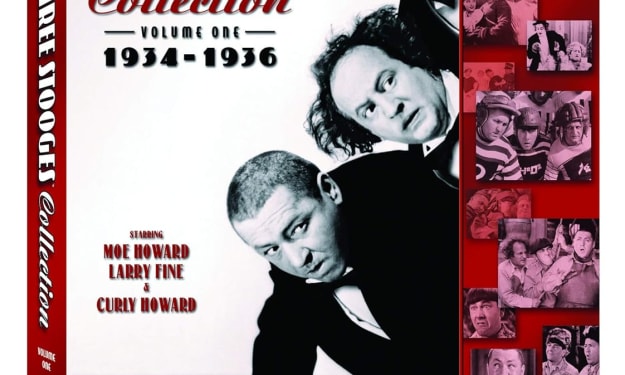
History of The Three Stooges (Part I: The Beginnings and Columbia Pictures - 1920s-1936)
I have been itching to write about The Three Stooges on Vocal for close to two years, but I couldn't figure out how to do it. I wanted to do it by third Stooge, but that's a bit complicated. I know this much. I was about eight or nine years old when I first saw The Three Stooges. I remember one of my local channels had the Stooges on for hours, and I tried my damnedest to be up for those shorts. I remember that the Family Channel actually had an hour of the Stooges on from 11PM to midnight, and it was the entire library on during that time.
By Clyde E. Dawkins4 days ago in Geeks
Top tipple tricks
Been thinking a lot about drinking, lately. Not least because of a recent episode of over-indulgence and the inevitable after effects. Some readers may recall the earlier articles I wrote about beating the booze. Here I set out an experiment in techniques for cutting down on my alcohol intake. The experiment was successful, the techniques worked, and I have armed myself with an arsenal of weapons in the war against the demon drink. I have yet to fire the first round however. It's all a question of timing (perhaps procrastination).
By Raymond G. Taylor7 days ago in Psyche



Comments
There are no comments for this story
Be the first to respond and start the conversation.