
Classic Sesame Street: Sweeping the Clouds Away
Revelations of the Golden Era of Live Muppets.
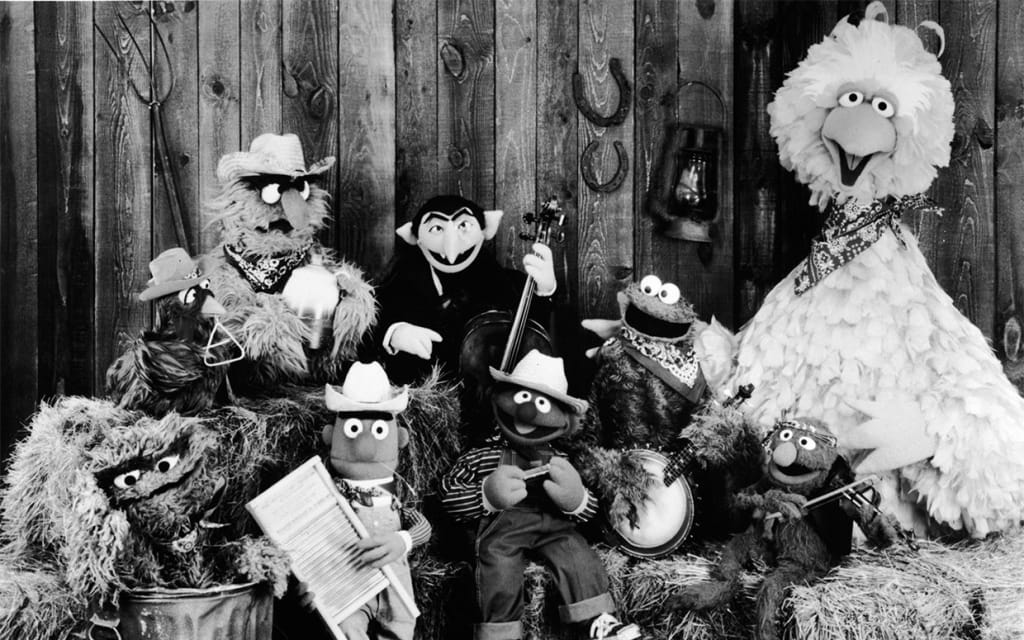
Many of us have warm memories of Classic Sesame Street, a time when live Muppets filled out a cast which was only augmented by a few puppets known to the cast as "socks." This golden era lasted from the late 1960s to the mid-80s, when live Muppets were almost completely replaced with actors in costume and puppeteers. The living cast were subject to the same chaotic, dark forces let loose in the rest of society in those years. It was a different time, when artists were given more leeway, and scandals could still be silenced, or at least tolerated. What follows is an oral history of Classic Sesame Street as told by the Muppets themselves, as they try to set the record straight.
Big Bird’s Drug Use and Suspicion of “Birdophilia”
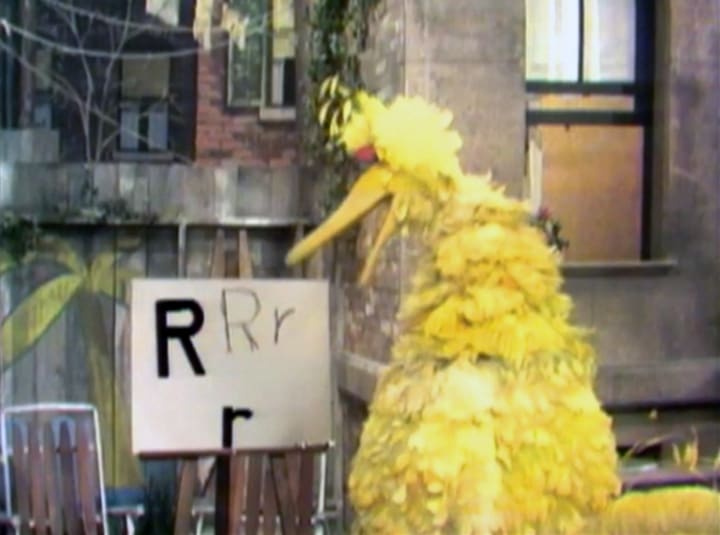
From the first season of Sesame Street, Big Bird’s drug use would be apparent to the anyone familiar with Muppet medicine. Feather loss, though common in all birds addicted to heroin, is particularly severe in Muppet birds. Molting caused Big Bird’s normally round head to appear small and pointy. This sparked rumors that he suffered from microcephaly, a condition in which a child is born with an abnormally small brain. Fearing that any hint of heroin use on the set might become public, the studio encouraged the idea that Big Bird was “special,” even making it a feature, dubbing Big Bird TV’s first “special” character. Later, after the Big Bird died of an overdose, his behavior was widely attached to drug use, but, as Muppet Gerald Dirkhauser wrote in his autobiography, I Am Not Snufflleupagus: “People thought he was mentally challenged, then they said it was drugs, but the truth is Big Bird was just extremely stupid.”
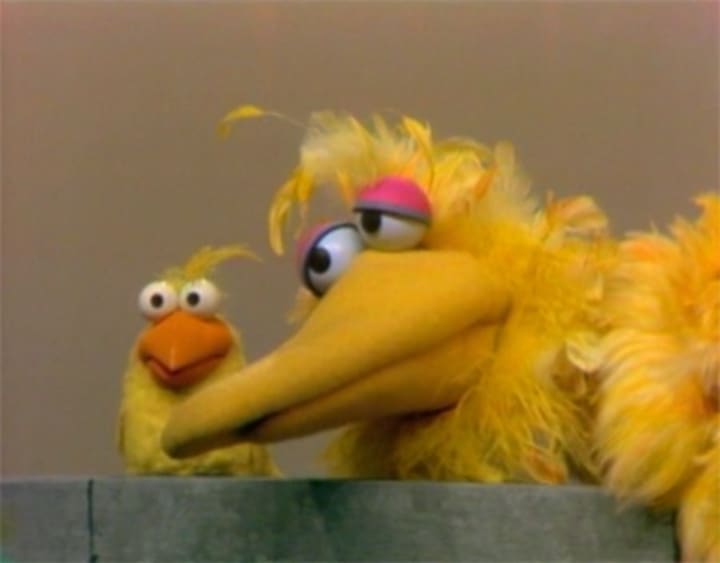
After Big Bird’s death in 1986, Charles Ramsay, known as Little Bird, spoke of him to the BBC as a mentor whose heroin use was self-medicating for physical infirmities.
“He was the largest Muppet bird ever known, and gigantism is especially painful in birds due to our hollow bones. This was exacerbated by his obesity. At one point, he mentioned a skull fracture from a tumble out of the nest as a chick. I can only believe that this was responsible for stunting his emotional growth. It limited his cognition to the point where he really thought he was Big Bird. It is common in Muppet society to use character names. With the stigma against us, it is best for you to stick to something that reminds the humans that you are lovable and sweet. But we suffer from the same troubled lives as any other sentient being. Perhaps worse. When we are alone with each other, we use our birth names, but Big Bird had no idea of his real name at all. It had somehow got lost.
“There was always this air of mystery about him. Sometimes, he spoke of an orphanage for ostriches, where they used to bully him, peck off his feathers. No Muppet orphanage would take him. Due to his gigantism, he was very clumsy, and kept stepping on the other Muppets. He was always gentle with me, though. What may surprise you is that he could do research and remember everything about any topic. If you prompted him the right way, he was an encyclopedia. When I asked about the limited range of motion in his right arm, he recited a paragraph he read about the painful nerve damage he said was a result of the fall when he was a chick. He wasn’t stupid or drug-addled like they say, he really was ‘special’.
“He was tremendously sensitive as well, Bird was. You know, the show was on all on our shoulders, the Muppets. Everyone knew that no one was watching the show for the human characters. It was a strange reversal of real life where Muppets normally formed the second-class citizenry. On Sesame Street, we were the first class citizens, but there is also tremendous pressure in that, and we took it out on the humans, treating them in a manner of undeserved contempt, or as if they did not exist. Bird, as always, was different. It was Bird and Oscar and the Count, who were most friendly to the humans when none of the other Muppets were. But Bird genuinely loved Will Lee [Mr. Hooper.] Will was a true father figure to him, and I can’t say as he ever had anyone he felt was real family to him like that. Will did everything he could to help Bird, and there was a terrible change in him for the worse after Will died. I don’t think he ever recovered.”
Little Bird was doing Cadbury Egg ads as a chick in London, when he first met Big Bird. Asked about rumors of an inappropriate relationship with Big Bird at the time, he replied, “Not to my thinking.” When asked to clarify, he said, “I’ve answered your question.” Little Bird’s seeming evasiveness shocked the Muppet community, and he would never do an interview again, reportedly claiming afterward that the BBC had “buggered” him. Dirkhauser would later remark in I Am Not Snuffleuppagus: “Well, Big Bird buggered him first; I know that for sure.” The details of what Dirkhauser knew were never disclosed.
Margaret Hanley, known as Prairie Dawn, wrote fondly of Big Bird in her self-published memoir, How I Got to Sesame Street. She had invented feather extensions to keep up with Big Bird's increasingly troubling molting. The application process took hours during which Big Bird and Hanley bonded.
“Bird could sometimes make my heart just want to bust in two. One day, for some reason, I went to a birthday party with him. He was like that, just talking and next minute you would be somewhere with him. Looking back, I guess it was more shady then I was thinking about it then. It was just so hard to think dark things around him. You felt invincible but in the gentlest way possible. I think that’s how he got away with being an addict so long. It’s near impossible to confront someone so sweet all the time. I didn’t realize he was doing birthday parties for drug dealers’ kids at the time so he could get his fix. Children of hookers and things, I guess, too. I remember at this one party, these kids just ran up and were all over him, and I think I would have gone crazy if it was like that with me, but he did not mind. And he would go find the kids that looked sad or looked like they had no friends, and just like magic, they were playing with him happy as can be. Later on, he must have had his fix—I was so naive about drugs back then—but he was nodding off the way junkies do, sitting there in the grass like a nesting hen, and these kids are piled all around him—and just about on top of him—and they were fast asleep. All this music and partying around—fast asleep, these kids. It was the sweetest thing I ever saw. I don’t know how I didn’t just start bawling. I think about those kids sometimes, about where they might be now, dreaming of some big yellow bird and having that same feeling all over again.”

Muppet Jack Cheney, who played Oscar, was very close with Big Bird. In an interview featured in the New York Times Magazine after Big Bird was found dead in a Baltimore shooting gallery, Cheney spoke at length.
“Was he was a chickenhawk? Did he touch Little Bird? Dude, I was a beach bum from California when I was asked to play the Grouch. I showed up hitting this New York accent too hard with my fur all sun-bleached orange, and the scene was so uptight on Sesame Street. Bert and Ernie did their thing. The blue monsters did their thing — and I was out with the monsters for being green. Bird and me were the only Muppets in the original cast not trained at Julliard. Cookie [Syd Jones] did Shakespeare in the Park regularly, and Snuffie hated him for it. He wanted to play Hamlet and was always ranting about ‘blue monster bias’ against him. But Snuffie hated everyone. Kermit was cool, but Downtown was more his scene — Lou Reed, Warhol, Bowie. One time, he came in with this weird German dude, like real avant-garde—Claus something—Claus Nomi. Ah, man, he was cool. He loved the Street. Me and Bird had a blast with him. He was was like us, but he was more Kermit's scene, too, you know?
“Me and Bird bonded as the outsiders, dude. You might be surprised, because it was the early 70s, but none of the other Muppets smoked grass. Maybe Kermit did, but I never saw it. He was a real pro. But me and Bird were these two outsiders who liked to spark one up and dig on Chet Baker. Grass was better than smack, I figured. And, you know, in the worst of his addiction, he was always cool with me. I remember ending up going up to Harlem with him to score, and it was like nothing to him. He was a giant bird, so they knew he wasn’t a cop, and they all liked him. You’d see these hardened dealers turn into little kids. Bird put that kind of vibe out there. People say the chicken groupies he kept around to peck his cloaca were more fuzz than feather, but I never saw it. If you want to know where Henson got the idea for Gonzo, dude, it was Bird and his chickens. You think Henson would have done that if he thought for a second…? No way, dude. No way.”

A party was thrown for Big Bird’s return from his first stay in rehab. When Dirkhauser overheard a joke about how anyone would prefer junkie Big Bird over his difficult, tee-totalling, “imaginary friend,” Dirkhauser burst into the party insisting his scenes with Big Bird would henceforth be performed alone in cutaways. Frustrated, producers later floated replacing the Snuffleupagus character with "socks." The Muppet cast, fearing their own replacement, threatened to strike. Dirkhauser brought things to a head when, as a follower of Ayn Rand, he nearly trampled Harry Anthony—known as Herry Monster—for insisting that Rand was a mere polemicist with no place in the canon of philosophy. When Harold wanted him arrested for assault, it was Big Bird who convinced him that it would ruin the show’s reputation and make sure they were all replaced with socks. Dirkhauser was allowed to continue on the condition that he make a full written apology to everyone and seek therapy. He was fired after responding with a four-page screed, including two pages about a “Bluish Conspiracy,” which ended: “And Big Bird is still stupid.” Eventually, almost the entire cast would be replaced, and a golden era for live Muppets brought to an end, but Dirkhauser was the first to be replaced, and by that point, the cast viewed it as a fair trade-off for never having to deal with him again.
The Notorious “Blue Pack” of Herry Monster, Grover, and Cookie Monster

Dick Vitale, the Muppet who played Grover gave an interview to the BBC in 1989 where he described the origin of Sesame Street’s Blue Pack, and his first frightening encounter with Syd Jones, known as Cookie Monster.
“I was into Fozzie for fifty-two large at the time. He didn’t start out as a cute comic. None of us did. There was not much work for Muppets back then. I had a thing for dice, and not much luck. This was back when Atlantic City was a big stop on the comedy circuit. I had just finished my Super Grover bit, and I was in the back room where there was whores and poker. I look behind me, and there’s one of Fozzie’s goons, a blue guy with a unibrow and an eggplant for a nose. But I had seen Harry around before. I turn to run, and BOOM! right into another blue goon. This one with googly eyes. You humans get syphilis, and you go nuts, but we monsters are already nuts — Muppet syphilis just makes us more like us, but with googly eyes. Syd had eyes that told me he was crawling with it, and there was no cure for us back then.
“So, next thing you know, Syd shoves my head in his mouth and it’s all dark and I can’t breathe and all I can hear is this om-nom-nom. I know I’m finished, but I feel someone pulling at my ankles and pretty soon I’m looking at these googly eyes, again. So, I think fast and say, ‘You guys can act?’ and Syd says, ‘Me train at Julliard.’ Then Harry tells me he did, too, and that he has a philosophy degree at Columbia. He always had to add that, that he was into philosophy. God, he would go on about it. But, by coincidence, me, Syd and Harry all went to Julliard at the same time. They had a lot of scholarships for Muppets back then because they treated us like crap, but some of them felt bad. We all got a free ride—otherwise, forget it. Anyway, so, I says to them: this guy Henson offered me this show, and he’s looking for blue monsters. I convinced them I was on the level, and Syd and Harry and me was the Blue Pack ever since.
"Syd had a spot right off, and Harry later, but for me there was a problem. They wanted me but there was this guy, Gleep, they had grandfathered in. He was green, so they call him green Grover, now. He was Gleep, not Grover. Me, Dick Vitale, I'm the only Grover. Everyone was too pansy to get rid of him, so the Blue Pack had a talk with him. And that was it. So, any nonsense someone tells you about us supposedly sodomizing Telly as an initiation into our club — we wasn’t looking for no one else. He’s not even blue!”

Gerald Dirkhauser, in I Am Not Snuffleupagus, offers a different view — “Dick Vitale was trouble. This was obvious to anyone from the moment Gleep simply disappeared. He claims he met Harry and Syd as common thugs collecting a debt when Fozzie was a shylock, but this is a ruse. Dick intimidated both of them. Harry looked the ruffian, but he had a glass jaw. The worst he could do was bore one to death with a jejune, ignorant lecture on philosophy. Syd speaks like the brute, but he is like the stutterer who can sing with exquisite articulation. He would say, ‘Me like Shakespeare,’ then perform a Lady MacBeth that rivaled my own. Certainly there were subtleties that he missed, but to approach my muse takes a sensitivity not known to an ill-bred goon.
“Dick once saw Bert and Ernie in a loving embrace and launched into a rant about ‘fairies.’ After Bert stood up to him — probably because he was drunk, he and Ernie were always drunk — he found the heads of Bert’s beloved pigeons stuffed in his shoes the very next week. Everyone knew it was Dick, but there was a big cover-up. They blamed me because they saw me as a side character — expendable. They made me a scapegoat because of my supposed reputation as ‘unbalanced.’
“Dick Vitale did it. I know he was the ringleader. There are too many blue monster fingers on the levers of power in Muppet society, but some are worse than others. If Telly was sodomized by the Blue Pack behind the Bert and Ernie set as some sort of hazing, it was Dick who played ringleader.”

Regardless of Dirkhauser’s claims, Harry's reputation as a brutal Muppet persists in a popular urban legend concerning the classic Sesame Street scene in which he counts with little John John Williams. The story goes that there was a cover-up after John John was found dead following a heated exchange with Harry that was caught on camera, and leaked in 1985. The footage shows Harry furious at John John, believing that he had insinuated that Albert Camus was an existentialist. Harry is seen exclaiming: “Camus always denied he was an existentialist!” He then threatens to cut John John’s head off. Although John John appeared on the show with Harry as a grown man in 1989 to put an end to the story, conspiracy theorists point out correctly that Harry was played by a sock, as the era of live Muppets had ended in the years after the death of Big Bird in 1986. This has led to persistent speculation as to who played the “second John John.”

If the rumors of the gang “initiation” of Telly are true, Telly, played by Moses Schwartz, has never spoken of it. Telly premiered on Sesame Street in 1979, when the incident was supposed to have taken place, and perhaps he has had the best revenge. When the rest of the cast was let go, Schwartz was kept on and remains the only live Muppet on the show today.
Bert and Ernie, Violence and Alcoholism
“I was the only one they let into their little couple cult,” wrote Margaret Hanley, of her close relationship with Bert Braithwaite and Ernie Smith, “I was in from Oklahoma swearing like a sailor, and they took a shine to that. They thought a tiny Muppet girl from the country with a potty mouth was so interesting, I guess. I was the only Muppet on the crew besides Carol [Burkhardt.] She came from Mormons over in Nevada. You would never figure she would become Miss Piggy, she was so quiet and nice. That kind of soft touch they bring up in Mormon girls. Bert and Ernie took no kin to quiet and easy. I was definitely not quiet, or easy.

“I repaired felt and replaced cracked eyes, which came in goddamn handy with Bert and Ernie. They were always showing up late all boozed up after some all-night hell-raising or other. You know, people don’t think gay fellers are men. Oh, they are men! One day, Ernie comes in without a damn nose. Another time, Bert’s eyebrows were torn clean off. I knew they fought like cats and dogs, and there was a sexual part to it, because I can’t tell you how many times they would start the day with a cracked eyeball or a ripped lip, and then next thing you know, they are going at it in a supply closet. They each had a dressing room, but you would catch them in every other place. I think they liked to get caught. You had to keep them separated in the morning and break them up like dogs in heat by evening.
“As the years went on, though, there was less screwing and more screwing each other up. They could barely get through a scene together without a fight. They broke up once or twice, and I’d have one or the other over. Bert was all manners, but he liked to stay up all night, and he would start in getting ornery with me like I was Ernie, when the drinking got toward dawn. I one time socked him across my living room. I said, ‘I’m from Tulsa, I seen worse than you.’ You know? It looked like it made him happy in some perverted way. He was the biggest pervert I ever did see.
“Ernie would just cry all the time. He would go in the bathroom for an hour or so to take a bath with Rubber Duckie like he did on the show. Just bubbles, you know, because you got to watch that felt when it gets wet. Rubber ducky and all, he would go in there, and I would hear a flush, and I would know he was done. Maybe ten minutes later, he’d come out, and the toilet would be all clogged with toilet paper. Muppets don’t crap—not like you humans, anyway—so I have no idea what the hell that was about.
“I caught Henson’s eye one day, and he started putting me on the show. Pretty much as a clean version of myself, except he didn’t want my Okie drawl. He said 'we already have a Betty Lou.' So I worked at my accent until it was America Brand X like you’d see on TV back then. I got so busy that it got to the point where I just had no time for Bert and Ernie and their drama. Worse is: they resented me leaving them to Carol, and gave me hell for it. As if I belonged to them. You know, a young girl can fill her life with that sort of drama when she has nothing better going for her. You get to like when you can change things on a dime. I used to be able to cheer them up by just saying the word, ‘Oklahoma.’ They’d sometimes be so mad at each other that you could warm your feet off the heat, and I’d find a way to slip in something where I could say ‘Oklahoma.’ Right smack in the middle of their fire and brimstone, they would bust out singing: ‘Oooooooo-klahoma, where the wind comes sweepin' down the plain…’ They’d sing the whole damn score of the musical if I let them. And I did sometimes, because they needed it. Bert had the most gorgeous voice. It was nice to be needed that way, when I had nothing else. But when Henson put me on the show, we just sort of drifted apart. I guess I’m as much a masochist as they are, sometimes, because I miss them now and again.”
Bert and Ernie, after long years of alcoholism and domestic violence arrests on both sides, got clean and credited the change in their lives to meeting the Muppet who played Animal, Ian Carmichael, who told them, “I want to — eat drums. Give me presents!” Ernie would later say of these words, “It was true. I realized that all I wanted to do with Bert was eat drums, when what he needed was presents. Bert and I looked at each other, and there was something so real, so sincere about Ian, that we just knew. Our lives began to change from that day. He never stopped giving. Animal was, I think, by all accounts, the most centered, kindest Muppet any of us met.”

In 1998, tragedy struck when Carmichael died of felt cancer. Unwilling to let Animal’s legacy die with him, Bert and Ernie started the Ian Carmichael Foundation For Felt Cancer Awareness.
The End of an Era
It has been said Big Bird’s life was at least partial inspiration for the character of Animal. Whether or not this was true, he would prove to have a kindness in him equal to that of Ian Carmichael. In a poignant irony, it would prove most vital to Dirkhauser. In 1987, I Am Not Snuffleupagus, in spite of increased interest in the era of live Muppets sparked by Big Bird’s death, failed to catch on. A frustrated Dirkhauser, for reasons that are still unclear, became obsessed with Elmo, who was introduced as a regular character on Sesame Street in 1985. In the early 90s, Dirkhauser began stalking Elmo, even reportedly fitting-out a dungeon under his Florida home for the purpose of keeping him in captivity. This was in spite of the fact that Elmo was the first featured Henson character who had always been a sock. Elmo was never a living being like the classic cast.
Out of work for years, thwarted in his publishing dreams, and refusing to believe that Elmo was not real, in December 2000, Dirkhauser snapped. Spotting Geoffrey the Giraffe, who was making a special appearance in a Tampa Toys ‘R’ Us, Dirkhauser assaulted him, shouting, “What did you do, Bird? Tell them what you did!” Leaving Geoffrey unconscious and bleeding stuffing, Dirkhauser proceeded to trample the entire Elmo display. When he was arrested and held in custody for psychological evaluation, the Big Bird Estate intervened, following provisions in Big Bird’s will for a trust to care for the classic cast. Four years later, Dirkhauser died in a well-appointed mental institution in Florida, his care paid for by the Estate of Big Bird.
Count von Count Gets the Last Word

In creating this oral history, of every cast member we approached, only Zoltán Király, the original Count von Count agreed to participate. In fact, he insisted. He is the only member of the cast who kept working after being released from Sesame Street. He now flies all over the world bringing cheer to children and adults, too, as entertainer in refugee camps.
"I was not an actor," he said of how he became Count von Count, "I was a waiter in my brother's Hungarian restaurant. When I serve the customer, if I have three things, I serve them: ONE! (on the table!) TWO! (on the table!) THREE! (on the table!) And then I laugh AHAHAH! Americans, they LOVE it! They feel they are in the real Hungary. One day, this woman come. She say, Would you like to count for the children? I say, this cannot be. I say to my brother, Attila! Attila! What is this country that a woman ask me to count for the children? My brother say, Zoltán! Zoltán! You must count for the children!
"So I go. And they say, to me: You play vampire, vampire is Romanian. You are Hungarian, can you do vampire? I say, no! I say, Lugosi Béla is Hungarian. He come to America like me. He become Bela Lugosi! He is the vampire! I am the vampire! Because vampire is Hungarian! Not Romanian. You American do not believe it, but it is true. And so, from that day, I am the vampire to count for the children.
"They will tell you the bad of these times, but they will not tell you the good. To be a Muppet in Hungary is so hard, so cruel. It is a must to remember when there is so much cruel, that no one is all bad, and no one is all good. To see the bad is simple; to see the good, you must struggle. I choose the struggle. Every day, I say, Zoltán, today is the day to struggle for the good! I will see it today! So, I tell you so that you may see—humans, you fight and you fight and you can never sit together. We cannot hold anger for a long time. It is our nature to be silly. We are like the children. We hold the grudge, it is true, but we can't hold it all the time. And on Sesame Street, the Muppets were very fortunate because I am Hungarian. The Hungarian makes the greatest food in the world because it is made with the passion. I could tell you many things, the beautiful moments, but let me tell you of Gerry. My dear, dear Snuffie. Because so much of the bad is always said about him. I tell you, Snuffie, he could do an impression of everyone in the cast. Kermit! He never laugh at anything. Very serious actor. He laugh at Snuffie. He sound so much like Kermit. You would not believe it! I want you to think of this good thing about Snuffie when you think all the bad things. It is why I am happy every day of my life. It is why I can make the children smile who have lost everything. It is because I remember what is good, and Snuffie had good in him and so did every Muppet I knew in those wonderful times. When you have the choice to think of the bad, or the good—always think of the good. AH AH AH!
About the Creator
The Page Collective
Stories. Lyrics. Songs. https://thepagecollective.bandcamp.com/releases
Keep reading
More stories from The Page Collective and writers in Geeks and other communities.
The Magic Arrow
The wide cargo bay of dirtship rode so high that the trees seemed half as tall on either side of the Old 40. Gathered around EJ, and scattered across the top of the canvas-covered cargo, were three types of faces—the drained, the bored, and the unconscious. He held up a jug of shortwater and deck of cards. “The game’s three jack,” he shouted. “Who’s in?”
By The Page Collective5 years ago in Fiction
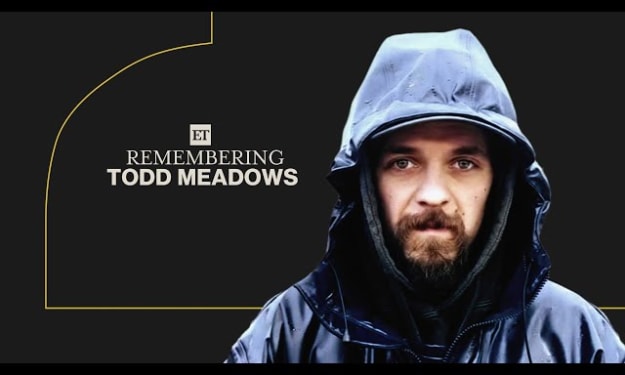
Todd Meadows, ‘Deadliest Catch’ deckhand, dies at 25
Todd Meadows, a young deckhand featured on the Discovery Channel reality series Deadliest Catch, has died at the age of 25 in what authorities are describing as a tragic fishing‑related incident during filming aboard a Bering Sea crab vessel. The news has sent shockwaves through the tight‑knit fishing community and fans of the long‑running show, highlighting again the grave dangers faced by those who make their living on the treacherous northern waters. Meadows died on February 25, 2026, while working aboard the crab boat Aleutian Lady, roughly 170 miles north of Dutch Harbor, Alaska, where crews were filming for the upcoming season. According to official reports, Meadows fell overboard in the frigid waters of the Bering Sea — a region known for its bone‑chilling temperatures, rough seas, and unpredictable conditions. Despite the crew’s efforts to rescue him, he was recovered unresponsive and later pronounced dead. The U.S. Coast Guard Arctic District is conducting a full investigation into the circumstances of his death, as is standard in all marine accidents. A Community Mourns Captain Rick Shelford, skipper of the Aleutian Lady and a longtime cast member of Deadliest Catch, shared a heartfelt tribute on social media after the news broke. Shelford described the day as “the most tragic day in the history of the Aleutian Lady,” calling Meadows “our brother” and praising his work ethic, infectious smile, and the close bond he formed with the crew in his short time aboard. “We lost our brother,” Shelford wrote. “Todd was the newest member of our crew — he quickly became family. His love for fishing and his strong work ethic earned everyone’s respect right away. His smile was contagious, and the sound of his laughter… is something we will carry with us always.” Discovery Channel also issued a statement expressing profound sorrow over Meadows’ passing, calling the loss “devastating” and extending condolences to his loved ones, his crewmates, and the broader fishing community. Production on the show’s 22nd season has briefly paused in the wake of the tragedy. Life at Sea and the Realities of Danger Deadliest Catch has built its reputation over nearly two decades by documenting the perilous world of crab fishing, widely regarded as one of the most dangerous professions globally. Fishermen ply the Bering Sea’s unforgiving waters during peak hazardous seasons, battling freezing weather, massive waves, and heavy equipment while racing to bring in lucrative catches of king crab and other seafood. Meadows, from Montesano, Washington, had joined the Aleutian Lady crew in May 2025 and was in his first year as a cast member. He was a devoted father to his three young sons, and friends and family have highlighted his dedication to both his work and his family. In honor of Meadows and to help support his grieving family, a GoFundMe campaign was launched to assist with funeral costs and provide ongoing support for his children. By early March, donations had already surpassed the initial goals, reflecting an outpouring of sympathy and communal support from fans and fellow fishermen alike. Risks and Response Marine safety experts note that even experienced fishermen are at constant risk in the Bering Sea. Unpredictable waves, slippery decks, and exposure to extreme cold can quickly turn routine tasks into life‑threatening situations. Falling overboard in those conditions — even for a short period — significantly reduces the chance of survival due to hypothermia and shock. The Coast Guard’s ongoing investigation will look at weather conditions, safety protocols, crew response, and any possible equipment or procedural factors that might have contributed to the incident. Findings from such investigations often influence future safety recommendations for the industry. Legacy and Reflection Meadows’ death marks yet another heart‑wrenching moment in the history of Deadliest Catch. Over the years, the series has seen other cast members lose their lives, including shipmates like Nick McGlashan, Nick Mavar, and others whose stories also underscored the formidable hazards of life at sea. But for those who knew him, Todd Meadows was more than a statistic or a television personality. He was a dedicated worker, a cherished friend, and above all, a loving father. In tributes shared online and in person, colleagues and fans have emphasized his joyful spirit and the positive impact he had on those around him. “This unimaginable loss leaves a hole in our hearts,” wrote one follower on social media. “But Todd will live on in the stories we tell and the memories we hold.” As Deadliest Catch and the wider fishing community mourn his passing, Meadows’ legacy serves as a stark reminder of both the dangers of the job and the deep bonds forged among those who face the sea’s unforgiving challenges together.
By Fiaz Ahmed 2 days ago in Geeks
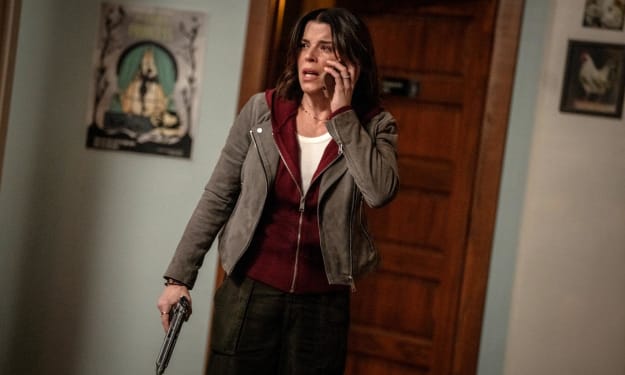
"Scream 7" (2026): Running out of Fresh Screams
This is the seventh time we’ve had a Ghostface crisis. Scream 7 is the latest edition of the Scream franchise. Sydney Prescott and her family are under attack by another anonymous killer dressed in a Ghostface costume. While having issues with her daughter, Tatum, they run from the bloody murders, trying to determine who is behind it all.
By Marielle Sabbag5 days ago in Horror


Comments
There are no comments for this story
Be the first to respond and start the conversation.