
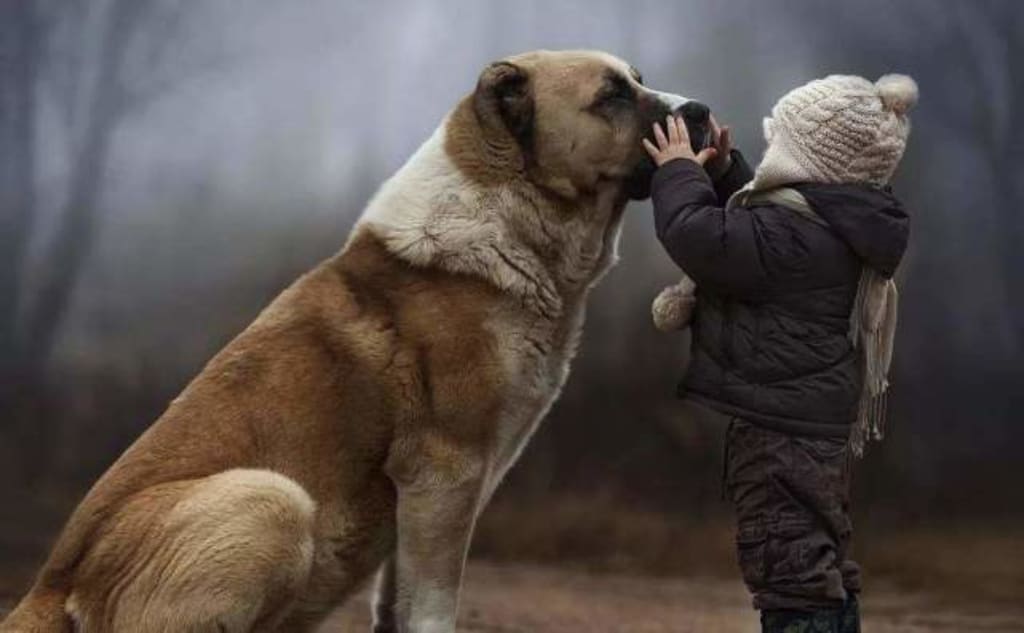
Call of the wild
Dogs are the closest and most loyal friends of mankind. Movies about dogs are the easiest to succeed at most, and some have earned tears (emotions), such as Hachi: A Dog's Tale, and some have earned money, such as A Dog's Purpose.
However, this adventure movie about dogs did not earn tears or money, but caused huge losses that could be as high as hundreds of millions of dollars. It is based on Jack London's phenomenal novel of the same name in 1903.
Speaking of this original novel, it comes from a lot. According to the survey published by UNESCO, Jack London is the most translated American writer in Europe, and The Call of the Wild ranks first among his 50 works and is the most read American novel in the world.
This book is not only the content of the designated reading course for American teenagers when they are studying at school, but also a must-read bibliography for liberal arts in our national universities-anyway, I am a must-read in college. I remember when I graduated from college, my classmates gave me an autobiographical novel Martin Eden by Jack London.
With such a good mass base, it has naturally been adapted into film and television works many times, including the version starring clark gable in 1935, which is called a handsome one.
It can be said that The Call of the Wild is the story of the greatest dog in history. And this dog, too, has a lot to offer. It is a hybrid of St Bernard dog and Scottish Shepherd Dog, named Buck. It is huge, its height and weight are comparable to those of normal adults, and its speed and strength are beyond people's imagination. It is just what people in Tao Jin, Alaska need most.
It turns out that it is also a mistake for dogs to look like Gao Fushuai. Buck used to live in a judge's home in the south of the United States, and he was pampered. The whole town was his territory, and he was arrogant and arrogant. As a result, they were deceived by domestic servants and sold to the north to do manual work of sledding and sending mails. In the words of their owners, they delivered love, hope and warmth.
Buck finally became the leading dog through cruel competition with his own powerful strength, but lost his job because of the emergence of the telegraph system, was sold again, and almost died of abuse by his new owner.
Fortunately, Buck met a man, John, who ran away from home because his youngest son died of illness, and accompanied him on a gold-seeking journey, and established deep feelings with him. However, in the vast and silent wilderness, Buck's dormant animal primitive instinct was awakened.
Obviously, this is the theme of "survival" in Jack London's novels: life always gains meaning and strength in the process of struggling for survival. While expressing the natural law of "natural selection, survival of the fittest", it also reflects the social reality of the change of living environment, revealing the changes of animal instinct and human nature.
Disney, who has always been good at dealing with animals and making live-action animation, after acquiring 20th Century Flowserve Pictures, intends to turn this work into its own Fantasy Forest, throwing 135 million US dollars and making a fake dog that is more real than a real dog through CGI technology.
However, it is this artificial dog that has become a failure of this film. Yes, it seems to be tall and strong enough, and all the movements it makes are highly difficult gymnastics movements, including drifting in snow, drifting on the river, even catching fish in the water and catching birds in the air, which is unbelievable.
But you see, Buck's eyebrows are too clear, just like a woman's eyebrows. The most important thing is that its emotional reaction, whether it is the hurt of self-esteem when it is sold, the sadness when it leaves its owner, or even the sadness when it recalls the past, is too real, and its rich expression is simply the essence of the play.
As an age story in the original book, dogs in the gold rush era are more like human slaves, being exploited and abused. Therefore, in order to show the modern audience, the film must be harmless to people and animals, and take the dog as the companion of human beings, adding a lot of emotional factors, which makes it appear warm and moving, thus weakening the cruelty of reality and making a serious and profound literary work become a family movie.
Buck was cheated, sold and trained in a childish way (Hal, the bad man, was simply too low and stupid, and looked ridiculous). Buck learned how to sled and strive to be the leading dog, and he was more cheerful than cruel, but he dedicated several frightening scenes such as avalanche on the top of the mountain and ice crack on the water surface.
If the first half is still a freezing world, which can still reflect the harsh environment of survival, then in the second half, as the season enters the summer, the lens of Oscar-winning photographer janusz kaminski presents a vibrant natural scenery. How can there be the evolutionary conditions of death in the original book and the painful struggle of later generations?
The original book said, "The cold seems to freeze the heart of nature." "In a temperature of MINUS 65 degrees, a person can't live as long as he lies in the snow for a few more minutes." However, the film shows warmth and romance, the animals are happy, the river is crystal clear, and the gold rush has become an easy task.
John's broken heart and sinking emotions, just like the revival of all things, can't be cured. What is the pain and loneliness? In other words, a person's heart is broken, his feelings are numb, and he only relies on his beard to pull slag.
77-year-old Harrison Ford plays John, the father of a few years old, which is not completely convincing. Although he used to play a tough guy or a powerful man in his heart, and although John's narration runs through the film like the original, Harrison Ford speaks in his trademark, lazy and tired tone, which is a gruff voice that is half roaring and half wise.
In order to express the warm feelings of interdependence between man and dog, Buck defeated the bad man Hal, made John live, and finally returned to nature and life, which made the audience give up emotionally. However, the "wild call", in the end, is the dog heard the call of nature or listened to people's persuasion?
In the original book, it was precisely because of John's death that the last bond between dogs was broken and the restraint was lost, which made Buck willing to listen to the call in the animal world, and restored the nature of hunting and became a real wolf dog.
"Its cunning is the cunning of wolves and the cunning of wildness; Its wisdom is the wisdom of the sheepdog, plus the wisdom of St Bernard dog. All of this, together with the experience gained from the most ferocious group, makes it as daunting as any creature roaming in the wilderness. "
But the film understates this process and even ignores the past. Buck and Wolf seemed to be brothers who had been separated for many years, and they came together when they met. What's more, Buck led the wolves to invade the black bear's territory and scared it away directly-the roar of the big black bear was just a bluff? Indeed as expected bear kind!
In a word, the audience expected to see how bloody or bloody the competition between animals was, which was shaking and thrilling. However, they watched an episode of Animal World or Man and Nature hosted by Zhao Zhongxiang, and the picture was as mild as the dubbing commentary-after all, there was still some loss or disappointment.
Let's take a look at the end of the original book. I suddenly feel that Buck is tall and tall:
"People may see it running in front of the wolves, crossing the pale Yue Hui and the faint Northern Lights. It jumps and jumps far higher than its partners. When its huge throat growls, it sings a song of the young world, that is, the song of the wolves."
About the Creator
Keep reading
More stories from writers in Geeks and other communities.
Not Just For Clean Up: A History Of The MCU's Department of Damage Control
Initially an organisation that seemed to exist to help the heroes of the Marvel Cinematic Universe, from Phase Four onwards, the Department of Damage Control has shifted into a more antagonistic role. Most recently seen in the Wonder Man series, the current incarnation of Damage Control seems to target superpowered individuals, regardless of whether that person poses an active or intentional threat.
By Kristy Anderson7 days ago in Geeks
U.S. and Iran Explore a Path to De-Escalation as Nuclear Talks Resume in Oman
In a world shaped by loud summits and public ultimatums, some of the most consequential diplomacy still happens quietly. That was the case this week as the United States and Iran engaged in renewed nuclear-related discussions in Oman, according to a regional official familiar with the matter. The talks, described as exploratory and focused on de-escalation, underline a shared recognition that prolonged confrontation serves neither side, nor the already fragile Middle East. While neither Washington nor Tehran has officially confirmed the details, the choice of Oman as the venue is telling. For years, Muscat has served as a discreet intermediary between adversaries, offering neutral ground away from media glare and political grandstanding. This latest round of engagement suggests that both the U.S. and Iran are testing whether diplomacy can once again temper a relationship defined by mistrust, sanctions, and brinkmanship. A Familiar Backdrop of Tension The nuclear issue has long been at the heart of U.S.-Iran relations. The 2015 Joint Comprehensive Plan of Action (JCPOA) once promised a framework that balanced Iran’s nuclear activities with sanctions relief. That agreement unraveled after the United States withdrew in 2018, triggering a cycle of escalating measures from both sides. Iran expanded its nuclear program beyond previous limits, while the U.S. and its allies responded with renewed economic pressure. Since then, attempts to fully revive the deal have stalled. Shifting political realities in Washington and Tehran, regional conflicts, and growing skepticism about the original agreement’s scope have all contributed to the impasse. Against this backdrop, even limited talks aimed at de-escalation carry significance. Rather than seeking a sweeping breakthrough, the discussions in Oman appear focused on managing risks. According to regional sources, the goal is to prevent misunderstandings, reduce the chances of miscalculation, and explore confidence-building steps that could stabilize the situation in the short term. Why De-Escalation Matters Now Timing is a critical factor. The Middle East is grappling with overlapping crises, from ongoing conflicts to economic uncertainty and shifting alliances. Any escalation involving Iran’s nuclear program could ripple far beyond the region, affecting global energy markets and international security. For the United States, reducing nuclear tensions with Iran could help free diplomatic bandwidth at a time when global challenges are multiplying. For Iran, easing pressure may offer economic breathing room and a chance to recalibrate its foreign policy without appearing to concede under duress. Importantly, de-escalation does not necessarily mean reconciliation. Officials familiar with the talks emphasize that expectations are modest. The discussions are not framed as a return to the JCPOA but as a pragmatic effort to keep disagreements from spiraling out of control. Oman’s Quiet Role Oman’s involvement highlights the value of trusted intermediaries in international diplomacy. Unlike more visible regional players, Oman has cultivated a reputation for neutrality and discretion. It has previously hosted back-channel communications between the U.S. and Iran, including talks that laid the groundwork for the 2015 nuclear deal. By hosting these discussions, Oman provides both sides with political cover. Neither Washington nor Tehran must publicly acknowledge concessions or shifts in position, allowing negotiators to explore options without immediate domestic backlash. This approach reflects a broader trend in diplomacy, where informal channels and incremental steps often precede more formal agreements. In highly polarized relationships, silence can sometimes be more productive than speeches. Regional Implications The prospect of U.S.-Iran de-escalation is being closely watched across the Middle East. Regional governments have long been caught between the consequences of confrontation and the uncertainties of diplomacy. Reduced tensions could ease fears of conflict spilling across borders, even if deeper disagreements remain unresolved. At the same time, skepticism persists. Previous efforts at engagement have faltered, and many regional actors are wary of temporary understandings that lack clear enforcement mechanisms. For them, the key question is whether these talks will lead to tangible changes or simply buy time. Challenges Ahead Despite the cautious optimism surrounding the Oman talks, significant obstacles remain. Trust between the U.S. and Iran is thin, shaped by decades of hostility and broken agreements. Domestic politics in both countries further complicate matters, limiting how far negotiators can go without facing criticism at home. Moreover, the nuclear issue is intertwined with broader regional dynamics, including security concerns, sanctions, and Iran’s relationships with neighboring states. Addressing one aspect without touching the others may limit the scope of any progress. Yet, supporters of dialogue argue that de-escalation does not require solving everything at once. Even small steps—such as improved communication channels or mutual restraint—can reduce the risk of sudden escalation. A Cautious Step Forward The talks in Oman do not promise a dramatic reset in U.S.-Iran relations. Instead, they reflect a shared understanding that unmanaged tensions are dangerous and that dialogue, however limited, is preferable to silence. In an era where international disputes often play out in public and on social media, this return to quiet diplomacy stands out. Whether it leads to lasting progress remains uncertain, but it signals that both sides are willing, at least for now, to explore alternatives to confrontation. As the world watches from a distance, the outcome of these discussions may hinge less on grand declarations and more on patience, pragmatism, and the willingness to keep talking—even when agreement feels far away.
By Saboor Brohi 4 days ago in Geeks



Comments
There are no comments for this story
Be the first to respond and start the conversation.