

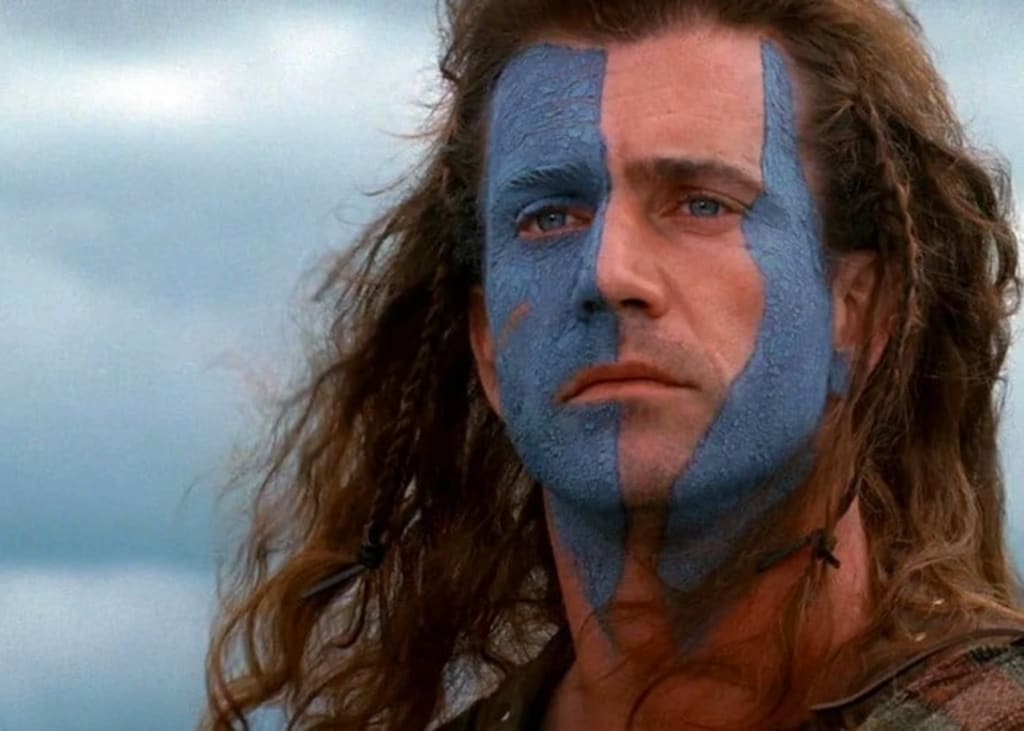
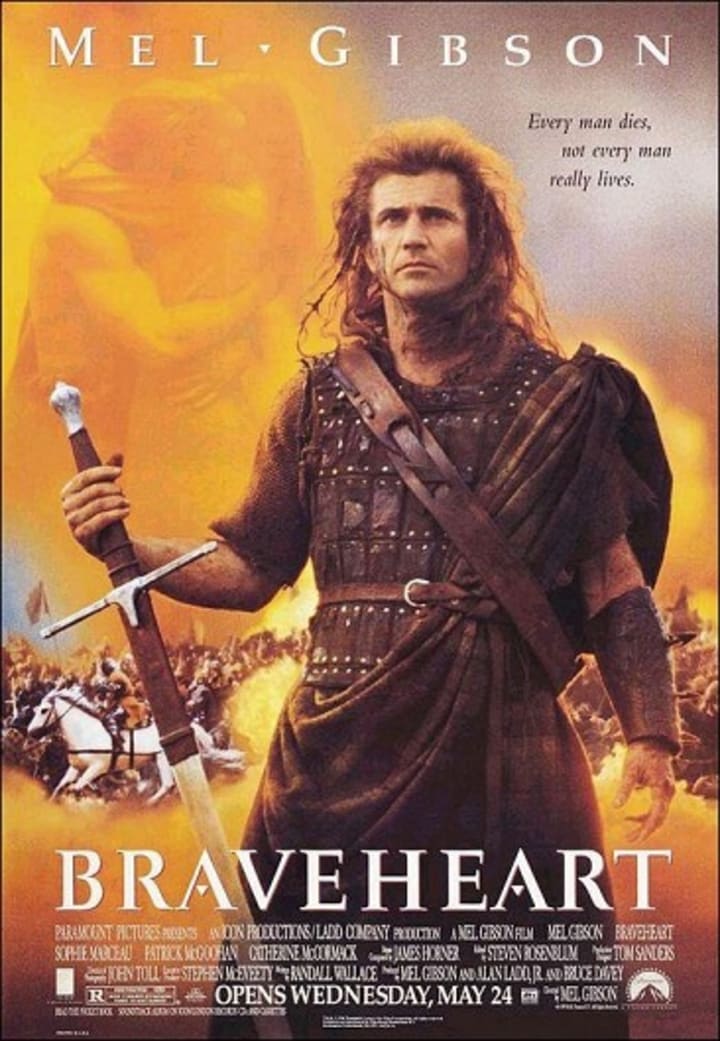
In the curriculum of more or less recent historical cinema one will hardly find such an accumulation of clichés and lies as in Braveheart . Of course, its director and protagonist care little because it is the film that gave him fame, money and even several Oscars, thus opening the way for him to shoot other films of a certain stature, as successful as they are controversial. If we start to enumerate, the popular story that Mel Gibson offered us about the life of William Wallace is so false that the Scots should have screamed in heaven. They didn't because, after all, Braveheart he injected them with a dose of self-esteem and pride; in fact, the iconography captured on celluloid by the Australian filmmaker has settled into national imagery and, if one visits the country, everywhere we see the kilt , the stud and the faces painted blue, although all this is a manipulation .
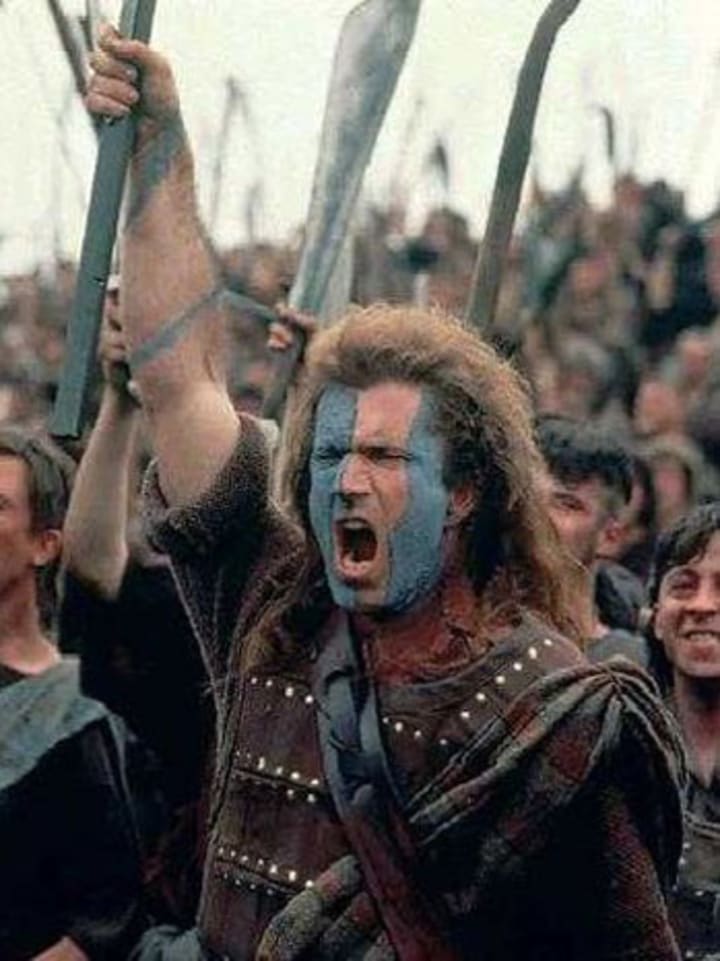
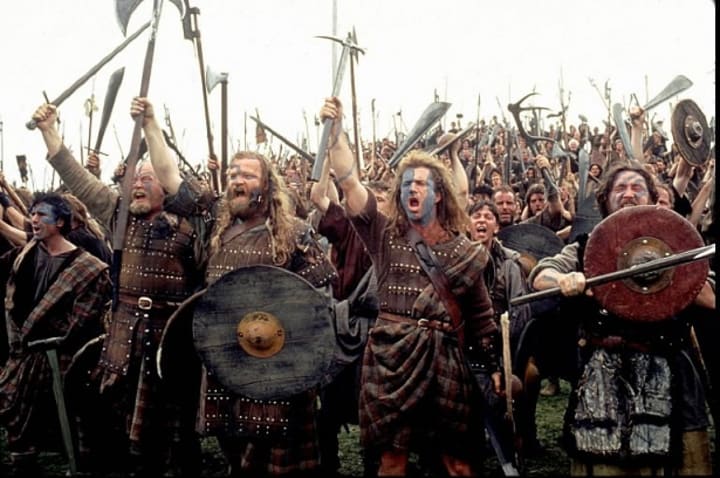
Because if we begin to critically analyze it is difficult to stop, starting with the historical changes themselves. William Wallace was born in 1272 and died in 1305, that is to say, in the middle of the Middle Ages , a time when tartan skirts were not yet worn -in fact, their generalization was nineteenth-century-; highlanders did wear a plaid tunic , but turns out wallace was a lowlander(that is to say, from the Lowlands, not from the Highlands, since he was born in Elerslie, Glasgow); his wardrobe, then, should not be very different from that of any other European of that time. To be exact, from other nobles, since he was not a simple peasant -no one would have followed him and, in fact, at first it was difficult for him to impose his leadership on the arrogant aristocracy- but a real landowner . He was not a brute or illiterate person either, since he did not have the birthright (he even had a younger brother) he was destined for an ecclesiastical career and therefore he received studies and knew several languages . It wasn't during a trip to Rome and Paris, as the movie says; he did travel through Europe but he did not do it as a child but when he was already an outlaw, after the defeat of Falkirk.
Speaking of the Middle Ages, it should be emphasized because the custom of painting one's face blue was Pictish , a people of Antiquity that by the 13th century in which the plot unfolds had already been left hundreds of years behind. Along the same lines, the red tunic worn by all English soldiers is out of place, since the armies did not begin to uniform themselves until the 17th century, and their panoplies would adjust to what each one could pay, as happened everywhere. . It is assumed that Gibson put that intense vermilion clothing on them to identify them well (a kind of prelude to the classic jackets of that color typical of the English troops).
Regarding the military theme, Wallace's famous sword (of which the director wore a nice pin on the lapel of his tuxedo during the Oscar ceremony) that at the end of the film flies through the air to metaphorically stick to the ground in a way rather reminiscent of Excalibur , it can be seen today in the strange tower-monument built to his memory at Stirling. The weapon, similar to the film one although somewhat cruder in appearance, measures 132 centimeters and was wielded with two hands, which probably means that it did not really belong to the character, since those types of swords corresponded rather to a later period. Furthermore, it is assumed that the real Wallace was a giant of two meters, while Gibson credits 1.77; inBraveheart there is a scene that jokes at the expense of it.
Insisting on the Middle Ages, few myths are as deeply rooted in the popular imagination as the one we see applied by the English king in a rather absurd plan (so that the nobility would be more English, would he wait twenty years for babies to grow up?). I refer to the primae noctis , better known here as the pernada right and that simply did not exist as such, that is, as written law; Most historians are inclined to think that it was a simple symbolic rite of submission to the feudal lord, usually paid for or, in any case, put into practice as "misuse" (that is, abuse). But for Mel Gibson, everything is valid as long as he gives free rein to his Anglophobia, recognized by himself and shown on screen on other occasions ( The Patriot is a good example, although he did not direct it personally).
As for the characters, it's not like they fit the story very well. Wallace's wife, Murron (played by Catherine McCormack), was actually called Marian but she feared the American public would mistake her for Robin Hood and they gave her another, cacophonically similar name. She was not killed by the English but she died long before the rebellion started. They weren't secretly married either; in fact, many historians doubt that they even had a romantic relationship. In the film, she dreamily appears to her widower in several perfectly expendable scenes leading up to their final maudlin reunion, on her scaffold.
The English king played by Patrick MacGoohan was Edward I Longshanks , married to Eleanor of Castile and who in 1296 invaded Scotland (as he did with Wales before), a vassal kingdom on the other hand, due to her refusal to collaborate in his war against France. He began to reign shortly after Wallace's birth and died three years after him - not at the same time, as the film shows to dramatically underline the parallel between the two. His son Edward II , the only one who is portrayed with some fidelity, weak and homosexual (which were almost synonymous at the time), was the one who ended up granting independence to the Scots.
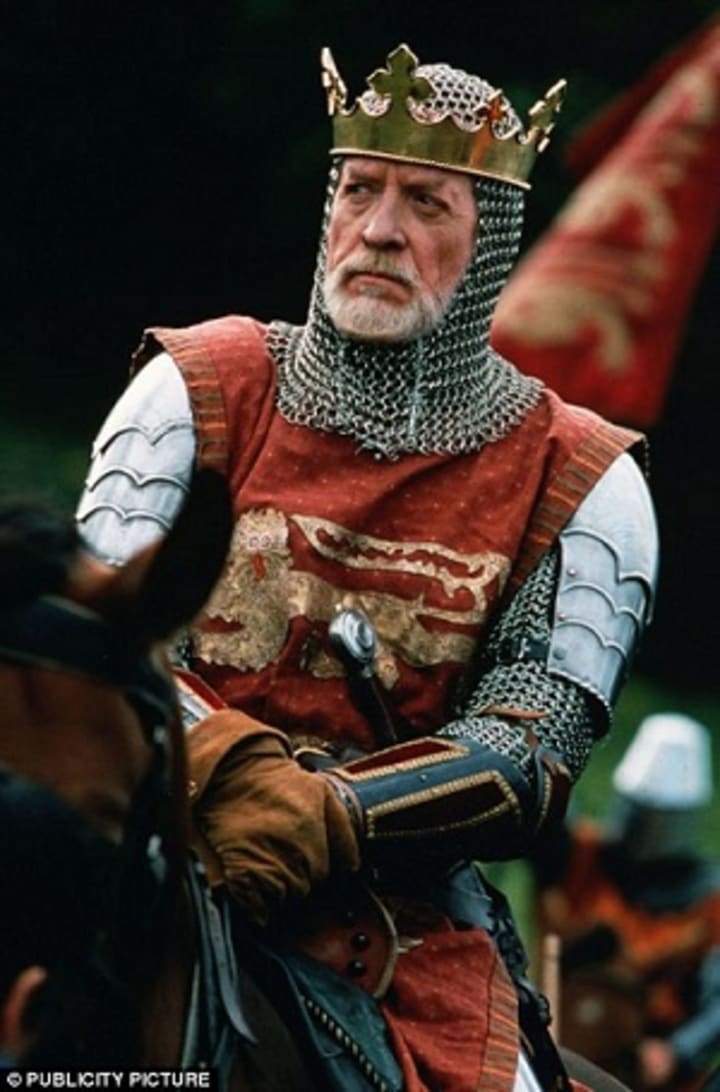
Edward II married the French princess Isabelle , who in the film cannot help but fall in love with Wallace and in his infinite kindness warns him of his father-in-law's tricks and even gives him poison to spare him from suffering torture. In this regard, a few points must be made: first, she was not so virtuous because it is suspected that later, in collusion with a lover, she had her husband murdered; second, she did not set foot in England until 1308, three years after Wallace's death; third, except in a display of precocity, she could hardly have fallen prey to the Scotsman's love because she was only thirteen at the time (she never even met her mother-in-law.
It seems that it was Edward I's wife, Margaret, who was popularly credited with this unlikely idyll); fourth, and consequently, it is impossible that Isabelle could have gotten pregnant by him. Of course, the temptation that a son of Wallace would end up reigning in England was irresistible for Randall Wallace , the screenwriter, who is also a descendant of the character (other descendants collaborated as extras).
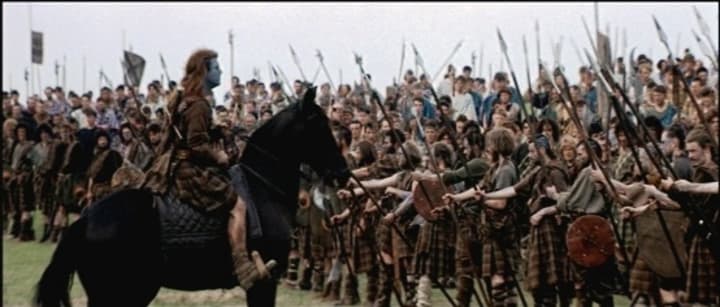
And what about Robert Bruce , who is the narrator in the film? It is ironic that, a candidate for the Scottish throne, he was an ally of England at first, since later he would be the one who in 1314 would take over as leader of the fight adopting the title granted to the previous one -Guardian of Scotland- and achieving his goal with the victory of Bannockburn , with which the film absurdly closes for leaving a positive message, just as it happened in other even worse ones such as Pearl Harbor or the insufferable remake of The Alamo . Of course, that way you can insert the pompous phrase "... and they won their independence", ignoring, of course, that they lost it again in 1707.
It was Bruce and not Wallace who earned the nickname Braveheart . Why that nickname? Because he had promised to go to the Crusades to atone for his sins but, having died -it is not known whether of syphilis or leprosy, like his father-, his men decided to take his heart to the Holy Land so that he could fulfill the promise posthumously. As in the Iberian Peninsula they also fought against the infidel, they signed up... and ended up exterminated in the battle of Teba (in Andalusia), falling such a curious package into the hands of Mohamed IV of Granada. Aware of what he was, he handed him over to Alfonso XI of Castile to return him to Scotland. In other words, even the title of the film is manipulative.
About the Creator
Keep reading
More stories from Nouman ul haq and writers in Geeks and other communities.
Exodus Review
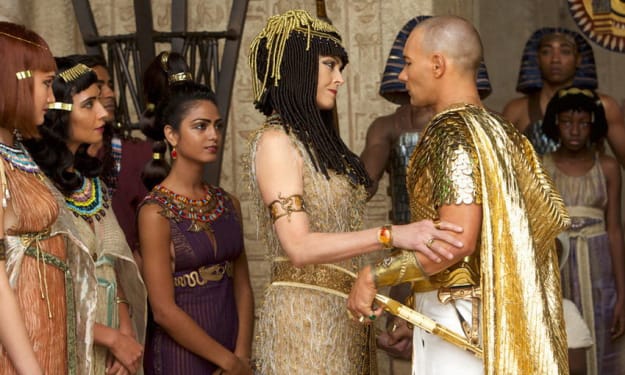
The mediocrity of today's Hollywood, the artistic and conceptual misery that asks to risk the least and has plunged North American cinema into the worst crisis in its history, has led production companies to settle in a continuous state of production and premiere of remakes , one after another like the waves on the beach, each worse and more unnecessary.
By Nouman ul haq4 years ago in Geeks
Goodbye, Mr. Duvall
It is turning out to be an interesting year. I was in the middle of teaching a class when a pop-up appeared on the screen announcing the death of Mr. Robert Seldon Duvall (yes, that was his full name). I was in the middle of a discussion on the obsession we have with winning when it comes to sports (the Winter Olympics was a theme), and I felt as though things were coming full circle. We had already lost Gene Hackman last year, and along with that titan, it feels though one particular golden age has closed off to be replaced by...?
By Kendall Defoe 25 days ago in Geeks
Iran Releases Epstein Files:
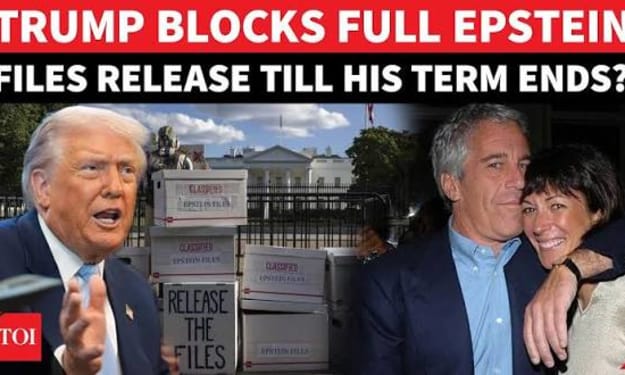
Introduction The controversy surrounding the Epstein files has once again captured global attention. These documents relate to the criminal activities and powerful connections of American financier Jeffrey Epstein, who was accused of operating a large international sex-trafficking network involving underage girls. In recent months, rumors and reports have circulated online claiming that Iran has released sensitive information related to these files, sparking intense debate and speculation across political and media circles worldwide.
By shaoor afridi4 days ago in Geeks


Comments
There are no comments for this story
Be the first to respond and start the conversation.