
Book Review: "Violeta" by Isabel Allende
5/5 - one of the greatest writers of the modern age...

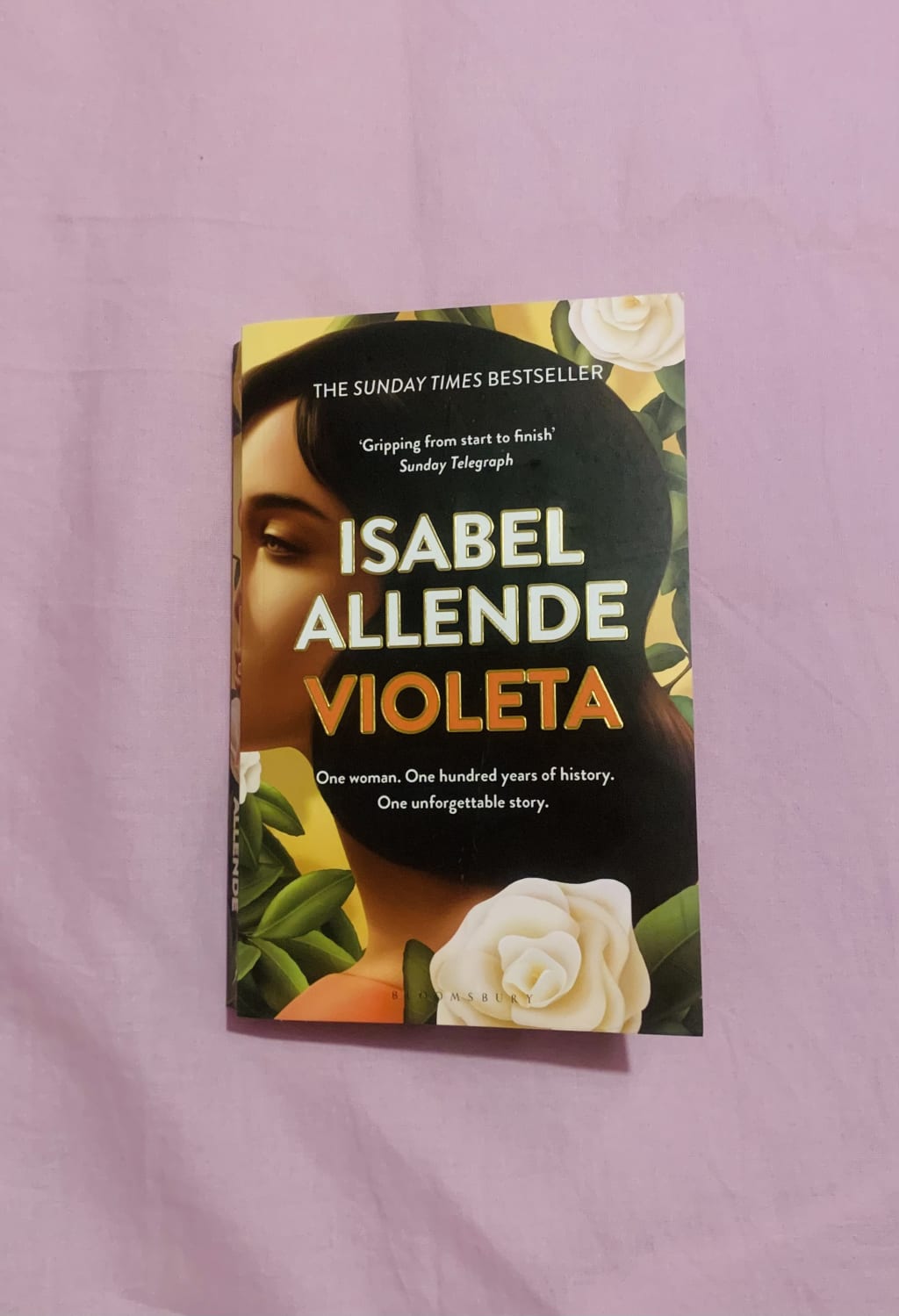
I was only around eighteen years' old when I first read Isabel Allende's The House of the Spirits and I was stunned from start to finish. To this day, I cannot forget the terrifying, electric and often heartbreaking events of that novel from the death of Rosa the Beautiful all the way to the impassioned ending. Esteban's house lingers over me like a dark cloud, that book is one of the few that has changed my life. Violeta is another one of Allende's novels that has sought to do the same thing. It has changed me in a way I never expected to be changed. It has hardened me against trust (if I wasn't hardened against it enough) and made me realise that caution against love is not just a good habit - it is absolutely necessary for the survival of women everywhere. Violeta is a ruthless novel filled with horrifying truths that we either have to shield ourselves from or force ourselves to encounter.
Violeta is a novel narrated by an epoynmous protagonist in a lengthy letter to her grandson, Camilo. As the protagonist approaches 100 years' old, she recounts her life back from the year she was born in 1920 and the enemies her father made in business whilst the world was leading up to the Great Depression. A horrifyingly true encounter of what it meant to live through such an era that was rocked by unpredictability, eviction notices and suicides, Violeta struggles with the fact that in reality - her father was nothing more than a coward and a fraud. As we revisit episodes in her life, his shadow becomes less and less powerful.
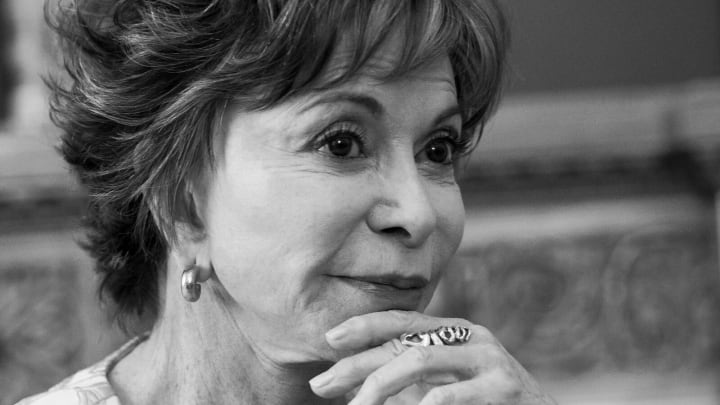
Jose Antonio is her brother and he takes over looking after the family with a resilience that gains Violeta's utmost respect. As she grows into a young woman, she encounters the dangers of men who, like her father, are brutes and cowards, fraudsters and criminals. She must find her way on this winding journey without getting too caught up in love or else she risks all her freedoms that the world once offered to her and was threatening to take away again.
She has stints as a teacher, she works with her brother on housing projects, she encounters death first-hand and sees exactly what regret means when she attempts to help her daughter out of a dire situation that would be a mother's worst nightmare. As we travel along with Violeta, we get to know more about the grandson she writes to, Camilo. We initially do not know anything about him and, if you read on, you will be able to piece together some facts that she mentions about the once young and troublesome boy who grew up to be something she never expected.
Isabel Allende strips away all the romanticism from Latin America and leaves us with a people who have actually been through a lot. From the threats of dictatorship to the Great Depression to the threat of communism taking route in the country and people having to flee from being blacklisted by the state. This entire text is told against a backdrop of political uncertainty in a style that befits Isabel Allende's The House of the Spirits in so many ways.
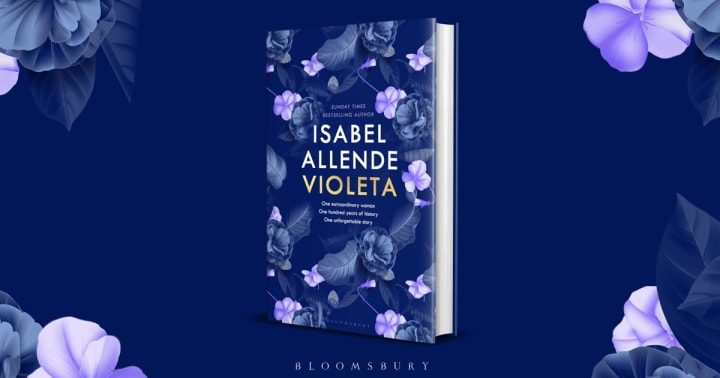
There are so many characters to get to know in the novel including Violeta's Irish Governess, Josephine Taylor. Josephine is just as memorable as all of the Latin American cast in her political drive, her incredible independence, her life lessons to Violeta and her passionate drive to be whoever she wants - even if it means breaking the rules and morals given to a woman from her dress sense to her sexuality. Characters come and go, but it is really up to the reader to decide which characters have had the most positive impact on the life of Violeta. Is it Josephine? Is it Abel? Is it Torito, or Violeta's mother? Is is Jose Antonio? Each person in this book pieces a piece of the jigsaw that is Violeta into being and makes her who she is - even the characters like Julian, who do her wrong.
A brilliant testament to her incredible writing and storytelling ability, Isabel Allende tells us 100 years of history through the eyes of a woman who could not possibly be stopped no matter how hard anyone tried. It is both an amazing text and a provocative history written by one of the greatest writers of the modern age.
About the Creator
Annie Kapur
I am:
🙋🏽♀️ Annie
📚 Avid Reader
📝 Reviewer and Commentator
🎓 Post-Grad Millennial (M.A)
***
I have:
📖 300K+ reads on Vocal
🫶🏼 Love for reading & research
🦋/X @AnnieWithBooks
***
🏡 UK
Keep reading
More stories from Annie Kapur and writers in Geeks and other communities.
Book Review: "All the Murmuring Bones" by A.G Slatter
I have to admit that many things have got in the way of reading this book - like other books. I have owned this book for absolutely ages and only decided to pick it up yesterday. It's been at least a month or two - but I am glad that I waited. A book like this has to be devoured with utmost concentration and I am happy I had the time to sit and read it all in one or two sittings. The book itself is a masterpiece from start to finish with the correct blend of high fantasy, classic gothic and my favourite one of all - folk horror. A.G Slatter creates an entire underworld of betrayal and hurt beneath a backdrop of riches, power and heritage. It's definitely my kind of book and I think it has a little bit for everyone in it too.
By Annie Kapur3 years ago in Geeks
A Knight of the Seven Kingdoms Series Review (Season 1)
As one of the biggest properties in fantasy, A Song of Ice and Fire remains immensely popular with audiences. After reaching far into the past with House of the Dragon, a second spin-off was on the cards. A Knight of the Seven Kingdoms serves up a bite-sized slice of action and drama, but it still claims a spot among the best small-screen titles.
By Robert Cain14 days ago in Geeks
Where Is The Cast Of 'Orange Is The New Black' Now?
While Netflix was still in the early days of blockbuster shows, the streaming service hit the jackpot when it launched the prison-dramedy series, Orange is the New Black, in 2013. The show followed a white collar criminal, Piper Chapman, as she faced consequences for a past mistake, and was based off the memoir of the same name by Piper Kerman. In fact, OITNB was just the second Netflix original series after House of Cards.
By Jenika Enoch4 days ago in Geeks



Comments
There are no comments for this story
Be the first to respond and start the conversation.