
Book Review: "Thus Were Their Faces" by Silvina Ocampo
5/5 - a fantastic anthology of the reality of madness, cruelty and superstition...

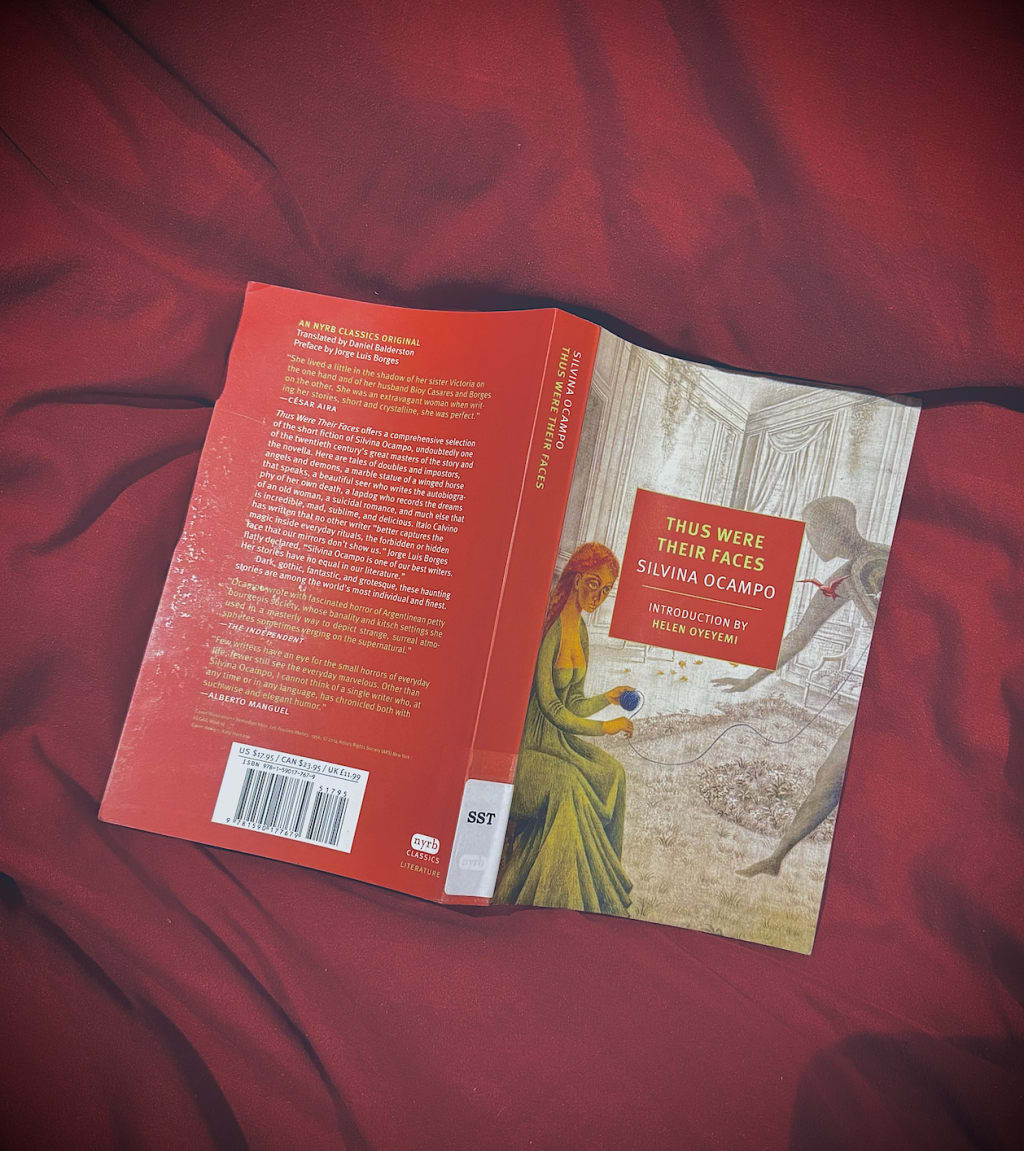
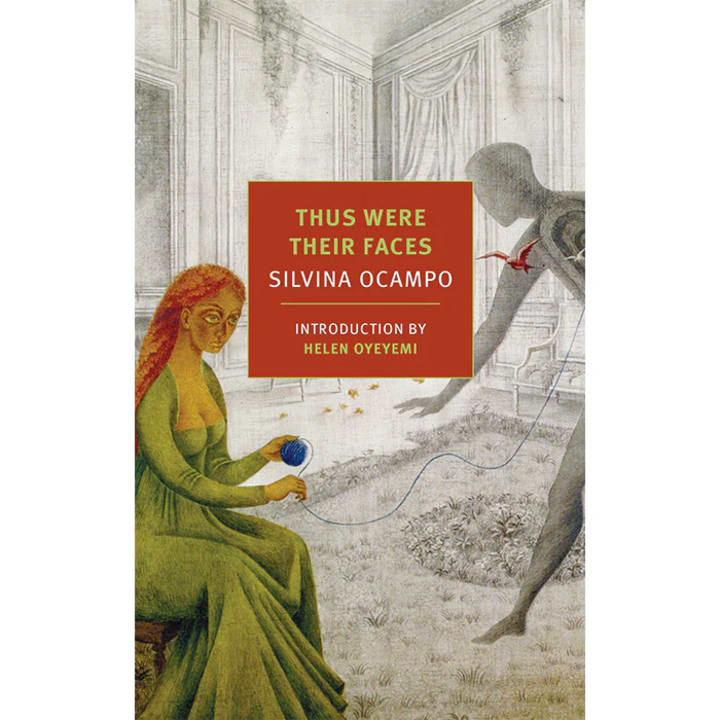
I've been back to the library looking for books I haven't really heard of. I have, however, heard of this author before even though I haven't read much of her work. Silvina Ocampo was an Argentinian writer and poet from Buenos Aires. She often wrote in this almost Angela Carter-mixed-with-a-hint-of-realism sort of way. One of the biggest authors of surrealism, Ocampo created entire worlds inside of characters' heads. I found this book almost by accident and was surprised to read that the introduction was by Helen Oyeyemi, the writer of the book Gingerbread. There's also a short preface by Jorge Luis Borges. It's completely on-brand for this author to have those other greats within.
One thing that really got me into the book was the introduction written by Helen Oyeyemi. She starts off with the fact that Ocampo's prose was decidedly 'too cruel' to allow her to win the Nobel Prize for Literature and that her natural way of writing is rather dark. There are comparisons that arise between the writer and Emily Bronte, looking not just at the darkness and the rugged nature of the stories but also at the fact that both had literary sisters. She takes a look at how Ocampo compares to writers like Blake and other greats, finishing on the note that this writer deserves more recognition for her ability to create characters who are basically living almost conditionally. One disaster away from oblivion.
One of the stories that is a great example of her psychological depth is called The Imposter. A reigning madness that pervades the novella is first seen upon a train where the narrator is anxious about a woman who is talking to him as he observes the woman's daughter and her necklace that reads 'Maria' in jewels. Finding out that they are both aware of the person he is going to visit, he becomes more and more agitated, only to find that the person in question, Armando Heredia - is a recluse who has been begged back home by his father.
The question of Armando's sanity runs deep underneath the text as the more the narrator becomes involved with his life, the more he realises that this man does not only live frugally, he lives without desperation or any kind of distraction. Nature is overgrown and rowdy, there's a story about how Armando's grandfather shot and killed the swans out of fear that they were bad luck and there's a psychologist mentioned only by name as a man who has told Armando to make a diary of his dreams - though Armando himself doesn't dream at all. The creeping dread in the narrator's mind does not go away - if there is an imposter in this life, then who is it?
Another great example of her psychological storytelling is within the much shorter text entitled The House Made of Sugar. This story explores the way in which previous occupants of a house can have an unsettling influence on those who just move in. We see Cristina and her husband, two newlyweds, try to find a house that nobody has lived in before due to the wife's superstitions - ultimately they find one. It is a pristine and beautiful house which Cristina initially feels they can call a home. However, there was a previous occupant named Violeta that Cristina did not know about and she starts to adopt the mannerisms and even the name of this woman. The author tracks this transformation which is tied in with yet again, a strange and creeping dread. The ending of the story is conceptually terrifying though nothing 'scary' by trope has happened.
Yet another story in this anthology which is wicked with psychological discomfort is entitled The Velvet Dress. This is almost an Angela Carter-esque narrative circling around the nature of a velvet dress embroidered with the image of a dragon. Once the woman whom it has been made for tries it on, she notices her difficulty in breathing but also the power the dress has over her, the narrator is stunned into a weird silence. She states she is leaving right now for a trip and thus, would like to take the dress with her, discarding the fact that the dress is literally suffocating her. This culminates into a darkly comedic situation which also shows us the power of materialism as the dress becomes an evil force of nature.
Many more stories within, including the title story, mess and meddle with the mind of the reader, showing us the true extent of ignorance and belief. Superstitions lurk around in the book, waiting to be uncovered. People often shrug off beliefs that perhaps they should pay a lot more attention to. On top of this, madness permeates through each character, each narrator and every theme of the stories within.
***
Join my unofficial writing challenge!
About the Creator
Annie Kapur
I am:
🙋🏽♀️ Annie
📚 Avid Reader
📝 Reviewer and Commentator
🎓 Post-Grad Millennial (M.A)
***
I have:
📖 280K+ reads on Vocal
🫶🏼 Love for reading & research
🦋/X @AnnieWithBooks
***
🏡 UK
Keep reading
More stories from Annie Kapur and writers in Geeks and other communities.
Book Review: "Strange Pictures" by Uketsu
I'd heard of this book before and when I did I'm not going to lie, it didn't really sound that interesting. Eventually, I caved and got it on my Kindle because I couldn't find it in the library. For a book with pictures, this was really well formatted on the Kindle, which is surprising. Apart from this though, I have an awkward opinion about this book. The beginning of the story seems very interesting but, as the story starts connecting and becoming more and more repetitive with all the drawings and stuff apparently have some 'secret' buried in them, I lost a lot of my original enthusiasm. It was a good concept, but perhaps it could have been executed better. It didn't feel as visceral and conceptually terrifying as the author perhaps intended.
By Annie Kapur7 months ago in Geeks
The Rachels - 2025
Much to my surprise, I have kept a list of the films I‘ve seen this year. I daresay it isn’t complete. There will be films that snuck in on a late night in front of the TV that I would’ve forgotten to note. Or others, that I went to watch at the cinema, but then had a red wine and promptly forgotten about. But it’s not a bad approximation of the films I’ve seen this year. In total, there are 53 films listed, so an average of one a week and one for good luck.
By Rachel Robbins25 days ago in Geeks
Tamer Hassan
Tamer Hassan is a name that carries weight in British film, television, and even popular culture beyond the screen. Known for his tough-guy roles and unmistakable presence, Hassan has built a career that reflects resilience, reinvention, and a deep connection to family. In recent years, public curiosity around him has also grown because of his daughter, Belle Hassan, who rose to fame on Love Island. This combination of cinematic grit and reality TV visibility has introduced Tamer Hassan to a whole new generation of audiences. Early Life and Path to Acting Before becoming a familiar face in crime dramas and action films, Tamer Hassan lived a life far removed from movie sets. Born in London, he grew up in a working-class environment where discipline and survival were everyday lessons. In his early adulthood, Hassan was involved in professional boxing and worked as a bouncer, experiences that later influenced the authenticity he brought to his on-screen roles. Unlike many actors who follow a traditional drama school route, Hassan’s entry into acting was unconventional. His natural intensity, real-life toughness, and commanding voice caught the attention of casting directors looking for realism rather than polish. This background helped him stand out in an industry often saturated with similar profiles. Career Highlights and Acting Style Tamer Hassan is best known for portraying hardened characters—gangsters, enforcers, and morally complex figures who live on the edge. Films such as Layer Cake, The Business, Kick-Ass, and Batman Begins allowed him to showcase his ability to bring depth to characters that could otherwise feel one-dimensional. His performances often balance menace with vulnerability, making his roles memorable even when screen time is limited. On television, Hassan has appeared in popular British series including EastEnders, Silent Witness, and Game of Thrones. These roles further cemented his reputation as a reliable character actor who elevates every project he joins. Rather than chasing leading-man status, Hassan has built a steady career by embracing roles that feel authentic to his life experience. Life Beyond the Camera While his on-screen persona is often intimidating, those close to him describe a different side of Tamer Hassan. Family plays a central role in his life, and this became especially visible when his daughter entered the public eye. Many viewers who searched online for “belle hassan dad” or “who is belle’s dad Love Island” were surprised to discover the connection between the reality TV contestant and the seasoned actor. This curiosity wasn’t just gossip-driven. It reflected genuine interest in how two people from the same family could navigate fame in such different ways—one through gritty cinema and the other through modern reality television. Belle Hassan and Public Curiosity Belle Hassan appeared on Love Island in 2019 and quickly became known for her strong personality and emotional honesty. As her popularity grew, so did questions like “who is Belle from Love Island’s dad” and “who is Belle Hassan dad”. The answer consistently led back to Tamer Hassan. Unlike some celebrity parents who actively leverage their status, Hassan remained largely in the background during Belle’s time on the show. This approach earned respect from fans who appreciated that Belle’s journey felt independent rather than manufactured. Searches such as “Love Island Belle dad” or “belles dad Love Island” often revealed interviews where Hassan expressed pride in his daughter while emphasizing that her success was her own. A Father-Daughter Dynamic in the Public Eye The relationship between Tamer Hassan and his daughter added an interesting layer to public discussions. People asking “who is Belle’s dad from Love Island” often expected a flashy celebrity figure, but instead found a grounded actor who values privacy and hard work. Hassan has spoken openly about wanting to protect his children from the harsher sides of fame while still supporting their ambitions. This balance resonated with many parents watching from the sidelines, especially those navigating social media-driven celebrity culture. In that sense, Hassan’s role as a father became just as compelling as his roles on screen. Legacy and Cultural Impact Tamer Hassan’s career is a reminder that success in entertainment doesn’t follow a single path. His journey from boxing gyms and nightclubs to major film sets reflects determination and adaptability. At the same time, his association with Love Island through Belle Hassan has expanded his relevance beyond traditional film audiences. For some, he is the actor known for intense performances; for others, he is simply the answer to “who is Belle from Love Island dad.” Both identities coexist, and together they paint a fuller picture of a man who has lived multiple lives within one. Final Thoughts Tamer Hassan stands as a unique figure in British popular culture. His work ethic, authenticity, and commitment to family have shaped a career that continues to evolve. Whether recognized for his film roles or through questions about who is Belle Hassan dad, Hassan remains a compelling example of how personal history and professional life can intersect without losing integrity.
By Saboor Brohi 4 days ago in Geeks


Comments (1)
Out of the stories you mentioned, I'm most intrigued by The House Made of Sugar! And ugh, thanks to the series YOU, I now hate the name Bronte, lol