
Book Review: "The Philosophy of Andy Warhol" by Andy Warhol
5/5 - what an experience!

Note: If you don't want to read the little narrative at the beginning, please skip to the 'review' heading.
***
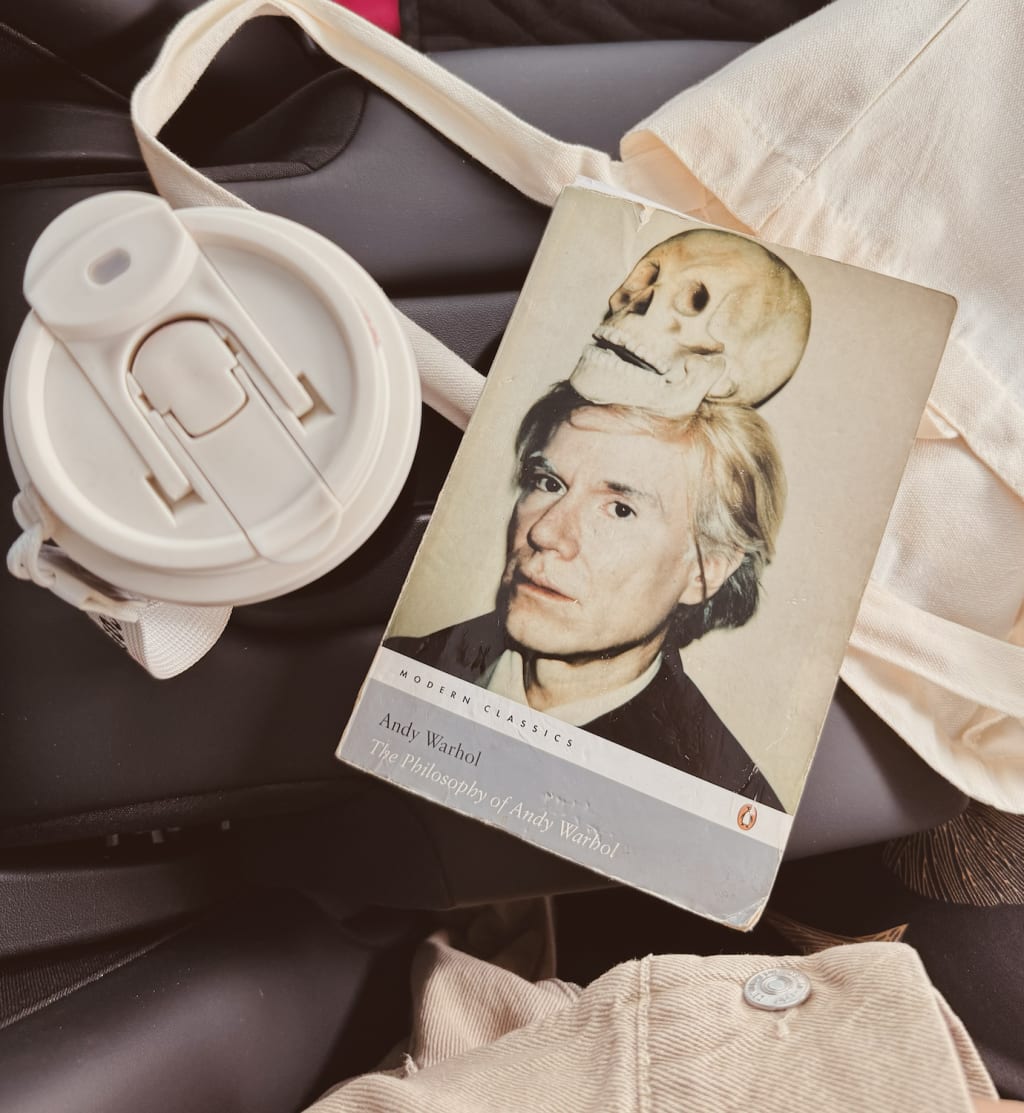
Okay, so I have to tell you a story so you might be here for some time. This isn't the review but it has something to do with the book so stay seated. I bought this book used for like 50p to £1 and it is a little worse for wear to be perfectly honest, though it is still readable and that's all I care about.
So I was reading the introduction to the book and there's all these annotations in pencil in the book. BUT, it isn't like someone was studying the book for education purposes. These annotations include words like 'hmmm' and 'you know what' and are more than often, passing thoughts. Sometimes, they even have something to do with the annotators own life. And yes, I did read them as I was reading the book because they are quite literally everywhere. When I finished the first chapter, I was wondering where my bookmark was and couldn't find it and so, I tipped the book over to face it down to remember my page. This is when something really strange dropped out of it...
There was an advertisement for a cafe in Glasgow plus a piece of paper. On the piece of paper was a narrative written by the same person who did the annotations (I assume because the handwriting is the same. The capital 'S' is very curvy and styled with a spiral in both cases). This narrative is about the person's stay at somewhere called the 'Blue Sky Hostel' (when I looked it up, it actually existed and it was very weird what I found). I couldn't read it all because I don't know what order it goes in and there are some words I can't really make out. I'll attach the photos on to this review if you'd like to be a sleuth.
The only things I found out were from the annotations and they were this: the annotator and the writer are the same person and most likely she is a British-Pakistani Woman; on top of this, these annotations were done either in late 2007 or early 2008 as some dates are mentioned around. Why would you annotate with dates that are so far in the past? I'm just guessing that it would be more around the time than somewhere like 2025. The book also smells very, very strange and pungent - often putting me off even opening it. That's it.
I spent a while trying to make a coherent narrative out of this paper though, but let's see what you can do.
And that's the end of the story...
Of course, I promised the pictures - here they are...
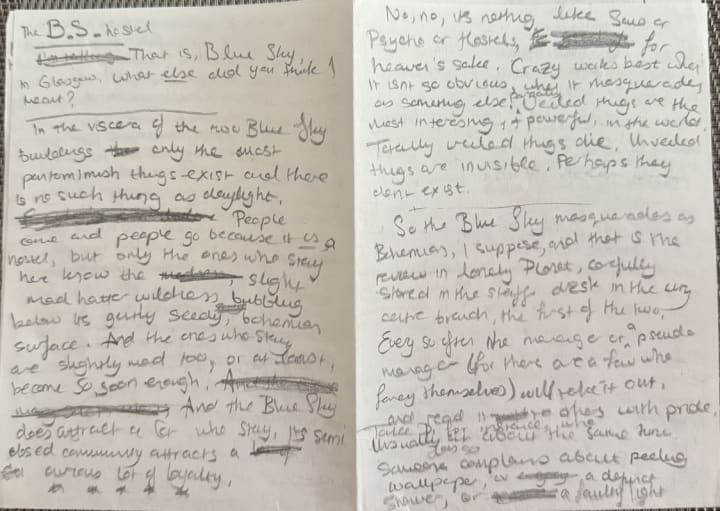
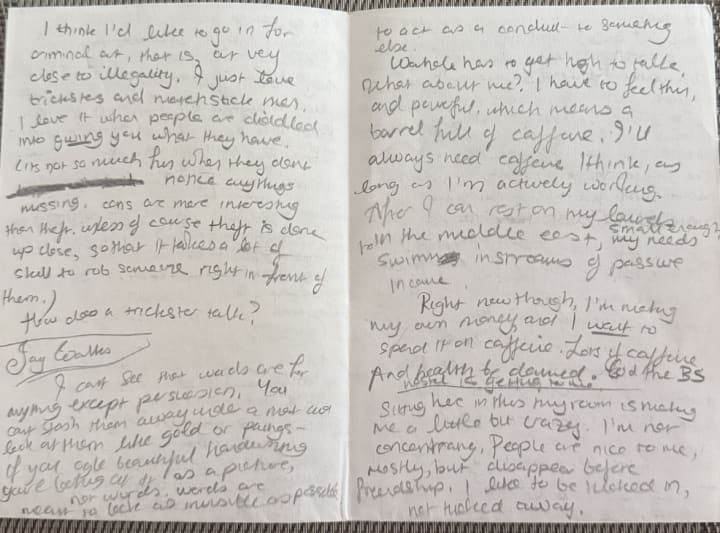
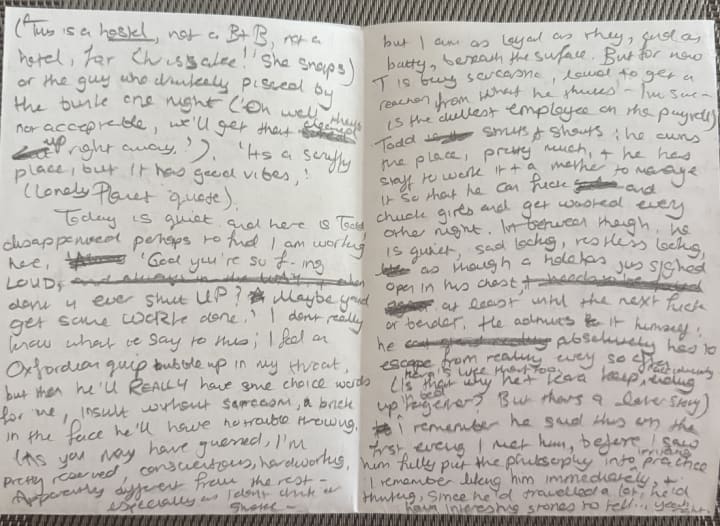
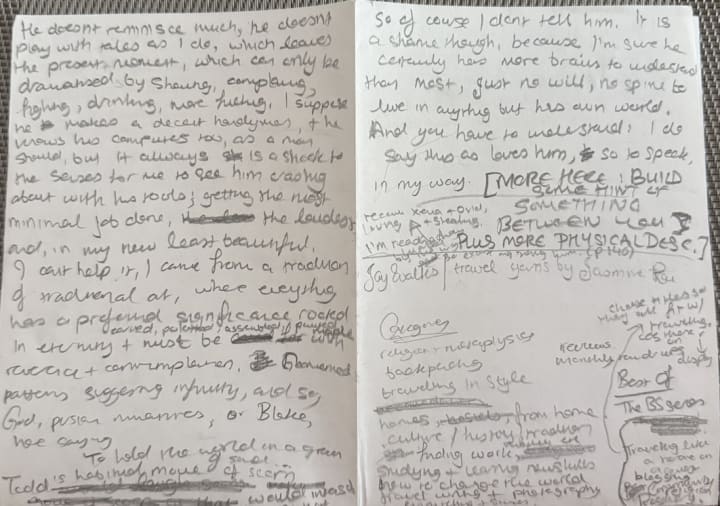

On to the review. Sorry for my blathering on about this stuff I found in a book. I'll show you some of the annotations as we go along...
Review:
Andy Warhol is perhaps one of 20th century culture's most recogniseable figures and one of the reasons for that is because of his insane philosophies about art, life and the way people should live. Instead of covering up imperfections and making sure everyone looks as 'Hollywood' as possible, Andy Warhol wanted to accentuate what made people different. Be that as it may, he pretty much did create the culture around fame we have today and so, all of that might not have been the best of ideas because now everyone is exactly the same. The idea it might have backfired isn't lost on anyone.
He definitely focuses on the ideas of love, beauty and sex quite often, showing how these are actually three different things entirely. He is this sort of 'reluctant celebrity' (as described in the blurb) and this is mainly because of the way he philosophises differently to the other artists of his generation. He describes living on top of Shirley's Pin-Up Bar in the 1950s and seeing people live in basements and in elevators - but never really feeling like he had a problem of his own. He loves his television a bit too much and spent a lot of time alone with his thoughts. One thing I found was that this guy was very much not a social person at a time when it was only really 'cool' to be social. He's also quite sarcastic about it which makes it slightly more readable.
He not only talks about clothes and how they are a better way of judging someone's character than by their face, he also writes about the way in which life changed from the 50s to the 60s and then to the 70s, often referring to the latter as the most empty of all of them. In his chapter about love and the 60s, he tells the story of a woman named 'Taxi' who invented the miniskirt. She is described as self-destructive and often beautiful but also annoying. By the end of the chapter, she has already died in Hawaii and Warhol states he hadn't seen her in years. I think that though this chapter is interesting, it does to the trained literary eye, seem like Warhol is glamorising beautiful, dim-witted women who die young.
Sometimes his points can be a little incoherent, as if he is trying to make a point but he has a million thoughts at once and wants to get them all down before they disappear. I appreciate his love for basic things, but I also think that his mind is far from it. When it comes to the chapter on love as well, I think myself and the annotator have concluded the same thing when it comes to the way Warhol talks about fantasy and how it takes a hold of people. The writing may be incoherent, but his ideas still break the surface. It's like you're reading someone talk to you about everything.
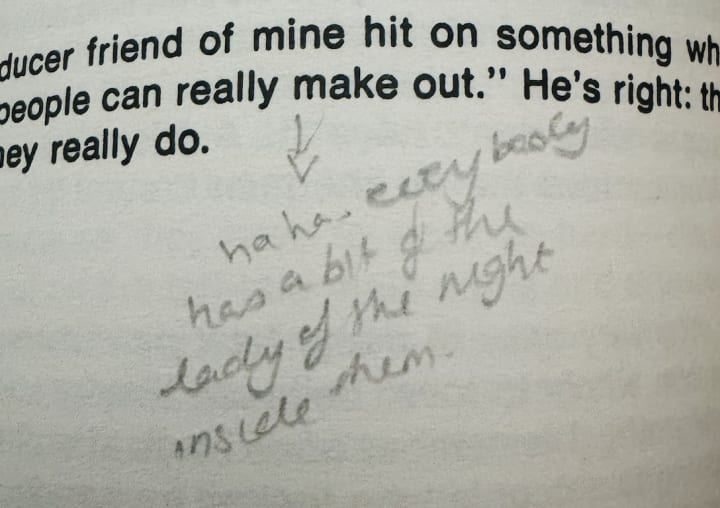
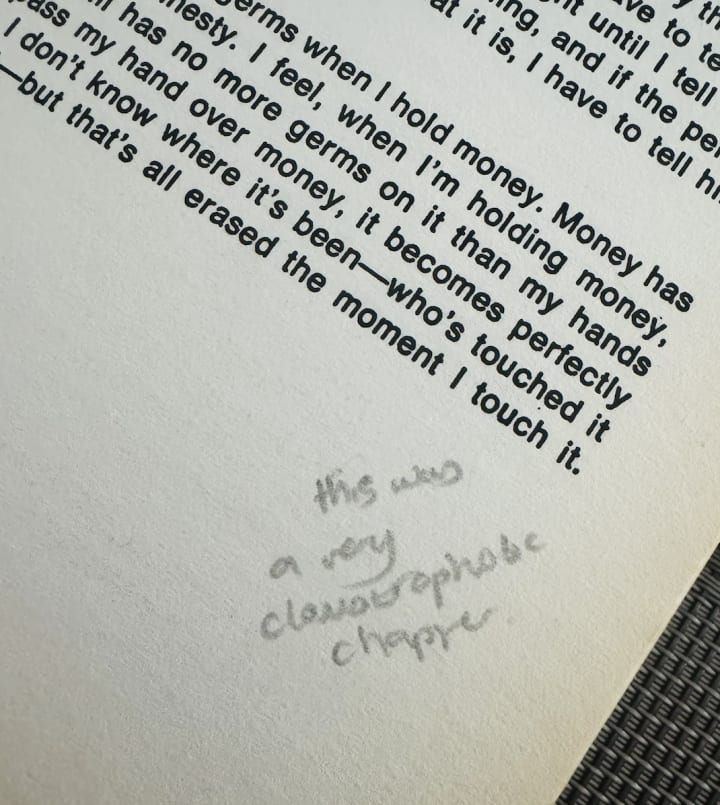
As we got on with the book (and I say 'we' as myself and the annotator were now on this journey together, thinking similar thoughts). By the end of the chapter on money in which Warhol exclaims that 'money is (his) mood', stating weird things like he likes it on the wall etc. We both came to the conclusion that this chapter was probably the worst written in the whole book mainly because Warhol doesn't make a lot of sense. He constantly contradicts himself with statements about 'looking poor' and yet preferring to act rich by carrying money in a business envelope or something like that. It was quite a here-and-there chapter.
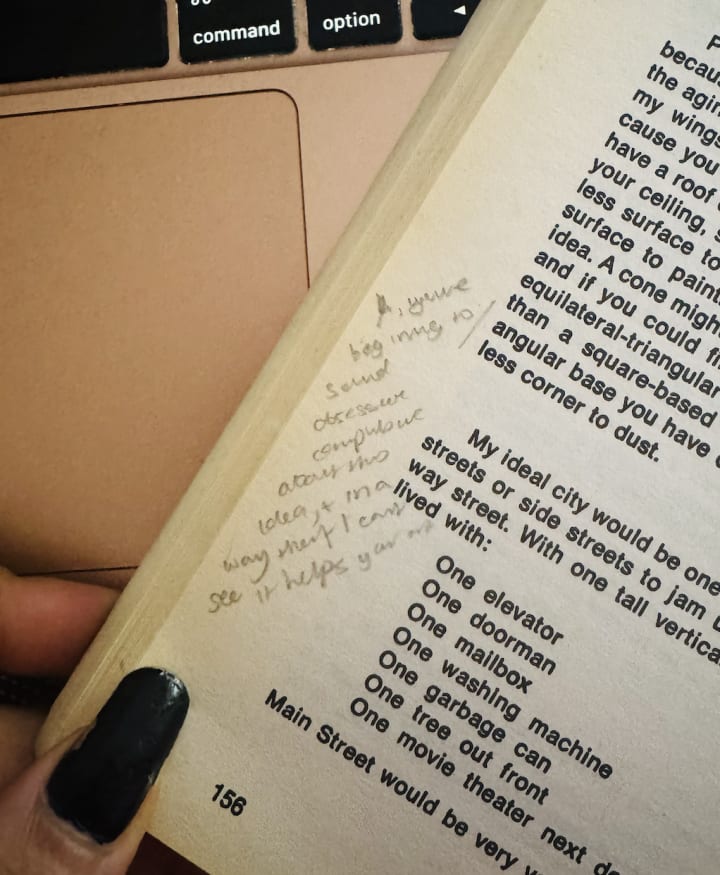
I think we can all agree that Andy Warhol is a little bit obsessive with his own ideas, hell he's a little obsessed with himself. Whilst reading about cities and countrysides, the way in which he would live if he could choose and how you should throw out your clothes as if they have an expiry date like milk does, I actually came to the conclusion that this guy is obsessed with never being boring. Something that I feel is a bit more Freddie Mercury than say, Edie Sedgewick. It almost seems too glamorous for Warhol to suggest it, but it is an under-current of his philosophy. I think the annotator agreed but as we get into this book, she seems to speak to Andy Warhol himself, referring to him as he is referred to in his own introduction - as 'A'. Did it help his art? I think being obsessive but also impulsive did help it. The annotator though, begs to differ.
As we come towards the endings of the book, the one thing we get a taste of is all the contradictions of Andy Warhol. I have to say though, he doesn't particularly shy away from them. In chapters like Underwear Power, he even states that the chapter is dedicated to what happens when his philosophy runs out. With his cool sense of self-deprecation and the humour mixed into the irony of it all, Andy Warhol walks us through the meanings behind his artistic creations and often, pulls back the cover on his own life. Honestly, I definitely think the annotator and I were both pleasantly surprised with this book.
About the Creator
Annie Kapur
I am:
🙋🏽♀️ Annie
📚 Avid Reader
📝 Reviewer and Commentator
🎓 Post-Grad Millennial (M.A)
***
I have:
📖 300K+ reads on Vocal
🫶🏼 Love for reading & research
🦋/X @AnnieWithBooks
***
🏡 UK
Keep reading
More stories from Annie Kapur and writers in Geeks and other communities.
Leave No Trace - Japan’s Evaporating People
Welcome back to 'why it's shifty' and today we are looking at a strange phenomenon: Japan's evaporating people. Commonly known as johatsu, these people just randomly vanish, leaving behind their family and friends to wonder exactly what happened. Popularised in the 1960s and 1970s, there's something that has never sat right with me about this. But, at the end of the day, it is up to the individual. Even if the individual may not be in a sound state of mind when they commit to something that will come to redefine everything about who they are...
By Annie Kapur5 months ago in Geeks
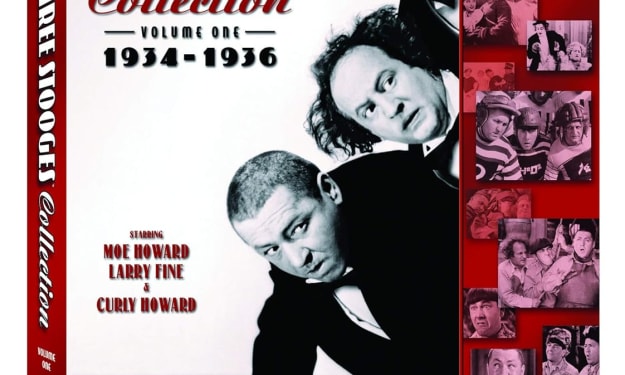
History of The Three Stooges (Part I: The Beginnings and Columbia Pictures - 1920s-1936)
I have been itching to write about The Three Stooges on Vocal for close to two years, but I couldn't figure out how to do it. I wanted to do it by third Stooge, but that's a bit complicated. I know this much. I was about eight or nine years old when I first saw The Three Stooges. I remember one of my local channels had the Stooges on for hours, and I tried my damnedest to be up for those shorts. I remember that the Family Channel actually had an hour of the Stooges on from 11PM to midnight, and it was the entire library on during that time.
By Clyde E. Dawkins4 days ago in Geeks
12 Child Stars Who Committed Suicide
While some child actors make the transition from child stars to healthy adults with good careers, whether or not in the acting industry, others struggle to lead a life that gives them happiness, and sadly, they make the choice to end their own lives. Here's a look at twelve highly successful child stars who tragically made the choice to commit suicide.
By Janis Masyk-Jackson3 days ago in Geeks
Pandora’s Burden
“My brother warned me to not accept gifts from the one who commissioned you,” said Epimetheus to the woman clad in silvery raiments standing at the entrance to the temple. Her silver tiara and the silver rings on her fingers and toes glinted in the firelight cast by torches set on either side of the doorway. Lingering in the shadows, beyond the reach of the flames as she was, he could not tell what she held in her hands. At first what appeared to be a box was perhaps a funerary urn, or maybe merely an apple.
By J. Otis Haas3 days ago in Fiction



Comments
There are no comments for this story
Be the first to respond and start the conversation.