
Book Review: "The Parasites" by Daphne Du Maurier
4/5 - an incredible novel of family dynamics through fear and failure...


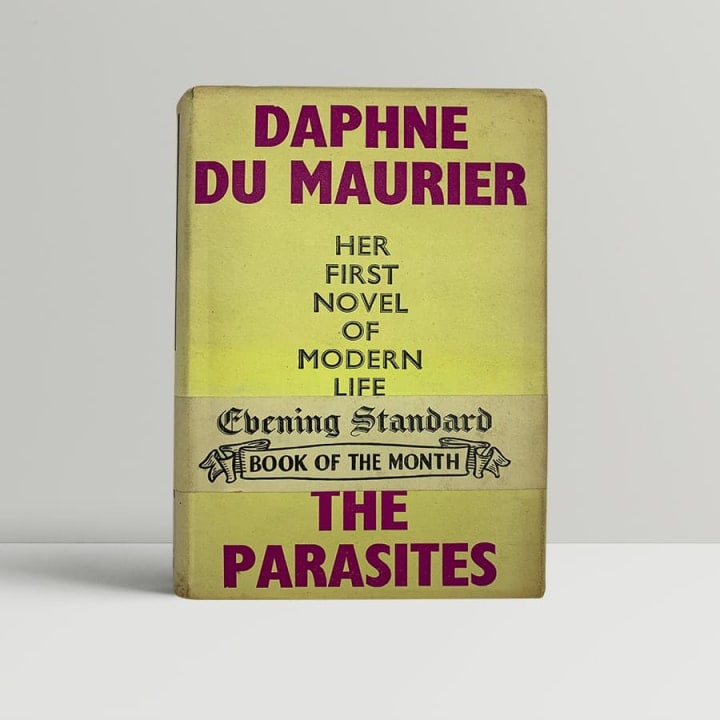
I think it is definitely the season for Daphne Du Maurier books. It is all cold and wintery and the darkness makes it feel like it is straight out of Rebecca or one of her other well-known nightmarish books. My reading of The Parasites came from the fact I was looking through the Virago Modern Classics list kind of cheesed off that they were all so expensive on my Kindle. When all else fails, I go for used books. And so, I managed to pick up this Du Maurier text for only a few pounds. Let me tell you this: it was entirely worth it.
The novel centres on the Delaney siblings—Maria, Niall, and Celia—each marked by their upbringing in an unconventional and intensely creative family. Their father, Pappy, is a celebrated entertainer, while their mother, Mama, is an opera diva. From an early age, the siblings are immersed in a world of performance and spectacle, a foundation that shapes their identities and relationships. However, their glittering family legacy comes at a cost, as they grow up in an environment where appearances often take precedence over emotional authenticity. The narrative opens during a heated confrontation at a country house where the siblings have gathered. Maria’s husband, Charles, accuses them of being parasites—feeding off others and contributing little in return. This accusation becomes a central theme, prompting each sibling to reflect on their lives and confront the uncomfortable truths about themselves and their relationships with one another.
If there is one thing that Du Maurier writes well it is conflict based on character personality clashes. These siblings might be different but they have these weird similarities that probably are not wholly good characteristics to have. When their relationships begin to break down, the key thing to focus on is whether they recognise these parts of themselves or continue on.

Maria, the eldest sibling, is a famous actress whose success on the stage masks her deep insecurities. She is elegant, self-assured, and outwardly composed, yet beneath her polished exterior lies a profound sense of dissatisfaction. Maria’s marriage to Charles is fraught with tension, as his traditional values and disdain for the artistic world clash with her bohemian upbringing. Their relationship deteriorates further as Maria’s career ambitions and self-centredness take precedence over her domestic responsibilities. I kind of feel for Maria. She is in a marriage she constantly has doubts about to a man who is not very likeable and the things she has wanted to do have been put on the back burner because of the other 'duties' in her life. It is a little bit sad. When she finally starts to get what she wants, there is a moment of reflection for the reader about whether they really like the new Maria.
Niall, the middle sibling, is a gifted composer whose charm and wit mask his lack of discipline and direction. While he possesses undeniable talent, Niall’s career is plagued by unfulfilled potential, as he consistently prioritises pleasure and escapism over hard work. He shares a particularly intense bond with Maria, one that borders on co-dependence. Their relationship is tinged with an almost incestuous closeness, blurring the lines between sibling affection and something more ambiguous. Niall creeps me out. I am sorry I simply do not like him. He is like a half-villainous character that was written into an Alan Hollinghurst novel.
Celia, the youngest sibling, is the most outwardly selfless of the three. While Maria and Niall pursue their artistic ambitions, Celia assumes the role of caretaker, managing the practicalities of their lives and providing emotional support. However, this selflessness comes at a cost, as Celia’s own desires and aspirations are consistently sidelined. She harbours resentment towards her siblings for their selfishness, yet she remains deeply enmeshed in their lives. Celia is one of those characters who I think I felt sorry for in the beginning but after a while, she just seemed so morose and mopey that it kind of brought the party down. I understand that she is a character we are meant to pity, but seriously, this woman is really sad - it is actually exhausting.
All in all, the novel has a deep exploration of family, ambition, and the human need for connection. Through the intertwined lives of the Delaney siblings, Daphne du Maurier examines the ways in which love and dependence can both nurture and destroy. The book's blend of psychological insight, vivid characterisation, and evocative prose creates a compelling portrait of a family caught in a web of their own making. The more you get into the text, the less you get to feel pity towards them. There is just this dynamic of constant failures and lost ambitions that makes these characters' wants and desires completely impossible.
About the Creator
Annie Kapur
I am:
🙋🏽♀️ Annie
📚 Avid Reader
📝 Reviewer and Commentator
🎓 Post-Grad Millennial (M.A)
***
I have:
📖 280K+ reads on Vocal
🫶🏼 Love for reading & research
🦋/X @AnnieWithBooks
***
🏡 UK
Keep reading
More stories from Annie Kapur and writers in Geeks and other communities.
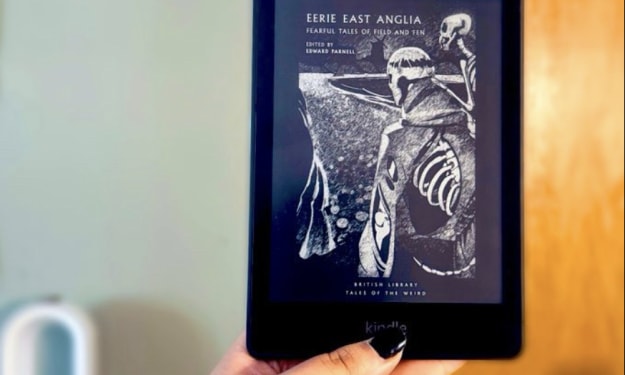
Book Review: "Eerie East Anglia" ed. by Edward Parnell
Full Title = Eerie East Anglia: Fearful Tales of Field and Fen by Edward Parnell I have been trying to catch up on one of my favourite series of books ever - The British Library's Tales of the Weird. As you can probably tell, I have been a bit here and there about it, hyping up anthologies like Out of the Past in my head only to be kind of disappointed. I thought that perhaps, I needed to get back on the folk horror wagon and delve deeper into my favourite subgenre and so, I sought out some writings on fields, weird coastal ghosts and remote places with haunting backstories. And so, I found this lovely anthology. Let's take a look...
By Annie Kapur11 months ago in Geeks
Thank You, John Cena
When December 13, 2025 arrived, I welcomed it. I welcomed it with open arms. The reason was simple: I wanted to see how John Felix Anthony Cena, Jr, someone who I've been a fan of for over 20 years, would end his iconic and legendary career.
By Clyde E. Dawkinsabout a month ago in Geeks
Takeover 2026 Movie Review
In an era defined by algorithms, automation, and constant digital surveillance, cinema has increasingly turned its attention to stories about control. Takeover (2026) enters this landscape as a tense, futuristic thriller that feels less like speculative fiction and more like a warning disguised as entertainment. Rather than imagining a distant dystopia, the film presents a world that looks uncomfortably close to our own—one where power no longer arrives with force, but quietly assumes authority through systems we depend on every day.
By David Cook7 days ago in Geeks



Comments
There are no comments for this story
Be the first to respond and start the conversation.