
Book Review: "On Suicide" by David Hume
5/5 - an interesting consideration when it comes to the miseries of life...

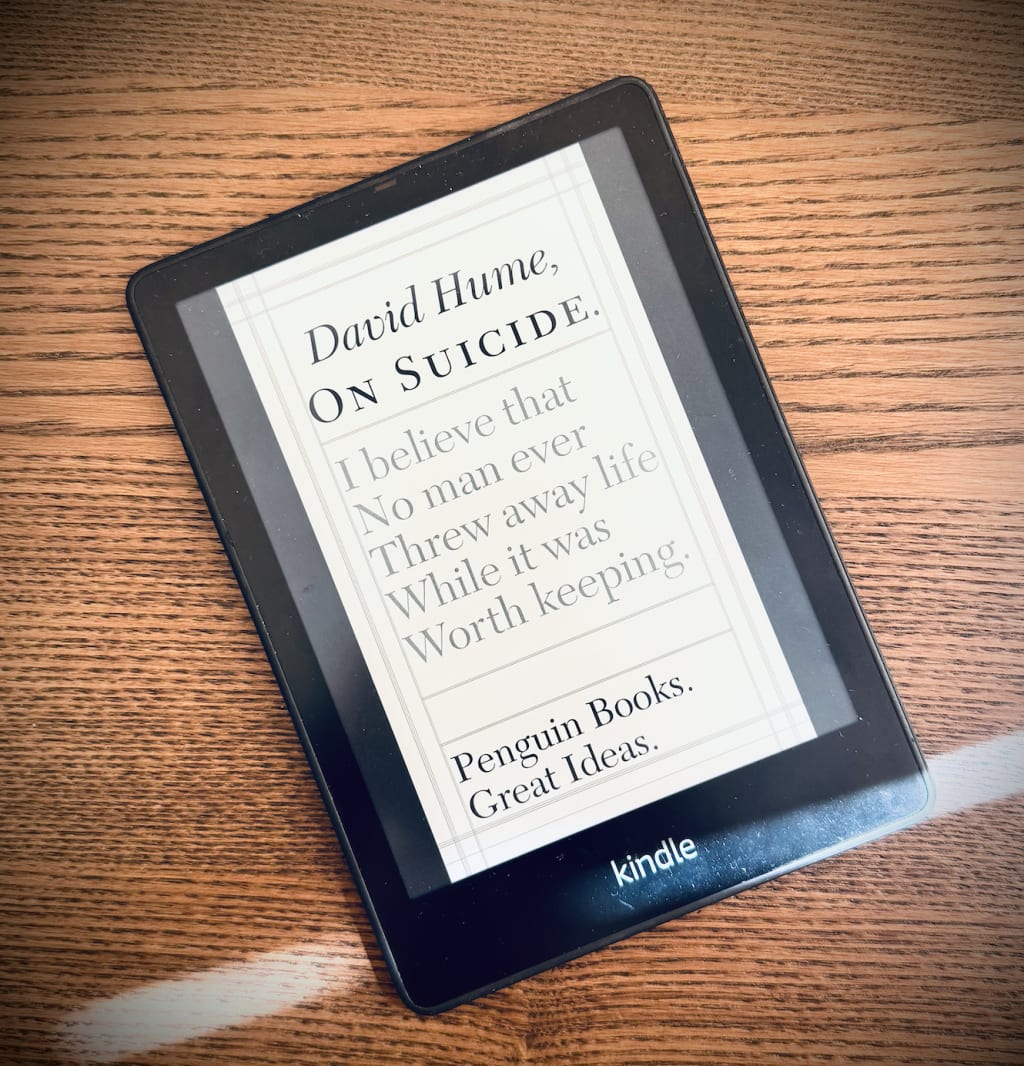
The Penguin 'Great Ideas' books have never really come up on my radar because they are so short. And to be honest, if I bought a book on David Hume's essays then I could consider them. However, some of the books are going relatively cheap on Amazon for the Kindle and so, I thought I would swoop in when a sale was on. I've been meaning to read this particular essay for a while. Currently, it is the end of May 2025 and I'm trying to read more essays, essay anthologies and nonfiction works - which is my reading goal for the whole year. So, let's take a look at what we can find inside David Hume's On Suicide...
“In vain do you seek repose from beds of roses: in vain do you hope for enjoyment from the most delicious wines and fruits. Your indolence itself becomes a fatigue; your pleasure itself creates disgust. The mind, unexercised, finds every delight insipid and loathsome; and ere yet the body, full of noxious humours, feels the torment of its multiplied diseases, your nobler part is sensible of the invading poison, and seeks in vain to relieve its anxiety by new pleasures, which still augment the fatal malady.”
According to David Hume, suicide does not violate the laws of nature as he goes through several actions that humans have done that are against the natural world such as: building cities/housing and curing diseases. He sees the very act of calling suicide 'against nature' as an irony that is rooted in religious authoritarianism. Suicide is apparently just ending one's life and is, another intervention in which society moves along in its autonomy. It is an act against intolerable misery and just goes to show how much autonomy people really have in the world. I find this to be an interesting point of action, because it reminds me of that passage from Cloud Atlas where Frobisher talks about his suicide before shooting himself in the roof of his mouth.
Hume then takes aim at those who state that suicide is against divine authority. To this, he simply analyses that the very fact that God gave humans this level of autonomy (and if the religious are correct, this was something God did deliberately) then even the act of suicide must be within God's plan for humanity. If all acts of humanity have been given to them by God, then suicide must not just be a part of that plan, it is also permitted as human action. He looks at acts of desperation as the idea that we do not blame the starving man when he eats just to survive, but apparently we blame the suffering and miserable man for ending his pain. It is a paradox that even religion cannot explain.
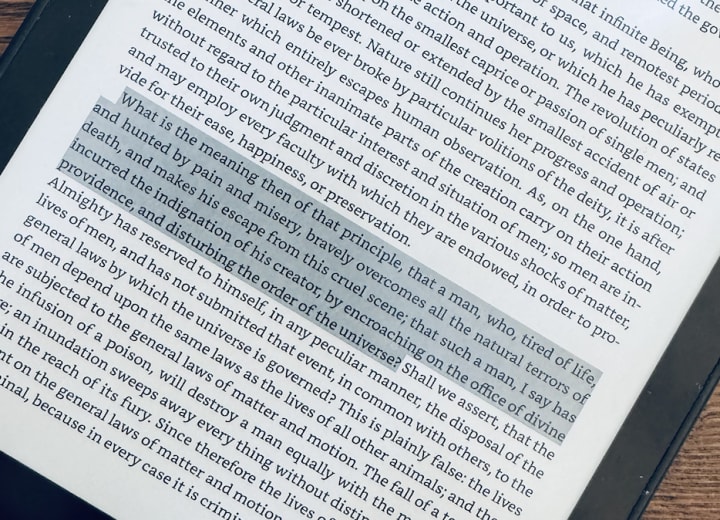
Even though Hume finds no reference against suicide in the Bible (both the Old and New Testaments) he takes the reason stance next rather than the religious one. He challenges this strange stigma that suicide is an act of cowardice and states that in some cases, it can be a rational thought. For a thoughtful, autonomous person, the choice to end their life can be as measured and deliberate as any other major decision. He makes this argument by stating that suicide is very rarely an impulsive act and tends to be measured by a degree of misery in one's own life. I think this might have been true for his own day, but I do think there is something to be said for our own era in which impulsive suicide has been going up. I cannot say why, I just know that it is more of a thing in this century than it would have been at the time of David Hume.
He also makes the argument that human life has no inherent value, which is something that I too, believe. Therefore, the act of suicide shouldn't really matter that much. He states that human life is mainly valued on the way in which it can be enjoyed and how much intrinsic happiness one can experience. Once this happiness is gone and even the most basic things cannot be seen through the lens of happiness, suicidal thoughts definitely become more dominant. The value of life diminishes as the way in which happiness decreases. He sees no compelling reason to cling to life when it no longer serves its purpose or brings well-being and to argue otherwise is something Hume equates to a kind of superstition - a belief that cannot be quantified by reality. Honestly, I actually agree with most of this, even though I would also state that one should not try to rationalise suicide. You never really know how you're going to feel six months from now and, if you off yourself - you won't know at all. So there's the superstition in that.
I enjoyed this analytical challenge because even though I am not someone who believes in the constructs of religion against suicide, I am also a person who would like to understand the suicidal. It is not a cowardly act and neither is it something impulsive in most cases. However, I also think it is more important to start here than in the religious or judicial cases which have dealt with suicide. Hume has his feet firmly on the ground.
About the Creator
Annie Kapur
I am:
🙋🏽♀️ Annie
📚 Avid Reader
📝 Reviewer and Commentator
🎓 Post-Grad Millennial (M.A)
***
I have:
📖 300K+ reads on Vocal
🫶🏼 Love for reading & research
🦋/X @AnnieWithBooks
***
🏡 UK
Keep reading
More stories from Annie Kapur and writers in Geeks and other communities.
Book Review: "The Unicorn Woman" by Gayl Jones
As you probably know, I'm trying to read a little outside of my comfort zone whilst not reading so far out that I get alienated from the book entirely. I found this book in the 'new additions' section of the library and it looked like nobody had snabbed to read this yet. I had definitely not seen it there the time before and I went only the week before. I'm all for a new book in my own home, but on the shelves of the library it's like new produce. It's a whole new realm of excitement. So, let's take a look at what makes this book great...
By Annie Kapur9 months ago in Geeks
Goodbye, Mr. Duvall
It is turning out to be an interesting year. I was in the middle of teaching a class when a pop-up appeared on the screen announcing the death of Mr. Robert Seldon Duvall (yes, that was his full name). I was in the middle of a discussion on the obsession we have with winning when it comes to sports (the Winter Olympics was a theme), and I felt as though things were coming full circle. We had already lost Gene Hackman last year, and along with that titan, it feels though one particular golden age has closed off to be replaced by...?
By Kendall Defoe 27 days ago in Geeks
Thief In The Night
To the thief in the night that took and replicated what once was mine: Honestly, I feel kind of bad for you. It’s funny, because we hardly know each other. I only know of you through the magazines you’ve written and the broadcasts you have televised in the past — as well as through the public mentions of you from your show business connections there.
By Snarky Lisa8 days ago in Humans


Comments (1)
I once heard the comment that suicide is always arrived at too late. And after living in Japan, I have very mixed feelings about it. Thank you for the review!