
Book Review: "Love, Sex and Frankenstein" by Caroline Lea
5/5 - one of the best novels I have read this year... a truly great achievement of literature...

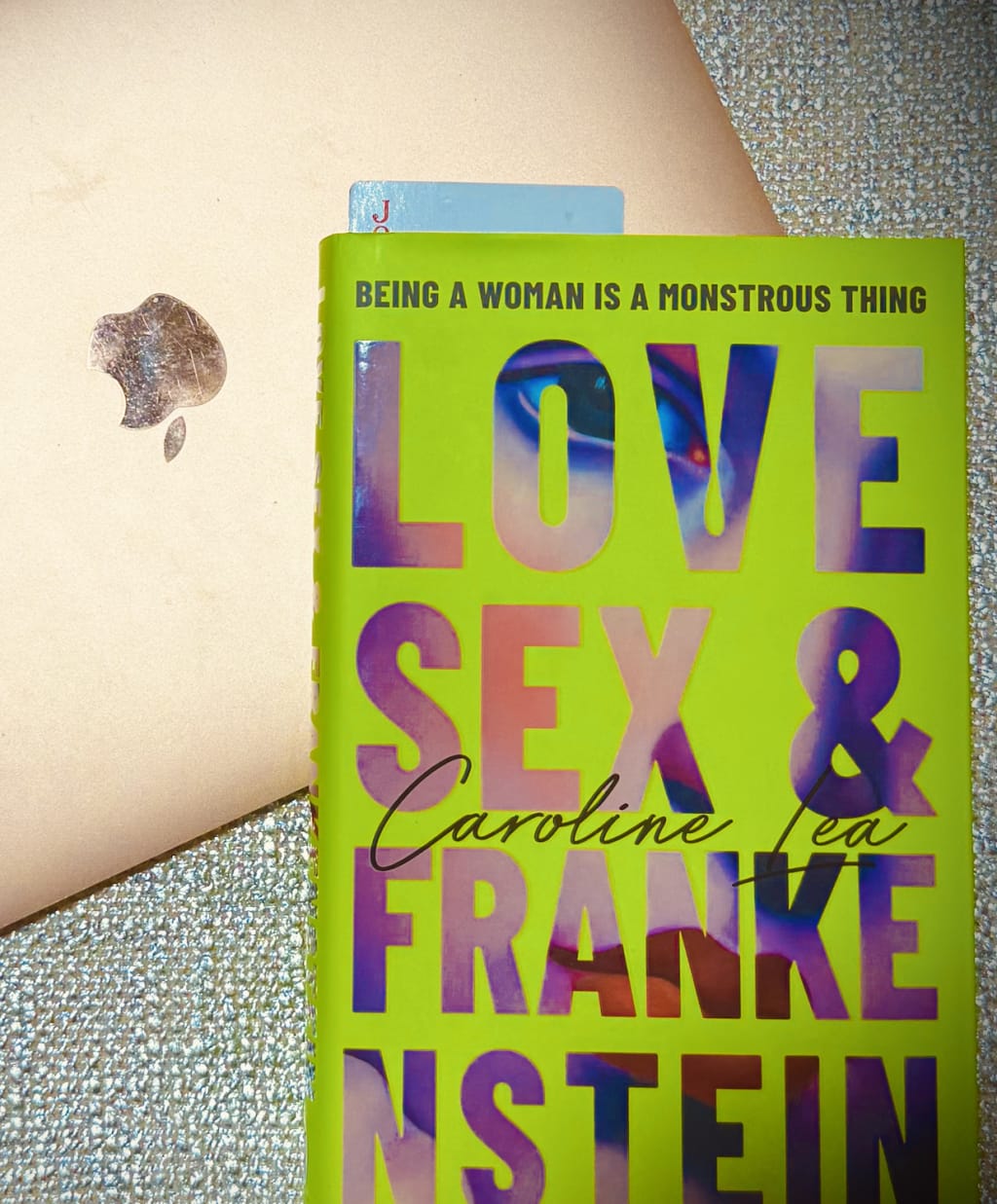
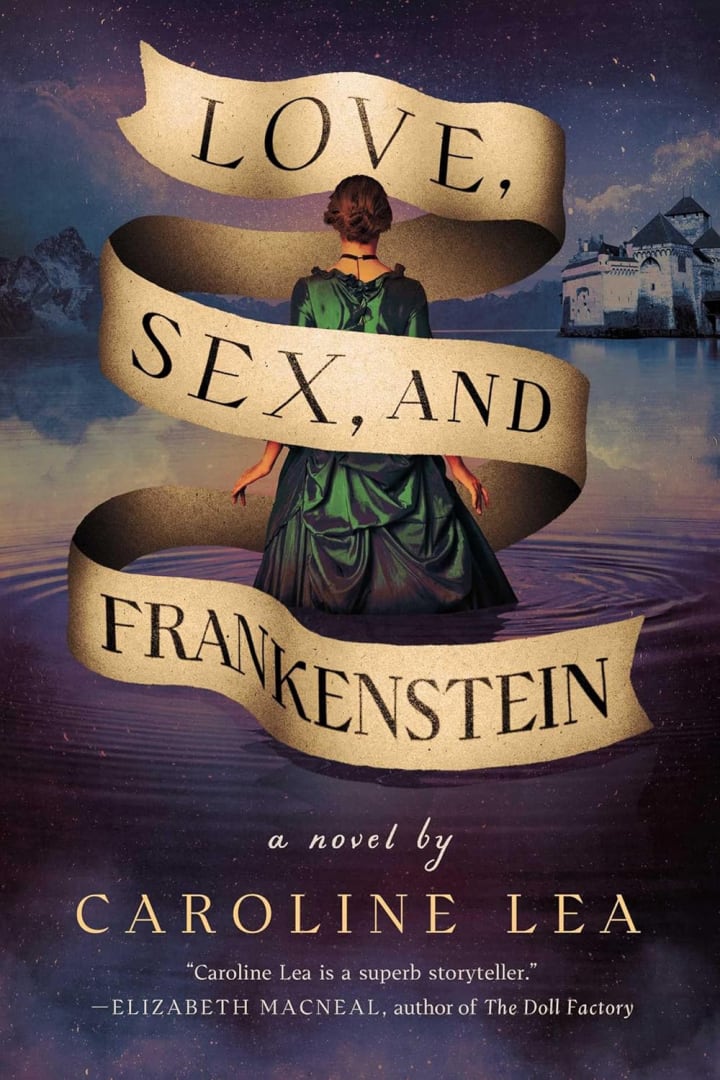
I have obviously been on my travels again and thankfully, this one included a Waterstones stop. One of the books I managed to collect from there was this one of which I have heard plenty about on social media. Love, Sex and Frankenstein is a story about Mary Shelley and a wickedly tasteful one at that. I have read plenty of books about Mary Shelley including In Search of Mary Shelley by Fiona Sampson and Romantic Outlaws by Charlotte Gordon. There are many books about her life, her works and her gothic attitudes out there but there is always room for more. I am so glad that we live in an era where so many biographies about one person's life are not only acceptable but they are encouraged. Let's have a look at what the book is about then...
From the outset, we are met with the dusk and darkness of the day and of course, this mirrors the atmosphere of the novel Frankenstein. We are introduced to a strong-willed Mary Shelley through her will to protect her child from a man who has broken into her home claiming that her husband owes money. We are then thrown back into the past where Mary is now leaving her family home, stating that she is alright with her father never speaking to her again though she does remain level-headed in the note she leaves behind as she goes off with the rebellious Percy Shelley and, at 16 years' old, disappears into the night. Caroline Lea creates such a heavy, incredible atmosphere through language. Her descriptions of space and weather make for excellent pathetic fallacy and the way in which we have already seen multiple sides to Mary Shelley means that we actually feel like this is a real human being as opposed to a character in a novel.
As we move through the book we are sent back in time to when Mary Shelley's mother died and later, when her father gave her a journal. She records her inmost thoughts here and of course, gives us a look in to how she actually was a child. Caroline Lea then moves on to the mid-teen years of the author in which she meets and falls in love with the poet Percy Shelley who, at the time is already married. It is upon her father's wishes that she never goes near Shelley again but, Mary defiantly tells him that she is not his to control. She states that she is her own person and he may not tell her what she is and is not allowed to do. This is the author showing us how the Mary Shelley we know and love has come to form. Locked in a room, eventually she tries to kill herself but of course, she doesn't. Instead, she is about to become one of the most revered writers in all of history. Caroline Lea definitely does not hold back on making Mary Shelley grow into an incredibly passionate woman. We see gllimpses of her mother in her: the defiant nature, the brilliant mind, the wit and the intellect. She holds her own against practically anyone and I love the fact the author doesn't overlook it because they assume the reader already knows. It is made to feel as alive as she once was.
We move towards Geneva in the book and we notice how Mary and Claire are talking about being with Byron and Shelley. But another thing we see is how Mary's expectation of her life and how her life actually turns out are different. We get scenes of Mary being exhausted and cold as Shelley never really has a lot of money - but regardless of that, she is happy. Another thing we see is that Mary and Shelley's relationship can sometimes be a rocky one: he writes to Harriet which angers her. When they reach Geneva, Caroline Lea writes the atmosphere as cold, dark and dreary - mirroring what writing is to come. The walk amongst a misty graveyard is overcast with the hue of nighttime terrors. It is a fantastic descent into what the reader can now, feel in their bones: the composition of Frankenstein and how it would come to change the literary world.
It takes a while before Lord Byron makes his entrance. At the end of the seventh chapter and the start of the eighth, we see him not turn up but arrive and we've heard so much about him so it's about to get real. Caroline Lea really makes an image of my favourite poet, he's a legendary man with an air of mythology. When he enters, he really bloody enters. There's a really great scene in Chapter 10 where Mary Shelley and Lord Byron are having this back and forth with each other and Mary is doing her best to defend and bolster her half-sister, Claire whilst Byron finds this quite insulting. Caroline Lea definitely captures the arrogance and wit of my favourite poet, the almost asshole-like nature and the way he makes those around him feel smaller than he is. I can't say whether this was actually his personality or whether he put it on for the 'celebrity' status he had. But whatever he did, Caroline Lea definitely hits the nail on the head when it comes to what he might have sounded like. It is near this point where he suggests that they go to the famed Villa Diodati.
During our time there, we discover that aside from Lord Byron being a shady character that would inspire John Polidori's The Vampyre, and Mary Shelley's character of Dr Victor Frankenstein, he is also a terrible human being who often accuses Claire of being hysterical. As Mary Shelley drifts between outwitting the poet and having sexual encounters with him, she also drifts closer to her husband. When the ghost story competition rolls around, we as readers become tense because we know what is coming. We know how Mary Shelley is about to blow away the competition both within the villa and within the rest of Europe. She gathers herself and begins to write further and further as the men find themselves more interesting than the women do. In between wants to escape the villa and the requirements to keep writing, Mary Shelley proves herself to be not only the best writer, but also the smartest person in the room.
Caroline Lea has created a very special book here, one I would love to read again. Complete with quotations from Frankenstein that outline each chapter, the novel is a grand achievement of the nonfiction novel, the likes of which I doubt we will see done as well for a very long time. Like Frankenstein's Monster, Caroline Lea brings Mary Shelley alive with a fire and thirst that cannot be quenched by staying in her position, subjugated by the likes of powerful, but heavily flawed men.
About the Creator
Annie Kapur
I am:
🙋🏽♀️ Annie
📚 Avid Reader
📝 Reviewer and Commentator
🎓 Post-Grad Millennial (M.A)
***
I have:
📖 300K+ reads on Vocal
🫶🏼 Love for reading & research
🦋/X @AnnieWithBooks
***
🏡 UK
Keep reading
More stories from Annie Kapur and writers in Geeks and other communities.
Book Review: "Love in a Cold Climate and Other Novels" by Nancy Mitford
I'm going to admit it, I've had this book lying around for a while and when I say 'while' I mean about a month. I bought it used and it was already crinkled and so, it getting kicked around on my bedroom floor every time I got out of bed in the morning wouldn't have made much of a difference. But, I eventually remembered it was there and, through the flip of a coin was choosing between this and another book to take on a road trip. Nancy Mitford came up and so, away we went. The first novel inside this anthology is entitled The Pursuit of Love where we meet a couple of girls, some very odd and outdated stereotypes and of course, faltering love through the years.
By Annie Kapur4 months ago in Geeks
History of The Three Stooges (Part I: The Beginnings and Columbia Pictures - 1920s-1936)
I have been itching to write about The Three Stooges on Vocal for close to two years, but I couldn't figure out how to do it. I wanted to do it by third Stooge, but that's a bit complicated. I know this much. I was about eight or nine years old when I first saw The Three Stooges. I remember one of my local channels had the Stooges on for hours, and I tried my damnedest to be up for those shorts. I remember that the Family Channel actually had an hour of the Stooges on from 11PM to midnight, and it was the entire library on during that time.
By Clyde E. Dawkins4 days ago in Geeks
Global Conflicts in 2026: A Deep Dive into Yemen, Russia-Ukraine, and Beyond
The world is currently facing several serious conflicts, including the war in Yemen and the ongoing war between Russia and Ukraine. As 2026 unfolds, the world continues to grapple with several protracted and escalating conflicts that are reshaping international relations, humanitarian priorities, and global economics. Among the most critical are the ongoing wars in Yemen and Ukraine, each with its unique dynamics, and other regional conflicts that collectively paint a troubling picture of global instability.
By shaoor afridi2 days ago in Geeks


Comments (2)
You had me at "Frankenstein."
And my TBR list grows and grows... ;)