
Book Review: "Letters to a Young Contrarian" by Christopher Hitchens
5/5 - a fantastic how-to for 'young contrarians'... Hitchens does it again...

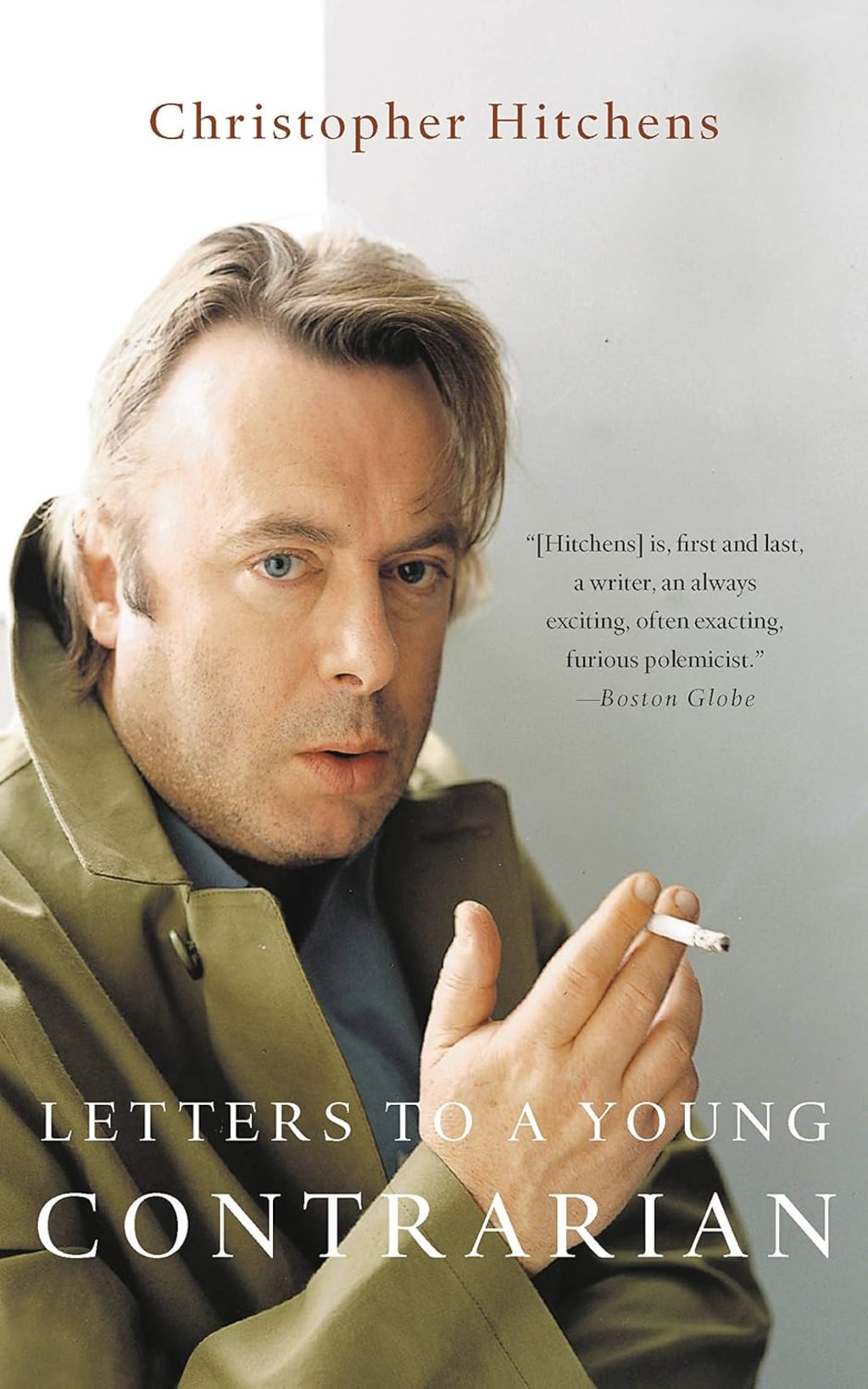
Yes, I'm still reading Christopher Hitchens books, I'm actually looking to read at least the vast majority of them. I've probably read more of Hitchens now than I did back in my teens and honestly, I think I understand it more now than I would have done if I had read them all back then. That being said, I wish I would have read this one long before I actually did. With its short length and its readability, it would have been a great place to start. Anyways, let's continue with looking at what Letters to a Young Contrarian contains.
According to Christopher Hitchens, being a contrarian is a duty rather than a right. It is the responsibility of anyone who wants to find the truth to go out of their way to become a contrarian. In a world that teeters on groupthink and cult-like ideologies, it is the job of the contrarian to go out of their way to find out what is right and what is wrong. A true contrarian examines the assumptions of the age and resists popular sentiment when it masks injustice, absurdity, or unreason. This is something that perhaps applies more to our own day than anything else. Especially those who define themselves as being a part of the cult of a certain billionaire that has far too much of a position in government and got upset when his car business went down the pan.
Hitchens asks the young contrarian to seek out debate, not fear it. He warns against the intellectual stagnation that comes from surrounding oneself only with the like-minded. True growth, he insists, comes from crossing swords with worthy opponents, not from mutual affirmation. I think this might be the reason I sometimes watch Matt Walsh - or it could be because I hate to admit it, but I love laughing at him. He is quite literally the dictionary definition of stupidity. The willingness to be this open about opinions and inviting the possibility that someone might change your mind is something I don't see from some people I do watch in earnest. It's definitely a virtue and I think it's something Hitchens was also bloody good at. The man was a proper orator. If you've watched his debates (especially the one where Stephen Fry is on his panel) then you will know what I am talking about.
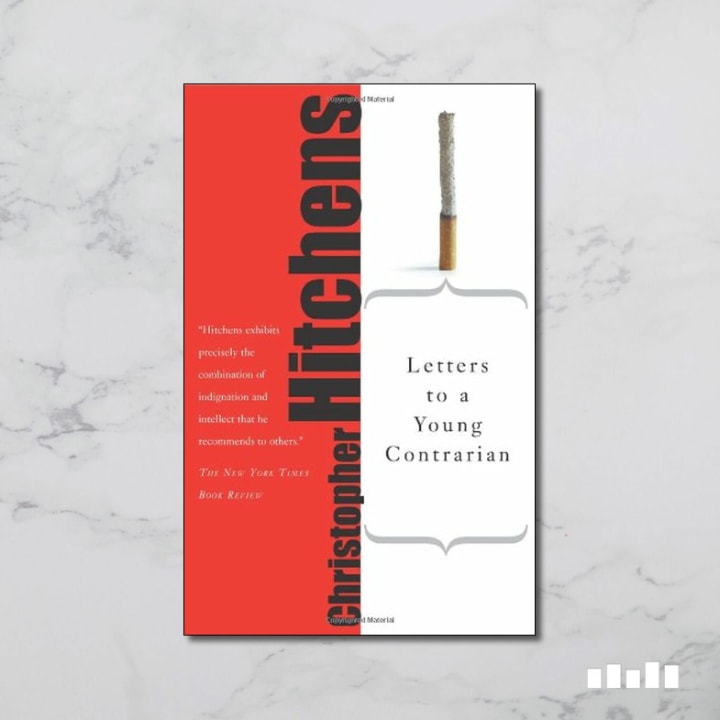
He critiques religious and dogmatic belief systems as corrosive to freedom and solidarity. Faith, he states, is irrational and encourages obedience whereas solidarity encourages thought, criticism and the ability to hold different opinions. Solidarity tends to be the one, therefore, which requires more courage. But I don't believe that these two are always mutually exclusive. I do think, however, that showing solidarity when you also have faith is something that can be much more courageous and possibly, even life-threatening if you happen to be in the more extreme faith groups. For example: supporting gay marriage when you are a staunch believer of the Christian faith and standing in solidarity with this movement is something which is truly something else entirely. That is very much real courage.
He famously defends the right to offend, particularly when confronting hypocrisy, authoritarianism, or sacred cows. Satire, criticism, and ridicule are not just permissible, they are vital tools in dismantling oppressive ideas. He does not believe in the “right not to be offended,” insisting that moral and intellectual clarity sometimes requires provocation. Politeness and deference can easily become masks for cowardice. This one hurt because I normally say that one of my main philosophies is politeness and respect can be the best tools to be a kind human being. Apparently, I'm wrong. What do you think?
Instead of idolising politicians or pop culture figures, he advises studying the lives of those who have stood up against tyranny, often at great personal cost. He celebrates figures like Václav Havel, Rosa Luxemburg, George Orwell, and Salman Rushdie; people who risked (or lost) their freedom, safety, or reputations to defend truth. To Hitchens, they embody the very spirit of contrarianism and it's all because they saw through the way in which certain people were trying to inject dogma into the narrative. I remember learning about Salman Rushdie in my teens and thinking that this situation could have only existed in the Medieval times. I mean the man literally went into hiding because he wrote a book.
From looking at religious dogma and telling the reader to be aware of an issue on which everyone seems to agree without question, we see Christopher Hitchens give his best advice to the 'young contrarians' of the day. Honestly, he could have done a part two to this and I still would have read it. It's short yes, but that does not make it any less brilliant.
About the Creator
Annie Kapur
I am:
🙋🏽♀️ Annie
📚 Avid Reader
📝 Reviewer and Commentator
🎓 Post-Grad Millennial (M.A)
***
I have:
📖 280K+ reads on Vocal
🫶🏼 Love for reading & research
🦋/X @AnnieWithBooks
***
🏡 UK
Keep reading
More stories from Annie Kapur and writers in Geeks and other communities.
Book Review: "Derek Jarman" by Tony Peake
I've read pretty much everything by the legendary late Derek Jarman. As one of my favourite human beings of all time, Jarman had a larger-than-life personality almost naturally. Likeable, intelligent, brilliant, he made some of the most gorgeous films in 20th century British film history. This is including but not limited to the aesthetically phenomenal Caravaggio (1986) which launched the career of Tilda Swinton. In his books, Jarman is often cadid and proves himself a philosopher and a friend to all. I get so upset about the fact that he passed away just before I was born because I really would have loved to have him here still. Tony Peake's biography hits the damn nail on the head about Derek Jarman in so many different ways.
By Annie Kapur7 months ago in Geeks
Silver Screen Magic with Mae West
American actress and singer Mae West became a popular film actress during the Great Depression. She started entertaining in vaudeville, then performed on Broadway, and finally went to Hollywood. She signed up with Paramount Pictures and made her debut in the 1932 film “Night After Night.” She also starred in musicals, comedies, and crime dramas. The American Film Institute named her one of the best classic Hollywood actresses.
By Rasma Raisters5 days ago in Geeks
Golden Globes 2026 Winners: Full List of Every Movie and TV Show
The 2026 Golden Globes ceremony, one of the most anticipated nights in entertainment, concluded with a mix of surprises, fan favorites, and industry heavyweights taking home the coveted golden statuettes. Celebrating achievements in both film and television, the event showcased the diversity and creativity that define contemporary storytelling. From Hollywood blockbusters to independent gems, this year’s winners reflect the dynamic landscape of global entertainment. Movie Winners: Triumphs on the Big Screen This year, the Best Motion Picture – Drama award went to “Eclipsed Horizons”, a thought-provoking drama that explores the emotional and social impacts of climate change. Critics lauded the film for its powerful performances and timely narrative. Actor Liam Cortez, who portrayed the lead role, also won Best Actor – Drama, marking a career-defining moment. In the comedy or musical category, “Laugh Lines” claimed Best Motion Picture – Musical or Comedy. Its witty script and heartfelt moments resonated with both audiences and critics. Sophia Renner, who played the lead in the film, took home Best Actress – Musical or Comedy, cementing her reputation as one of the most versatile performers of her generation. The Golden Globes also recognized supporting roles, with Marcus Delgado winning Best Supporting Actor for his compelling performance in “Shattered Streets”, and Ayesha Khan earning Best Supporting Actress for “The Last Melody”. Both performances were celebrated for their depth, authenticity, and impact on their respective films. Directing and Screenwriting: Honoring Visionaries Directorial excellence was acknowledged with the award for Best Director, which went to Isabella Marquez for “Eclipsed Horizons”. Her visionary approach, blending stunning cinematography with emotionally resonant storytelling, set a new benchmark for narrative-driven cinema. Screenwriting honors were awarded to “The Forgotten City”, recognized for its original screenplay. The writers were praised for crafting a narrative that intertwines suspense, mystery, and human drama, captivating viewers from start to finish. Television Winners: Small Screen Magic Television categories this year highlighted both drama and comedy series that pushed creative boundaries. Best Television Series – Drama was awarded to “Shadows of the Capital”, a gripping political thriller that delves into the intricacies of government, power, and personal ambition. The series was widely praised for its intricate plotting and nuanced performances, particularly lead actor Jonathan Rivera. In comedy, “Family Ties Unplugged” won Best Television Series – Musical or Comedy, celebrated for its humor, warmth, and relatable storytelling. Elena Foster, who starred in the series, also received the Best Actress in a Television Series – Musical or Comedy award, reflecting her seamless balance of comedic timing and emotional authenticity. Supporting roles in television were also recognized, with Rafael Ortega winning Best Supporting Actor for “City Lights”, and Meera Patel securing Best Supporting Actress for “Threads of Destiny”. Both actors impressed audiences with performances that elevated their shows and contributed to the overall critical acclaim. Special Recognitions and Notable Moments The 2026 ceremony also honored lifetime achievements and humanitarian contributions. Renowned filmmaker David Keaton received the Cecil B. DeMille Award, acknowledging his decades of contributions to cinema. The award recognized his groundbreaking work that not only entertained audiences but also inspired future generations of filmmakers. Another memorable aspect of this year’s Globes was the emphasis on diversity and inclusion. Many winners highlighted the importance of representing marginalized voices and exploring stories that resonate across cultures. Acceptance speeches reflected gratitude and a commitment to using art as a platform for meaningful dialogue. Audience Favorites and Surprises While some awards went to widely anticipated favorites, there were notable surprises that delighted audiences. The recognition of “Silent Echoes” for Best Original Score was unexpected, earning praise for its haunting and evocative music that perfectly complemented the film’s visual storytelling. Social media buzzed throughout the evening, with viewers highlighting moments of camaraderie, stunning fashion, and heartfelt speeches. The 2026 Golden Globes successfully balanced celebration, entertainment, and recognition of artistic achievement, leaving fans and industry insiders alike with plenty to talk about. Looking Ahead: What This Means for the Industry The winners of the 2026 Golden Globes reflect broader trends in the entertainment industry. Films that tackle pressing social issues, celebrate diverse voices, and blend genre conventions are increasingly gaining critical recognition. Television continues to be a space for experimentation, offering shows that challenge audiences while delivering high-quality performances. As awards season continues, these accolades may serve as indicators for the Oscars, Emmys, and other prestigious honors, offering a glimpse into what might dominate the cinematic and television landscape in the coming months.
By Fiaz Ahmed Brohi6 days ago in Geeks
Miss Persephone's Manual to a Seemingly Ordinary Life
Miss Persephone was found at the dining table, her blue eyes swollen, her tears arriving and retreating like the tides of the ocean. Earlier that day, her family had visited her in the retirement home where she had lived for eight years. It was her eightieth birthday.
By Imola Tóth3 days ago in Fiction



Comments (3)
I don't have a copy of this one, but I will find it!
Really loved reading your thoughts. You’ve clearly spent time with Hitchens, and it shows. That bit about solidarity and faith was especially thoughtful, I hadn’t thought about it that way before.
"Politeness and deference can easily become masks for cowardice. This one hurt because I normally say that one of my main philosophies is politeness and respect can be the best tools to be a kind human being." I agree with both of you because politeness and respect has it's pros and cons. Loved your review!