
Book Review: "Jane Austen at Home" by Lucy Worsley (Pt.2)
5/5 - from Steventon to Bath...from love to loss...and everything in between...

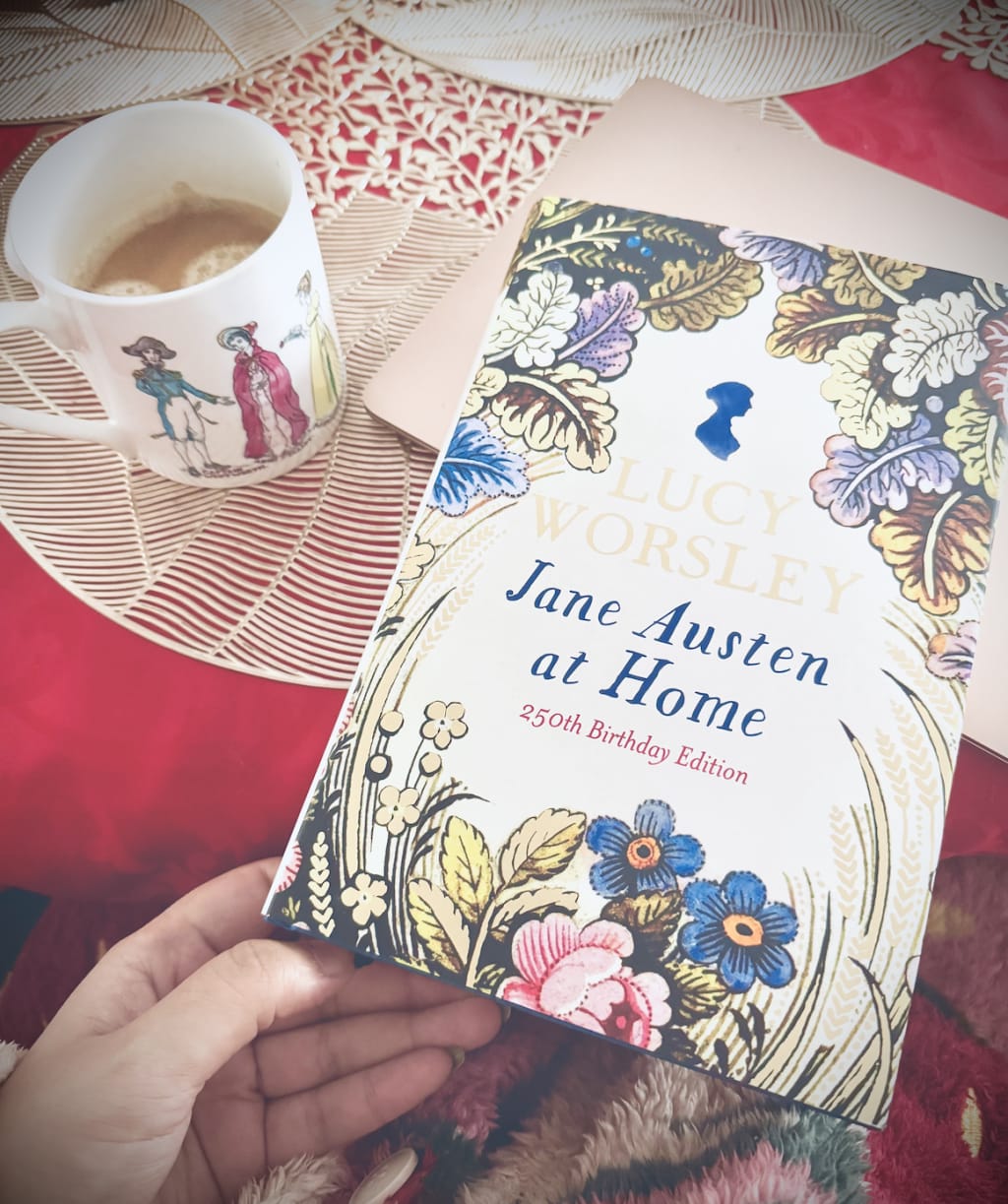
This review covers chapters 10 through to 18.
***
Chapter 10, entitled 'Novels' covers Jane's written beginnings. We get to see inside the first formations of the novel that would become Sense and Sensibility and how, in installments, she would read it per evening to her family. These were novels written in letters, which were not in fashion and had not been for decades. I'm quite surprised and filled with joy that such an incredible woman existed in a place where more than often, extra-curricular activities outside that of being a wife and mother were not considered very important. However, her father thought them important enough to buy his daughter a writing desk with many drawers. This single act of encouragement was definitely a play to make sure his daughter continued to show her passions - a man clearly ahead of his time and fond of his daughters.
By the time we see the development of Jane's writing, we also see a further development in her life: love. The man's name was Tom and he was quite different to the 'Mr Darcy' kind of man we associate with Jane Austen. Instead, he is quite dull and boring - he's a law student and he's so dedicated to his faith, he feels like he cannot lead Jane on. This romance would end in a flat nothing - leaving the both of them regretting that they didn't do something about it at the time. In later life (and after outliving Jane by half a century), Tom often thought about Jane and their time together. Jane, on the other hand, was said to have rejected a marriage proposal to a gentleman partly because of her fleeting romance once upon a time with a lawyer named Tom. Worsley writes Jane's love life as a story rather than a matter-of-fact. She is a narrative rather than a person at this point - we can only speculate as to her feelings as, when Cassandra was with her, there was no need for her to write letters. Lucy Worsley does well at exploring every avenue of the 'why' in this 'Jane-based' love story.
As we move along, we get a look at the inspiration behind First Impressions (later titled Pride and Prejudice). I think that really every single Jane Austen fan would do well to fall utterly body and soul into this chapter, reading each word as carefully as the last. The inspiration for the Bennett sisters, the inspirations for Pemberly, the idea that Jane often focused on the details she could control in her own life: the bonnets and tea sets rather than the decor and furnishings of the home. There are many things to adore about Jane's writing but yes, one of the greatest joys (it is universally acknowledged) is reading (or rereading in our case) Pride and Prejudice. It is quite possibly the greatest of the Georgian novels of sensibility (and wit).
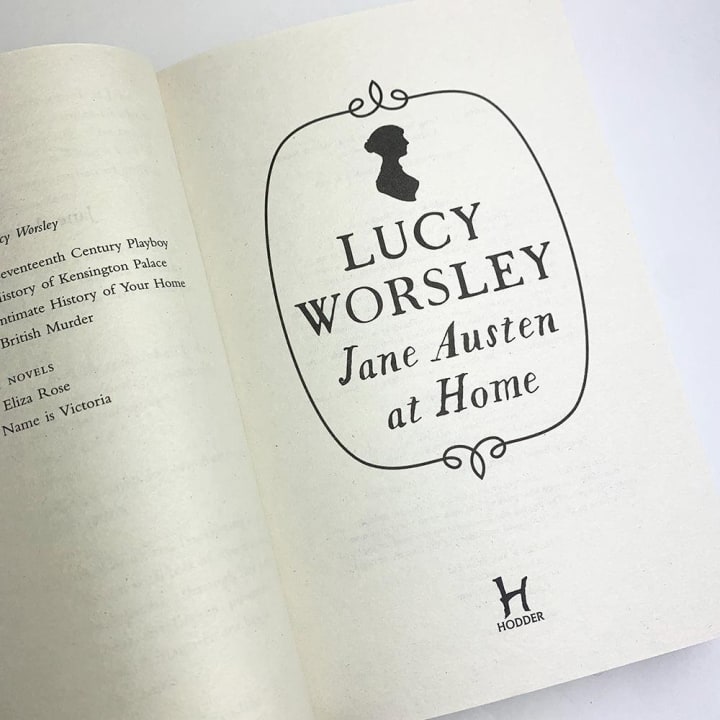
As Jane's story is presented to us, Worsley makes a point of connecting her to her most beloved characters. For example: there is a chapter on 'homelessness' in which Jane is attempting to find her place in the world, and the sense of 'home' seems to have a different meaning once Jane's family begins to move to Bath from Steventon. Her characters, such as those from Sense and Sensibility are also trying to find their home. As the chapters 'Away from Home' and 'Homelessness' prepare us with not only the narrative and characters, but also with photographs and possibilities, we are forced into Jane's shoes as she begins her travels from a small parish to a big and bustling city that was on the cusp of even bigger changes when the Austen family moved in. Lucy Worsley's writing really does immerse us in the world of Jane Austen, giving us not only a woman who was once a writer, but a whole woman with a personality and a deep inner-life. Jane Austen as we have never seen her before.
I stated beforehand that Jane rejected a marriage proposal, but one thing that was even more discomforting for Jane was the new-age Bath lifestyle. Jane, we are told, was a natural introvert and, unlike in the countryside, there was really nowhere to hide from others in the big city. We are told of the Georgian customs and fashions of the day as Bath was becoming the Hollywood of southern England. We are told all of this whilst also being reminded that Jane, being the way she was, probably would not have committed to the new high fashions of the age. She is definitely the most relatable of the writers of her era - she has this fierce independence of thought which is also a rejection of new populism. She knew that not every new idea was necessarily a good idea. The writing again, weaves Jane into her own time and her new place. Lucy Worsley has done brilliantly at letting us know that Jane was both a product of her time and place, and yet she was apart from them as well. This was not Jane in a Georgian world, but rather a Georgian world, observed by Jane.
The rejection of the marriage proposal and return to Bath marked a new time for Jane, who slowly grew to like the place. As we move through the text though, we see more of her through her characters. We see much more of her personality come through in small phrases, sentences, passages which are said and played out by her great protagonists and heroines. The author works these in brilliantly - not as side notes - but as a large part of the narrative: the big picture that makes the subject 'become' Jane Austen.
About the Creator
Annie Kapur
I am:
🙋🏽♀️ Annie
📚 Avid Reader
📝 Reviewer and Commentator
🎓 Post-Grad Millennial (M.A)
***
I have:
📖 280K+ reads on Vocal
🫶🏼 Love for reading & research
🦋/X @AnnieWithBooks
***
🏡 UK
Keep reading
More stories from Annie Kapur and writers in Geeks and other communities.
Book Review: "Cranford" by Elizabeth Gaskell
"I could perceive she was in a tremor at the thought of seeing the place which might have been her home, and round which it is probable that many of her innocent girlish imaginations had clustered" - "Cranford" by Elizabeth Gaskell
By Annie Kapur2 days ago in Geeks
No Other Choice (2025)
It is only February, so other films may well surpass “No Other Choice”, but I think this is the best film I’ve seen so far this year. And that surprises me, because, it is a subtitled film and while I am pretentious enough to choose to watch foreign-language films, I was also very tired and that was an extra commitment from me. But more importantly, let me warn you, this film is gruesome and violent. There were times I had to turn away from the screen to avoid the worst of it (including some self-inflicted dentistry).
By Rachel Robbins2 days ago in Geeks
K-Dramas You Need To Watch In February 2026
We need to talk about the K-dramas you need to watch in February 2026 We are in February, and we need to talk about the new K-dramas. There will be no shortage of K-dramas this month. Like January, February will see a lot of good K-dramas as well. Some of these K-dramas have already started to air, while others will arrive soon. In this post, let’s talk about the K-dramas you need to watch this month.
By Megha Pavanagd4 days ago in Geeks



Comments
There are no comments for this story
Be the first to respond and start the conversation.