
Book Review: "How to Change Your Mind" by Michael Pollan
3/5 - an insightful book with some great scientific points, however there are a few problems...


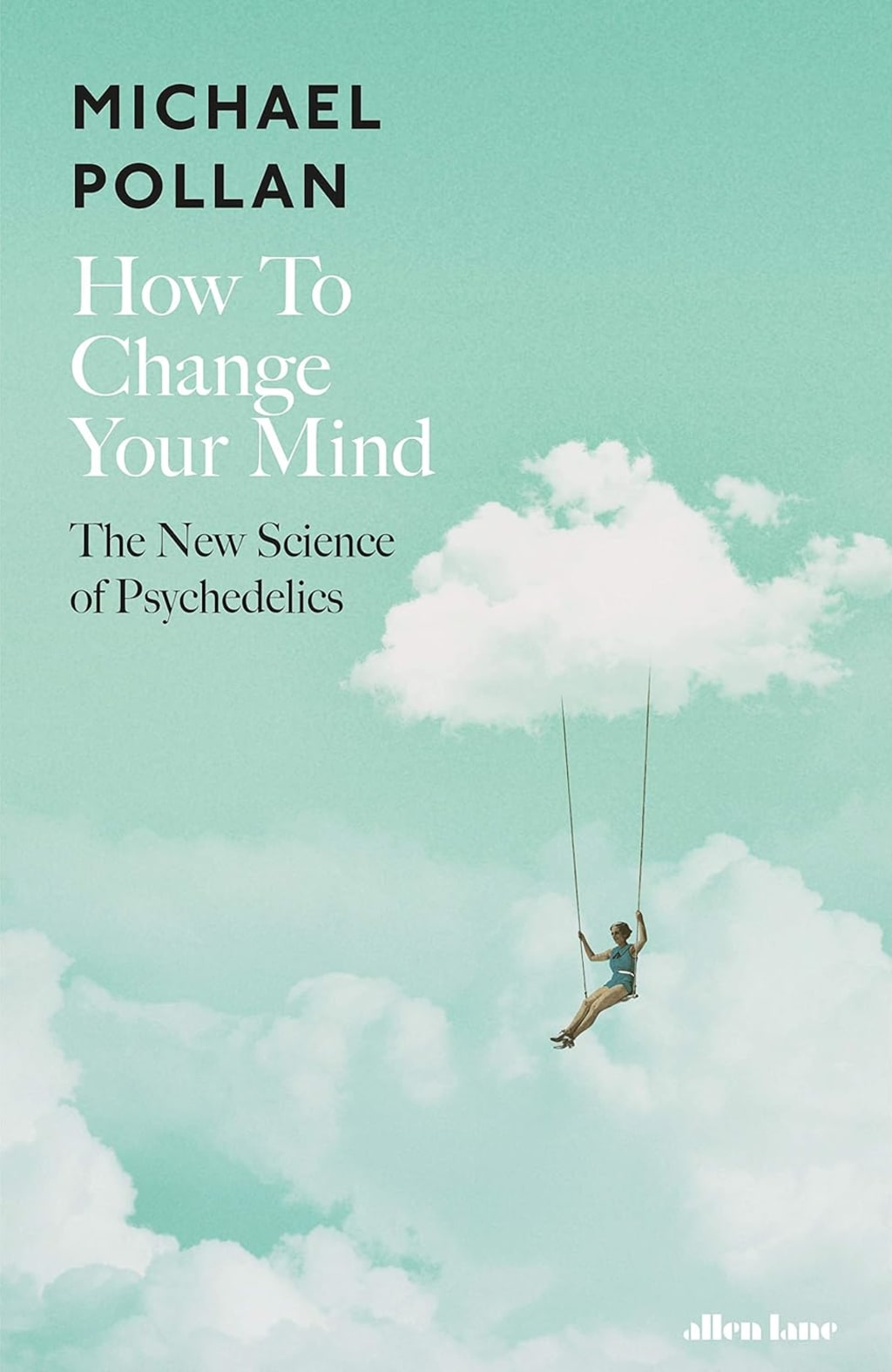
I had the entirely wrong idea about this book. I was reading on my phone when I finished the last book and wanted to start a new one. Thus, I quickly bought this on the cheap and started reading. I thought it was going to be about changing your mind, like actually changing it by using therapy techniques and the like. It's about LSD and psychedelics. But it's also about depression, anxiety, dying, terror, mythologies of humanity etc. Interesting and actually pretty well-written - I have absolutely no regrets of not reading the blurb when it came to this book even though I don't particularly agree with everything within. Let's take a look at what it is about then...
One thing I enjoyed about this book is that it takes psychedelic research seriously. In experiments mentioned like the 'Good Friday Experiment' in which controlled groups of people were given psychedelics and then were more likely, on Good Friday in church, to report having a 'religious experience' was quite interesting to read about. However, there are a lot of holes the author pokes in the experiment, such as the over zealous nature of the researchers in an experiment where they should really be trying their utmost to be impartial. The author writes the experiment initially with enthusiasm but then starts to break it down for us so that we too, can notice what was bubbling beneath the surface.
However, one thing I do have to say is that I don't like the way the author states with certainty that LSD and psychedelics creates these religious experiences. Of course, if you give these things to folks who are already open to experiencing it, it will happen. But perhaps giving them to someone who has no interest in them, or in fact has some sort of dangerous mental health disorder - things could go differently. The certainty definitely sounds very 'hippy' and less scientific and there are probably some holes the reader could poke in that themselves.

The author writes about how the funding for psychedelic research slowly dried up and eventually, it became junk science just by the fact that it was no longer something trendy. He looks at examples of certain people who were disgraced because of their confidence in psychedelics and talks about how it was actually probably less about the actual research and more about finding solutions to certain problems and then using confirmation bias to prove them. Not only does the author admit that this was possibly some important research, but he also admits that perhaps these scientists of the time were not the best people to carry the research out because of their over zealous beliefs in the power of psychedelics.
As the book continues, we get various acceptances of psychedelics which have brought them back to the forefront of research. The author admits to enjoying the fact that they are getting more attention again after having been banned in the United States for so long and funding basically being non-existent. Though they are still banned, there's some wiggle room for researching their impacts on health. One of the major pieces of research originally was that psychedelics could be used to treat people who were chronically addicted to mainstream drugs and alcohol. However, to think that we can have a 'higher state of consciousness' because you like the sound of psychedelics being used for mental health and repairing the mind means that you yourself are probably over-zealous about them. I'm not convinced that there can be anything more than our current consciousness and no amount of LSD is going to make me believe otherwise.
The whole love and hippy stuff sort of ruins the book for me because I was expecting a bit more scientific research rather than commentary on consciousness and the idea that love makes the world go around (no, it does not). I know the author once thought himself a rationalist as well, but many if not most of us are never going to be sold on the idea of this trippy drug being something to look forward to. Instead, it seems like a waste of money in the grand scheme of things - there are more important things to do than sit around in drum circles telling everyone how much you love them.
All in all, I did enjoy this book to a degree and it did surprise me when it came to the points it made. I don't want to say too much or we'll be here all day. Again, I might write something longer about it in the future but for now know this: it's a great book when it comes to the science but when it comes to all the love and hippy stuff, I can honestly say that it falls down a steep hill. Love does not make the world go around and it's almost juvenile to think so.
About the Creator
Annie Kapur
I am:
🙋🏽♀️ Annie
📚 Avid Reader
📝 Reviewer and Commentator
🎓 Post-Grad Millennial (M.A)
***
I have:
📖 300K+ reads on Vocal
🫶🏼 Love for reading & research
🦋/X @AnnieWithBooks
***
🏡 UK
Keep reading
More stories from Annie Kapur and writers in Geeks and other communities.
Book Review: "Oleander, Jacaranda" by Penelope Lively
“When you do not know what to expect of the world—when everything is astonishing— then anything is possible and acceptable. Children are aliens in a landscape that is entirely unpredictable; they are required to conform to the dictation of a mysterious code while finding their way around a world which is both dazzling and perverse. I wanted to see if it was possible to uncover something of this experience”. - "Oleander, Jacaranda" by Penelope Lively
By Annie Kapur4 months ago in Geeks
No Other Choice (2025)
It is only February, so other films may well surpass “No Other Choice”, but I think this is the best film I’ve seen so far this year. And that surprises me, because, it is a subtitled film and while I am pretentious enough to choose to watch foreign-language films, I was also very tired and that was an extra commitment from me. But more importantly, let me warn you, this film is gruesome and violent. There were times I had to turn away from the screen to avoid the worst of it (including some self-inflicted dentistry).
By Rachel Robbins26 days ago in Geeks
Nidoran Exposed: The Poison Pokémon That Packs a Punch Beyond Its Size
Nidoran is a fascinating and versatile Poison-type Pokémon that surprises many trainers with its combination of speed, agility, and offensive capability. Despite its small stature, Nidoran exhibits a level of strategy and tactical potential that makes it an effective choice in battles. Its design, evolution line, and abilities highlight the value of careful training, patience, and strategic thinking, showing that even seemingly modest Pokémon can grow into powerful combatants.
By Lukáš Hrdličkaabout 7 hours ago in Geeks



Comments (3)
I agree with you while the psychedelic research is fascinating, the book does lean a bit too much into the love and light territory. It could have benefited from more scientific depth and less idealism.
Interesting read! I always wonder about psychedelics, though probably not enough to ever try them, at least not in the near future. But it seems like they open people’s eyes to a lot of new knowledge, feelings, and experiences! And I feel like that love defeats all messaging, especially if it was too blatant as it can oftentimes be, would make me cringe a little reading this as well at the cornball wishful thinking of it all.
I doubt the whole efficacy of the psychedelics they want to use, but I think it is in the early stages of this research. Thank you for the review!