
Book Review: "Heaven and Hell" by Bart D Ehrman
5/5 - a interesting cultural analysis, deep and philosophical, into where these ideas come from...

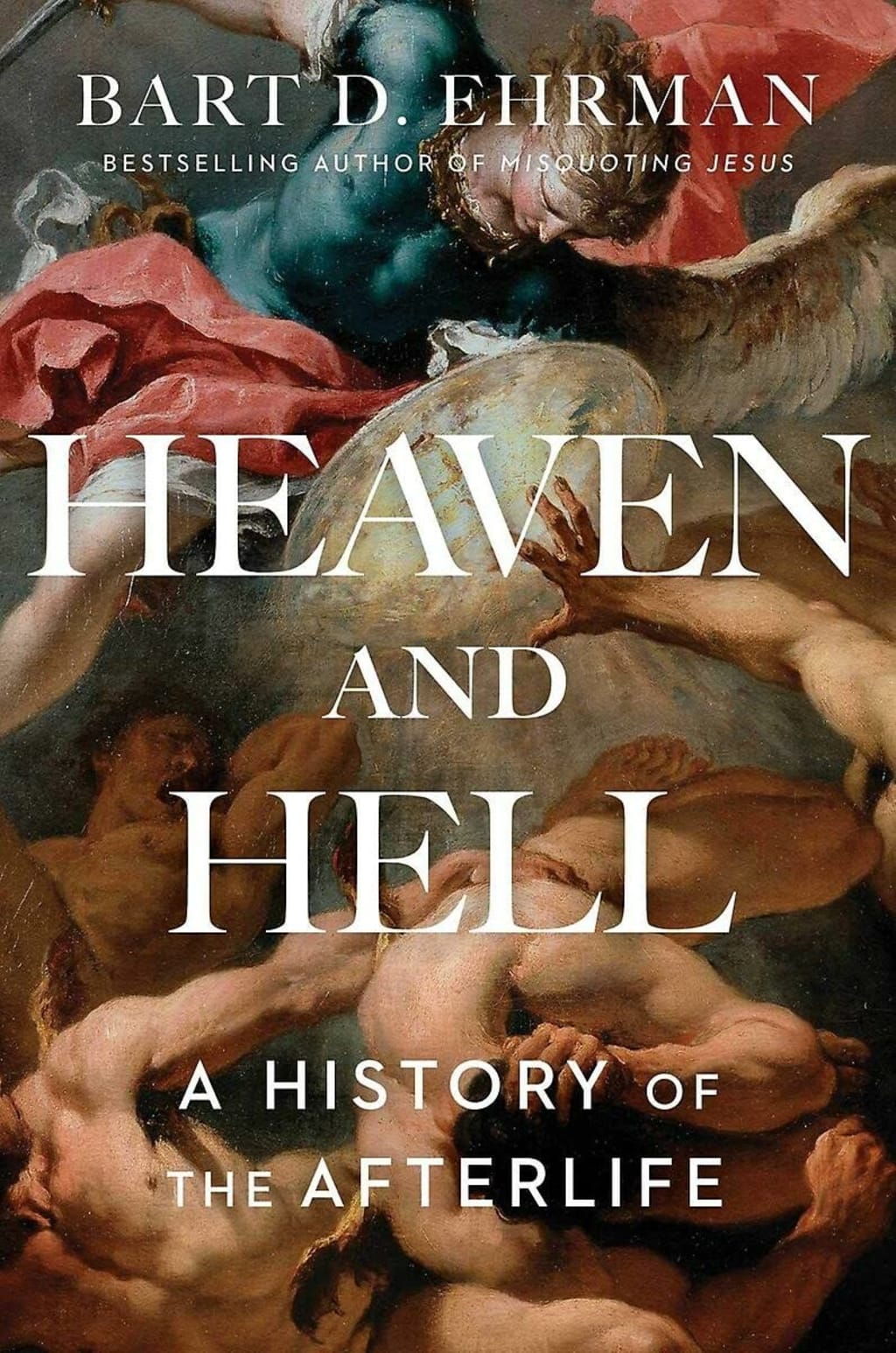
Kindle Books has some of the best stuff on sale, on Kindle Unlimited sometimes or even just on for cheap. One of those books was Heaven and Hell by Bart D. Ehrman and as I'm always interested in looking at the psychology of why people believe the things they do, I was drawn to this book. Is it really about religion? Not throughout. Instead, it lets us question our beliefs and our paranoias about the way in which heaven and hell operate within the psyche. It really is a cultural thing and it definitely made me think. To be honest, I was pleasantly surprised by this book.
Bart D Ehrman is really trying to get across the fact that perhaps not all of America's belief in heaven and hell (and perhaps those beliefs around the world) come from Biblical teachings but instead, they are part of a wider cultural stratosphere that is far more philosophical than we care to think about. He seems to argue that the ideas of eternal reward and damnation respectively actually have very little to do with the ancient teachings of religions such as Judaism and Christianity as they themselves offer far more of a philosophical viewpoint of the afterlife than many people know about. A cross-cultural analysis would therefore be a better way at critiquing what has led us here today. The author, through this cultural analysis of the afterlife, invites us to consider these complexities rather than say one thing or another is correct.
We first take a look at ancient texts like The Epic of Gilgamesh and how afterlife is viewed within. If you haven't read it, the main character spends his entire life avoiding death because of the darkness dwelling in the underworld. Another one is Homer's Iliad and Odyssey, where we witness the gloomy drift of heroes within a depth not known to the common man. This is a lot different to what we see in The Epic of Gilgamesh. It is really later on when we encounter texts like Phaedo by Plato where we see the idea of reward for moral conduct, which is pretty far before the popularity of the Bible as it is known today. However, we can also see that one may be inspired by the other, or at least have some similarities. Ehrman's explanations are easy to read, clear and offer room for the reader to stop and think without losing the argument he's making. Honestly, this is probably one of the better written books I have read on the subject.

Even though these books are dramatically different, they all plant those seeds about the immortal soul which would solidify later on. We get a look at the Biblical narratives and how they introduce new angles, ones such as resurrection, angels and demons. This is where the idea of the moral good being rewarded in death and the bad being punished seems to take a real hold and now have its own complete narrative. These are the ones that form that framework that serve as the Early Christian beliefs and yet again, it is written to make sense not for the author's ego and self-importance. It really does feel like Ehrman wants the reader to consider the argument by working through the chronology and cultures in some level of depth but not so much to be going off on some tangent. It's only after formulating these foundations that the author starts to discuss Jesus.
One thing I quite enjoyed about this book is the way in which the author investigates the ideas regarding the apocalypse. I always like apocalyptic visions because I'm quite looking forward to the world ending. These include the Apocalypse of Peter, the Pauline Apocalypse and the Acts of Thomas. We get to see the delights of the Christian heaven and the torments of hell, analysing what makes someone 'good' and 'bad' in turn. Obviously, this is now a cultural anxiety in a form of 'what if' for example: 'what if I have not been as good as I think I am and thus, the apocalypse comes and goes?' I'm not going to lie, this is a really good way of solidifying the morality narrative with an end-goal, but also a great way at putting some morality argument into the cultural consciousness, especially in Western Philosophy.
All in all, there is quite a bit more to this book but I think I've gone through the general arguments so that you may read it for yourself without having too much of my bias. I do have to say, I don't believe in any religion but that doesn't mean I don't enjoy reading about people's arguments regarding how it has been woven into the fabric of cultures across the world.
About the Creator
Annie Kapur
I am:
🙋🏽♀️ Annie
📚 Avid Reader
📝 Reviewer and Commentator
🎓 Post-Grad Millennial (M.A)
***
I have:
📖 280K+ reads on Vocal
🫶🏼 Love for reading & research
🦋/X @AnnieWithBooks
***
🏡 UK
Keep reading
More stories from Annie Kapur and writers in Geeks and other communities.
Book Review: "Take Arms Against a Sea of Troubles" by Harold Bloom
Harold Bloom has always been a contentious figure if you've studied literature at university. I mean there are two types of people you'll meet: people who think he's right and people who think he's wrong. I've been quite the former to be honest, he makes some really good points and the way he states that for him, Shakespeare replaced God, was something I could definitely get on board with. Harold Bloom wrote many books, some of which I have read (such as: The Western Canon and The Art of Reading Poetry - both on my degrees. Then there's The Anatomy of Influence which I want to read again if I can find it) but there are others that I simply didn't get to read in their entirety, and so am only familiar with bits and pieces. So I am quite happy to place myself as a Harold Bloom fan - I too believe that literature is a way of life.
By Annie Kapur7 months ago in Geeks
The Rachels - 2025
Much to my surprise, I have kept a list of the films I‘ve seen this year. I daresay it isn’t complete. There will be films that snuck in on a late night in front of the TV that I would’ve forgotten to note. Or others, that I went to watch at the cinema, but then had a red wine and promptly forgotten about. But it’s not a bad approximation of the films I’ve seen this year. In total, there are 53 films listed, so an average of one a week and one for good luck.
By Rachel Robbins26 days ago in Geeks
Is This Thing On? - A Movie Review
We’ll figure it out together. Is This Thing On? showed up in theaters in 2025. Alex and Tess’s marriage falls apart. Struggling with the divorce, Alex discovers open mic comedy nights, which become his outlet to talk about the dilemma. Meanwhile, Tess confronts sacrifices made for the family, forcing them to navigate co-parenting.
By Marielle Sabbagabout 8 hours ago in Geeks



Comments (2)
Omgggg gurl, high 5!! I too look forward to the world ending, and don't believe in any religion but still fascinated by the way people think about it
I am not sure I am ready for the world to end. I think I am ready for hate to end. You wrote a great review of this book. I have actually read it. As I am going through a mind reset in my old age.