
Book Review: "Existential Dialogues I" by Daniel Chechick
5/5 - A brilliant and enthralling dialogue of ideas...

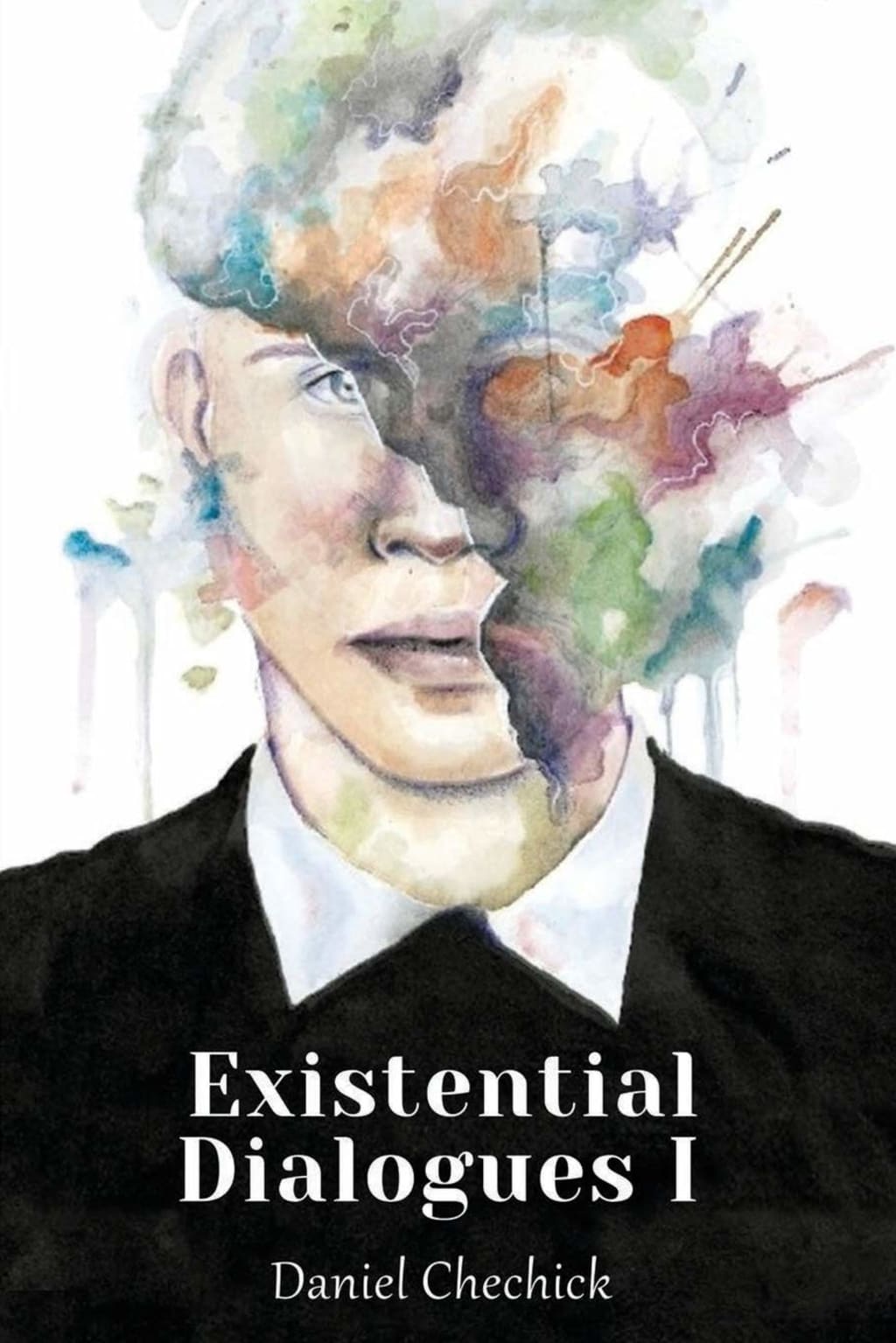
For many years I have studied psychology and philosophy and I have done this both at Bachelor’s Degree level and Master’s Degree level but I can honestly say that just like everyone else, it has been difficult and often confusing. I have really enjoyed studying existential philosophy for many years of these and honestly, Soren Kierkegaard is my personal favourite philosopher. So when I found this book (and it has a part 2!) I was overjoyed that I was about to get a brand new lesson in existential philosophy. One thing I was most excited about when it came to this book was that it was written in the style of a dialogue. I have always preferred reading philosophy as a dialogue. Why? Well it’s because it makes it not only seem more like a real conversation that you can get stuck into, but there is also the ease of reading. Philosophy is normally difficult to read because of the fact it keeps skipping between ideas and then relating back to other ideas. All this as one big block of essay can seem overwhelming and make you not want to read it. In this book however, you have this almost question and answer session. You get smaller blocks of texts, you get ideas that are far more understandable and most importantly, you can get lost in thinking about the conversation for ages. It is not only factual, it is not only understandable, but it is also entertaining and worth a good, intense read.
The language, unlike many philosophy texts you will read, does not feel like it is trying to trick you. This text is one of the few that is actually trying to help you understand. You feel as if you are sitting in on the conversation and actually involved rather than being made to feel like you’re too dumb to understand the giant brain feelings of the philosopher at hand (coughs: Nietzsche). The language is something that enthralled me the most, I was really into these answers that I almost forgot to get ready for my Zoom meeting on the same day because I was too busy reading these incredibly worded answers. For example: the question from the writer is: “I reckon Nature can provide us with the noblest arguments for believing in recovery and resurrection into perpetual growth out of destruction…” this is easy enough to understand and the following is the answer, which is something I sat there thinking about for a long time:
“However sadly enough, human minds find it difficult to absorb this lesson, preferring to succumb to their grim contemplations. But long practice can imprint this concept in one’s mind, make one memorise it like some mantra: even when darkness seems to invade and overwhelm you completely, you can still light your infinite light which will re-create your world once you choose to.”
This is followed by another question on how a person in desperate conditions would be able to absorb or understand this particular lesson to which the answer is another thoughtful, understandable and yet, entertaining answer:
“In other words, even in the abyss of horror, humans have a choice. From here follows one’s own terrible responsibility for becoming whatever one desires to. If one is currently desperate, let one engage in one’s soul-searching to find out what sustains despair in one’s mind or, conversely one’s hidden benefits from despair.”
Personally, my favourite chapters have been on human emotions and the extremities of them, the two quotations above being from the chapter on ‘Despair’. The fact that the chapters are split up into very particular categories as well, makes this book far easier to read than your average philosophical text - especially if you want to go down the route of existentialism. You probably want to read this before you read Kierkegaard and Schopenhauer.
Chapter Eleven is called “An Ounce of Happiness” and again, this was another one of my favourite chapters in which we get to really dig into what happiness is, what loneliness is and the strange correlations between being existential and being miserable. The question that I found most profound was:
“Yet strangely, in spite all my intellectual conclusions, I feel loneliness. So tell me, who are those impervious to it, those joy-coated ones who won their war on existential solitude?”
The answer to this was possibly one of my favourite answers in the book because it tends to look at it from a point of view that is impersonal and can relate to any person who has felt even the slightest amount of this misery. It takes that and gives advice on the topic, which also includes the existential philosophy that we are all seeking to understand.
“Look, the greatest human minds have struggled with the horrible problem of existential solitude and expectation of blissful life. Honestly, speaking, I advise you should seek not elixir of sincere and eternal happiness. All those best-selling guides for happiness are nothing but drugs addicting you to modern life’s loneliness and insatiable misery.”
Various other chapters which cover the ideas of sin and doubt are amongst more of my favourites but I think the one thing that was on my mind whilst I was reading this was where the hell this book was when I was writing my Master’s Degree philosophy essay - which was basically on this topic and Orientalist theories. This was a great book and I am going to get right on to part two because at the moment, I am still heavy breathing from this one.
About the Creator
Annie Kapur
I am:
🙋🏽♀️ Annie
📚 Avid Reader
📝 Reviewer and Commentator
🎓 Post-Grad Millennial (M.A)
***
I have:
📖 280K+ reads on Vocal
🫶🏼 Love for reading & research
🦋/X @AnnieWithBooks
***
🏡 UK
Keep reading
More stories from Annie Kapur and writers in Geeks and other communities.
Book Review: "A Christmas Memory" by Truman Capote
Truman Capote is one of my favourite writers in the entire world and honestly, this is the only book I had never read by him before. I have always made a point of reading everything by my favourite authors but I do not understand how I managed to miss this one. Anyways, this is just what it says it is - it is a Christmas story from Truman Capote's own childhood. I will not be discussing how much of it is true and how much of it might be fiction because really, that is not my concern. Instead, I am looking at how Truman Capote writes about his own life.
By Annie Kapur5 years ago in Geeks
The Rachels - 2025
Much to my surprise, I have kept a list of the films I‘ve seen this year. I daresay it isn’t complete. There will be films that snuck in on a late night in front of the TV that I would’ve forgotten to note. Or others, that I went to watch at the cinema, but then had a red wine and promptly forgotten about. But it’s not a bad approximation of the films I’ve seen this year. In total, there are 53 films listed, so an average of one a week and one for good luck.
By Rachel Robbins25 days ago in Geeks
Grant Gustin's Chances Of Returning As The DC Universe's Flash Have Just Increased After New Update
The Flash has yet to be cast for the new DC Universe, and after a new update, the rumors of Grant Gustin's return as Barry Allen in the new franchise have gained strength once again. Gustin made history by playing Barry for The Flash's nine seasons. The actor also starred in multiple Arrowverse crossovers, becoming one of the franchise's fan-favorites.
By Dena Falken Esq5 days ago in Geeks


Comments
There are no comments for this story
Be the first to respond and start the conversation.