
Book Review: "Amerika" by Franz Kafka
5/5 - ...they've all come to look for America...

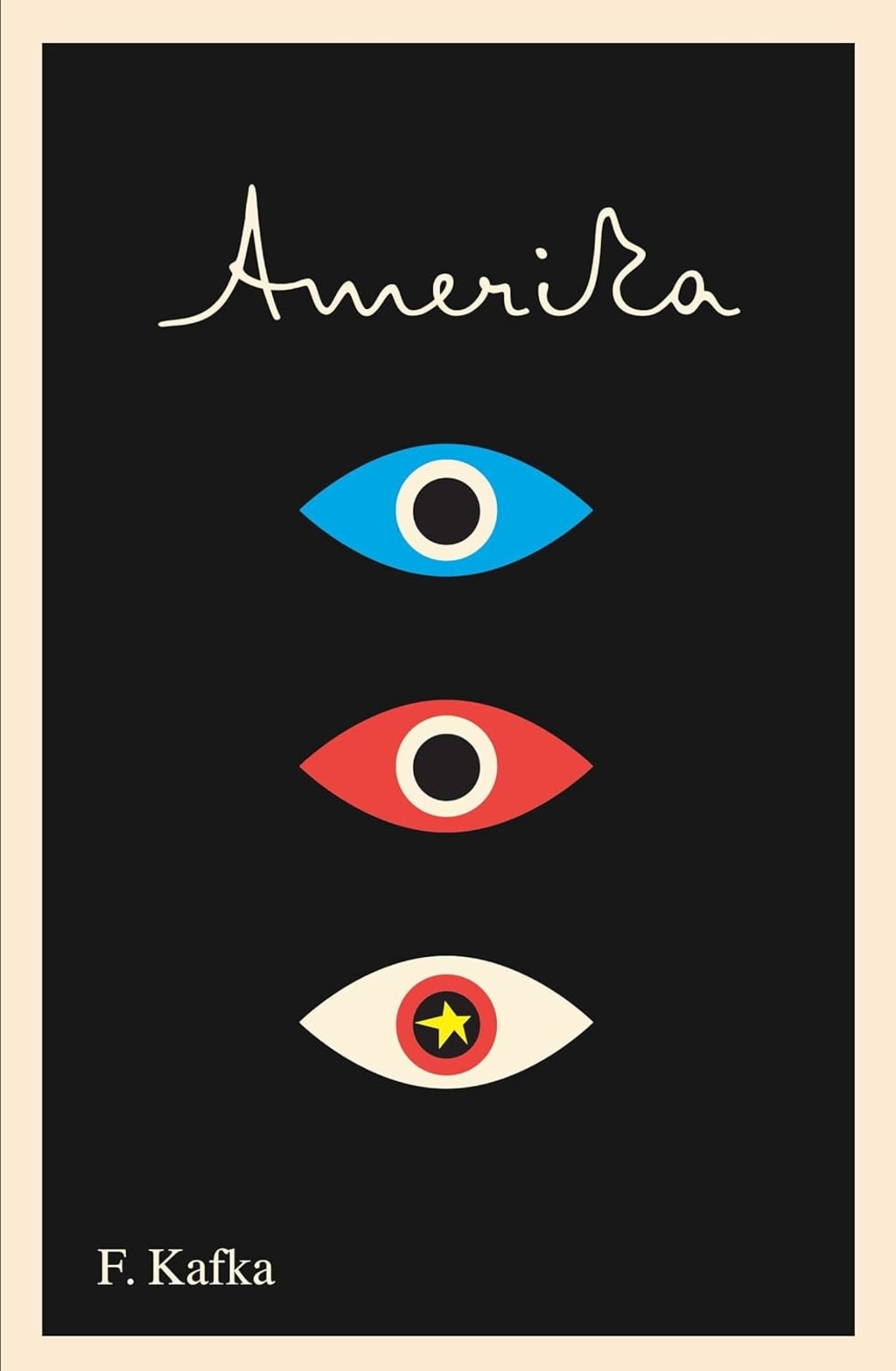
I probably should not have read Kafka to try to make myself feel better. There is absolutely nothing about a Kafka novel that could make someone feel better, in fact whilst I'm teaching modules on dystopia, it could possibly just verify my own beliefs that I have to hold my tongue against in the classroom. Amerika was one of those I had touched on before but I had quickly put back down because I was never really in the absolute mood for it. I eventually did read the rest of it, but this review is the first time I've read the whole thing at one time rather than putting it down and picking it up again after six months.
The novel opens with 17-year-old Karl Rossmann arriving in New York after being exiled by his parents in Europe due to a scandalous affair with a maid that resulted in an illegitimate child. This forced migration is Kafka's way of introducing Karl as a figure of displacement, set adrift in an alien world. The overwhelming size of the port and the bustling activity of the city highlight Karl’s smallness and vulnerability in a strange new land. I always love it when Kafka works with size and space. It can be massively symbolic and gets the reader into how the character is supposed to be understood straight away.

Karl’s uncle takes him in, providing him with a home and opportunities for advancement. Jakob represents the successful immigrant who has made it in America, and his wealth offers Karl a glimpse of stability in this new land. He is introduced to American society, and it seems, for a moment, that Karl might have a future filled with promise. However, his uncle is strict and controlling. It emphasises that Kafkan message we all know too well: the idea that you are never really free, instead you just give yourself up to a new set of rules. Sometimes, for the sake of freedom you are willing to sacrifice yourself to a new set of hyper-strict rules. It is massively depressing to learn how this applies to real life. Everyone is constantly waiting to have fun, always waiting because they just need a bit more money or something. Eventually, they've died without having any fun whatsoever.
Despite his new life, Karl's relationship with his uncle crumbles when Karl disobeys Jakob by visiting a friend without permission. Jakob, who had been depicted as Karl’s benefactor and protector, reacts harshly and abandons him entirely. This rejection is Kafka’s commentary on the precariousness of human connections and the fragility of success in a new world. Karl is suddenly left alone, with no money or support, thrust back into the alienating environment of America. Therefore, we can understand that the punishment for breaking unwritten rules is alienation - again this applies to our everyday lives as well.
Wandering aimlessly, Karl encounters two vagrants, Delamarche and Robinson, who quickly take advantage of him. These characters are emblematic of the darker, predatory aspects of American society, exploiting Karl’s naïveté and vulnerability. Karl begins to descend into a lower social stratum, living a transient life dependent on the whims of unscrupulous individuals, reinforcing Kafka’s portrayal of a harsh, indifferent world. A world that is indifferent again, is one we live in. Nobody cares about another person's suffering unless it is directly impacting them and Karl represents this perfectly - he is the victim who is seen almost as a nobody since there are no strings attached to him. To the vagrants, they have not hurt anyone at all.
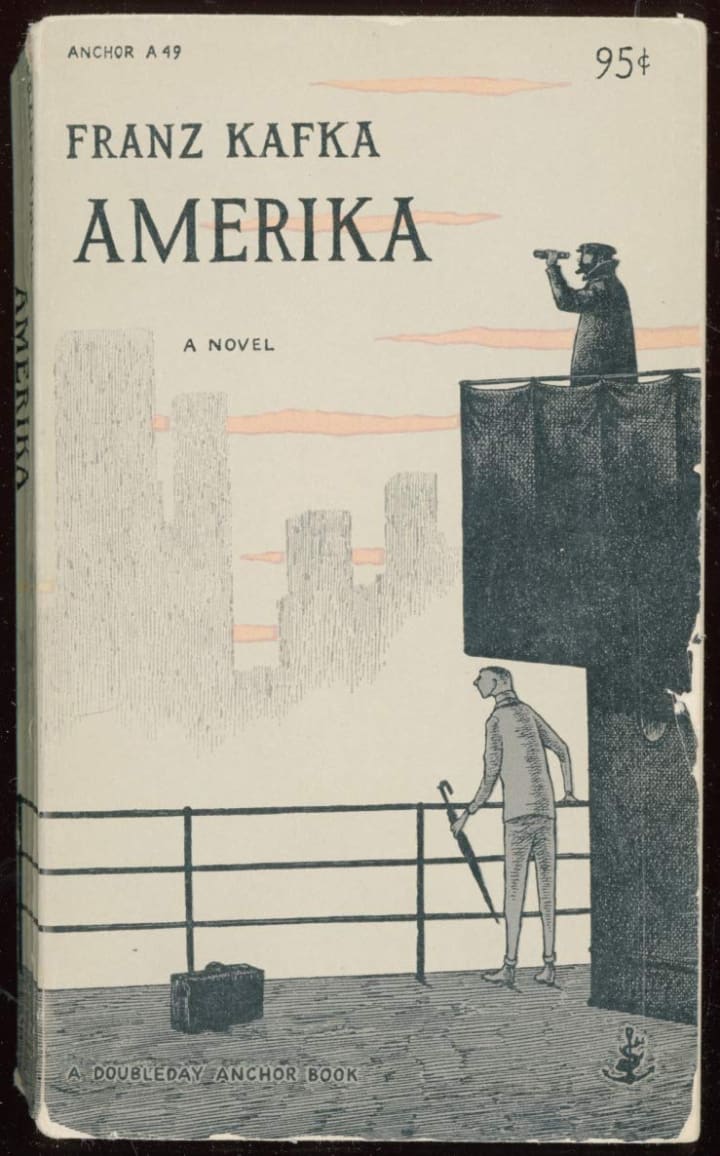
Despite being diligent in his work, Karl is wrongfully accused of inappropriate behavior toward a female headwaiter at the hotel. Although he is innocent, he is dismissed without any opportunity to defend himself. After his dismissal, Karl crosses paths with Robinson once again. Robinson, now injured and destitute, manipulates Karl into helping him, dragging him deeper into a life of squalor. Karl’s attempt to distance himself from these disreputable characters fails, as he is pulled back into their orbit. This shows us something we know again, too well in Kafka's novels: someone who is accused and cannot defend themselves. This is the kind of submission to the government that we cannot allow but we are forced to endure.
The ending is absolutely fantastic because it holds such a double meaning. I won't say what the ending is but it makes perfect sense as being a rebirth and an absurdity. Kafka's writing is always great but I think it was the wrong time for me to read this book. I got way too into it and started picking it apart, looking in our own world for these symbols, messages etc. and, as you can see I think I found them. This is probably my favourite Kafka novel so far and might also be the final one I have to read.
About the Creator
Annie Kapur
I am:
🙋🏽♀️ Annie
📚 Avid Reader
📝 Reviewer and Commentator
🎓 Post-Grad Millennial (M.A)
***
I have:
📖 280K+ reads on Vocal
🫶🏼 Love for reading & research
🦋/X @AnnieWithBooks
***
🏡 UK
Keep reading
More stories from Annie Kapur and writers in Geeks and other communities.
Book Review: "Exile and the Kingdom" by Albert Camus
Albert Camus is a real hit-or-miss when it comes to me. I thought his play Caligula was okay and the book The Rebel that I read recently was also fair. I've read other works by him and they are either average or they have simply completely missed the mark. I found his book of short stories Exile and the Kingdom to probably be the better side of his writings even though I have also read his personal writings (I apologise to anyone who liked these, I know they are objectively good but I could not plough through his ramblings and pretend I was enjoying it for too much longer - I will return to it). So, let's have a look at his anthology: Exile and the Kingdom and what I thought of these twisted philosophical stories that reminded me of Hemingway (if Hemingway was trying to break my brain).
By Annie Kapurabout a year ago in Geeks
The Rachels - 2025
Much to my surprise, I have kept a list of the films I‘ve seen this year. I daresay it isn’t complete. There will be films that snuck in on a late night in front of the TV that I would’ve forgotten to note. Or others, that I went to watch at the cinema, but then had a red wine and promptly forgotten about. But it’s not a bad approximation of the films I’ve seen this year. In total, there are 53 films listed, so an average of one a week and one for good luck.
By Rachel Robbins26 days ago in Geeks
Kartik Aaryan suffers first major setback after minor dating controversy
Kartik Aaryan recently suffered first major setback after getting caught in a controversy of dating a minor. It all started when the 35-year-old actor’s newly released film, Tu Meri Main Tera Main Tera Tu Meri, became a box office bomb.
By Dena Falken Esq5 days ago in Geeks




Comments (1)
It was always interesting to me that he wrote this book without visiting the US. A brilliant writer, and I like your review. Any thoughts on the recent Nobel winner? Personally, I read one book and did not like it.