
Beyond Borders: How Bollywood Still Unites India and Pakistan
Unnecessary Controversy around the release of 'Sardaar Ji 3'


The recent backlash against Sardaar Ji 3 — starring Indian superstar Diljit Dosanjh and Pakistani actress Hania Aamir — is yet another example of how art becomes an easy target whenever tensions flare between India and Pakistan. While the casting of a Pakistani actress sparked outrage in some circles, the reaction reveals a deeper and more troubling pattern: art and sport are always the first casualties of politics in South Asia.
This isn’t the first time this has happened. Over the last decade, every time India-Pakistan relations become strained, cultural and creative exchanges are shut down or heavily scrutinized. Pakistani actors have been banned from working in Bollywood. Indian films have been pulled from theaters in Pakistan. Cricketers have been forced to sit out joint events. In an era when collaboration should be encouraged, it is stifled by fear, nationalism, and reactionary politics.
What makes this situation particularly ironic is that Bollywood, the crown jewel of Indian pop culture, is built on diversity — and more specifically, on shared Indo-Pak roots. From Dilip Kumar (Yusuf Khan) and the Kapoor family to Shah Rukh Khan, many of its biggest icons have ancestral roots in present-day Pakistan. Their contributions helped shape Indian cinema into a global brand. So how do we now justify drawing borders around an art form that, by its very nature, transcends borders?
It’s also important to recognize how deeply Bollywood is loved across the border. Generations of Pakistanis have grown up watching Indian films, listening to Indian songs, and idolizing Indian actors — even during times of severe political and military tension. From wedding dance floors to cinema halls, Bollywood has remained a cultural constant in Pakistan, not because of politics, but because of the emotional connection people have with its stories and stars.
In fact, Bollywood has become a global presentation of not just Indians — but also Pakistanis and Bangladeshis. Despite differences in politics or language, the broad strokes of culture, family dynamics, and storytelling traditions remain strikingly similar. That’s exactly why Pakistani audiences have always found Indian cinema so relevant — often watching Bollywood more than any other foreign film industry. Even today, young people in Pakistan still quote Shah Rukh Khan’s legendary line, “Bade bade shehron mein aisi chhoti chhoti baatein hoti rehti hain,” or refer to a certain hairstyle as “Tere Naam style.” The music of Dharma Productions or the timeless romanticism of Yash Raj Films evoke deep nostalgia, as if these stories are part of a shared memory. It's not just entertainment — it's emotional heritage.
This isn't about appeasing a minority, nor is it a matter of compromise. It’s about the credibility and global growth of Indian cinema. With over 20 million potential viewers in Pakistan alone, closing that door is not only politically regressive — it's economically and culturally short-sighted. If Bollywood wants to continue growing into a powerful global industry like Hollywood, it must embrace diversity and resist the pressures of jingoism.
Art speaks a language far beyond race, religion, or nationality. It reflects our shared humanity, and history shows that while empires fall and borders shift, art endures. The ruins of ancient civilizations may lie buried, but their poetry, sculptures, and melodies still live on. This is why art must not only rise above politics — it must be protected from it.
The casting of Hania Aamir in Sardaar Ji 3 should not be viewed as a betrayal or provocation. It should be seen for what it is: an artistic decision that celebrates talent, storytelling, and shared cultural heritage. Instead of outrage, it deserves applause. Because in a world becoming increasingly divided, any act of cultural unity — however small — is worth celebrating.
Let’s stop turning artists into scapegoats. Let art do what it’s meant to do: build bridges, not walls.
About the Creator
Zeeshan Ali
Seeking clarity in a world drowned in noise — for in lucidity lies real strength.
Keep reading
More stories from Zeeshan Ali and writers in Geeks and other communities.
The Contradictions of Western Ideals:
Growing up in Muslim societies, I often felt caught between two worlds: the traditional Islamic values we held sacred and the Western ideals we were taught to admire—but also fear. As I matured, I found myself increasingly drawn to Western concepts like liberal democracy, freedom of speech, secularism, and Enlightenment rationality. These ideals appeared to represent human dignity, progress, and justice. But over time, the contradictions behind them became impossible to ignore.
By Zeeshan Ali9 months ago in The Swamp
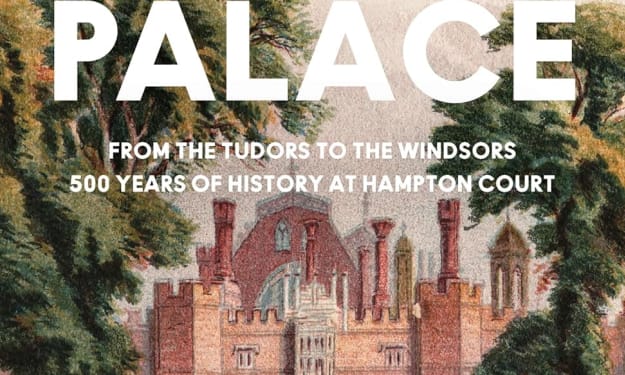
Book Review: "The Palace"by Gareth Russell (Pt. 2)
This review covers chapter 4 through to the end of chapter 6 *** We've covered people such as Elizabeth of York, Thomas Woolsley, Martin Luther and even Anne Boleyn but now it is time to move on from these figures. It is proven that Gareth Russell has done such an incredible amount of research here and the book itself is a fantastic achievement of nonfiction literature regardless of your personal feelings towards the royal family. Gareth Russell's writing and insight makes the book even more intriguing to read as he offers us arguments to consider, thoughts to ponder on and stories of whispering gossip that lurk inside the walls of this great palace.
By Annie Kapur2 days ago in Geeks
TUS NUA - ch 53
TUS NUA – ch 53 New Beginnings – Mia and Midnight (*)(*)(*) Finola knew Ali’s brother-in-law needed to put his mind at rest. She fed her arm through his and led him outside. “We’ll sit here. If you like, I can put a block around us so our conversation will be private.”
By Margaret Brennan5 days ago in Fiction



Comments
There are no comments for this story
Be the first to respond and start the conversation.