
Behind the Magic
The Real Origins Behind 5 Famous Disney Movies

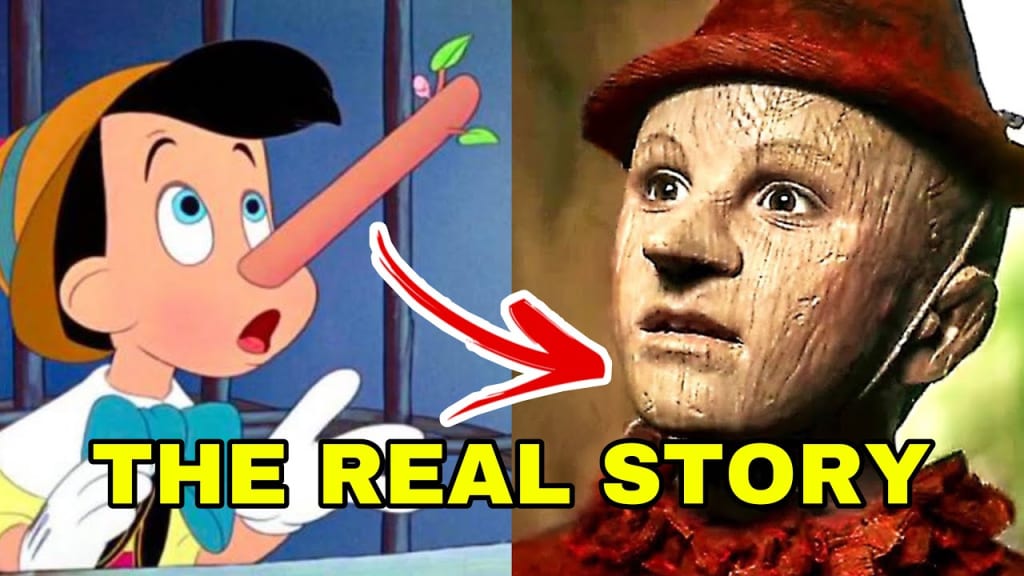
Disney films have enchanted audiences for generations with their heartwarming tales and memorable characters. But beneath the magic, some of these beloved stories have roots in much darker or more complex origins. Let’s take a closer look at five Disney classics and uncover the surprising histories behind them.
1. Snow White and the Seven Dwarfs

The 1937 film Snow White and the Seven Dwarfs was Disney's first animated feature and has since become a timeless classic. Most of us know the story of Snow White, a princess whose wicked stepmother, the Evil Queen, orders her death. Instead, Snow White finds refuge with seven dwarfs, only to later fall into a death-like sleep from a poisoned apple. In the end, a prince’s kiss awakens her, leading to their "happily ever after."
However, the original tale, penned by the Brothers Grimm in 1812, is much darker. After Snow White is revived, not by a kiss but by the dislodging of the apple from her throat, a wedding is arranged. The Evil Queen, unaware it’s Snow White’s wedding, attends and is forced to dance in red-hot iron shoes until she drops dead. A gruesome ending for what is now considered a children’s story!
2. Pocahontas

Pocahontas (1995) is one of Disney's most controversial films, mainly due to its significant deviations from the true story. The movie portrays Pocahontas as a young Native American woman who falls in love with English settler John Smith, leading to a peaceful resolution between her people and the English colonizers.
In reality, Pocahontas, whose real name was Amonute and sometimes Matoaka, was around 10 years old when she met John Smith, and there was no romantic relationship between them. She was later captured by the English and married John Rolfe, a tobacco planter, in what was the first recorded marriage between a European and a Native American woman. Tragically, she died at just 21, far from the idyllic life depicted in the film.
3. Rapunzel (Tangled)

Disney’s Tangled (2010) offers a lighthearted and adventurous take on the story of Rapunzel, a princess with magical hair, who escapes her tower and finds love. The film ends happily, with Rapunzel reuniting with her royal parents and living happily ever after with her love interest, Flynn Rider.
The original tale of Rapunzel, also by the Brothers Grimm, is not quite as cheerful. In the darker version, Rapunzel is imprisoned in a tower by a witch after her parents steal a plant from the witch’s garden. A prince discovers her, but their romance leads to tragedy when the witch catches on, cuts off Rapunzel’s hair, and blinds the prince. The two eventually reunite, but not without enduring significant suffering.
4. Pinocchio
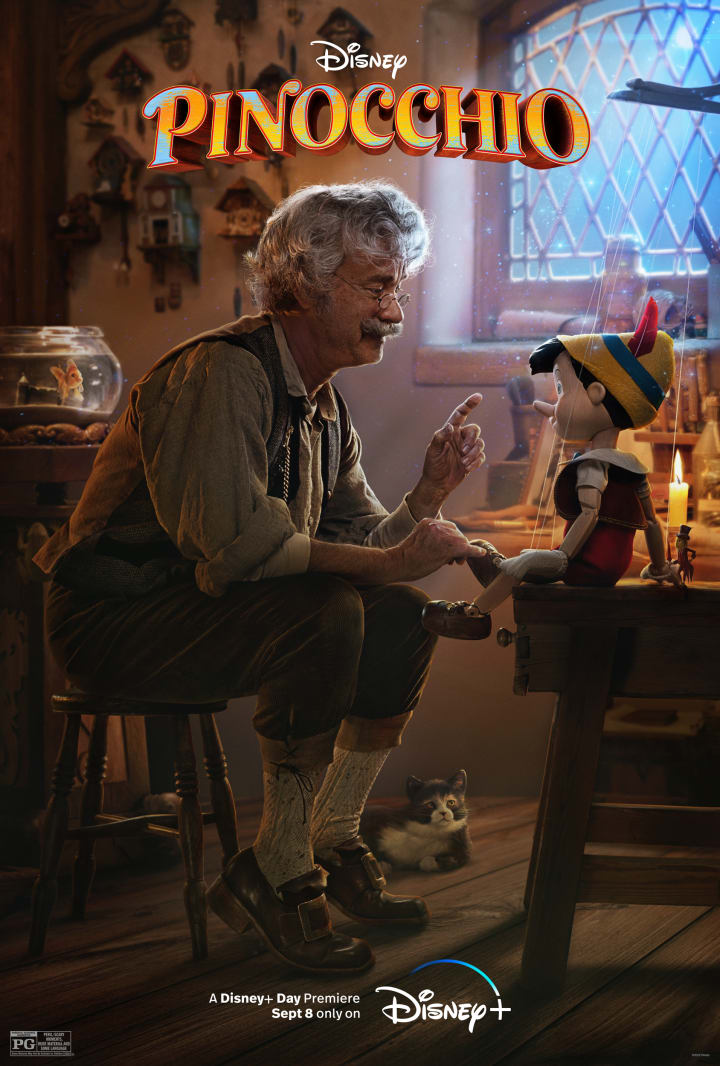
Considered one of the greatest Disney films, Pinocchio (1940) tells the story of a wooden puppet who wishes to become a real boy. With the help of his conscience, Jiminy Cricket, and after a series of moral lessons, Pinocchio achieves his dream.
The original Adventures of Pinocchio by Carlo Collodi, published in 1883, paints a much grimmer picture. Pinocchio is far from the innocent puppet seen in the film—he’s mischievous, often cruel, and meets with severe consequences for his actions. Jiminy Cricket, known as the Talking Cricket in the book, is killed early on by Pinocchio, only to return as a ghost. Collodi's story was intended as a cautionary tale about the importance of obedience and the harsh realities of life, making the Disney adaptation significantly lighter in tone.
5. Winnie the Pooh

Winnie the Pooh, the lovable bear created by A.A. Milne and later adapted by Disney, is based on real-life inspiration. Milne’s son, Christopher Robin Milne, had a teddy bear named Winnie, after a Canadian black bear at the London Zoo. The characters and stories of the Hundred Acre Wood were inspired by Milne’s observations of his son’s interactions with his toys.
However, some theories suggest that the characters of Winnie the Pooh represent various mental health disorders. For instance, Pooh is thought to display symptoms of ADHD, Piglet shows signs of anxiety, Eeyore is often linked to depression, and Tigger might have ADHD. While these interpretations are speculative, they add a deeper layer of understanding to the seemingly simple and innocent stories.
Closing
Disney’s magical adaptations often obscure the more complicated, and sometimes darker, origins of the stories they’re based on. While the films are beloved for their charm and positivity, it’s fascinating to explore the real stories behind these classics. Whether grim or historically complex, these origins remind us that every story has layers waiting to be uncovered.
About the Creator
Horace Wasland
Research analyst, writer & mystical healer. Exploring the edge where science meets mystery. From mystery/the mystical, to facts, news & psychology. Follow for weekly insights on all four and please leave a tip if you like what you read :)
Keep reading
More stories from Horace Wasland and writers in Geeks and other communities.
Jazz Ramsey: A K-9 Mystery Revealed
Hallmark has launched a new mystery series that promises to keep viewers on the edge of their seats: Jazz Ramsey: A K-9 Mystery. Starring Rachel Skarsten and Corey Sevier, this show, inspired by Kylie Logan's popular Jazz Ramsey books, combines suspense, romance, and the unique capabilities of crime-detection dogs to create a riveting watch.
By Horace Waslandabout a year ago in Geeks
The Rachels - 2025
Much to my surprise, I have kept a list of the films I‘ve seen this year. I daresay it isn’t complete. There will be films that snuck in on a late night in front of the TV that I would’ve forgotten to note. Or others, that I went to watch at the cinema, but then had a red wine and promptly forgotten about. But it’s not a bad approximation of the films I’ve seen this year. In total, there are 53 films listed, so an average of one a week and one for good luck.
By Rachel Robbins17 days ago in Geeks
"Beyond the Gates" Weeks 38-44 Recap
It's been a minute since I delivered a Beyond the Gates recap, but I want to start with this. If you had told me that in 2025 and now into 2026 that I'd be religiously watching any soap opera, I would have looked at you like you had three heads or something. My feelings about soaps had always been complicated. I had peeped into some of the classics at times, but I was never a religious viewer. A question I never asked myself was this: "What would it take for me to actually watch a soap every day?"
By Clyde E. Dawkinsabout 7 hours ago in Geeks
'20/20'
"Do It Again" the track that would ultimately open the Beach Boys final album on Capitol Records which was released on February 10th 1969 had originally been released as a single in August of 1968. The track was the first of many post-Pet Sounds era throwbacks to the early Beach Boys sound which would become continually more cliched and eventually lead the Beach Boys to the level of self-parody they would eventually succumb to in the 1980s while their closest contemporaries The Beatles nearing the end of their run in 1969 would go on to be viewed as the most influential band of all time. However, the song itself is not bad on its surface, and it opens with a futuristic sounding (for 1969) drumbeat captured by then-Beach Boys engineer Stephen Desper using tape delays on the drums performed by Dennis Wilson and John Guerin. The song has been re-recorded numerous times over the years on various Beach Boys-related projects most notably the 2011 re-recording at Capitol studios featuring the five surviving Beach Boys at the time backed instrumentally by various members of both the Brian Wilson Band and Mike Loves touring "Beach Boys" to promote the then upcoming Beach Boys 50th Anniversary reunion tour in 2012. The hammering and power drill sound at the end of the song was an excerpt from a track called "Workshop" that was to be a part of the uncompleted "SMiLE" album.
By Sean Callaghan7 days ago in Beat


Comments
There are no comments for this story
Be the first to respond and start the conversation.