
Analyzing Racial, Sexual and Gender based Stereotypes in western media culture.
-An essay by Partha Singh

Firmin Didot was a French printer, engraver and type founder born in Paris, France. Didot was born in a family of printers, in France, and he later on in life he chose to follow the legacy of printing that was started by his grandfather, Francios Didot. Firmin, in 1798 recorded the first usage of the term “Stereotype”. In his printing business, Firmin referred to any plate that would facilitate copying or duplicating a pre-existing typing pattern, as a Stereotype. In the printing business today, the use of a “Stereotype plate”, or a duplicate plate is still prevalent. Even today, it is generally used to replicate an original piece of printing, or print an existing pattern multiple times. Although, in 1850, the word “Stereotype” was used for the first time in a non-printing context. In the spoken word then, Stereotype was used as a noun to define an image, or an idea, that could or had continued for a long time, without change. The Etymological roots of Stereotype originates from two different Greek words, stereos; meaning firm or solid, and typos; meaning an impression. Hence, for the larger part of human knowledge, Stereotypes have always been used to define a solid impression of anything. Today, the word stereotypes has the same literal meaning, but a very social connotation.
Stereotypes have historically been an indicator of the social status of an individual or a group of people. Just like in the printing business, the word “Stereotypes” today has been referred to as a fixed societal idea of a group of people and the existence of stereotypes depends vastly on preconceived notions that people within our society subscribe to, exactly how Firmin Didot used duplicate printing plates to replicate or reuse prints that he possessed beforehand. For instance, In Indian society, it is common for one to hear a negative opinion about the Islamic community, which is in complete disregard to its actual nature. But, there are many people who would blindly believe an idea about muslims, without checking if it's true and in a lot of cases, Muslims are too subject to ill-treatment and disrespectful societal practices, on the basis of the preconceived notions that we think to be true. And hence, in the most practical way, this is what a stereotype actually is. It is a fixed idea, that we as humans are psychologically wired to foster which has repeatedly led to the degradation of the societal status of a community. For instance, people from northern states in India have certain stereotypes about their southern neighbors and sometimes, these stereotypes make South Indians living in Northern states uncomfortable and possibly insecure about their identities.
While there are many stereotypes that are prevalent in world society today, some of them are rather common and have had a huge historic effect on our thinking. Some of these stereotypes have triggered mass riots and have also started struggles for equality and human rights. The purpose of this essay is to identify various stereotypes that we have come across in the history of our existence. This essay also aims to look at how these stereotypes are portrayed in movies and hence how they affect our behaviours and thought processes in a way that has led to the historic oppression of these communities. The scope of discussion within this essay would be highly dependent on examples from the movie industry, that has knowingly or unknowingly confirmed stereotypes regarding racial minorities and gender. On many occasions, movie industries (in this case Hollywood) have attempted to manufacture entertainment by targeting these stereotypes, and in many cases, appeal to the masses by confirming these stereotypes. What we fail to understand when we enjoy these movies, is that we enjoy the misery of these oppressed classes. We sit on our cushioned theatre seats, and munch on the overpriced popcorn, while the integrity of these social classes is compromised on the big screen.
For us to understand how the portrayal of these stereotypes by movie houses are defamatory to the status of minority communities, we need to define these stereotypes. The scope of this essay is set within exhaustive limits of stereotypes based on Racial minorities and Gender. The world at large is not oblivious to the fact that these communities are subject to struggles of their own. What makes matters worse, is that the very society that has on various occasions turned a blind eye to the plight of these communities, feels no guilt in using their challenges to gather attention to their craft. While it can be argued that the main focus of Hollywood as an industry is to promote their productions and entertainment is largely dependent on appealing to the masses, making a mockery out of the societal standards of a group of a community is not the way to go about it. The only goal that this has proven to achieve, is that we have further suppressed these minorities, and have placed them at the lowest rungs of social development.
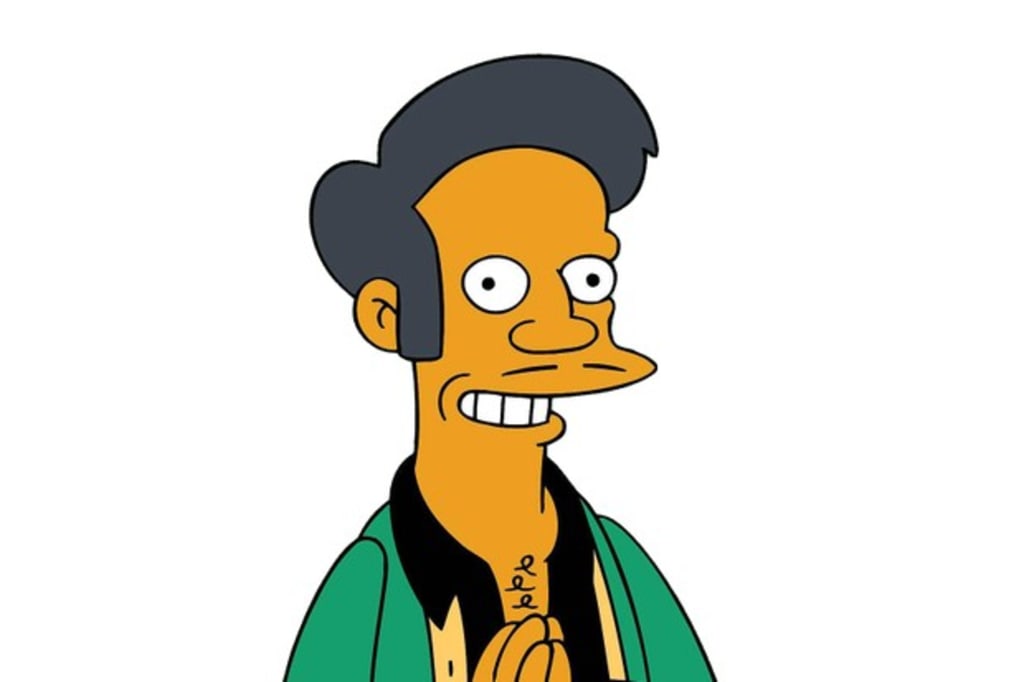
A great example of this is Hank Azaria, and his career as a voice over artist for the famous animated American TV show, ‘The Simpsons’. Azaria was asked to voice Apu, a character that was based entirely on the stereotypes of the American-Indian community. Right off the bat, it is rather unfair that a white man, who has very little knowledge about what it is like to be a minority in the United States of America, was asked to voice an Indian character, while many American-Indian artists watched from the sidelines. Although lack of proper representation is an issue that many minorities face, over here the damages endured by the Indian community were caused due to the broadcasting of various stereotypes that were associated with them. But that did not stop Azaria from giving Apu his voice for twenty years. It took a man of privilege two decades in his country to realise that maybe there is something wrong with the way he is portraying a certain character. Lastly, it took Hank Azaria twenty years to apologise to the Indian-American community and own up to his mistakes. What the world today fails to see is that Apu was a character of amusement for many generations, meaning that there were some children in the United States of America that grew up thinking that Indians are just some annoying immigrants, who run small businesses, have annoying accents and it is okay for anyone to mock them for their origins. Alas, the story doesn't end here. There are many instances where the Indian American or just the Indian community is shown as backwards, impoverished just for the sake of it. For instance, in Netflix’s blockbuster action thriller, ‘Extraction’, the scenes shot in Pakistan, India and Bangladesh were shown on screen with a yellow filter. This yellow filter is a symbol of dust, and in this case was used to depict South Asian countries as dusty, underdeveloped and dirty, whereas the scenes that were shot in Australia did not have a filter. There are so many intricate details like the yellow filter that the world probably does not notice, but on so many levels it does ruin the image of a community and in this scenario, even a country. Another way that Hollywood depicts India as a third world country is by manipulating the site of shooting. Many Hollywood movies, Like ‘The Avengers’, have scenes that were shot in the slums of India. ‘The Avengers’ has a scene, where Dr. Bruce Banner, also known as The Hulk, was found hiding in the slums of Kolkata. Banner’s character was portrayed as a doctor who was there to help the people of the slums from a water borne disease, while he was in hiding. Kolkata, is the fourth largest city in India in terms of population, and is one of the most expensive places in India. The streets of Kolkata are lined with tall skyscrapers, towers and malls and have one of the highest literacy rates within the country. Yet, the west thought it would be appropriate to depict one of the richest cities in India through poverty, sickness. Last but not the least, Kunal Nayyar, an Emmy winning American-Indian actor, who played the part of Rajesh Koothrapali on “The Big Bang Theory”, was also a problematic depiction of race in western popular culture. Nayyar was asked to portray Rajesh, or Raj as someone who was intellectually superior, but also as someone who was always in awe of how modern and developed the state of California was. Raj’s character was also shown as someone who was afraid to talk to women without being intoxicated. Raj also on various occasions makes jokes about India’s population, mentions that people in India commute on elephants, and is also the butt of various other racial jokes. What is truly sad about Raj’s portrayal, is that there is no mention of the fact that he is an astrophysicist, and is on a prestigious grant that is funded by Caltech, a premier scientific institute in the world. Raj’s character is also ignorant towards the scientific breakthroughs he makes in his field, and he is also shown as someone who is coddled by his parents to an extent where he on multiple occasions abandons his right to choose a significant other for himself, and hands them to his parents. In short, Rajesh Koothrapali is a product used to get laughs out of the viewers, that was manufactured by using different stereotypes that the West had for Indians. In a way, these portrayals just normalize having these stereotypes and thus make the world slightly more hostile for these communities.
Even the way that gender is made visible on the big screen by Hollywood is highly questionable. In the past one year, the majority of the women in movies are portrayed as domestic entities. Although there were some roles where women were portrayed as figures of authority, only some of them were cast as lead characters. Many movies and shows portray women in a way that gives out the message that women structure their lives and opinions in a manner that caters directly to the needs of their male counterparts. Moreover, the general trend within Hollywood is that most of the time only men are shown in working environments. Hollywood has also on various occasions given more screen time and script dedication to men rather than women. Some very famous examples of misportrayal include the ‘Bridezilla’ scene from the very famous movie ‘Bride Wars’ starring Kate Hudson and Anne hathway. ‘Bridezilla’ is a state of mind where a sane woman loses all of her calm on her wedding day, and is generally very neurotic and over the top about the idea of marriage. Portrayals of this very bleak phenomenon have communicated the belief that women are obsessed with the idea of marriage and family, and would go to extreme lengths to make sure that their weddings are immaculate in every way. It has also centred the entire institution of marriage around women which in turn has stereotyped women around the world as domestic creatures. It also completely ignores the idea that many women do not necessarily obsess about marriage, and marriage is not the only goal that they work towards. Women today are more than capable of having successful careers in any field, and are also entitled to their lifestyle choices, like any person with dignity. What these misportrayals have done historically, is that they have generated a completely irrational image of a woman and has helped us protect social practices that rob women of their right to make choices for themselves. Another prominent addition to this list would be Merryl Streep’s performance in the movie ‘Devil wears Prada’, where she abandons her youth, relationships and sexuality to have a successful career as an industrialist. Once again, these misportrayals have fabricated an image of women that is highly superficial. In this context, women can either be successful in business or choose love and relationships; it is completely unreasonable for a woman to aspire for both. It is justified to believe that the societal plight of women today aren’t entirely dependent on the stereotypes that are celebrated by Hollywood. But in a way, these ideas are immortalized by movie houses when they make their work available to the masses and we as consumers have fed on these stereotypes. It is safe to say that such depictions have done more social harm than the positive impact that they have had on the economy or the society. There is a dire need for revision in what media and movie houses consider appropriate for the screen.
What goes without saying is that Hollywood is in desperate need to reform it’s policies regarding what it thinks to be socially and morally justified to reach the big screens. On a personal note, film makers need a system where they screen their productions to educated professionals within the community that they are trying to portray, and their opinions regarding their production should be considered as a safe parameter to decide what is correct or not. This would make sure that entertainment is served, while keeping in mind the social difficulties that these minorities face. Lastly, writers should be expected to conduct extensive research about these groups and hence should be well informed about the history of these groups before they draft characters and scenes. In conclusion, stereotypes about minorities that are being propagated by landmark Hollywood and western media productions should be inspected, reformed and also curbed to an extent where the integrity of these communities are left intact, with integrity.
REFERENCES
Antone, Tiffany. “Female Stereotypes in Movies We’re So Sick of Seeing – SheKnows.” SheKnows, 8 Oct. 2021, https://www.sheknows.com/entertainment/slideshow/810/female-stereotypes-in-film-that-make-us-yawn/2/.
Contributors to Wikimedia projects. “Stereotype - Wikipedia.” Wikipedia, the Free Encyclopedia, Wikimedia Foundation, Inc., 18 Aug. 2002, https://en.wikipedia.org/wiki/Stereotype.
Pandey, Aditya. “Indian Racism In Hollywood: Stereotypes That Continue To Show While Shooting ‘Indian Scenes.’” Www.Mensxp.Com, MensXP, 18 Apr. 2021, https://www.mensxp.com/special-features/features/79370-indian-racism-in-hollywood-stereotypes-that-continue-to-show-while-shooting-indian-scenes.html.
About the Creator
Partha Singh
My opinions on the law, books, and everything that's insignificantly significant.
If you are here, you either have very good taste, or you're probably just bored.
Consider tipping! Law school is expensive :p
Keep reading
More stories from Partha Singh and writers in Geeks and other communities.
Victimology and Sexual Abuse
Introduction This post analyses the process of Victimology in criminal law cases and takes rape as an extreme example to highlight legal and societal sway in delivering criminal justice. Victimology in essence underlines the consequences of being a victim of a particular criminal act. These consequences in rape at least are impregnated with irreversible damages to the social standing of the victim which makes Victimology a necessary study to evaluate the nature of damages that arise from such crimes (Weis & Borges, 1973). This field of study emerged sometime towards the middle of the twentieth century, right near the end of the second World War. Some criminologists, like Benjamin Mendelsohn, a French-Israeli advocate and academic, brought this under their field of study and hence worked on it to establish a better understanding of the origins of crimes and its implications on the victims/violators and the society and general which eventually helped create a wave of awareness for victim’s rights, which was later recognized by the United Nations’ act for victim’s rights, submitted by the honorable Secretary General, in 1984, which then gave birth to the United Nations' Charter for Human rights (Citizens for Peace and Justice). Victimology has since then emerged as a significant field of study under criminology as it helps us understand the victim’s relationship with the violator and their experience with the criminal justice system. In the legal profession, Victimology has repeatedly proven to be an important subject as it helps experts understand Sociology, Criminology and Psychology in depth (Pathlegal.in). Victimology is considered to be a subset of all these subjects. Although, in its simplest form, Victimology helps in studying victims of heinous crimes (in this case sexual assault/rape) and analyze patterns and trends that display how factors like gender, race and sexual orientation affect the perception of the victim and their stories by different constituents/entities like the public, media and our legal system.
By Partha Singh4 years ago in Education
History of The Three Stooges (Part I: The Beginnings and Columbia Pictures - 1920s-1936)
I have been itching to write about The Three Stooges on Vocal for close to two years, but I couldn't figure out how to do it. I wanted to do it by third Stooge, but that's a bit complicated. I know this much. I was about eight or nine years old when I first saw The Three Stooges. I remember one of my local channels had the Stooges on for hours, and I tried my damnedest to be up for those shorts. I remember that the Family Channel actually had an hour of the Stooges on from 11PM to midnight, and it was the entire library on during that time.
By Clyde E. Dawkins4 days ago in Geeks
Villainess Blown Opportunity: A Villainous Liz Hurley Cancelled by NBC (Wonder Woman)
You know, NBC's done a lot of things over the years that has pissed me off. And no, I'm not talking about losing the NHL coverage. I'm grateful to NBC for basically resurrecting the NHL following the lockout, how they promoted the sport, and how they elevated it during a time where apathy towards hockey was at its worst. NBC delivered 16 great seasons of NHL coverage. I'm grateful for that, and plus, someone had to go to make way for the NHL's debut on Turner and their return to ESPN.
By Clyde E. Dawkinsa day ago in Geeks
A Transparent Look at Vocal Challenges and Top Stories
Almost three years ago, we shared a resource article that served as a place for people to suggest new challenge prompts. We thought it would be a good idea to refresh that thread, and take the opportunity to answer a few common questions about top stories, how challenges are judged and how submissions are reviewed.
By Vocal Curation Team4 days ago in Resources


Comments
There are no comments for this story
Be the first to respond and start the conversation.