
“A Thousand Splendid Suns” by Khaled Hosseini
Classic Book of the Month: February


Possibly one of the most loved books by South Asian women of the 21st century, “A Thousand Splendid Suns” is a war tragedy, a book about women’s rights and a book about a mother, a daughter and their struggles. Released on the 22nd of May, 2007, the book has received praise atop of praise for its depictions of women in an Afghan regime that revolves around institutional misogyny and upholds increasingly patriarchal views in which women can be ritually killed for their outspoken behaviours.

The title of the book comes from the 17th century poem entitled ‘Kabul’ by the Iranian poet Saib Tabrizi and specifically the translation by Josephine Davis. It states the following: ‘One could not count the moons that shimmer on her roofs and the thousand splendid suns that hide behind her walls…’ Hosseini explains he found the ‘evocative title’ by searching for a particular line that a character would say when leaving the city he loves and holds dear. He also explains that the reason for women being the central topic of the book is meant to be a contrast to the book with men at its centre, his novel ‘The Kite Runner’.

‘A Thousand Splendid Suns’ is set across a period of near to forty-five years and is set in brutal regimes of the east in the beautiful country of Afghanistan. On the outskirts of the city of Herat, Mariam - the protagonist, lives with her mother Nana in a secluded hut. Born out of wedlock, nobody treats Mariam as one of the family and everyone is angry at her all the time. When Mariam’s father rejects her over and over again, Mariam’s mother finally responds by hanging herself. It is here that Mariam’s father and his three wives rush to get her married off to a man who is thirty years’ older than her and more abusive than she ever could have imagined. Laila runs away from home when it becomes too dangerous to stay and fearing that her friends and family have died in a bomb blast, by fate she comes into contact with Mariam and the two must survive together. Laila becomes intertwined with Mariam’s life and ultimately, someone will have to pay the price of protection - and the price isn’t pretty at all.

I read this book in 2009 and then re-read it in 2012 and 2015. I have never really been away from this book at all. It seems to sum up all the little problems that come with being a woman in South Asian existence and yet, it is much more than that altogether. Psychologically, it can take you to an entirely different place. First of all, you are dropped in 1960s-70s Afghanistan with Mariam growing up from being born in 1959. Then, you are dropped into the 1990s regime of Afghanistan, which is something slightly different and far more brutal in its approach to politics and we also get Laila’s story after she is born in 1978. Two different generations of women who are two entirely different character and yet, seem both to have similar fears and heartbreaks.
The best theme in the whole book is the value of human life. The question of what a human life is worth is constantly questioned throughout. One of the times it is questioned a small amount is when Mariam gets to know that Rasheed was married before he was married to her and his child died after he was drunk when caring for him, the child ended up drowning.
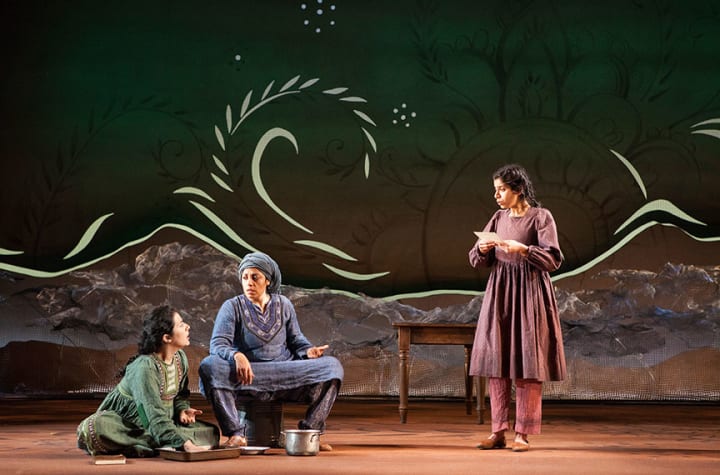
Mariam is quite shocked and yet Rasheed doesn’t seem too concerned at all. The book definitely shows us that the people who take action tend to prevail against those who go towards the political downfall of their country - even if it means paying a price they never thought they would have to pay. Mariam is a symbol of strength through everything. She goes through every single thing that could possibly go wrong for her throughout the novel and still comes out and tries to keep her head above the water. It is extraordinary to witness.
I think that more people should read this book and more people should come to see what Mariam goes through and how she keeps going afterwards. I know I would not have the strength to do what she did but what she did, she did to protect others not herself. The selflessness definitely pushes its way through the novel as acts committed by women in order to save their children, their families or those they care about more than anything in the world. A quality of sacrifice, selflessness and care is also the quality to be human and Mariam is one of the most intensely human characters I have ever read.
About the Creator
Annie Kapur
I am:
🙋🏽♀️ Annie
📚 Avid Reader
📝 Reviewer and Commentator
🎓 Post-Grad Millennial (M.A)
***
I have:
📖 280K+ reads on Vocal
🫶🏼 Love for reading & research
🦋/X @AnnieWithBooks
***
🏡 UK
Keep reading
More stories from Annie Kapur and writers in Geeks and other communities.
Book Review: "I Married a Communist" by Philip Roth
When it comes to Philip Roth, I admittedly have not actually read a lot of his work. I have read American Pastoral and well, apart from that novel I have read a lot of his other writings such as: his conversation with Isaac Bashevic Singer in the New York Times Book Review, 1976, his reading of Saul Bellow in The New Yorker, 2000. There have been some interesting things he has written and, as we know from this book, have been written about him. But, I'm not going to lie, there are some flaws in this book and yet, I enjoyed myself quite a bit. The book feels perfectly plausible in real life and yet, it has many strange things going on. The title of this book is I Married a Communist and just to warn everyone, there is a lot of discrimination in this book that some may feel uncomfortable with reading about.
By Annie Kapur4 years ago in Geeks
The Rachels - 2025
Much to my surprise, I have kept a list of the films I‘ve seen this year. I daresay it isn’t complete. There will be films that snuck in on a late night in front of the TV that I would’ve forgotten to note. Or others, that I went to watch at the cinema, but then had a red wine and promptly forgotten about. But it’s not a bad approximation of the films I’ve seen this year. In total, there are 53 films listed, so an average of one a week and one for good luck.
By Rachel Robbins27 days ago in Geeks
PTA Wrote to X Three Times Seeking Closure of Imran Khan’s X Account Over the Past 3.5 Years
Pakistan’s digital governance has once again come into the spotlight following revelations that the Pakistan Telecommunication Authority (PTA) contacted X (formerly Twitter) multiple times over the past three and a half years, seeking the closure of former Prime Minister Imran Khan’s X account. The disclosure has sparked renewed debate about freedom of expression, political speech, and the regulation of social media platforms in Pakistan. As social media continues to shape political narratives, the issue highlights the growing tension between state regulation and digital rights. Background of the Requests According to official sources, the PTA wrote to X three separate times over the last 3.5 years, requesting action against Imran Khan’s verified account. The communications reportedly cited concerns related to content guidelines, misinformation, and public order. Imran Khan, leader of the Pakistan Tehreek-e-Insaf (PTI), has remained one of the most influential political voices on social media, even during periods of political uncertainty and legal challenges. His X account has been used to: Share political statements and policy positions Address supporters directly Comment on national and international developments This influence has made his digital presence a highly sensitive issue for regulators and authorities. PTA’s Role in Digital Regulation The Pakistan Telecommunication Authority is responsible for monitoring and regulating telecommunications and internet services in the country. Over the years, PTA has taken action against: Content deemed unlawful Accounts accused of spreading misinformation Platforms that allegedly violate Pakistan’s digital laws Officials argue that their requests to X were made under existing legal frameworks, emphasizing the need to maintain public order and prevent the spread of harmful or misleading content. However, critics say the repeated requests raise concerns about selective enforcement and political pressure. X’s Response and Platform Policy X, like other global social media platforms, operates under its own content moderation policies, which are applied worldwide. While the company may comply with local laws in some cases, it also balances: Free speech principles User rights International standards on expression There has been no public confirmation that X agreed to permanently suspend or close Imran Khan’s account following PTA’s requests. In fact, his account has remained active for most of the period in question, suggesting that X either rejected or limited compliance with the requests. This reflects the broader challenge faced by governments when dealing with international tech platforms that are not fully subject to domestic control. Political and Public Reactions News of the PTA’s repeated letters has drawn strong reactions from various quarters. Supporters of Imran Khan PTI supporters view the requests as an attempt to silence political opposition. They argue that: Social media remains one of the few platforms for uncensored political expression Restricting accounts undermines democratic discourse Digital spaces should remain open for debate and dissent Government and Regulatory Perspective On the other hand, supporters of regulation stress that: No individual should be above the law Social media content can influence public order Authorities have a responsibility to act when content crosses legal limits This divide reflects Pakistan’s deeply polarized political environment, where digital platforms play a central role. Freedom of Expression vs. Regulation The case has reignited a broader conversation about freedom of expression in the digital age. Social media has become a powerful political tool, but it also raises concerns about: Fake news and misinformation Incitement and hate speech National security implications Human rights advocates argue that account closures should be a last resort, used only in extreme cases and through transparent legal processes. They warn that repeated requests without clear public justification could lead to self-censorship and erosion of democratic values. The Global Context Pakistan is not alone in facing these challenges. Governments around the world have struggled to regulate social media platforms while respecting free speech. Similar disputes have emerged in: India Turkey Brazil Several European countries These cases highlight a global trend where states seek greater control over digital narratives, while tech companies resist blanket censorship. What This Means for Pakistan’s Digital Future The disclosure that PTA contacted X three times over several years points to an ongoing struggle over digital authority. Key implications include: Increased scrutiny of political speech online Pressure on social media companies to comply with local demands Growing public awareness of digital rights Possible legal reforms related to online regulation As Pakistan’s population becomes increasingly connected, the outcome of such disputes may shape how politics, activism, and expression function online. Conclusion The revelation that the PTA sought the closure of Imran Khan’s X account three times over 3.5 years underscores the evolving battle between state authority and digital freedom. While regulators insist they are acting within the law, critics warn that repeated attempts to restrict a major political voice risk undermining democratic principles. As social media continues to influence public opinion and political engagement, Pakistan faces a critical question: How can it balance regulation with the right to free expression in an increasingly digital society? The answer will likely define the country’s online landscape for years to come.
By Fiaz Ahmed about 24 hours ago in Geeks
📢 Raise Your Voice Thread: 01/22/2026
Our “Raise Your Voice Threads” are hosted most alternating Thursdays at 12PM ET to offer creators more avenues to uncover exceptional stories on Vocal. As we are continuously searching for fresh creators and inspiring stories, this thread provides an opportunity to exchange and discuss the stories that have moved and motivated us on Vocal.
By Raise Your Voice by Vocalabout 18 hours ago in Resources


Comments
There are no comments for this story
Be the first to respond and start the conversation.