
A Review of He Lost His Keys in Space
Exploring the Universe with Earth's Worst Ambassador

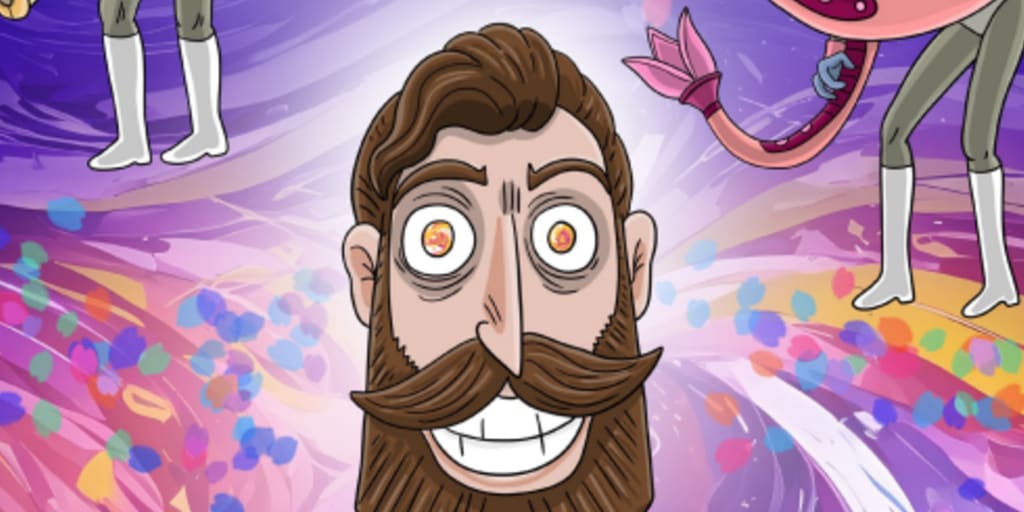
On September 30, indie comic fans everywhere finally got the chance to pick up their very own copies of He Lost His Keys in Space by Luke Milton and Lizzy Lang. This new, irreverent sci-fi comedy has been hotly-anticipated since it was announced with an original release date scheduled for June.
Now, after an unfortunate yet entirely understandable delay, He Lost His Keys in Space is finally here for readers to dive into for themselves. Even better, Black Panel Press was kind enough to reach out to me with a review copy to pour over and explore on behalf of anyone still on the fence about whether He Lost His Keys in Space will really be worth the read. In that regard, I can confidently say that yes, He Lost His Keys in Space is absolutely worth the read, even if it isn't exactly the kind of graphic novel that will sit particularly well with every reader for some very obvious reasons.
For anyone who needs a little more of a preview of He Lost His Keys in Space before continuing on with this review, you can check out my interview with co-creator, writer, and artist Luke Milton for some extra insight. For everyone else, let's get started by breaking down exactly what He Lost His Keys in Space is all about.
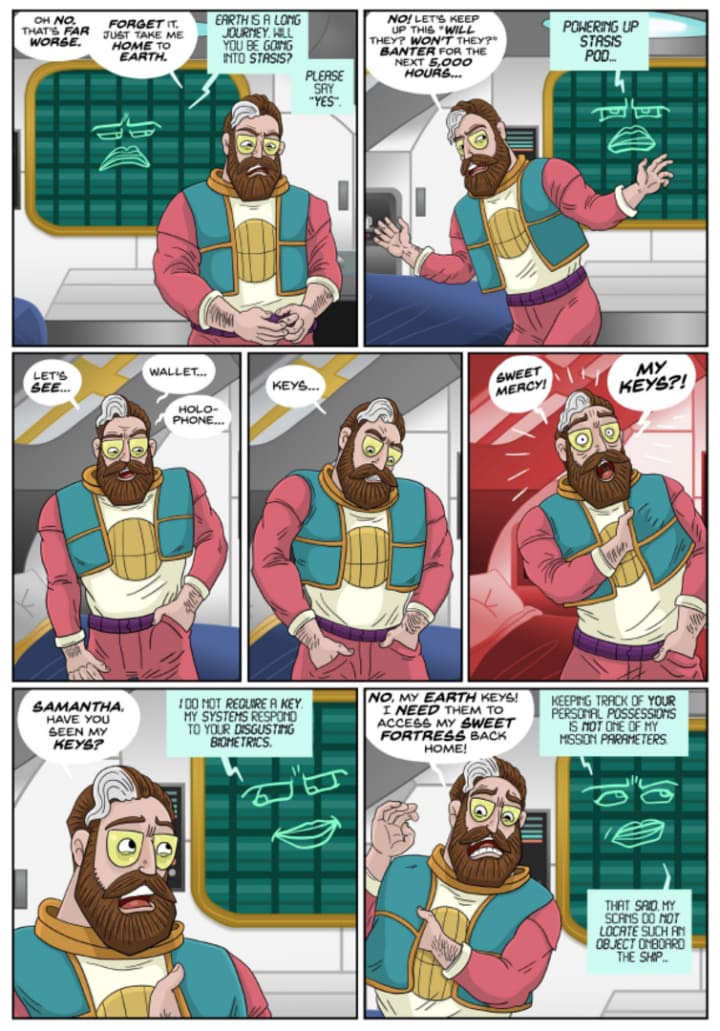
Like the title would suggest, He Lost His Keys in Space follows human ambassador for Earth, Vega Ulysses, whose career ends in a whimper before he is forced to embark upon one last grand adventure thanks to, well, losing his keys. With that, Ulysses ropes his former companion Snax into joining him on his trek across the cosmos in search of what seems to be his one and only set of housekeys.
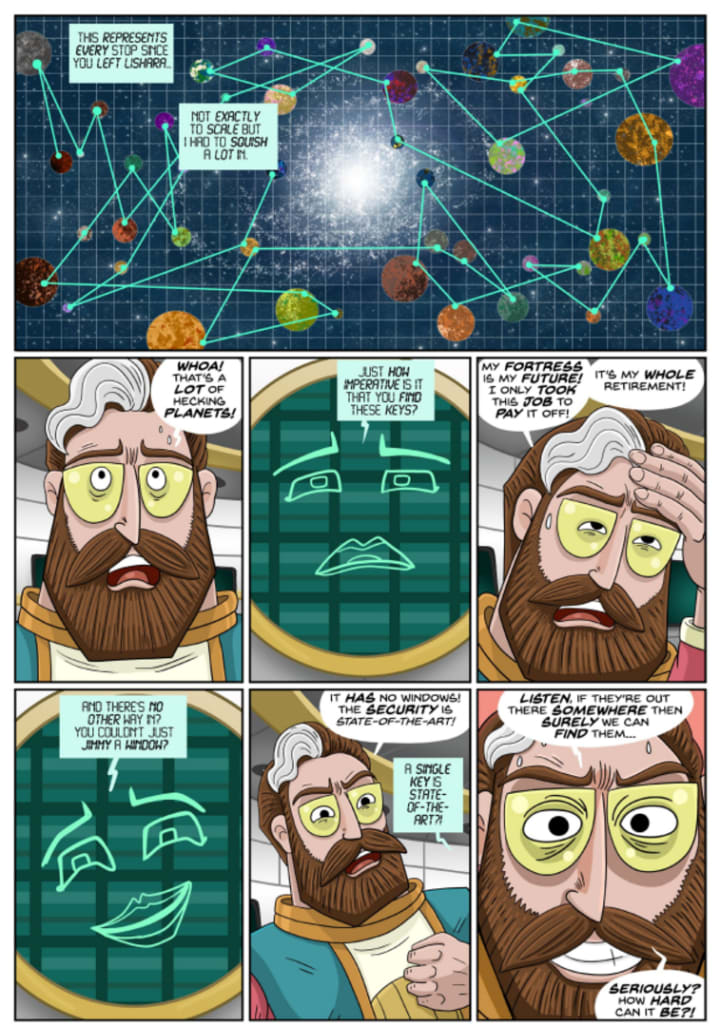
While that is a fairly mundane setup in and of itself, it serves to give Ulysses a renewed sense of purpose, which is one of the central themes of the book. Vega Ulysses in and of himself has been described by Milton as "a nightmare character," and that is a perfectly apt assessment. Ulysses is a narcissist with no real sense of self-awareness who is desperately looking for any reason to achieve greatness. Fortunately for him, being an ambassador is the perfect opportunity for Ulysses to espouse his "Earth is best" philosophy and attach himself to the purported greatness of something bigger than he will ever be.
This also just so happens to be the perfect inroad to the episodic structure of He Lost His Keys in Space, which itself is the perfect format for its overarching narrative.
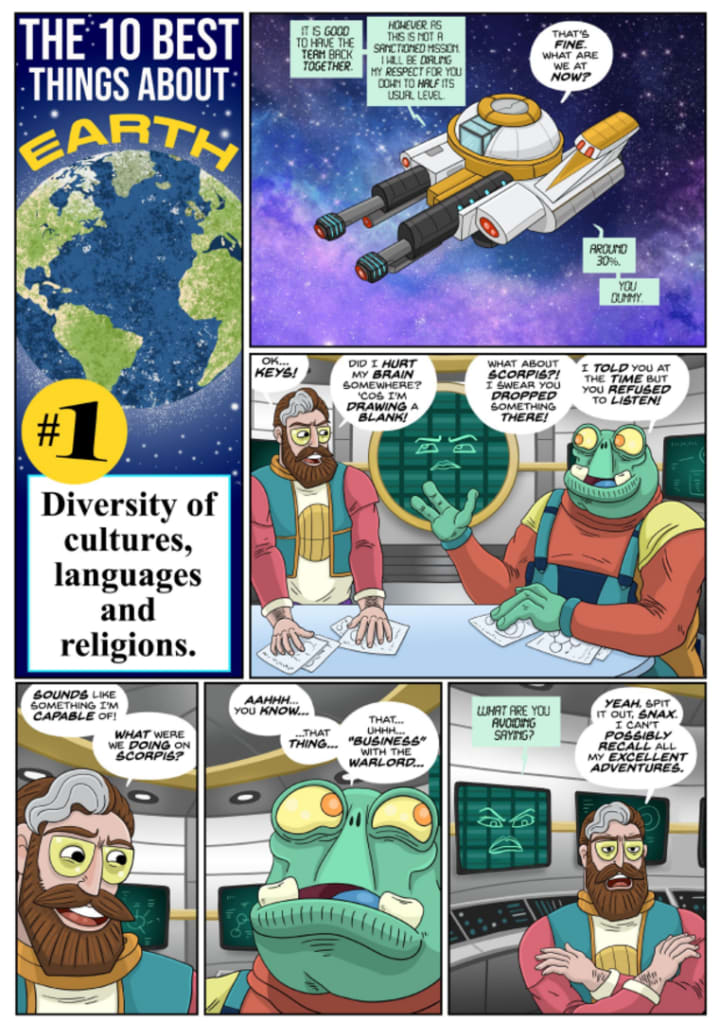
With each chapter, He Lost His Keys in Space gets to explore not just one of the reasons that Ulysses believes Earth is the greatest planet of them all while also unpacking a key aspect of his character. At least, this is the case for most chapters, whereas others uncover major revelations regarding Ulysses' personal history or introduce new characters to the small ensemble cast of characters at the heart of He Lost His Keys in Space.
Some of these characters are mildly abrasive, but none so much as Ulysses himself. As such, nearly every other character in He Lost His Keys in Space serves as a foil for Ulysses, shining a spotlight on the worst aspects of his personality and peeling back the few layers that he has. At the same time, there are characters who simply serve to drive home the frequently heavy-handed social and political commentary that makes He Lost His Keys in Space what it is even more than its unique yet familiar brand of humor and illustration.
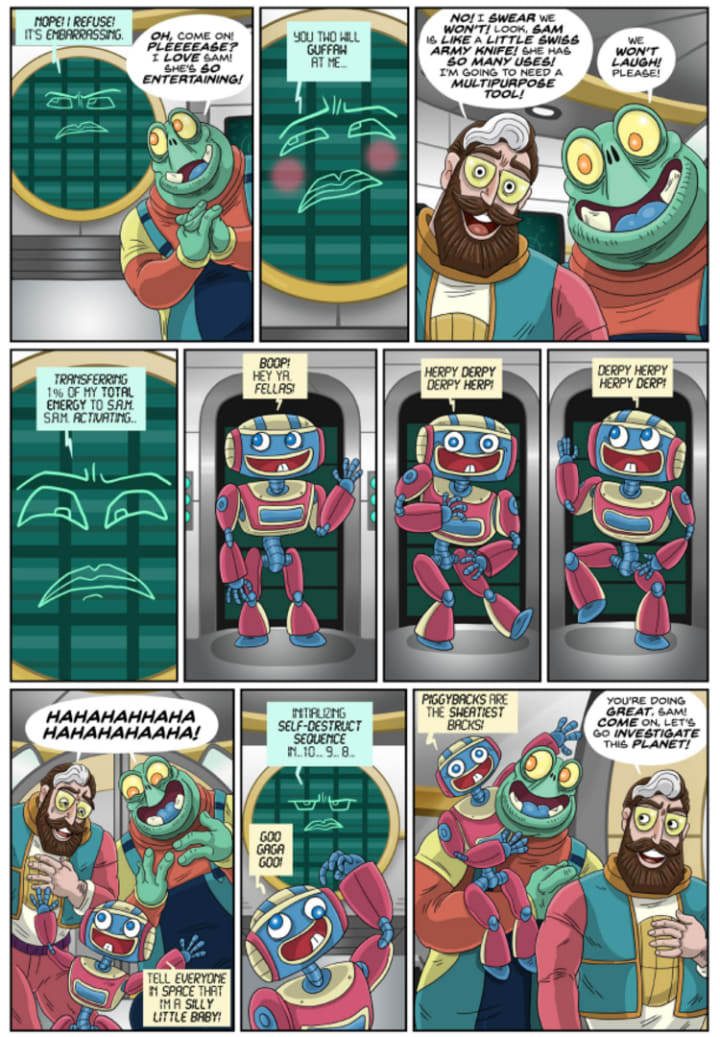
This is likely to be where many readers find themselves on the fence when it comes to He Lost His Keys in Space, and understandably so. He Lost His Keys in Space is not trying to paint a particularly fine line between good and bad, mostly because it isn't a story about good and evil. If anything, He Lost His Keys in Space is an exploration of and nationalist politics and the belief in exceptionalism eventually erodes not just an entire society, but the individuals who help prop up such ideologies. The book isn't subtle about this either, nor should it be.
Even if He Lost His Keys in Space has something to say, it has no qualms with saying it in about as blunt a manner as possible. That being said, He Lost His Keys in Space never points its biting humor towards any specific nation or political party, no matter how easy it is for many readers to make that assumption. Instead, He Lost His Keys in Space targets the specific ills that so many people fall victim to when society becomes warped around them, and while that isn't going to be a selling point to everyone, the fact that it will almost assuredly evoke an uneasy response while telling a seemingly innocuous story is proof of its narrative success.
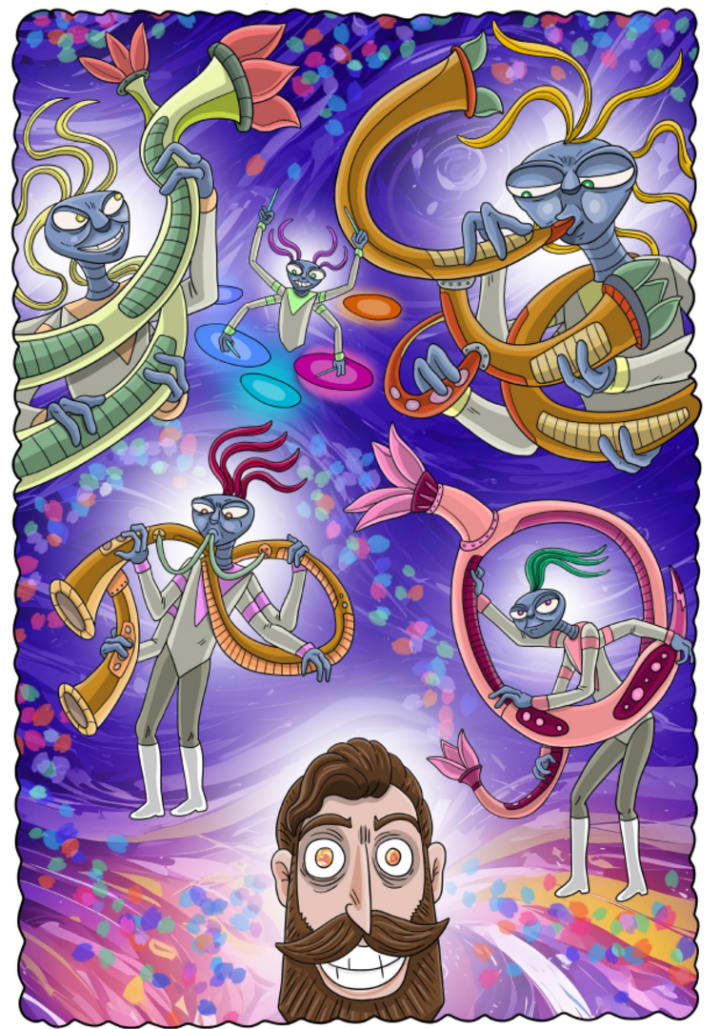
Is He Lost His Keys in Space a life-changing graphic novel? Probably not. Is it a clever and funny enough graphic novel that it could be a life-changing graphic novel for some small subsection of its readership? Yeah, actually, it could. He Lost His Keys in Space is, as a whole, a solid B in terms of grade, which is in no way a knock against it. As hard as it is to imagine that He Lost His Keys in Space will ever receive the big-budget animated series treatment, it is incredibly easy to imagine that some number of people will read it and start asking themselves some genuine questions they would have never even considered otherwise. That alone makes He Lost His Keys in Space worth stopping to peruse.
He Lost His Keys in Space is currently available from Black Panel Press.
About the Creator
Keep reading
More stories from John Dodge and writers in Geeks and other communities.
Talking 'He Lost His Keys in Space' with Creator Luke Milton
A few weeks ago, the fine folks at Black Panel Press reached out with a copy of their next graphic novel, He Lost His Keys in Space by Luke Milton and Lizzy Lang. A new space-faring sci-fi comedy, He Lost His Keys in Space is far more charming and poignant than I was expecting, even if its protagonist, Vega Ulysses, is rarely either.
By John Dodge6 months ago in Geeks
A Knight of the Seven Kingdoms Series Review (Season 1)
As one of the biggest properties in fantasy, A Song of Ice and Fire remains immensely popular with audiences. After reaching far into the past with House of the Dragon, a second spin-off was on the cards. A Knight of the Seven Kingdoms serves up a bite-sized slice of action and drama, but it still claims a spot among the best small-screen titles.
By Robert Cain13 days ago in Geeks
Lycan Lore
As the students of my 10am mythology class take their seats, I decide to steer the day's curriculum away from Greek and dive into a Western European discourse on the misaligned beliefs of the Werewolf. A tale of truth or fiction. No one really knows.
By Lamar Wigginsabout 11 hours ago in Fiction


Comments
There are no comments for this story
Be the first to respond and start the conversation.