
A Filmmaker's Guide to: Symbolism
Film Studies (Pt.17)


In this chapter of ‘the filmmaker’s guide’ we’re actually going to be learning about literature and film together. I understand that many of you are sitting in university during difficult times and finding it increasingly hard to study and I understand that many of you who are not at university or not planning on it are possibly stuck of what to do, need a break or even need to catch up on learning film before you get to the next level. This guide will be brief but will also contain: new vocabulary, concepts and theories, films to watch and we will be exploring something taboo until now in the ‘filmmaker’s guide’ - academia (abyss opens). Each article will explore a different concept of film, philosophy, literature or bibliography/filmography etc. in order to give you something new to learn each time we see each other. You can use some of the words amongst family and friends to sound clever or you can get back to me (email in bio) and tell me how you’re doing. So, strap in and prepare for the filmmaker’s guide to film studies because it is going to be one wild ride.
Symbolism
Vocabulary:
Mise-en-scene = Translated from French, it means "setting the stage" but, in film analysis, the term mise en scene refers to everything in front of the camera, including the set design, lighting, and actors.
Connotation = an idea or feeling which a word invokes as opposed to just the literal meaning
What is it?
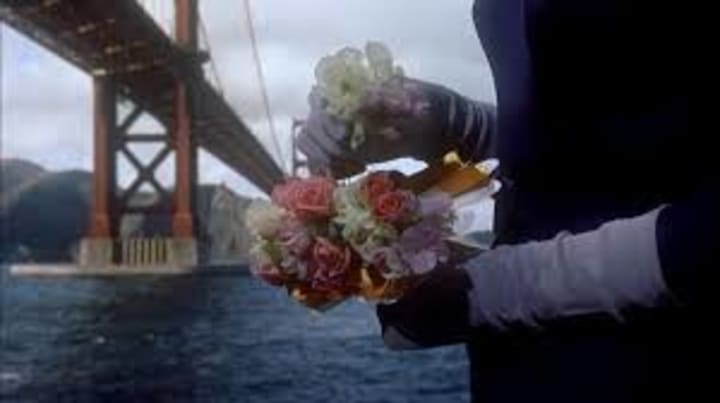
It is when something physical is used to represent an idea, theory or belief that has some sort of meaning in the piece of work.
Unlike themes that are actually ideas, symbols are physical things that represent these themes. For example: if the piece of art/literature/film is about travel we could maybe see the image of description of an old car which represents the old instinct of wanderlust ingrained in humans from the very beginning.
Books that focus on the symbolism within them include the poetry of Arthur Rimbaud and Paul Verlaine, the works of Oscar Wilde like "The Picture of Dorian Gray" and "The Ballad of Reading Gaol", the works of Sir Arthur Conan Doyle, Mark Twain and F. Scott Fitzgerald. When we move into the 20th century, we gain more access to the symbolism of war. If you read an anthology released by Sebastian Faulks called "War Stories" then you will definitely see what I mean by symbolism of war. When the symbolism is in the form of random scattered body parts, you really rethink war and its reasons.
When we look at other mediums, there are definitely things that we have to look at differently and possibly with more ease.
What about in film?
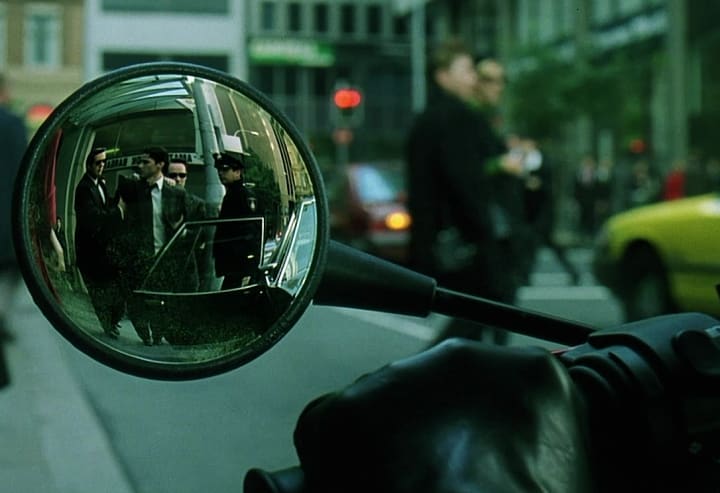
In film, as you can imagine, looking at symbolism is done with some ease. In a film, the physical is produced far easier than it is in literature as in literature, it requires reason and explanation whereas in film, it just requires to be part of the mise-en-scene to do the job. The reason comes from the dialogue and interaction between the characters.
Some films to put on your watchlist should be:
- The Third Man (1949)
- Vertigo (1958)
- The Exorcist (1973)
- The Deer Hunter (1979)
- Pulp Fiction (1994)
- The Matrix (1999)
- Inception (2010)
- The Conjuring (2015)
There are others, but these are the films I'd recommend to start off with. Of course, there are symbols you should be looking for within the film that you should probably find the connotation to and then analyse. In "The Third Man" (1949) you want to be looking at the cat and obviously the drinks that are served. Notice what these things say about the characters and the story, I think you'll be pleasantly surprised. With the rest of the ones on the list, I want to see what you come up with for your analysis, maybe you'll get something that hasn't been analysed before - you never know.
Further Reading:
- Edwards, K.L (2019). Reading Literary Animals: Medieval to Modern (Perspectives on the Non-Human in Literature and Culture). UK: Routledge.
- Rimbaud, A (2004). Selected Poems and Letters. UK: Penguin
- Simons, A (2014). Symbolist Movement in Literature. UK: Fyfield Books.
- Tressider, J (2004). The Complete Dictionary of Symbols: In Myth, Art and Literature. 2nd ed. UK: Duncan Baird Publishers.
- Verlaine, P (2009). Selected Poems. 2nd ed. UK: Oxford World's Classics
- Von-Franz, M.L (1995). Shadow and Evil in Fairy Tales. 2nd ed. UK: Shambhala Publications Inc.
About the Creator
Annie Kapur
I am:
🙋🏽♀️ Annie
📚 Avid Reader
📝 Reviewer and Commentator
🎓 Post-Grad Millennial (M.A)
***
I have:
📖 300K+ reads on Vocal
🫶🏼 Love for reading & research
🦋/X @AnnieWithBooks
***
🏡 UK
Keep reading
More stories from Annie Kapur and writers in Geeks and other communities.
Why I Adore: Robert Downey Jr.
In this chapter of ‘the filmmaker’s guide’ we’re going to look at people that I absolutely adore and why I adore them. They can be anyone who is famous for being in film such as: actors and actresses, directors and producers, composers etc. We’re going to be looking at my childhood heroes, people I have discovered recently and people that I have yet to look entirely into. We’ll take a bit of a look at how I discovered them, what I think of them and why I think this way about them. Hopefully, we can gain a common ground, you can discover some new people or, via the email address in my bio, you can email me with any new people I don’t know about that you think I would like based on what you’ve seen. These are supposed to be positive articles and made to brighten your day and mine. So, let’s take a wild ride into my childhood, my teen years and what I absolutely adore about the film industry because it is alive and kicking (and if it isn’t, hell I might be out of a job…). Let’s go!
By Annie Kapur5 years ago in Geeks
Goodbye, Mr. Duvall
It is turning out to be an interesting year. I was in the middle of teaching a class when a pop-up appeared on the screen announcing the death of Mr. Robert Seldon Duvall (yes, that was his full name). I was in the middle of a discussion on the obsession we have with winning when it comes to sports (the Winter Olympics was a theme), and I felt as though things were coming full circle. We had already lost Gene Hackman last year, and along with that titan, it feels though one particular golden age has closed off to be replaced by...?
By Kendall Defoe 25 days ago in Geeks
Iran Releases Epstein Files:
Introduction The controversy surrounding the Epstein files has once again captured global attention. These documents relate to the criminal activities and powerful connections of American financier Jeffrey Epstein, who was accused of operating a large international sex-trafficking network involving underage girls. In recent months, rumors and reports have circulated online claiming that Iran has released sensitive information related to these files, sparking intense debate and speculation across political and media circles worldwide.
By shaoor afridi5 days ago in Geeks


Comments
There are no comments for this story
Be the first to respond and start the conversation.