
A Filmmaker's Guide to: Objective and Subjective Narratives
Film Studies (Pt.10)


In this chapter of ‘the filmmaker’s guide’ we’re actually going to be learning about literature and film together. I understand that many of you are sitting in university during difficult times and finding it increasingly hard to study and I understand that many of you who are not at university or not planning on it are possibly stuck of what to do, need a break or even need to catch up on learning film before you get to the next level. This guide will be brief but will also contain: new vocabulary, concepts and theories, films to watch and we will be exploring something taboo until now in the ‘filmmaker’s guide’ - academia (abyss opens). Each article will explore a different concept of film, philosophy, literature or bibliography/filmography etc. in order to give you something new to learn each time we see each other. You can use some of the words amongst family and friends to sound clever or you can get back to me (email in bio) and tell me how you’re doing. So, strap in and prepare for the filmmaker’s guide to film studies because it is going to be one wild ride.
Objective and Subjective Narratives

What is it?
An objective narrative is a story in which the main character/narrator interjects no personal feelings and emotions into the story, the story is purely fictional and a work of non-biographical imagination or, the story has no emotional placement upon its creator. This could include works of religious scripture seeing as the authorship in most cases is varied and/or uncertain.
A subjective narrative is the opposite. It is part biographical, has something to do with its creator or, the creator has interjected their own personal opinions and viewpoints on the topic of the story into the narrative. This could include most novels of America and 19th Century English Women's Novels, African American Experience Narratives and even War Stories. Most of these, you will find, are either written in first person or written from the third person limited perspective.
What about in film?
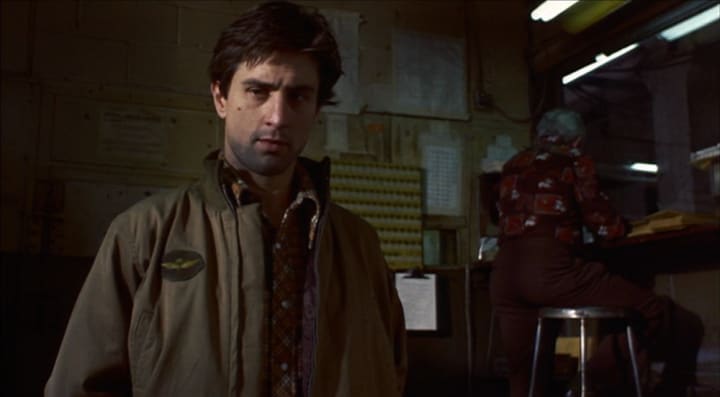
In film, it can be more difficult to recognise a objective narrative and a subjective narrative and the differences between them. However, there are some steps we can take to recognise them. For example: if the film has a narrator it may be easier to observe as to whether it is an objective or a subjective narrative.
For example: "Fight Club" (1999) vs. "Inglorious Basterds" (2009)
"Fight Club" (1999) has a narrator. The narrator is also the main character of the film. The film is clearly a biographical piece about its narrator and therefore, it makes for a good subjective narrative.
However, "Inglorious Basterds" (2009) has a narrator. The narrator makes no appearance in the narrative apart from informing the audience on backstories and filling in some gaps. Therefore, this makes for a good objective narrative.

Other Examples
Another set of examples could deal with the production of biopic cinema and whether the creators are directly involved with the subjects of the biopic or not. Obviously, if they are then the film cannot be completely objective as it will have interjections of facts and meaningful experiences of the person the biopic is about.
Finally, you could have films that are completely fictional that deal with either a vision of the filmmaker's experience and therefore a piece of auter cinema (Tim Burton, Quentin Tarantino, Derek Jarman etc. in which filmmaking has a certain signature) and so, the film could never really be objective. And, then we have the directors who keep distance and do not establish particular styles and thus, the film is slightly more objective than the auter experience.
However, it is arguable that in general, film could never really be completely objective at all and that there really is no such thing as the objective narrative. As a matter of fact, the entire aspect of objective narratives and films are completely subjective as an idea.
Further Reading:
- Barker, A. Elsaesser, T. (1990). Early Cinema: Space, Frame, Narrative . UK: British Film Institute Publications.
- Branigan, E (1992). Narrative Comprehension and Film. UK: Routledge.
- Kozloff, S (1989). Invisible Storytellers: Voice-Over Narration in American Fiction. 2nd ed. USA: University of California Press.
- Laine, T (2013). Feeling Cinema: Emotional Dynamics in Film Studies. USA: Bloomsbury Academic USA.
- Lenos, M. Ryan, M. (2019). An Introduction to Film Analysis: Technique and Meaning in Narrative Film. 2nd ed. USA: Bloomsbury Academic USA.
- Russell, C (1994). Narrative Mortality: Death, Closure, and New Wave Cinemas. USA: University of Minnesota Press.
- Scher, L (2011). Reading Screenplays: How to Analyse and Evaluate Film Scripts. UK: Creative Essentials.
- Yorke, J (2014). Into The Woods: How Stories Work and Why We Tell Them. UK: Penguin
About the Creator
Annie Kapur
I am:
🙋🏽♀️ Annie
📚 Avid Reader
📝 Reviewer and Commentator
🎓 Post-Grad Millennial (M.A)
***
I have:
📖 280K+ reads on Vocal
🫶🏼 Love for reading & research
🦋/X @AnnieWithBooks
***
🏡 UK
Keep reading
More stories from Annie Kapur and writers in Geeks and other communities.
A Filmmaker's Review: "My Friend Dahmer" (2017)
“My Friend Dahmer” (2017) is a film adapted from a graphic novel which I think we all passed around at school because we hoped this guy was a fictional character and we didn’t know he was real. Good grief he was real. And well, the graphic novel is quite dark and so, I was a little confused when I started watching this and I found that the film was trying to make me laugh along. I’m not going to lie, I wasn’t laughing. Knowing who Dahmer is, I was just incredibly uncomfortable and stuck with a look of disgust on my face. Honestly, I didn’t think it was funny though the film clearly wanted me to think so. I felt my intelligence was slightly insulted and whilst the graphic novel didn’t really want to make you laugh as its main thing, the film relied on that way too much for me not to finish half a bottle of Russian Standard Vodka in the first act. Let’s have a look at the pros and cons of the film.
By Annie Kapur5 years ago in Geeks
The Rachels - 2025
Much to my surprise, I have kept a list of the films I‘ve seen this year. I daresay it isn’t complete. There will be films that snuck in on a late night in front of the TV that I would’ve forgotten to note. Or others, that I went to watch at the cinema, but then had a red wine and promptly forgotten about. But it’s not a bad approximation of the films I’ve seen this year. In total, there are 53 films listed, so an average of one a week and one for good luck.
By Rachel Robbins26 days ago in Geeks
Maharashtra BMC Elections 2026: Aamir Khan, Rakesh Roshan, Boney Kapoor, Shraddha Kapoor And Others Flash Smiles After Casting Their Votes- Watch
Bollywood veterans and Mumbai celebrities made a strong presence at the 2026 BMC polls, actively participating by casting their votes and urging the public to support the democratic process. During the Mumbai elections, notable stars such as Aamir Khan, Boney, Shraddha Kapoor and others were spotted at various polling stations, demonstrating their commitment as responsible citizens. From early morning, many celebrities were seen fulfilling their civic duties with a sense of responsibility.
By Dena Falken Esq7 days ago in Geeks


Comments
There are no comments for this story
Be the first to respond and start the conversation.