
A Filmmaker's Guide to: Detectives
Film Studies (Pt.24)

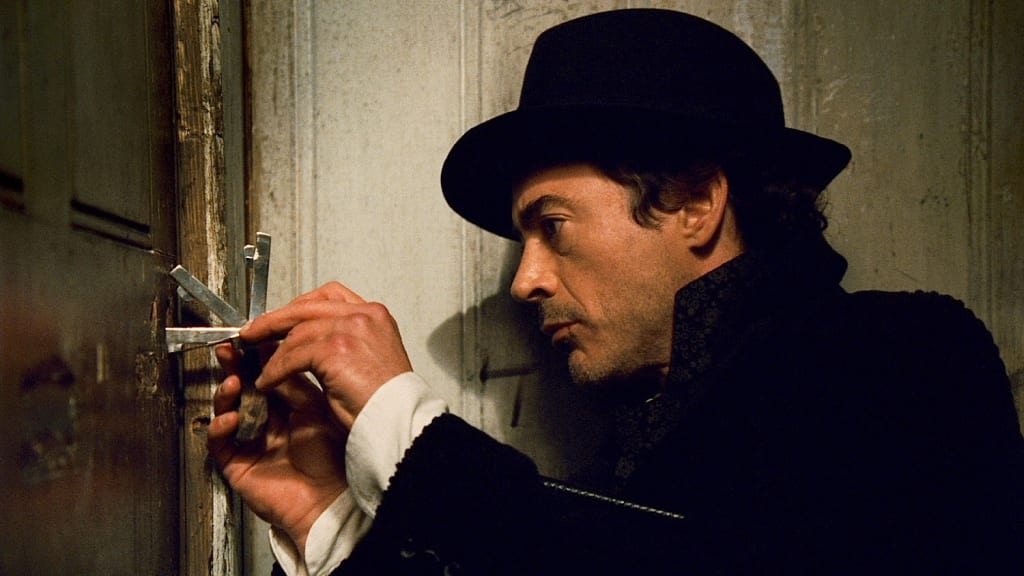
In this chapter of ‘the filmmaker’s guide’ we’re actually going to be learning about literature and film together. I understand that many of you are sitting in university during difficult times and finding it increasingly hard to study and I understand that many of you who are not at university or not planning on it are possibly stuck of what to do, need a break or even need to catch up on learning film before you get to the next level. This guide will be brief but will also contain: new vocabulary, concepts and theories, films to watch and we will be exploring something taboo until now in the ‘filmmaker’s guide’ - academia (abyss opens). Each article will explore a different concept of film, philosophy, literature or bibliography/filmography etc. in order to give you something new to learn each time we see each other. You can use some of the words amongst family and friends to sound clever or you can get back to me (email in bio) and tell me how you’re doing. So, strap in and prepare for the filmmaker’s guide to film studies because it is going to be one wild ride.
Detectives

What are they?
I think we all know what detectives are and so I'm not going to insult your intelligence but let us just see the definition so everyone's on the same page:
People, especially police officers, whose occupations are to investigate and solve crimes.
Fun fact: my mother was one before she retired. She worked in the police force for over twenty years.
Detectives in literature are very popular. Going back to the most famous of all literary detectives, Sherlock Holmes, has been successful in books and on screen for over the ages he has existed for. From this, we've gotten Hercule Poirot, The Hardy Boys, Miss Marple, Veronica Mars, Nancy Drew, Phillip Marlowe, Sam Spade, Superintendent Battle, Inspector Clouseau, Columbo, Inspector Dalgliesh, Inspector French, Jules Maigret, Inspector Morse, Dick Tracy. We also get people like: Commissioner James Gordon, Dr. Scarpetta and James Patterson's Women's Murder Club. So you can tell that detectives are very popular. By the way, there's a lot more and these are just the ones I could think of at the time.
What about in film?
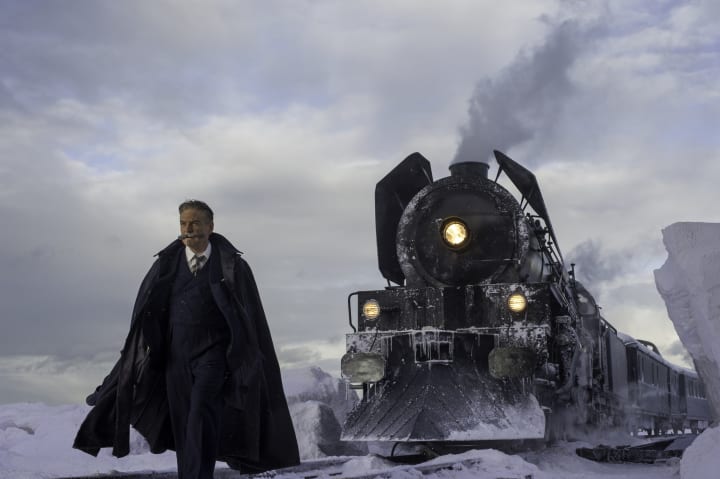
Detectives on screen have a number of uses and can be in a number of different genre of films. Normally, when there's a detective in a film, especially in a leading role, the character will then reflect the sub-genre and the genre itself will become something like "detective thriller" rather than just "thriller" or "detective comedy" rather than just "comedy".
Let's have a look at a watchlist that will offer a bunch of difference in the roles detectives can play in a film:
- The Exorcism of Emily Rose (2005)
- The Dark Knight (2008)
- Murder on the Orient Express (2017)
- The Pink Panther (1963)
- The Maltese Falcon (1941)
From this, we can see the sheer difference that detectives can offer and what happens to genre when they do not take a leading role. As in "The Exorcism of Emily Rose" (2005), the detectives are not in a leading role and are just investigating the case and therefore, the genre of the film would not change to include a sub-genre that links their arc to the main storyline. Thus, this film simply remains as "Horror" or sometimes "Thriller". In "The Dark Knight", James Gordon is not one of the main cast as neither is he Batman or the arch nemesis and again the genre is not changed to suit his arc. It remains a "comic-book movie" or a "thriller" in some cases. However, in the case of "The Pink Panther" (1963), Inspector Clouseau's character arc is directly linked to the main storyline and the actions he takes has an impact on how the story flows. Therefore, the genre is changed to suit his character arc and the "comedy" becomes a "detective comedy" to include him.
These films depend on whether the detective is in the main role of the film. If they aren't then the film cannot be considered a detective film because it is not their own actions that change the arc of the story. However, there are fictional detectives in films that are not detective films and so, these films too need to be recognised. If you're writing a detective film and you want them to have a major impact on the storyline, then you need to make sure you put them in a main role opposite someone they can have a direct impact on, such as an arch-nemesis or a criminal.
Let's get some further reading here then, shall we?
Further Reading:
- Bellairs, G (2019). Surfeit of Suspects. UK: British Library.
- Bude, J (2020). Death in White Pyjamas: & Death Knows No Calendar. UK: British Library.
- Christie, A (2017). Murder on the Orient Express. UK: Harper Collins.
- Conan Doyle, A. (2011). The Adventures of Sherlock Holmes and Other Stories. UK: Canterbury Classics.
- Lorac, E.C.R (2019). Murder in the Mill-Race: A Devon Mystery. UK: British Library.
About the Creator
Annie Kapur
I am:
🙋🏽♀️ Annie
📚 Avid Reader
📝 Reviewer and Commentator
🎓 Post-Grad Millennial (M.A)
***
I have:
📖 300K+ reads on Vocal
🫶🏼 Love for reading & research
🦋/X @AnnieWithBooks
***
🏡 UK
Keep reading
More stories from Annie Kapur and writers in Geeks and other communities.
Book Review: "Ringolevio" by Emmett Grogan
This book is possibly one of the coolest and most intense autobiographies I’ve ever read. It starts off like a game and teaches you how to ‘play the game of life’. Just check out the opening of the book and see if you can resist:
By Annie Kapur5 years ago in Geeks
ChatGPT’s Great-Great-Grandmother: A Fascinating Story from the Pre-Internet Era 📜🕰️
Many people use AI today, but few realize that the beginnings of artificial intelligence took place a long time ago – long before the internet era 🌍. Although the technology of that time wasn't as advanced as what we have now, it could already do quite a bit. Let me introduce you to a distant relative of ChatGPT and other language models. Listen in. 🎧
By Piotr Nowak5 days ago in Geeks



Comments
There are no comments for this story
Be the first to respond and start the conversation.