
A Filmmaker's Guide to: Cultural Studies
Film Studies (Pt.62)

In this chapter of ‘the filmmaker’s guide’ we’re actually going to be learning about literature and film together. I understand that many of you are sitting in university during difficult times and finding it increasingly hard to study and I understand that many of you who are not at university or not planning on it are possibly stuck of what to do, need a break or even need to catch up on learning film before you get to the next level. This guide will be brief but will also contain: new vocabulary, concepts and theories, films to watch and we will be exploring something taboo until now in the ‘filmmaker’s guide’ - academia (abyss opens). Each article will explore a different concept of film, philosophy, literature or bibliography/filmography etc. in order to give you something new to learn each time we see each other. You can use some of the words amongst family and friends to sound clever or you can get back to me (email in bio) and tell me how you’re doing. So, strap in and prepare for the filmmaker’s guide to film studies because it is going to be one wild ride.
Cultural Studies

What is it?
Cultural studies is a theory of literature and film which explores power structures within the realms of:
- Ideology
- Class
- Nations
- Ethnicity
- Sexual Orientation
- Gender
- Age
- Social Situation
- Time and Place
When I was at university, I read about a man called Ziauddin Sardar who managed to put 'Cultural Studies' into different characteristics and categories. Let's take a look at those:
This is a simplification of these characteristics because when I read them, I felt like they were needlessly complicated. I've tried to simplify them as much as I can in order to read like a question instead of a confusing statement.
- How does the social and political context manifest itself?
- How does it fit as a part of larger political criticisms?
- How does the cultural study show that the divide in knowledge is shown as 'natural'?
- How is the cultural study an ethical evaluation of the society contained within the work? Then, relate this to the society in which we live. How is the artwork representative reality?
- How does the work make light of the differences between cultural practices between the upper and lower classes?
Ta-dah!
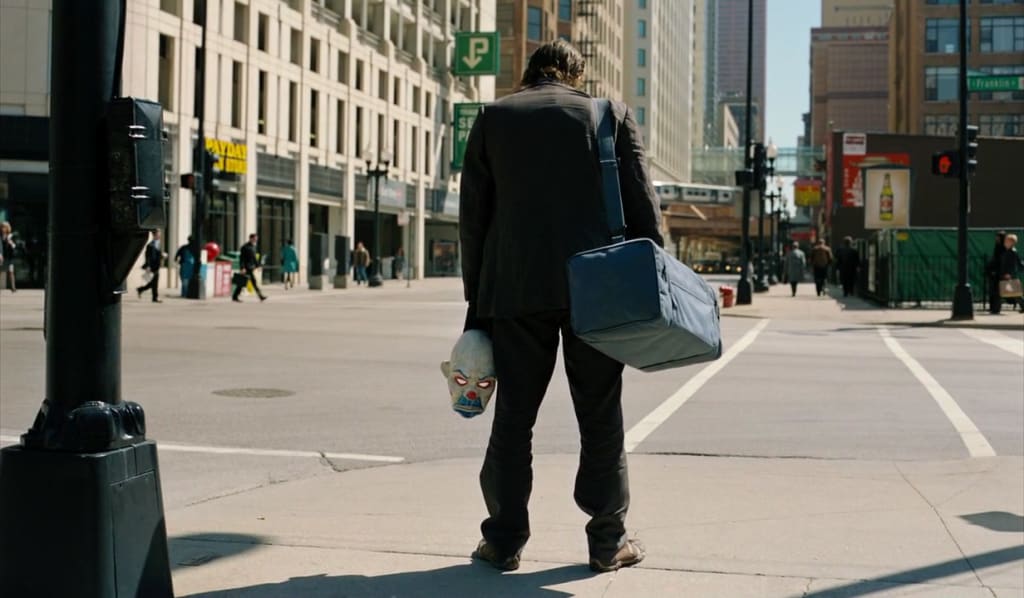
Let's take a look at an example of films which I think most of you have probably seen: Christopher Nolan's Dark Knight Trilogy:

How does the social and political context manifest itself?
Well, if we look at the movie, we should be able to see that there is a stark difference between the way in which the richer folk of Gotham live and the poorer folk. If we then look at the modes of public transport around the city, such as the train, we can see that there is practically nothing being done to improve the city due to the train's state of . Therefore, we can probably assume that the rich are, in this case, ignorant of the poverty around them. The rising crime level is also a prime example of this because large crime numbers are often associated with cities in which poverty is rife.
How does it fit as a part of larger political criticisms?
I think it is safe to say that many people believe that this divide between the rich and poor can be representative of the political criticism that is going on at the moment in our own society. People are getting poorer whilst the top couple of percent keep their wealth or get richer. The larger political criticism is going on right now and has been going on since the first recession in the early part of the century.
How does the cultural study show that the divide in knowledge is shown as 'natural'?
There is nothing about the social state of Gotham which feels forced or unnatural. There is nothing that suggests to us that there is something else underlying such as malevolence on the part of the rich and wealthy. Instead, the fact that the rich are wilfully ignorant of the poor shows us that, in the films, the poverty is nothing new. The divide in knowledge therefore, is shown by the way in which the rich can get into offices of power through being in the environment to study and work for it, whereas the poor cannot. But again, this is no surprise to the population of Gotham City.
How is the cultural study an ethical evaluation of the society contained within the work? Then, relate this to the society in which we live. How is the artwork representative reality?
The fact that the state of Gotham City is poor and that the backstreets are filled with homeless folk and that mobs are able to meet in public buildings without any backlash means that the ethics and morale of the city is quite low. Corrupt police and bad security that meant the Joker could have gotten into the funeral march and start shooting. This is directly representative of our own reality in which the USA clearly has a problem with security around the subject of firearms and the UK has a problem with its rising divide between what is rich and what is poor with a definite problem with homelessness.
How does the work make light of the differences between cultural practices between the upper and lower classes?
Well, in "The Dark Knight" trilogy, we can clearly see that whilst the poor often work late until the dark hours of nighttime and the very poor folk often are homeless and are shown trying to keep themselves warm on the street and so, this is the practice of what is considered to be 'poor' in this trilogy as a representation of our own society.
However, the practices of the rich include things like fundraisers, parties, jobs in which they are more protected, the offices often look better and more up-to-date in comparison to the poorer locations. But another thing we can see is the menial things that are done by the rich in order to show that they are doing for the poor and trying to improve their lives to the audience. For example: in "Batman Begins", Bruce Wayne gives his coat to a homeless man and thus, the audience would view him as the 'good rich man'. Whereas, the intentions of Bruce Wayne were actually that he was running away from Gotham and needed to rid himself of his identity. He has the opportunity to do this, whereas the man with a coat may now be warm but he does not have the option to do this. So is it actually doing anything?
Part II
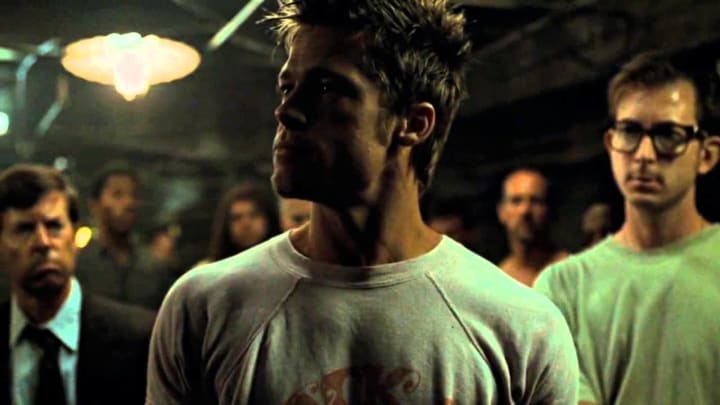
I know this has been a pretty long post, but I would really recommend you try this for yourself. You could view this in the following films:
- Fight Club by David Fincher
- A Clockwork Orange by Stanley Kubrick
- Malcolm X by Spike Lee
Now, I'm not going to bother you anymore, let's go through some further reading and we can all be at ease. I hope we've learned something today.
Further Reading
- Barker, C. Jane, E. (2016). Cultural Studies: Theory and Practice. 5th ed. USA: SAGE Publications Ltd.
- Campbell, N. Kean, A (2016). American Cultural Studies. 4th ed. USA: Routledge.
- Longhurst, B. Smith, G. (2016). Introducing Cultural Studies. 3rd ed. UK: Routledge.
About the Creator
Annie Kapur
I am:
🙋🏽♀️ Annie
📚 Avid Reader
📝 Reviewer and Commentator
🎓 Post-Grad Millennial (M.A)
***
I have:
📖 300K+ reads on Vocal
🫶🏼 Love for reading & research
🦋/X @AnnieWithBooks
***
🏡 UK
Keep reading
More stories from Annie Kapur and writers in Geeks and other communities.
Manhattan (1979)
In this article, we will be looking at 2019’s book “1001 Movies to See Before You Die” and going through each film in a random order that I have chosen. We will be looking at what constitutes this film to be on the list and whether I think this film deserves to be here at all. I want to make perfectly clear that I won’t be revealing details from this book such as analyses by film reporters who have written about the film in question, so if you want the book itself you’ll have to buy it. But I will be covering the book’s suggestions on which films should be your top priority. I wouldn’t doubt for a second that everyone reading this article has probably watched many of these movies anyway. But we are just here to have a bit of fun. We’re going to not just look at whether it should be on this list but we’re also going to look at why the film has such a legacy at all. Remember, this is the 2019 version of the book and so, films like “Joker” will not be featured in this book and any film that came out in 2020 (and if we get there, in 2021). So strap in and if you have your own suggestions then don’t hesitate to email me using the address in my bio. Let’s get on with it then.
By Annie Kapur5 years ago in Geeks


Comments
There are no comments for this story
Be the first to respond and start the conversation.