
A Filmmaker's Guide: "Cleo from 5 to 7" (1962)
Film Studies (p.161)


In this chapter of ‘the filmmaker’s guide’ we’re actually going to be learning about literature and film together. I understand that many of you are sitting in university during difficult times and finding it increasingly hard to study and I understand that many of you who are not at university or not planning on it are possibly stuck of what to do, need a break or even need to catch up on learning film before you get to the next level. This guide will be brief but will also contain: new vocabulary, concepts and theories, films to watch and we will be exploring something taboo until now in the ‘filmmaker’s guide’ - academia (abyss opens). Each article will explore a different concept of film, philosophy, literature or bibliography/filmography etc. in order to give you something new to learn each time we see each other. You can use some of the words amongst family and friends to sound clever or you can get back to me (email in bio) and tell me how you’re doing. So, strap in and prepare for the filmmaker’s guide to film studies because it is going to be one wild ride.
"Cleo from 5 to 7"
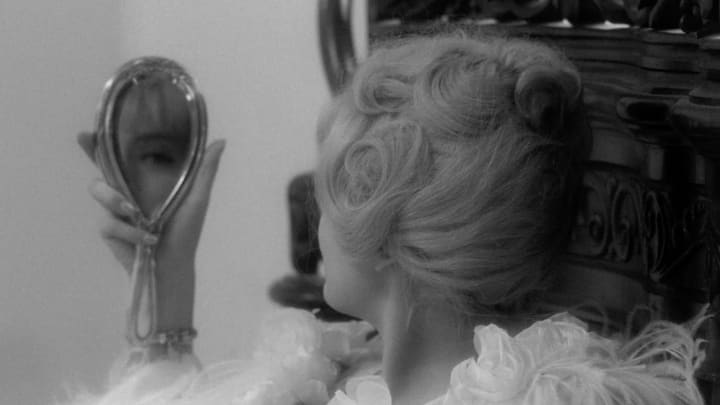
A movie about loneliness and desperation, "Cleo from 5 to 7" is an amazing film of French Cinema. Including a brilliant atmosphere and really well-acted scenes, this film is a must-watch for anyone interested in the scene of Europe's Cinema History from 1920 through to 1970. After the scene of the French New Wave came an even strange subgenre of French Cinema, the 'Left Bank'.
Key Term: French Left Bank Cinema
Instead of simply having the experimental symbolism present like the New Wave showed us, the later ideas of the New Wave - the 'Left Bank' deals with the deconstruction of symbolism. Therefore, it is the destruction of beliefs and ideas in order to create a deeper meaning in the film. Unlike the 'Right Bank' in which Godard, Truffaut and others were heavily obsessed with cinema, the 'Left Bank' makes films to be seen alongside the other arts by less cinema crazed people such as Agnes Varda and Chris Marker - which is why films like "Cleo from 5 to 7" and "Hiroshima Mon Amour" seem more like they were adapted straight from a book though that is not always the case and a lot of them were not books to begin with.
The ideas in this film have to do with loneliness at a time where the lonely character is most vulnerable. The destruction of the common ideas of loneliness is one of the themes of this film. The lonely person is not contented with being the way they are, instead Cleo lashes out at people, she cries and screams before we see her evolve in the story. Struggling with aspects of her existence, the film takes a lot from the theories of existentialism - philosophers such as Jean-Paul Sartre and Simone de Beauvoir were all the rage back in France during this time and so, the movie's themes are heavily influenced by them.
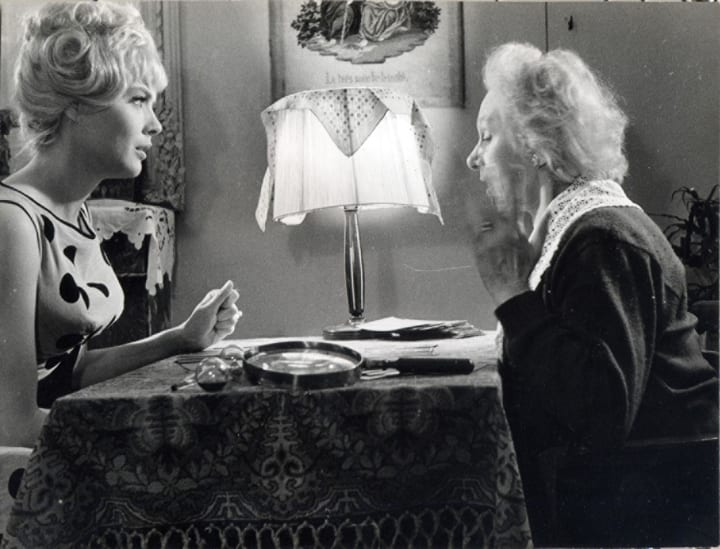
The book The Second Sex by Simone de Beauvoir was a huge influence on the theme of women in this film. Cleo is constantly making these existential comments followed with a add-on where she states nobody takes her seriously or 'really' listens to her because she is a woman. This adds to the existentialism she feels because she is presumably dying. She tries her best not to take things forgranted, but ends up in an existential stupor, wandering the streets and seeing a movie with her friend, she ends up shouting at a few people and crying a lot. Though she seeks to stay what she defines as 'serious' - her emotional state towards death and dying does not allow her to be. The question really is whether Cleo's description of 'seriousness' is the same as everyone else's. The comments about her own appearance being the most important thing about her shows the audience that this may not be the case.
Conclusion
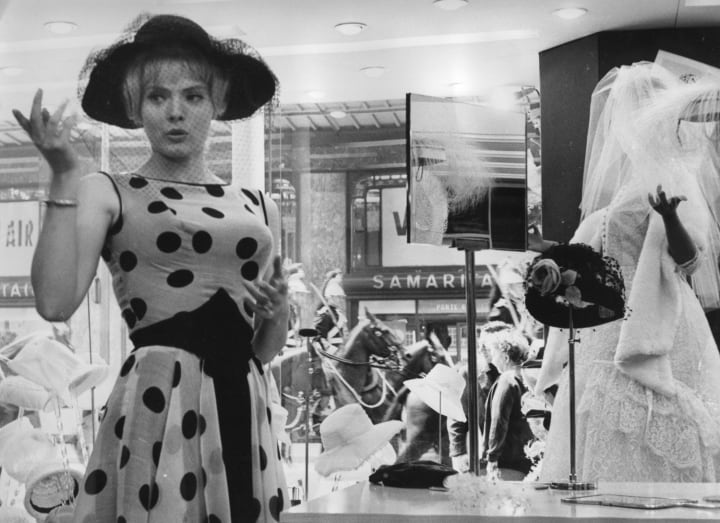
Named as the 2nd Greatest Film Directed by a Woman, Agnes Varda's "Cleo from 5 to 7" is a great exploration into female existentialism in which their lives are somewhat meaningless without external beauty and, whilst in the male-dominated sphere of the 50s and 60s, we die without really living for anything at all. Our own existentialism towards dying young blinds us into an emotional stupor rather than giving us the will to live if only for a while. We are shrouded with regret.
About the Creator
Annie Kapur
I am:
🙋🏽♀️ Annie
📚 Avid Reader
📝 Reviewer and Commentator
🎓 Post-Grad Millennial (M.A)
***
I have:
📖 300K+ reads on Vocal
🫶🏼 Love for reading & research
🦋/X @AnnieWithBooks
***
🏡 UK
Keep reading
More stories from Annie Kapur and writers in Geeks and other communities.
Book Review: "Storyland" by Amy Jeffs
Yes, we are back here again. We are being thrust straight back into folk culture and honestly, this resurgence is the best thing ever. Books that are coming out now with an incredible amount of folkish background to them include the realms of horror and thriller, Sci-Fi and fantasy and even romance is giving it a go. Folk horror films are coming out and I am very excited about that. And finally, we have the books which we thank for compiling some of the great stories that go along with these cultures.
By Annie Kapur4 years ago in Geeks
A Knight of the Seven Kingdoms Series Review (Season 1)
As one of the biggest properties in fantasy, A Song of Ice and Fire remains immensely popular with audiences. After reaching far into the past with House of the Dragon, a second spin-off was on the cards. A Knight of the Seven Kingdoms serves up a bite-sized slice of action and drama, but it still claims a spot among the best small-screen titles.
By Robert Cain16 days ago in Geeks
Best CRM Software for Small Businesses Compared
Small businesses typically begin managing customers using email threads, spreadsheets, and accounting software. That approach works while the number of customers remains small, but the moment a company begins handling dozens of active opportunities or managing recurring client relationships, operational visibility begins to deteriorate. Sales conversations are lost in inboxes, follow-ups become inconsistent, and leadership has limited insight into pipeline health.
By Maxwell Lord4 days ago in Geeks



Comments
There are no comments for this story
Be the first to respond and start the conversation.