
Why Word Puzzle Games Good for Brain Memory
Increase Memory Through Puzzle Games

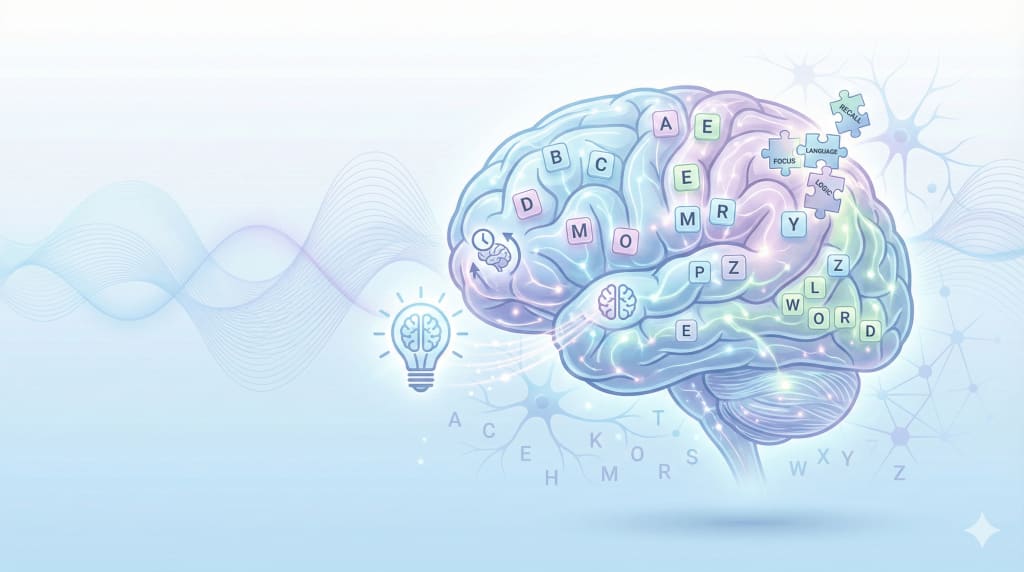
The human brain is one of the most complex organs in the body. It requires constant stimulation and engagement to maintain optimal performance throughout our lives. Word puzzle games have emerged as one of the most effective and enjoyable ways to challenge our mental faculties. These games are not merely entertainment & represent a scientifically backed approach to cognitive wellness and memory enhancement. Understanding the connection between word puzzles and brain health can transform how we approach our daily mental exercises.
Science Behind Word Puzzles and Cognitive Development
How Word Games Activate Multiple Brain Regions
When you engage with a word puzzle game your brain doesn't simply perform a single task. Instead multiple regions activate simultaneously to process information and solve problems. The prefrontal cortex becomes engaged as you make decisions about word placement and validity. The temporal lobe activates to retrieve vocabulary and language-related memories. The parietal lobe contributes to spatial reasoning when you work with letter positioning. This multi-regional activation creates a comprehensive workout that strengthens neural pathways throughout the brain.
Studies conducted by neuroimaging researchers have shown that word puzzle games create stronger connectivity between different brain regions. This enhanced communication between areas leads to improved overall cognitive function. The brain essentially learns to work more efficiently as these neural pathways strengthen through repeated use. Regular engagement with these games can increase the thickness of gray matter in areas associated with memory formation.
The Role of Neuroplasticity in Memory Enhancement
Neuroplasticity refers to the brain's remarkable ability to reorganize and form new neural connections throughout life. Word puzzle games are particularly effective at triggering this process. Each time you learn a new word or solve a puzzle. You're literally rewiring your brain at the neurological level. The challenge presented by word puzzles forces your brain to create new pathways rather than relying on established ones.
This process of neuroplasticity becomes increasingly important as we age. Many people accept memory decline as an inevitable part of aging but research suggests this isn't necessarily true. By maintaining consistent engagement with cognitive challenges like word puzzles we can preserve and even enhance memory function well into our senior years. The brain remains capable of forming new connections and strengthening existing ones regardless of age.
Understanding Memory Formation Through Puzzle-Solving
Memory formation involves three primary stages: encoding storage and retrieval. Word puzzle games directly engage all three stages simultaneously. When you encounter a word you don't recognize your brain must encode this new information. As you practice and solve more puzzles your brain stores this information more effectively. The retrieval process becomes faster and more reliable with repeated puzzle engagement.
The act of retrieving vocabulary to solve a puzzle strengthens memory traces. This is often called the "retrieval practice effect" where accessing memories makes them stronger and more accessible in the future. Studies show that people who regularly play word games have faster recall times and better memory retention overall. This benefit extends beyond vocabulary to general memory performance across various domains.
Specific Cognitive Benefits of Word Puzzle Games
Enhancement of Vocabulary and Language Skills
Word puzzle games like Wordle Today – Play Unlimited Word Game expose players to a wide range of vocabulary in a contextual and engaging manner. Unlike traditional studying methods learning through games feels natural and enjoyable. Players encounter words they might never use in everyday conversation. This expanded vocabulary strengthens linguistic processing in the brain.
The benefits of improved vocabulary extend far beyond puzzle-solving. People with stronger vocabularies demonstrate better communication skills. They show improved comprehension when reading complex material. Enhanced vocabulary even correlates with better problem-solving abilities in general. This linguistic foundation becomes increasingly valuable in professional and academic settings.
Concentration and Focus Development
Modern life presents constant distractions that fragment our attention. Word puzzle games demand sustained focus over extended periods. Your mind must concentrate on the puzzle at hand without wandering. This practice in maintaining attention strengthens your ability to concentrate in other areas of life.
The demanding nature of word puzzles means your brain cannot multitask effectively. It requires genuine undivided attention to make progress. This kind of deep focus is increasingly rare in our hyperconnected world. Regular practice with word games trains your brain to maintain this focused state more easily. The concentration skills developed through puzzle-solving transfer to work studying and other important activities.
Pattern Recognition and Problem-Solving Enhancement
Word puzzles fundamentally involve recognizing patterns and solving problems systematically. These skills are among the most valuable cognitive abilities humans possess. When solving word puzzles your brain learns to identify patterns in letter combinations word structures and language rules. This pattern recognition ability becomes faster and more intuitive with practice.
Pattern recognition skills extend into numerous real-world applications. Professionals in fields ranging from mathematics to medicine rely heavily on these skills. People who regularly engage with word puzzles show improved performance on other pattern-recognition tasks. This suggests that the cognitive benefits of puzzle games are transferable to other domains. The brain essentially learns a more efficient way of processing complex information.
Memory Consolidation and Retention
One of the most significant benefits of word puzzle games is how they facilitate memory consolidation. This is the process by which information transitions from short-term to long-term memory. Puzzle-solving involves actively using memories and retrieving information under time pressure. This active retrieval process strengthens memory consolidation far more effectively than passive study methods.
Regular engagement with word games creates a kind of "memory workout." Just as physical exercise strengthens muscles cognitive exercises strengthen memory systems. The hippocampus which is crucial for memory formation shows increased activation during word puzzle games. This brain region also maintains its integrity longer in people who regularly engage in cognitive challenges. The protective effect of cognitive engagement on the hippocampus becomes increasingly important as we age.
Different Types of Word Puzzle Games and Their Unique Benefits
Crossword Puzzles and Semantic Memory
Crossword puzzles represent one of the most traditional and effective word games for memory enhancement. These puzzles require players to access both semantic memory and linguistic knowledge. Semantic memory refers to our understanding of facts concepts and the meanings of words. Solving crosswords strengthens the neural networks associated with semantic memory.
The clue-based nature of crosswords adds an additional cognitive challenge. Players must sometimes interpret ambiguous or clever clues. This interpretation process requires flexible thinking and creative problem-solving. Over time regular crossword solvers develop faster access to vocabulary and improved linguistic flexibility.
Word Search Games and Visual-Spatial Processing
Word search games offer different cognitive benefits than crossword puzzles. These games emphasize visual-spatial processing and sustained attention. Your brain must scan a grid systematically while maintaining awareness of the target word patterns. This combination of visual search and linguistic processing activates different neural pathways than crosswords.
The visual-spatial component of word searches strengthens the right hemisphere of your brain. Many people focus on left-hemisphere activities making word searches a valuable supplement. Improved visual-spatial processing benefits everything from navigation to understanding complex visual information. The balance between left and right hemisphere activation created by word searches contributes to overall cognitive health.
Anagrams and Cognitive Flexibility
Anagrams require a unique form of cognitive flexibility. Your brain must mentally manipulate letters into various configurations. This process strengthens abstract thinking and improves the brain's ability to view problems from multiple perspectives. People who solve anagrams regularly show improved cognitive flexibility in non-puzzle domains.
The cognitive flexibility developed through anagrams has practical benefits in everyday life. It improves your ability to adapt to new situations and think creatively about problems. Anagrams also strengthen letter recognition and phonological processing. These skills support better reading fluency and spelling ability.
Scrabble and Strategic Thinking
Scrabble combines vocabulary knowledge with strategic thinking and planning. Players must consider not only valid words but also board position and scoring strategy. This multi-layered game engages planning memory retrieval and strategic reasoning simultaneously. The competitive element of Scrabble adds motivation and emotional engagement to the cognitive challenge.
Scrabble players show enhanced performance on memory tests and vocabulary assessments. The game's strategic component strengthens executive function which involves planning and decision-making. Regular Scrabble players demonstrate improved performance on tests of general intelligence. The combination of vocabulary and strategy makes Scrabble uniquely effective for comprehensive cognitive enhancement.
The Aging Brain and Word Puzzle Games
Cognitive Decline Prevention
One of the most encouraging aspects of recent neuroscience research is the finding that cognitive decline is not inevitable. While aging does naturally affect cognitive processing speed word puzzle games can offset this decline significantly. Older adults who regularly engage with word puzzles show slower rates of cognitive decline. Some studies suggest that consistent puzzle engagement can maintain cognitive function at levels found in younger adults.
The protective effect of word games appears most pronounced when people begin playing before significant cognitive decline occurs. This suggests that puzzle games serve as preventive measures against age-related cognitive loss. People who maintain cognitive challenge throughout their lives age more successfully in terms of mental function. This finding has important implications for how people approach aging and cognitive health.
Maintenance of Mental Sharpness
Mental sharpness refers to the speed and accuracy of cognitive processing. Both of these factors naturally decline somewhat with age. However people who regularly play word puzzle games maintain much sharper mental function than their less-engaged peers. This preservation of mental sharpness significantly improves quality of life in later years.
Maintaining mental sharpness through activities like word puzzles has cascading benefits. Sharper mental function supports better decision-making and problem-solving in everyday life. Older adults who stay mentally engaged maintain greater independence and autonomy. They show better performance on driving tests and other safety-critical tasks. The cognitive reserve developed through lifelong puzzle engagement provides a buffer against age-related changes.
Social Connection Through Puzzle Games
Beyond individual cognitive benefits word puzzle games often provide social engagement. Many people play puzzles with family members or in community groups. This social component adds emotional benefits that further enhance overall brain health. Social engagement itself supports better cognitive function and emotional well-being.
Group puzzle-solving creates opportunities for intergenerational connection. Grandparents and grandchildren can work together on puzzles benefiting both age groups. The communication and collaboration required during group puzzle-solving strengthens social bonds while stimulating cognitive function. This combination of cognitive engagement and social connection creates optimal conditions for brain health.
Practical Implementation: Incorporating Word Puzzles into Daily Life
Creating a Sustainable Puzzle Practice
Starting a word puzzle habit works best when approached gradually. Begin with puzzle types that you find most enjoyable. This makes maintaining consistency easier and more rewarding. Consistency matters far more than intensity when building cognitive benefits.
Setting aside even fifteen minutes daily for word puzzles produces measurable benefits over time. This modest time commitment is sustainable for most people. Many people find that puzzle time becomes a valued part of their daily routine. The habit develops naturally as the enjoyment of puzzle-solving becomes established.
Varying Puzzle Types for Maximum Benefit
Incorporating multiple types of word puzzles maximizes cognitive benefits. Different puzzle types strengthen different aspects of cognition. Crosswords improve semantic memory and vocabulary. Word searches enhance visual-spatial processing. Anagrams build cognitive flexibility. Scrabble combines multiple benefits through strategic vocabulary application.
Rotation among puzzle types ensures comprehensive cognitive engagement. This variation prevents the brain from adapting too completely to one type of challenge. Fresh cognitive demands maintain the stimulation that drives neural plasticity. The diversity of puzzle types keeps the activity intellectually engaging and prevents boredom.
Balancing Challenge with Enjoyment
The most effective cognitive training occurs at the edge of current ability. Puzzles should be challenging enough to require genuine mental effort. However they shouldn't be so difficult that they become frustrating. Finding this balance maintains motivation and ensures sustained engagement.
Many people benefit from having puzzles at varying difficulty levels available. Starting the day with easier puzzles as a warm-up works well for many. Progressing to more challenging puzzles later keeps the brain stimulated. This graduated approach maintains the optimal level of challenge throughout the puzzle session.
Tracking Progress and Maintaining Motivation
Monitoring improvements in puzzle-solving ability provides motivation to continue. Tracking metrics like completion times or difficulty levels conquered shows tangible progress. This visible improvement reinforces the habit and maintains engagement. People who monitor their progress show higher long-term adherence to cognitive training programs.
Celebrating achievements even small ones supports sustained motivation. Completing a particularly difficult puzzle or achieving a personal best time deserves acknowledgment. This positive reinforcement encourages continued engagement with puzzle activities. The sense of accomplishment from solving puzzles provides intrinsic motivation beyond the cognitive benefits themselves.
Comparing Word Puzzles to Other Cognitive Training Methods
Word Puzzles Versus Digital Brain Games
Digital brain games marketed specifically for cognitive enhancement have proliferated in recent years. While some digital games show cognitive benefits research suggests word puzzle games may be superior in several ways. Word puzzles engage more complex language processing and vocabulary retrieval. The tangible paper-based nature of traditional puzzles often produces better engagement and retention of the habit.
However digital word games offer advantages including convenience and accessibility. Mobile applications make word puzzles available anywhere and anytime. Some people find digital games more motivating due to gamification elements. The optimal approach may involve combining traditional and digital puzzle formats.
Word Puzzles Versus Other Cognitive Challenges
Learning a new language musical instrument or complex skill also provides cognitive benefits. Word puzzle games offer advantages in terms of accessibility and sustainability. They require minimal investment and can be picked up and put down easily. The lower barrier to entry makes word puzzles more accessible to a broader population.
Additionally word puzzles specifically target language and memory systems of the brain. This specialized focus on language processing and vocabulary provides distinct benefits. Combining word puzzles with other cognitive challenges creates a comprehensive approach to cognitive wellness. No single activity represents the optimal cognitive training; variety and consistency matter most.
Conclusion
Word puzzle games represent one of the most effective, accessible and enjoyable approaches to cognitive enhancement and memory strengthening. The scientific evidence supporting the cognitive benefits of word puzzles is substantial and continuously growing. These games engage multiple brain regions simultaneously creating comprehensive cognitive workouts. They strengthen neuroplasticity, facilitate memory consolidation and enhance language processing capabilities.
The benefits extend beyond immediate puzzle-solving performance to improve general cognitive function across numerous domains. Vocabulary improves concentration, strengthens problem solving abilities and memory retention increases. Different types of word puzzles offer unique cognitive benefits making variety an important component of a puzzle practice. The accessibility and enjoyment factor of word puzzles make them particularly valuable for sustainable cognitive training.
For aging individuals word puzzle games offer measurable protection against cognitive decline. They maintain mental sharpness and support continued independence and autonomy in later life. The social aspects of puzzle games add emotional and relational benefits beyond individual cognitive enhancement. These comprehensive benefits make word puzzle games an investment in long-term brain health.
Starting a word puzzle habit requires minimal effort but delivers substantial returns. Setting aside even brief periods daily for puzzle engagement produces measurable cognitive improvements over time. The key to maximizing benefits lies in consistency, variety and maintaining puzzles at an appropriate challenge level. By incorporating word puzzles into daily routines individuals of all ages can strengthen memory, enhance cognition and invest in their brain's lifelong health and vitality.
About the Creator
Snow Flake
I am a blooger. I will share good information about these topics like health, travel, gaming, technology & more.
Keep reading
More stories from Snow Flake and writers in Gamers and other communities.
Why Puzzle Games Good For Human Brain
Puzzle games have captivated people for generations because they provide amusement while discreetly testing one's mental limits. These games are now seen as tools to improve mental health and cognitive performance going beyond just being a recreational activity. Puzzle games challenge us to think creatively whether we're putting together a jigsaw, solving a crossword or figuring out a Sudoku grid. People of all ages and backgrounds can now profit from puzzles because of their increased accessibility due to the growing integration of technology.
By Snow Flakeabout a year ago in Gamers
TUS NUA - ch 53
TUS NUA – ch 53 New Beginnings – Mia and Midnight (*)(*)(*) Finola knew Ali’s brother-in-law needed to put his mind at rest. She fed her arm through his and led him outside. “We’ll sit here. If you like, I can put a block around us so our conversation will be private.”
By Margaret Brennan6 days ago in Fiction




Comments